 ultimate-guide
Wooded Lot Clearing East Texas: Costs, Permits & Steps
Table of Contents
- Why East Texas Wooded Lots Need a Different Clearing Plan
- Forestry Mulching vs. Traditional Clearing: Which Fits Your Land
- What Forestry Mulching Cost Per Acre Actually Depends On
- Land Clearing Permits and Local Rules You Should Check First
- Step 1: Confirm jurisdiction
- Step 2: Check for a grading or land disturbance permit
- Step 3: Screen for waters, wetlands, and floodplain
- Step 4: Review erosion and sediment control requirements
- Step 5: Check tree ordinances and heritage tree rules
- Step 6: Verify utility and easement lines
- Step 7: Document your file
- A note on timing
- Site Preparation for New Construction: From Stumps to Structural Readiness
- The Wooded Lot Clearing Process, Step by Step
- DIY vs. Hiring a Professional: A Cost-Benefit Comparison
- Conclusion: Making Your Wooded Lot Usable Again
- Frequently Asked Questions
Last Updated: October 4, 2026
Why East Texas Wooded Lots Need a Different Clearing Plan
Wooded lot clearing in East Texas is not the same job as clearing land in the Hill Country or the Panhandle.
At SemperFi Land Clearing LLC, every quote starts with a free land assessment, because species mix, slope, and drainage decide the method, not a generic acreage formula.
Three local factors drive the difference:
- Regrowth speed. Warm, humid conditions push underbrush back fast after a bare-soil clearing, which is why mulch-in-place methods often hold ground longer than scraping everything to dirt.
- Soil variability. Much of the region sits on acidic, clay-heavy soils that compact badly under repeated heavy equipment traffic, especially when wet.
- Access and terrain. Rolling terrain, creek bottoms, and fence lines limit where a dozer can safely work without pushing topsoil into a drainage.
Get these three wrong and you pay twice: once for the clearing, again when erosion, mud, or regrowth forces a redo.
Forestry Mulching vs. Traditional Clearing: Which Fits Your Land
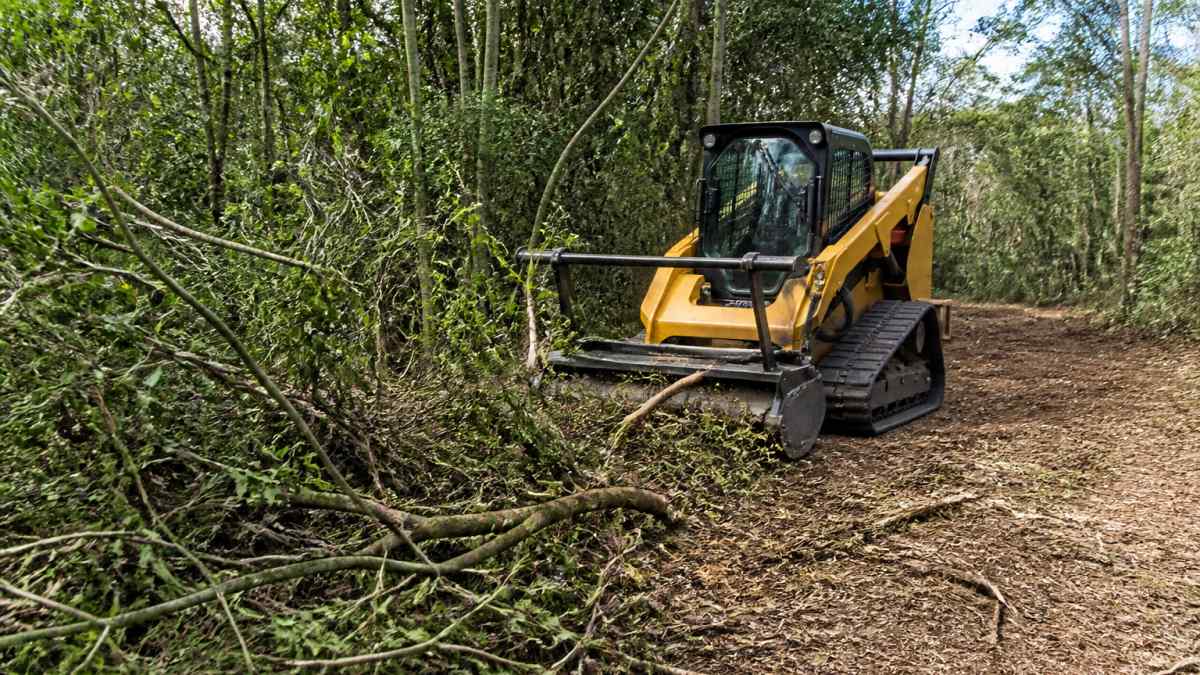
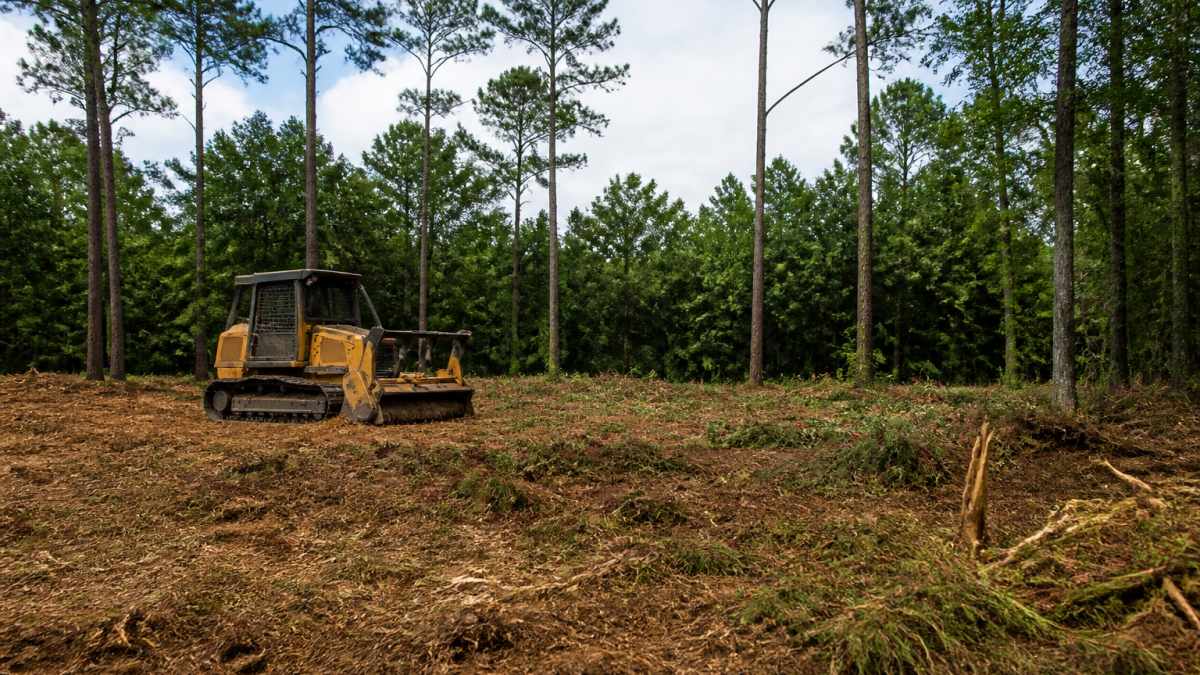
Forestry mulching grinds standing brush, saplings, and small trees into mulch on the spot, leaving a mat of ground cover and no burn piles.
The choice usually comes down to what you want the land to do next.
| Method | What It Leaves Behind | Best For | Main Drawback |
|---|---|---|---|
| Forestry mulching | Mulch layer, intact root systems | Underbrush removal, fence lines, food plots, wildlife trails | Not ideal where you need bare soil |
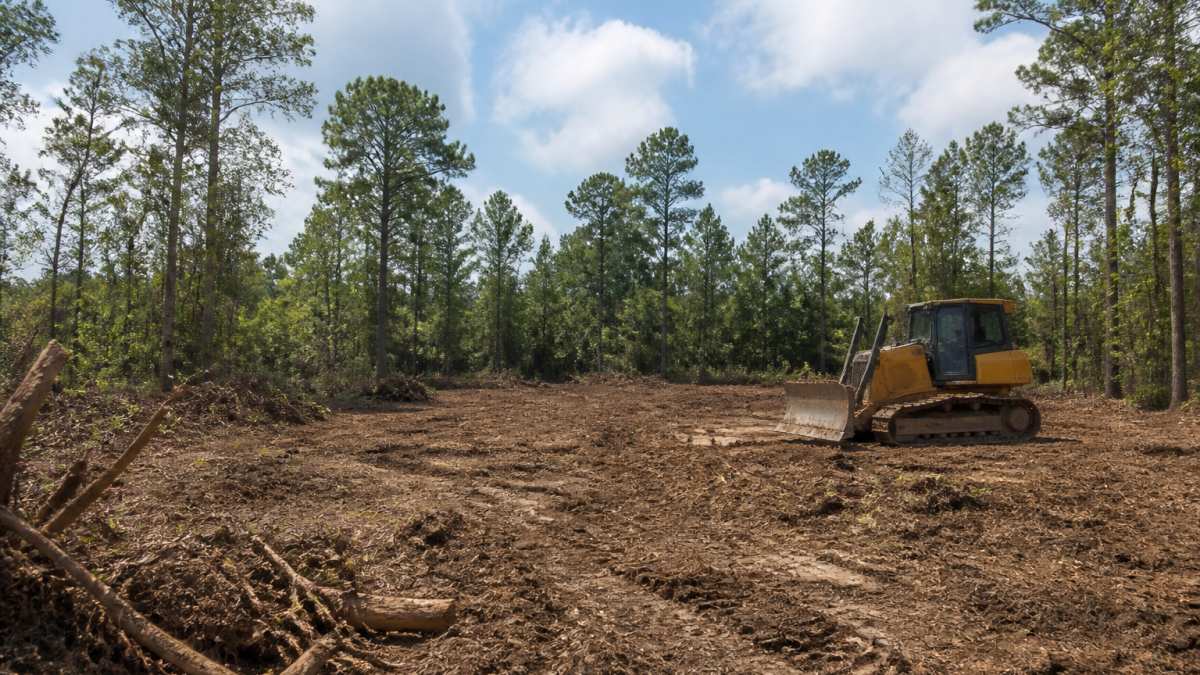
| Dozer and root rake | Bare soil, stumps removed | Building pads, roads, structural readiness | Slower, more soil disturbance |
| Hybrid approach | Cleared pad plus mulched edges | Homesites with acreage around them | Requires careful sequencing |
For most residential lot clearing and acreage management, mulching wins on speed and soil health.
When a Dozer and Root Rake Make More Sense
A dozer and root rake are the right call when the end goal requires bare, compactable ground.
The trade-off is disturbance: dozer work moves more soil, takes longer, and needs more erosion control afterward. On sloped ground, we often recommend mulching the perimeter and limiting bare-soil work to the build area.
What Forestry Mulching Cost Per Acre Actually Depends On
Forestry mulching cost per acre is not a fixed number, and any flat-rate quote given before someone walks your property should be treated with suspicion.
The variables that move the number most:
- Clearing density. Light saplings and grass clear far faster than mature hardwood with heavy limb load.
- Tree size. Mulchers handle brush and small stems efficiently; larger trunks may need to be cut and removed separately.
- Terrain and access. Steep slopes, creek crossings, and soft ground slow production and sometimes rule out certain machines.
Because we do not publish flat per-acre rates, we assess your land first and price the actual job. Our free land assessment gives you a real number tied to your property rather than a range that shifts once we arrive.
Land Clearing Permits and Local Rules You Should Check First
No single agency issues a land clearing permit. What applies depends on whether you are inside or outside city limits, proximity to a waterway or wetland, how many acres you are disturbing, and whether your county has tree or floodplain rules. Run this checklist before any equipment shows up.
Step 1: Confirm jurisdiction
Start at the county level. Most rural parcels fall under county rules, but lots inside a city limit or extraterritorial jurisdiction usually have a separate set of ordinances on top. Call the county planning or environmental health office and the city planning department and ask: "Does my parcel sit under your clearing or grading rules?" Get the answer in writing if you can.
Step 2: Check for a grading or land disturbance permit
Many jurisdictions require a grading permit once you disturb more than a set acreage threshold, which varies widely. Ask:
- Is a grading or land disturbance permit required for my acreage?
- Is a site plan or erosion and sediment control plan required with the application?
- What inspections happen during and after the work?
Step 3: Screen for waters, wetlands, and floodplain
Clearing near creeks, streams, drainage ditches, ponds, or wetlands can trigger federal review. The U.S. Army Corps of Engineers regulatory program explains when a permit may be required for work affecting waters of the United States, and the U.S. Fish and Wildlife Service wetlands mapper can help you see whether mapped wetlands or floodplain touch your parcel before you call.
Step 4: Review erosion and sediment control requirements
Disturbed ground needs a plan to keep soil out of drainage. The U.S. Environmental Protection Agency stormwater guidance outlines why sediment runoff matters and what controls are typically expected. In practice, that usually means silt fence, a stabilized construction entrance, and a schedule for seeding or mulching bare ground before the rainy season.
Step 5: Check tree ordinances and heritage tree rules
Some cities and a few counties restrict removing certain mature trees regardless of acreage. Ask whether your jurisdiction has a tree preservation ordinance, whether a heritage or specimen tree designation applies, and whether removals require a replacement or mitigation plan.
Step 6: Verify utility and easement lines
Before cutting, confirm where electric, gas, water, sewer, and pipeline easements run. Call 811 for locates and coordinate with the utility if work occurs inside an easement. Cutting inside an easement without clearance is one of the most expensive mistakes a landowner can make.
Step 7: Document your file
Keep a folder with jurisdiction contacts, permit applications, approved plans, inspection records, and written confirmations. If a neighbor or agency questions the work later, that file is your defense.
A note on timing
Permits and reviews can add days or weeks. If you are targeting a build date, start the permitting checklist before signing a clearing contract so the timelines run in parallel rather than in sequence.
Site Preparation for New Construction: From Stumps to Structural Readiness
Site preparation for new construction is where a wooded lot becomes a buildable one. It covers everything between "trees are down" and "the builder can start," and skipping steps causes foundation issues or drainage failures later.
A typical sequence:
- Land survey and layout. Confirm boundaries, easements, and the exact building envelope before cutting.
- Clearing and grubbing. Remove vegetation and root mass from the footprint and any area that will be graded.
- Stump removal. Grind or pull stumps below grade so nothing organic remains under structural fill.
- Rough grading. Shape the site so water moves away from the building pad.
- Drainage solutions. Install swales, culverts, or French drains where the grade demands them.
- Final grading and compaction. Bring the pad to the elevation and density the foundation plan requires.
The step most often rushed is stump removal, leaving organic material under a slab invites settling and voids later.
The Wooded Lot Clearing Process, Step by Step
Every wooded lot clearing project we run follows the same basic sequence, adjusted for the property. The order matters: doing a later step early means redoing work.
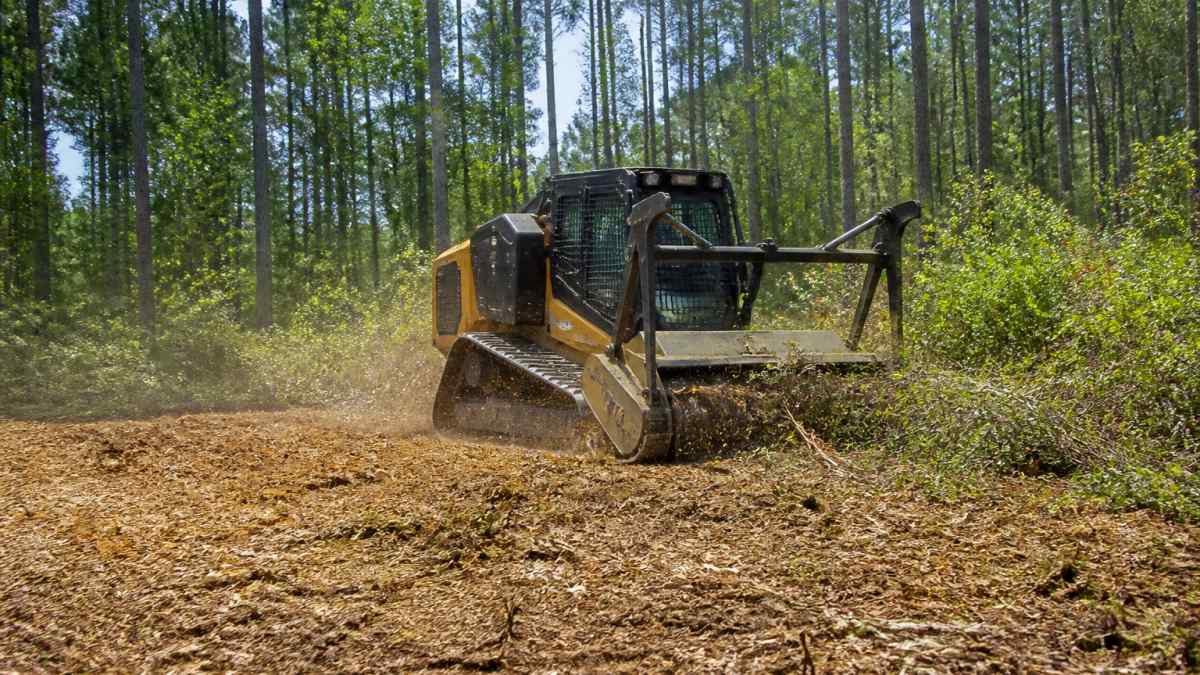
- On-site assessment. We walk the property, identify species, note drainage and access, and flag anything that needs a permit or utility clearance.
- Scope and estimate. You get a written scope listing exactly what is included: mulching, stump work, grading, hauling, or a combination.
- Marking and protection. We mark boundaries, easements, and any trees or features you want kept. Native vegetation preservation starts here.
- Clearing. Mulching or dozer work proceeds in passes, working from access points inward and keeping equipment off saturated ground.
- Stump and root handling. Stumps are ground or raked according to the end use.
- Grading and drainage. The site is shaped so water leaves the cleared area instead of pooling.
- Erosion control. Mulch, seed, or structural controls go down on any bare ground before we leave.
- Walkthrough. We review the finished work with you against the original scope.
That last step is where a lot of contractors disappear. We schedule it as part of the job.
DIY vs. Hiring a Professional: A Cost-Benefit Comparison
DIY land clearing looks cheaper until you price the equipment, time, and risk. Build a real cost stack for your acreage and compare it against a professional quote, not a gut feeling.
The DIY cost stack
Renting equipment means paying for more than the machine. A realistic stack includes:
- Equipment rental. A compact track loader with a forestry mulcher attachment, or a walk-behind mulcher for lighter work, rents by the day, week, or month. Rates vary by region and machine class, so get quotes from two or three local rental yards for the exact machine you would need.
- Delivery and pickup. Heavy equipment usually moves on a trailer, and round-trip delivery is a separate line item.
- Fuel and DEF. A mulcher under load burns fuel fast. Budget for refills on multi-day jobs.
The professional quote stack
A professional quote should bundle the machine, operator, fuel, insurance, and disposal or mulching of material. Ask every contractor to break the quote into these lines so you can compare apples to apples:
- Mobilization and demobilization
- Clearing method (mulching, dozer, or hybrid)
- Stump grinding or root raking
Where DIY actually wins
DIY is the right call for light, flat, dry work: small saplings, thin underbrush, fence lines, and food plot edges a walk-behind mulcher or tractor with a rotary cutter can handle. For a quarter-acre fence line on level ground with a capable tractor already on hand, the math can favor doing it yourself.
Where DIY falls apart
DIY stops making sense when any of these are true:
- Heavy overgrowth. Mature hardwood, thick vines, and multi-stem brush slow a small machine to a crawl and burn through cutting teeth.
- Sloped or wet ground. A compact machine on a slope or saturated clay is a rollover and rutting risk.
- Proximity to structures, utilities, or water. A mistake near a culvert, septic line, or creek can cost more than the entire professional quote.
A simple decision rule
Price the rental, fuel, delivery fee, damage waiver, and your own weekends, then get a professional quote for the same scope. If the numbers are close, hire the pro, you are buying speed, soil knowledge, and liability coverage with the difference. If DIY is dramatically lower and the job is light, flat, and dry, DIY can make sense.
For a quarter-acre fence line, we will tell you honestly whether the job is worth hiring out. Small jobs are still jobs, and we take them.
Conclusion: Making Your Wooded Lot Usable Again
Overgrown acreage is not permanent, but it requires a plan built for this region's soils, regrowth, and rules.
SemperFi Land Clearing LLC is a veteran-owned operation serving Longview, Tyler, and the surrounding area. We offer free land assessments, specialized 10-foot fence line clearing, and forestry mulching built for heavy East Texas overgrowth.
Frequently Asked Questions
How much does it cost to clear an acre of wooded land in East Texas?
There is no single rate because forestry mulching cost per acre depends on clearing density, tree size, terrain, and how much debris hauling is needed. A lightly brushed acre with saplings costs far less than an acre of mature hardwoods with deep stumps. Some quotes you see online may not reflect your actual property conditions. The most accurate number comes from an on-site estimate where a crew walks the land and measures what actually needs to come down.
Do I need land clearing permits to clear trees on my property?
It depends on where the property sits and what you plan to do with it. Many rural East Texas tracts have few restrictions, but properties near waterways, floodplains, or city limits often require a permit or a site plan review. Some counties also have rules about burning debris. Before any equipment arrives, check with your county and city offices, and ask whether a land survey or drainage plan is needed. A reputable clearing company should walk you through this.
How long does it take to clear a wooded lot?
A forestry mulcher can clear roughly one to three acres of moderate underbrush in a day, but thick hardwoods, steep slopes, or heavy debris can slow that significantly. A typical residential lot of one to two acres may take one to two days, while larger acreage or construction sites can take a week or more. Weather matters too, since wet ground limits heavy equipment access. Your contractor should give a realistic timeline after seeing the property.
What is the difference between forestry mulching and traditional land clearing?
Forestry mulching grinds standing brush, saplings, and small trees into mulch that stays on the ground, which helps with erosion control and topsoil preservation. Traditional clearing uses a dozer blade, excavator, and root raking to push material into piles, then hauls debris off site or burns it. Mulching leaves root systems and soil mostly intact, while traditional clearing removes stumps and roots for site preparation for new construction. The right choice depends on whether you want land improvement or a fully cleared building pad.