 ultimate-guide
Homesite Clearing East Texas: A 2026 Guide
Table of Contents
- Homesite Clearing East Texas: What It Takes to Get Your Land Buildable
- Forestry Mulching East Texas: The Method That Protects Your Topsoil
- Cost to Clear Land Per Acre: What Drives Your Estimate
- Site Preparation for New Construction: From Cleared Ground to Foundation-Ready
- Permits, Environmental Compliance, and What East Texas Counties Require
- East Texas Soil and Topography: Why Your Land Fights Back
- Keeping It Cleared: Post-Clearing Maintenance and Vegetation Management
- Frequently Asked Questions
Last Updated: October 2, 2026
Homesite Clearing East Texas: What It Takes to Get Your Land Buildable
Homesite clearing in East Texas removes brush, trees, stumps, and undergrowth so a parcel can be surveyed, graded, and built on. It is the first paid step between owning raw acreage and pouring a foundation, and it decides how predictably the rest of your build budget behaves.
Most landowners underestimate one thing: East Texas does not clear like a flat Midwestern field. Clay-heavy subsoils, rolling topography, and aggressive yaupon regrowth mean the method you choose on day one determines what you're fighting in year three.
Forestry Mulching East Texas: The Method That Protects Your Topsoil
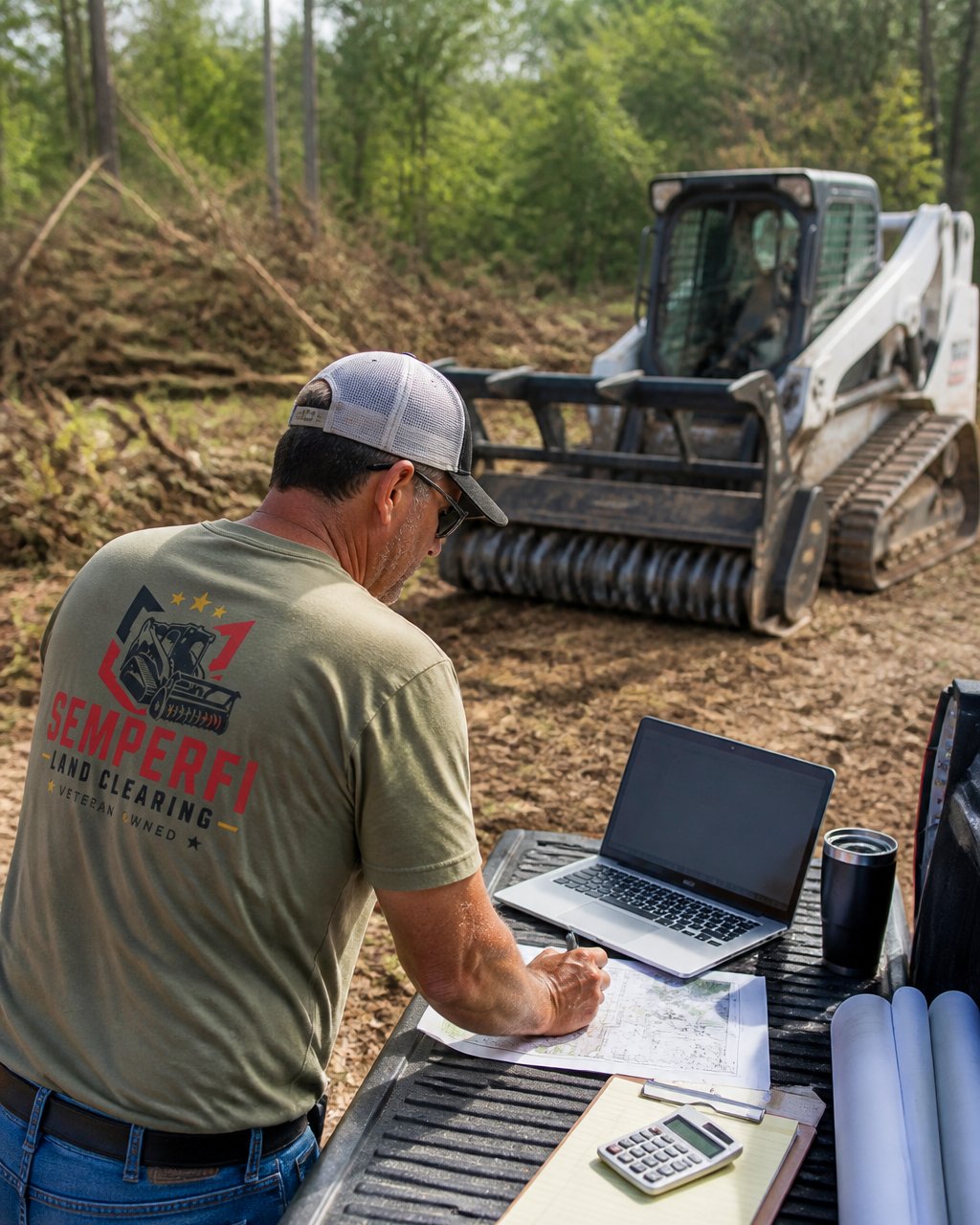
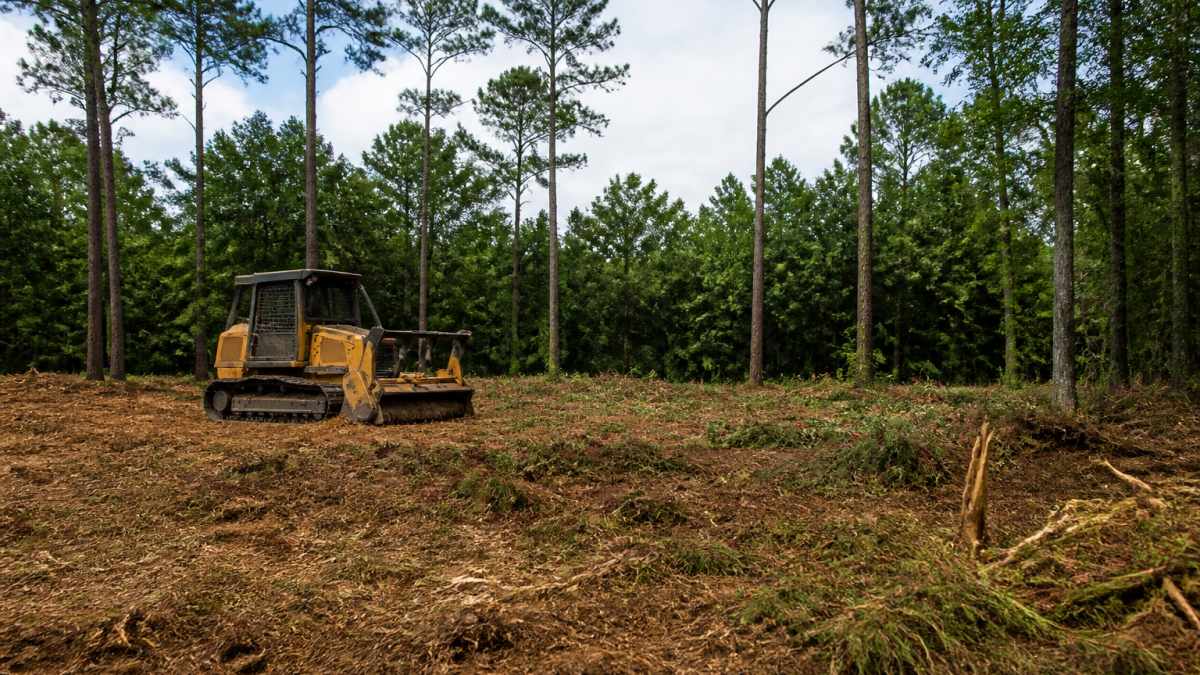
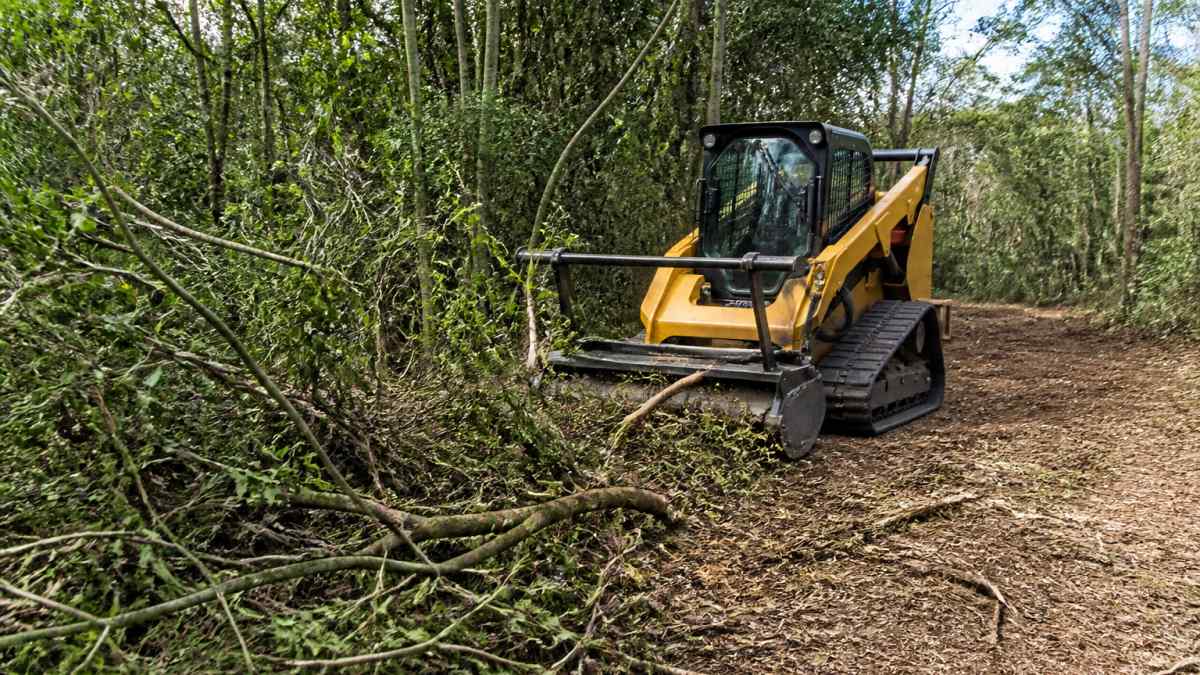
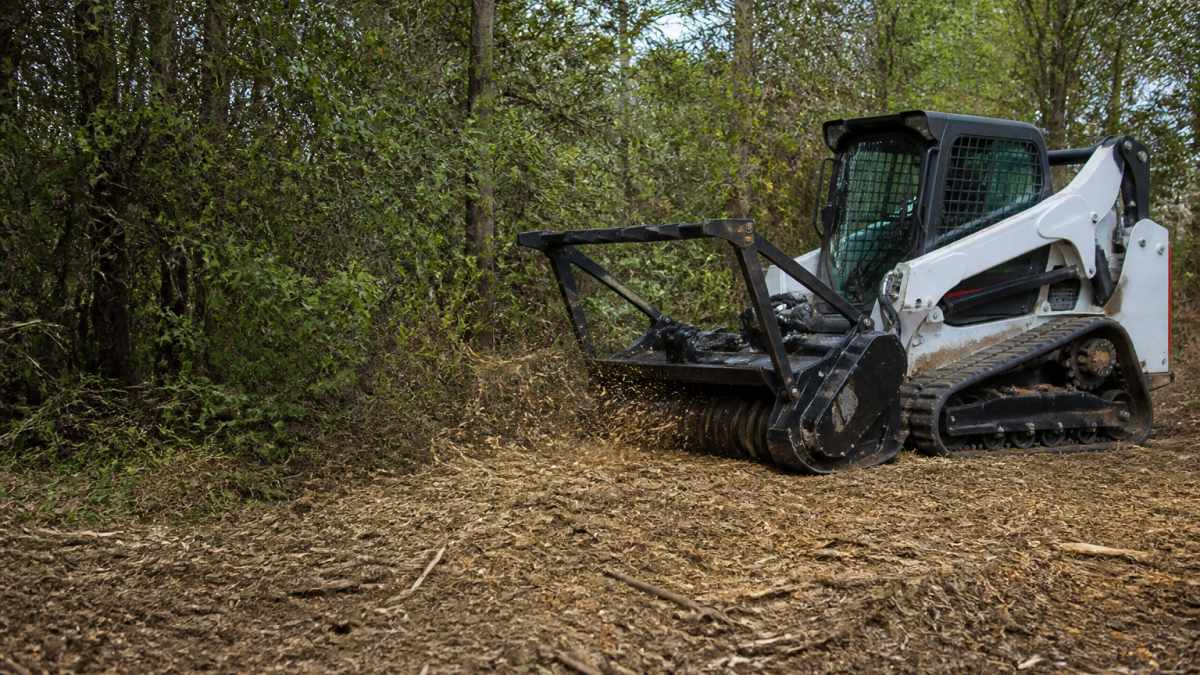
Forestry mulching East Texas landowners rely on is a single-machine method that grinds standing brush, saplings, and small trees into a mulch layer left on the ground rather than pushing topsoil into burn piles.
How Forestry Mulching Handles Heavy Brush and Yaupon
Yaupon is the test case. It spreads by root sprouting, so anything leaving roots intact invites regrowth. A mulcher grinds the stem and canopy to ground level and, with repeat passes, stresses the root system enough to slow it. Dense stands usually need two passes: one to knock down the canopy, a second to reduce material size and reach the stumps.
Forestry Mulching vs. Traditional Clearing: What Changes for Your Soil
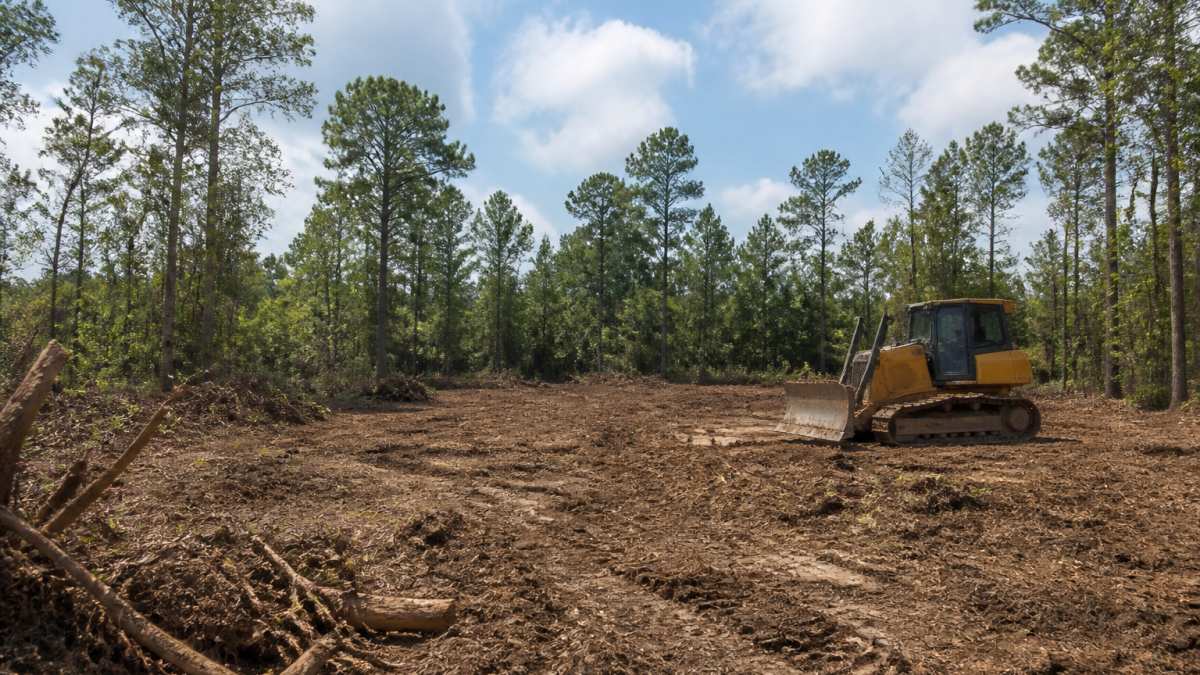
Traditional clearing uses dozers to push everything, topsoil included, into piles. That works on large agricultural tracts but leaves compacted ground, lost topsoil, and a burn pile to manage. Mulching keeps the soil profile intact and leaves a seedbed you can grade, but it is not the right tool for large-diameter hardwoods or ground you intend to excavate immediately.
| Method | Soil Impact | Best For | Main Limitation |
|---|---|---|---|
| Forestry mulching | Topsoil retained, mulch layer added | Brush, yaupon, saplings, fence lines | Not for large hardwoods |
| Dozer clearing | Topsoil pushed and lost | Large tracts, full root removal | Compaction, burn piles |
| Excavation | Full removal, bare subsoil | Foundation footprints, trenching | Highest cost per acre |
Cost to Clear Land Per Acre: What Drives Your Estimate
There is no single per-acre number for homesite clearing, because the estimate depends on what is growing on your parcel. Density, stem diameter, terrain slope, and access all move the figure. That is why a free on-site assessment matters more than any phone quote: two three-acre parcels in the same county can differ by thousands of dollars based on brush thickness alone.
Realistic Cost Ranges by Job Type
Most contractors in the region price forestry mulching by the acre, hour, or day.
- Light pasture cleanup (grass, weeds, scattered saplings under 2 in.): the lowest per-acre tier, often quoted as a day rate because the work is fast.
- Moderate brush and yaupon (dense understory, stems 2-6 in.): the middle tier, and the most common homesite scenario.
- Heavy timber and mature hardwoods (stems over 6 in., or requiring a dozer and root removal): the highest tier, frequently priced by the hour because production varies so much.
- Fence line clearing: usually priced by the linear foot rather than the acre, since a 10 ft wide lane is a different unit of work than open acreage.
Because pricing shifts with fuel, equipment, and crew availability, any per-acre figure quoted over the phone is a placeholder. What you can control is how many of the cost drivers below apply to your land.
Factors That Move the Number Up or Down
- Clearing density. Light pasture cleanup and heavy yaupon thickets are not the same job, and density is the biggest swing factor.
- Stem size. Saplings mulch quickly; mature hardwoods need different equipment and may require a dozer rather than a mulcher.
- Topography. Slopes slow equipment and can force a switch from a skid steer to a larger, more expensive machine.
- Site access. A gated, narrow entry limits what machinery can reach, and unreachable acreage gets priced differently.
- Debris disposal. Mulching leaves material on site at no extra haul cost; hauling it off adds trucking and dump fees.
- Stump grinding. Stumps gone below grade for a pad or driveway are separate work from mulching the stem.
- Rock and buried debris. Old fence posts, concrete, and shallow rock can damage cutting teeth and add unplanned hours.
- Distance and mobilization. A crew hauling equipment from outside the area may add a mobilization charge.
How to Compare Two Quotes Apples-to-Apples
Two quotes for the same acreage rarely measure the same thing. Before you sign, confirm:
- Number of passes included. A single-pass quote on dense yaupon often means regrowth returns within a season, and the second pass is billed separately.
- Stem diameter limit. Ask what size tree the quoted price covers and what the upcharge is above it.
- Whether stumps are cut at grade or ground below grade. These are different scopes.
- Whether debris stays on site or is hauled. This is often the largest hidden line item.
- Whether the price is per acre, per hour, or a flat bid. Hourly quotes protect the contractor on unknown ground; flat bids protect you.
Ask for the quote in writing with the pass count, stem diameter limit, and debris handling spelled out. That single page is what keeps a final invoice from drifting past the estimate.
Budget for clearing, stump work, and debris disposal as three separate line items. Bundling them into one mental number is how homeowners get surprised at the midpoint of a build.
Site Preparation for New Construction: From Cleared Ground to Foundation-Ready
Site preparation for new construction starts where clearing ends: the ground is bare and now must be made level, stable, and dry. Clearing removes vegetation; site prep makes the pad buildable. Skipping this stage is how foundations crack and driveways sink.
Drainage, Grading, and Soil Compaction
Water is the enemy of a new build here. Grading shapes the pad so surface water runs away from the footprint, and drainage management handles what collects uphill. Loose fill settles unevenly, so the pad must be compacted in lifts before a foundation crew arrives. Septic systems, utility trenching, and driveways all run through the same prepared ground, so plan the layout before the first machine moves.
Clearing, grading, and drainage are one continuous project. Treating them as three separate jobs is the most common reason new builds stall between the pad and the foundation.
Permits, Environmental Compliance, and What East Texas Counties Require
Permitting for land clearing varies by county and intended land use. Some counties require a land clearing permit or grading plan for larger disturbances; others only regulate work near waterways or floodplains. Environmental compliance matters most around creeks, streams, and drainage easements, where vegetation removal can trigger erosion control requirements.
The Regulatory Layers That Apply to a Homesite
Most rural homesite clearing here is regulated at three levels, and knowing which applies is the whole game:
- County level. Many rural counties have no standalone land clearing permit, but they regulate development through subdivision rules, floodplain ordinances, and driveway/culvert permits where new access crosses a county road ditch. In unincorporated areas, this is usually your primary touchpoint.
- State level. Work disturbing soil near waterways can trigger the state water quality agency's construction stormwater program, usually at a disturbance threshold tied to acreage and proximity to a water of the state, a creek, stream, or drainage leaving the property.
- Federal level. If your parcel contains a wetland or mapped floodplain, the federal wetlands permitting process can apply, and it is slow enough to change your build schedule. A jurisdictional determination tells you whether it applies.
The Triggers That Turn a Simple Job Into a Permitted One
- Disturbance acreage. Larger disturbances more often require a stormwater or erosion control plan than a small homesite pad.
- Proximity to water. Clearing inside a buffer along a creek or stream is the most common reason a project needs extra review.
- Floodplain location. A mapped floodplain usually means a local floodplain development permit and elevation considerations.
- Grading and fill. Moving significant dirt, not just cutting brush, most often pulls a project into grading or stormwater review.
- Road access. A new driveway crossing a county road ditch typically needs a county-issued culvert or approach permit.
A Practical Pre-Clearing Checklist
- Pull your parcel on the county appraisal district map and confirm whether it sits in a mapped floodplain.
- Identify any creek, stream, or drainage easement on the parcel and mark a buffer before any machine moves.
- Call your county road and bridge department if you plan a new driveway approach or culvert.
- Ask your county whether a land clearing or grading permit is required at your acreage threshold.
- Confirm whether a stormwater or erosion control plan is triggered by your disturbance acreage.
- Check for a wetland or waters-of-the-state designation if the parcel has wet ground or a creek.
- Verify setback and buffer requirements near waterways.
- Confirm any HOA or deed restrictions on tree removal.
- Call 811 before you dig, it is free, required before excavation, and it protects you from hitting a utility line.
Burning and Debris Disposal Rules
If your clearing method produces burn piles, burning is regulated separately. Most counties restrict burning during burn bans, require notification or authorization from the county or state forestry office, and prohibit burning certain materials. Mulching sidesteps this by leaving material on site, one reason it is the default for homesites rather than large agricultural tracts.
Permit thresholds are set by acreage and by proximity to water, and they change. Confirm your specific requirements with your county office and the state environmental agency before work begins, a five-minute phone call is cheaper than a stop-work order.
For most rural homesite clearing, the county is your main regulator and water proximity is your main trigger. If your parcel has no creek, no floodplain, and no new road crossing, your permitting path is usually short. If it has any of those three, plan for review time in your schedule.
East Texas Soil and Topography: Why Your Land Fights Back
East Texas soils are why generic clearing advice fails here. Much of the region sits on clay-heavy subsoil that holds water, swells when wet, and compacts under heavy equipment.
That combination shapes every decision. Clay subsoil means you cannot leave a graded pad exposed through a wet season without erosion control. Slopes mean water arrives at the pad faster than on flat ground.
Keeping It Cleared: Post-Clearing Maintenance and Vegetation Management
Cleared ground does not stay cleared on its own. The mulch layer from forestry mulching slows regrowth but does not stop it. Vegetation management is the difference between a homesite that stays buildable and one that returns to brush within a few seasons.
A practical maintenance schedule looks like this:
- First season: Walk the cleared area monthly and spot-treat new sprouts before they harden off.
- Year one: Mow or brush hog the open areas two to three times to keep woody seedlings from establishing.
- Ongoing: Re-mulch or spot-clear fence lines and edges, where regrowth starts first.
For pasture restoration, grazing or mowing keeps brush gone. For hunting access and trails, cleared lanes need annual attention or they close back in.
Frequently Asked Questions
What is a normal price for clearing 1 acre in Texas?
There is no single normal price because the cost to clear land per acre depends on clearing density, underbrush type, topography, site access, and whether you need stump grinding or debris disposal. Dense yaupon and heavy hardwood cost more per acre than open pasture with light brush. Request a free land assessment so a contractor can walk your property, measure actual conditions, and give you a written estimate instead of a phone-book guess.
Do you need a permit to clear land in Texas?
Texas does not require a statewide land clearing permit for most private rural acreage, but local rules vary by county and city. If your property falls under a municipal ordinance, sits near a floodplain, or contains wetlands, you may need approvals or environmental compliance review before work starts. Always check with your county and any applicable water or conservation authority before clearing.
How does forestry mulching compare to traditional land clearing?
Forestry mulching grinds vegetation in place, leaving mulch that protects topsoil and reduces erosion. Traditional clearing uses excavators and bulldozers to push and haul debris away, which removes nutrients, compacts soil, and leaves bare ground exposed to runoff. Mulching works well for homesite clearing, fence line clearing, and selective thinning, while traditional methods suit projects needing full root removal or major land grading.
How do I avoid brush coming back after clearing?
Regrowth depends on what is left in the soil. Forestry mulching cuts vegetation at the surface, so aggressive species like yaupon can resprout. Plan a post-clearing maintenance schedule: spot-spray regrowth, mow before seed set, and consider a follow-up mulching pass in 12 to 18 months. Property owners who skip maintenance usually see thick regrowth within a single growing season.