 ultimate-guide
How to Prepare Land for Construction: 7-Step Guide
Table of Contents
- Step 1: Site Assessment and Feasibility for Your Build
- Step 2: Soil Testing, Geotechnical Survey, and Subsurface Conditions
- Step 3: Clearing, Grubbing, and Vegetation Removal
- Step 4: Grading, Leveling, and Soil Compaction
- Step 5: Site Drainage, Erosion Control, and Stormwater Management
- Step 6: Utility Connection, Infrastructure, and Utility Easements
- Step 7: Permitting, Zoning Ordinances, and Environmental Compliance
- How Much Does It Cost to Clear Land for Construction?
- Frequently Asked Questions
Last Updated: September 24, 2026
Step 1: Site Assessment and Feasibility for Your Build
Common mistakes at this stage:
- Skipping the survey and trusting a fence line as the property boundary
- Ignoring utility easements that restrict where you can build
- Assuming a flat-looking pasture has no drainage problems
Step 2: Soil Testing, Geotechnical Survey, and Subsurface Conditions
A geotechnical survey analyzes soil bearing capacity, groundwater depth, and subsurface conditions to determine what foundation your site can support. Skipping it is the most expensive shortcut in site preparation.
Step 3: Clearing, Grubbing, and Vegetation Removal
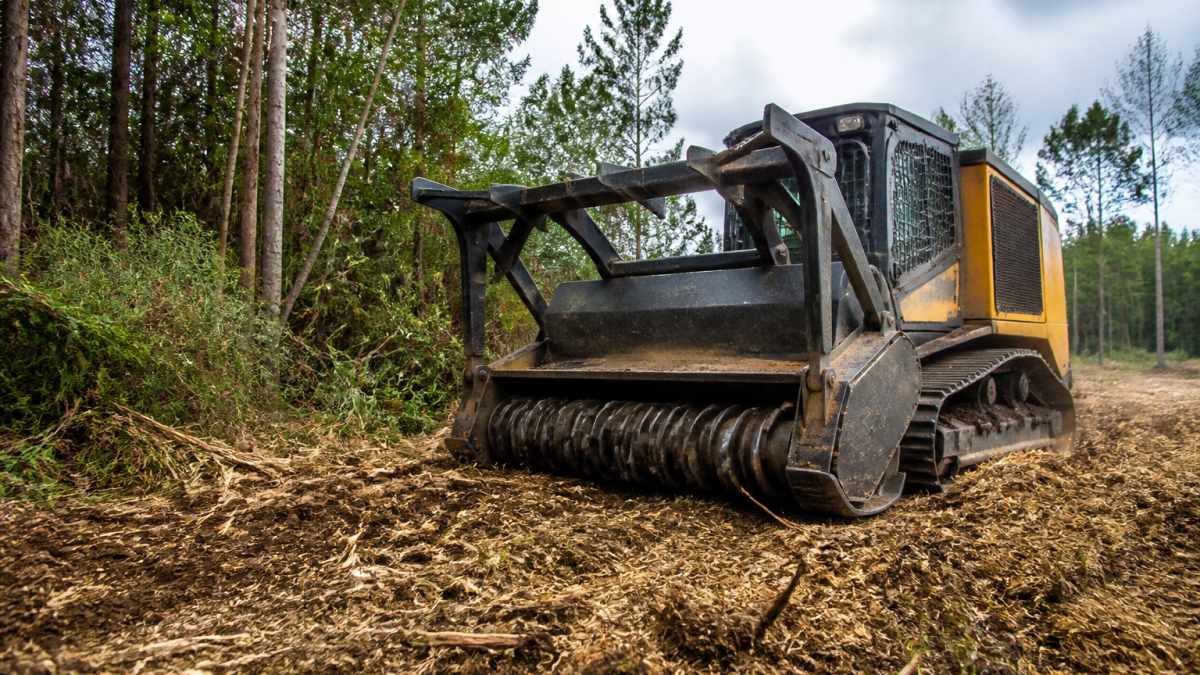
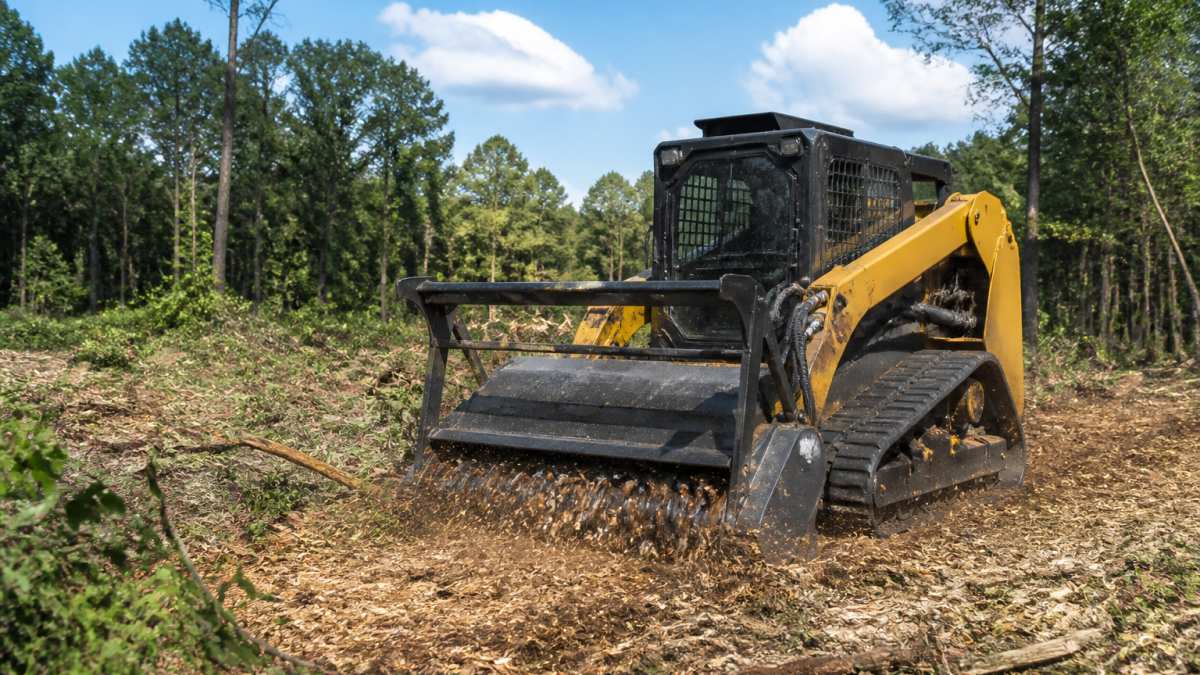
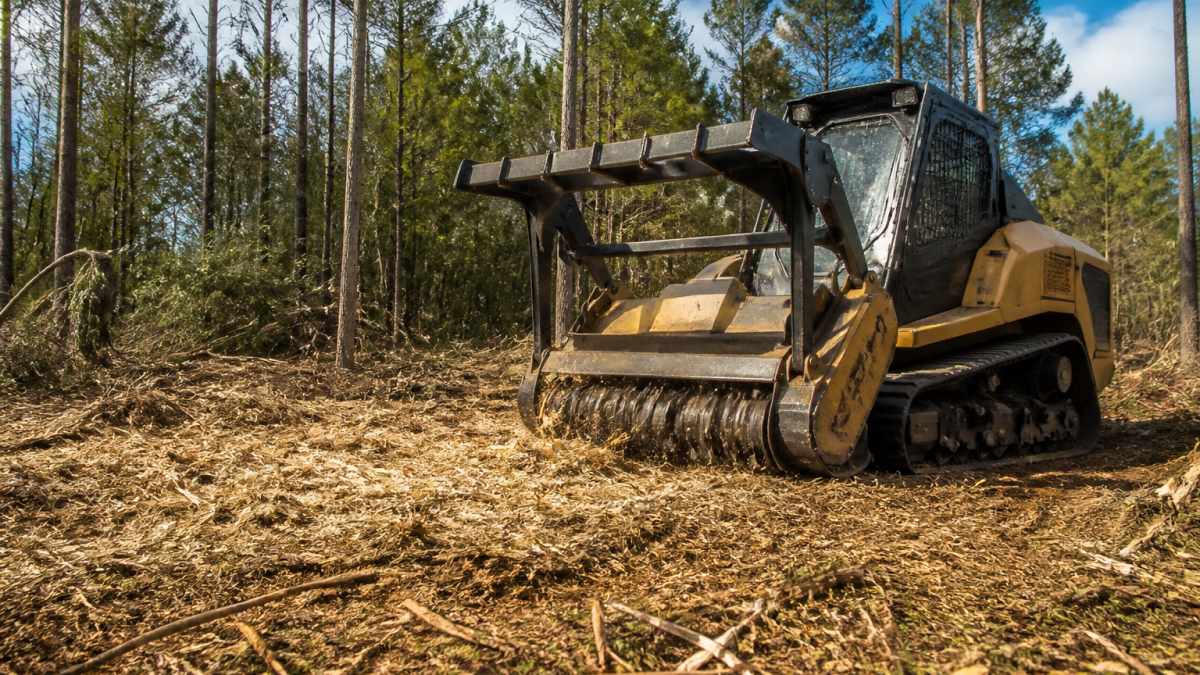
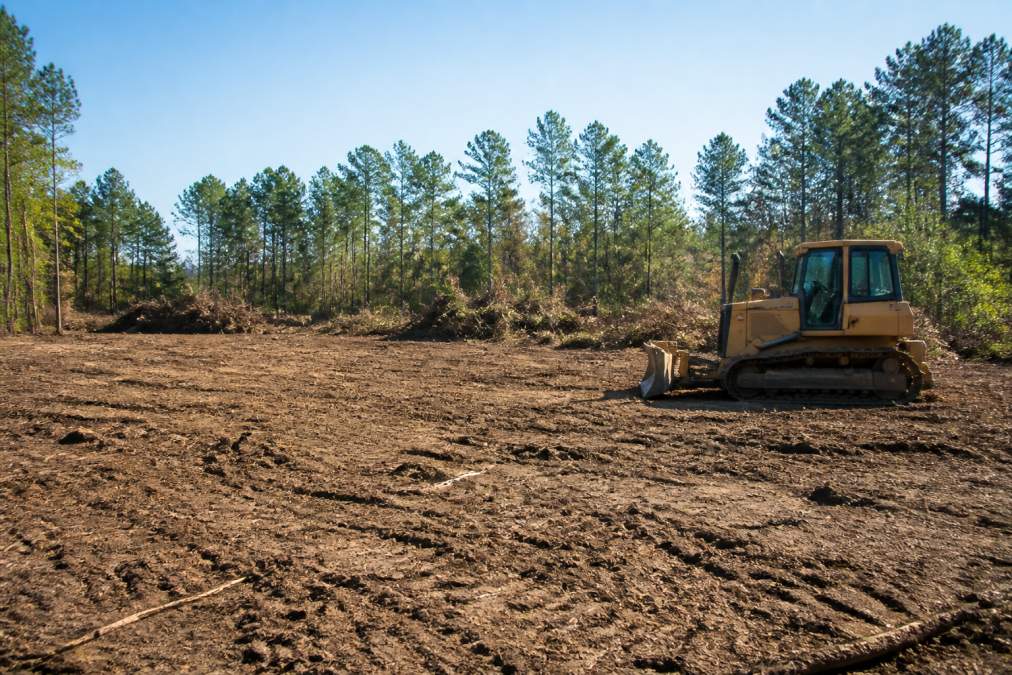
Clearing removes trees, brush, and overgrowth; grubbing removes roots and stumps below grade. Together they create a workable surface for excavation and grading, and this is where forestry mulching earns its place.
| Method | Best For | Ground Disturbance | Regrowth Pattern |
|---|---|---|---|
| Forestry mulching | Brush, saplings, fence lines | Low | Slower, mulch-suppressed |
| Dozer clearing | Large trees, stumps, root balls | High | Faster, bare soil |
| Hand clearing | Small lots, sensitive areas | Minimal | Variable |
Step 4: Grading, Leveling, and Soil Compaction
Grading shapes the site to a designed elevation, and soil compaction helps prepare land to carry a structure. A civil engineer's grading plan sets the cut and fill balance: how much dirt moves, and whether you import or export material.
Step 5: Site Drainage, Erosion Control, and Stormwater Management
Site drainage moves water away from your foundation, driveway, and build pad. Stormwater management is the regulated version: controlling where rain runs and how fast, so it does not carry soil into a neighbor's ditch or creek.
Step 6: Utility Connection, Infrastructure, and Utility Easements
Utility connection covers water, sewer or septic, electric, gas, and communications. Infrastructure development means the trenches, conduit, pads, and transformers those services need. Utility easements are recorded rights that let providers run lines across your property, and they constrain where you can build, sometimes across the exact spot you picked for a driveway.
What actually goes in the ground
Most residential and light commercial sites involve some combination of:
- Water service: a buried line from the meter or well to the structure, typically set below the local frost depth. In northern states that can mean 4 feet or more; in southern states it is often 12 to 18 inches.
- Sewer or septic: gravity sewer needs continuous fall, which is why sewer layout often drives the building pad elevation more than the foundation does. A septic system needs a reserve area and separation from wells and property lines.
- Electric and communications: conduit and direct-burial cable, often sharing a trench with a separation between power and low-voltage lines. Many utilities require 12 to 24 inches of vertical or horizontal separation between electric and communications.
- Gas: a separate trench with its own depth and clearance rules, frequently inspected before backfill.
- Storm and drainage: not a utility in the billing sense, but it competes for the same trench corridor and must be coordinated so it does not cross a water line.
The sequencing conflicts that cost money
A common pattern: the homeowner grades and paves the driveway, then learns the power company needs a transformer pad within 10 feet of the driveway edge. Now the new asphalt gets cut. The same happens with:
- Well and septic locations that conflict with the approved building envelope
- Easements that prohibit structures, fences, or even deep-rooted trees
- Utility companies that require their own inspection before backfill, holding up the grading crew
Easements: read them before you design
An easement is a recorded right for someone else to use part of your land. A utility easement lets the provider install, access, and maintain lines, and usually prohibits permanent structures, pools, and sometimes fences or trees within its width. Standard widths run from 10 feet for a single residential line to 30 feet or more for transmission corridors.
Coordination checklist
- Contact each utility provider early, lead times for new service can run weeks to months.
- Confirm the meter, transformer, and pedestal locations in writing before trenching.
- Call 811 before any excavation, even on your own land, to mark existing lines.
- Schedule provider inspections before backfill so you are not re-excavating.
- Photograph and document trench depths and separations for your records.
For guidance on safe digging and existing line locations, see the 811 Call Before You Dig.
Step 7: Permitting, Zoning Ordinances, and Environmental Compliance
Permitting is the step landowners underestimate most. Building permits, grading permits, and environmental approvals run on separate timelines with separate reviewers, and none care that the others are slow.
The three layers of approval
Almost every project touches three levels of regulation that do not coordinate with each other:
- Local: zoning, setbacks, lot coverage, height limits, driveway aprons, and the grading or land disturbance permit. This is where most of the timeline lives.
- State: erosion and sediment control permits, stormwater construction general permits, wetland and waterway permits, and in some states a separate land-disturbing permit tied to acreage thresholds.
- Federal: Clean Water Act Section 404 permits for dredge or fill in waters of the United States, and Endangered Species Act consultation in some areas. These are triggered by specific site conditions, not by project size alone.
A permit navigation sequence that keeps projects moving
- Confirm zoning ordinances and setbacks with the planning department before you design anything.
- Pull the recorded plat and easement documents so the site plan reflects reality.
- Submit the site survey and grading plan for review, and ask for the reviewer's checklist in advance.
- File for a grading or land disturbance permit if required by your jurisdiction's acreage threshold.
- File the stormwater construction general permit if your disturbed area crosses the state threshold.
- Request utility connection approvals from each provider separately.
- Schedule inspections at each phase, footing, backfill, erosion control, and do not skip them.
- Keep erosion control documentation current through construction, because inspectors check it.
What actually triggers extra review
- Disturbing more than one acre: this is the common federal threshold for needing a stormwater construction general permit under the EPA's NPDES program. Many states run their own version with the same one-acre trigger.
- Working in or near a wetland or stream: Section 404 permits come into play, and the review can take months.
- Steep slopes or highly erodible soils: some jurisdictions require a grading plan stamped by a licensed engineer.
- Floodplain location: floodplain development permits add elevation certificates and, often, a no-rise certification.
- Tree preservation or buffer ordinances: many municipalities require a tree survey and replacement plan before clearing.
Environmental compliance in practice
Environmental compliance can include wetland buffers, tree preservation rules, and stormwater inspections. Requirements vary widely, so verify locally rather than assuming a neighboring county's rules apply. A common mistake is treating county rules as the ceiling, state and federal triggers sit on top of them.
Ask the planning department for a pre-application meeting. Many jurisdictions offer one at no cost, and it surfaces conflicts, easements, buffers, floodplain, before you spend money on engineering.
How Much Does It Cost to Clear Land for Construction?
The cost to clear land for construction depends on acreage, vegetation density, terrain, access, and how much dirt has to move. No single per-acre figure fits every property, and any quote given before someone walks your land is a guess.
What drives the number up:
- Dense hardwood and large stumps that require grubbing
- Steep slopes or wet ground that slows equipment
- Long access routes or culverts that need repair
- Hauling debris off site instead of mulching in place
What keeps it down:
- Light to moderate brush that forestry mulching handles in one pass
- Good site accessibility for equipment
- Mulching in place rather than burning or hauling
Frequently Asked Questions
How much does it cost to prepare land for construction?
There is no single price because costs depend on acreage, vegetation density, terrain, soil conditions, and local labor rates. Clearing and grading are typically the largest line items, followed by utility trenching and drainage work. Request itemized quotes from at least three contractors, and ask each one to separate clearing, grading, and utility costs so you can compare apples to apples. A free on-site assessment from a professional land clearing service will give you the most accurate number for your specific property.
Do I need a professional land assessment before starting construction?
Yes. A professional assessment identifies subsurface conditions, drainage patterns, and potential problem areas that are not visible from the surface. Skipping this step often leads to expensive surprises later, such as unstable soil, hidden rock, or poor drainage that causes foundation issues. Many land clearing companies offer free initial assessments, which gives you a low-risk way to understand what your property actually needs before you commit to a full site preparation budget.
What is the difference between land clearing and land grading?
Land clearing removes vegetation, trees, brush, and debris from the site. Grading reshapes the soil surface to create a level building pad and proper drainage slopes. Clearing comes first, then grading. Both are essential steps in how to prepare land for construction. If you skip clearing, grading equipment cannot work efficiently. If you skip grading, your foundation may sit on uneven ground, which can lead to structural problems and costly repairs down the road.
How do I determine if my land is suitable for a foundation?
A geotechnical survey is the standard way to evaluate soil bearing capacity, compaction, and subsurface conditions. The survey involves soil borings or test pits that reveal what is under the surface. If the soil is too soft, too rocky, or has a high water table, you may need engineered fill, piers, or other foundation solutions. This step is critical because foundation problems are among the most expensive issues to fix after construction begins.
What permits are required for land preparation in rural areas?
Permit requirements vary by county and state, but most rural land preparation projects need at least a grading permit, a building permit, and sometimes a stormwater or erosion control plan approval. Zoning ordinances may also restrict what you can build and where. Contact your local planning department early in the process. Navigating permits step by step, starting with a phone call to the county, saves time and prevents costly work stoppages later.
How does forestry mulching prevent weeds and brush from growing back?
Forestry mulching grinds vegetation into a layer of mulch that covers the soil surface. This mulch layer blocks sunlight, which slows seed germination and reduces regrowth. It also retains moisture and adds organic matter to the soil over time. Mulching does not permanently stop all regrowth, but it significantly reduces the speed and density of new growth compared to leaving bare soil or using traditional clearing methods that leave roots and seeds undisturbed.
What should I budget for unforeseen site conditions during land preparation?
Set aside a contingency of 15 to 25 percent of your total site preparation budget for unforeseen conditions. Common surprises include buried debris, unexpected rock formations, high water tables, and old utility lines that are not on any map. A thorough site assessment and geotechnical survey reduce the risk of surprises, but they do not eliminate it. Having a contingency fund means you can address problems immediately instead of pausing the project to find more money.
Can I prepare land for construction myself, or should I hire a professional?
Small projects like clearing a quarter-acre fence line or removing light brush can be done with rented equipment and some research. Larger projects involving grading, drainage, utility trenching, or foundation preparation require professional expertise and specialized equipment. Hiring professional land clearing services ensures the work is done correctly, meets local codes, and does not create drainage or compaction problems that are expensive to fix later. For anything beyond light clearing, professional help is usually the safer investment.