 How-to
Is Forestry Mulching Safe for Existing Hardwood Trees?
Last Updated: November 4, 2026
Quick Summary
Forestry mulching is safe for existing hardwood trees when the machine stays outside the critical root zone and the operator cuts vegetation rather than scraping soil. Every hardwood should be treated as a tree to protect, with the root zone staked and marked before the machine starts.
- Mark every hardwood you want to save with flagging tape at eye level before work begins.
- Stake a circle around each keeper sized to the canopy or wider for older trees.
- Work from the outside in so the machine never backs into keeper trees.
- Check trunks after the pass for fresh bark damage while it is still visible.
- Keep chip piles away from trunks, since deep mulch against a trunk can invite fungal growth.
Table of Contents
- Is Forestry Mulching Safe for Existing Hardwood Trees?
- How to Protect Trees During Land Clearing
- Forestry Mulching Tree Root Damage and Soil Compaction
- Frequently Asked Questions
Is Forestry Mulching Safe for Existing Hardwood Trees?
Forestry mulching is safe for existing hardwood trees when the machine stays outside the critical root zone and the operator cuts vegetation rather than scraping soil. Every hardwood should be treated as a tree to protect.
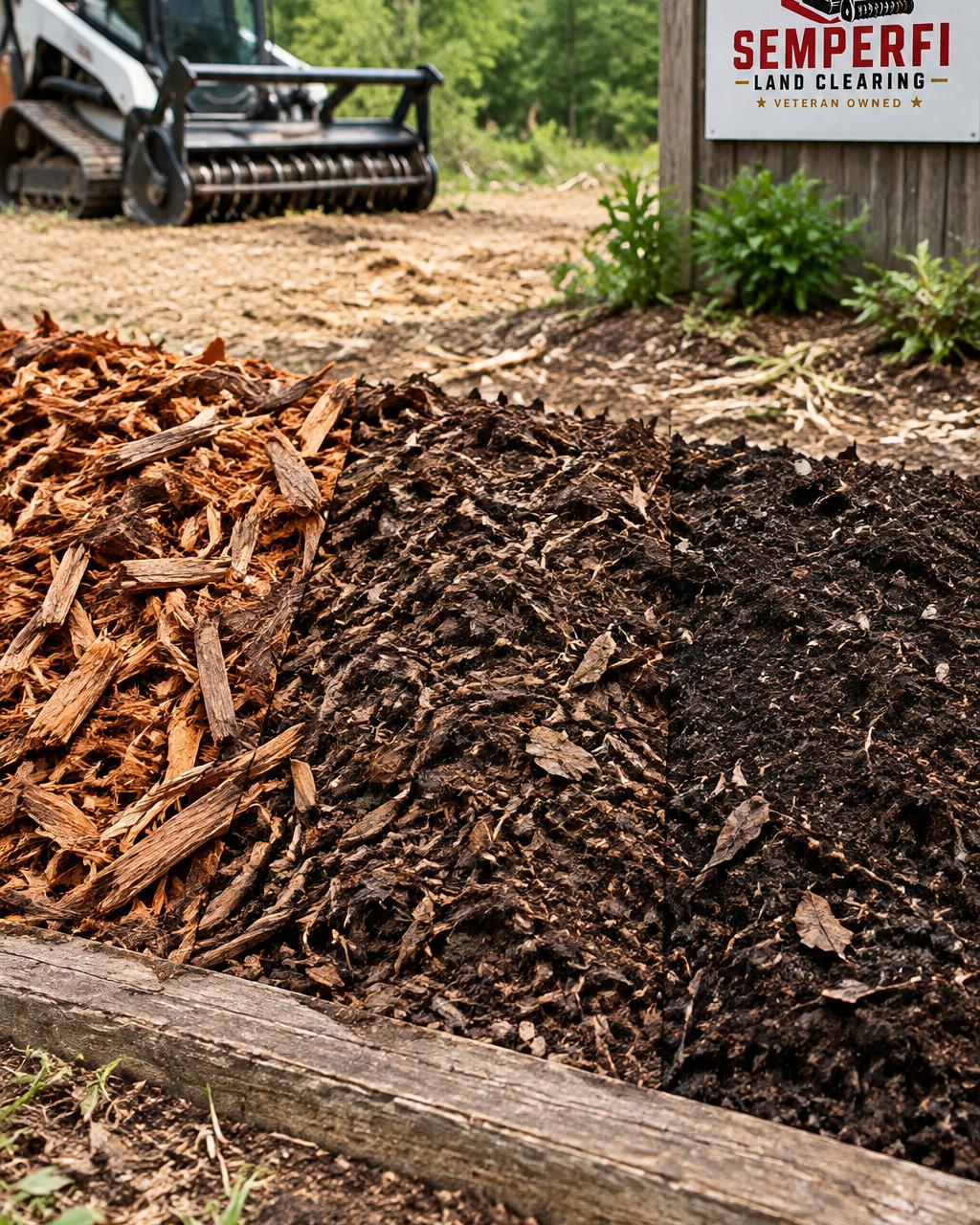
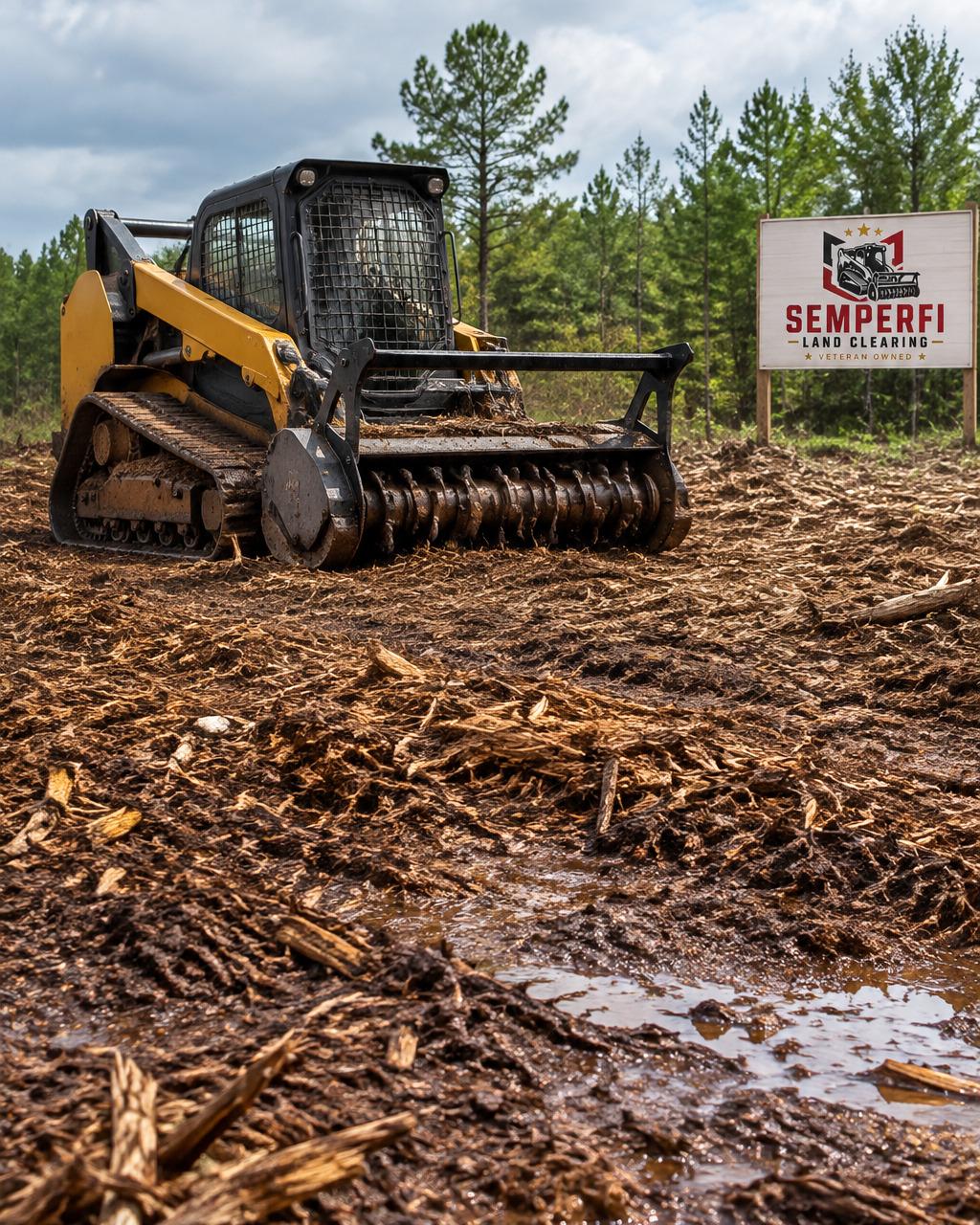
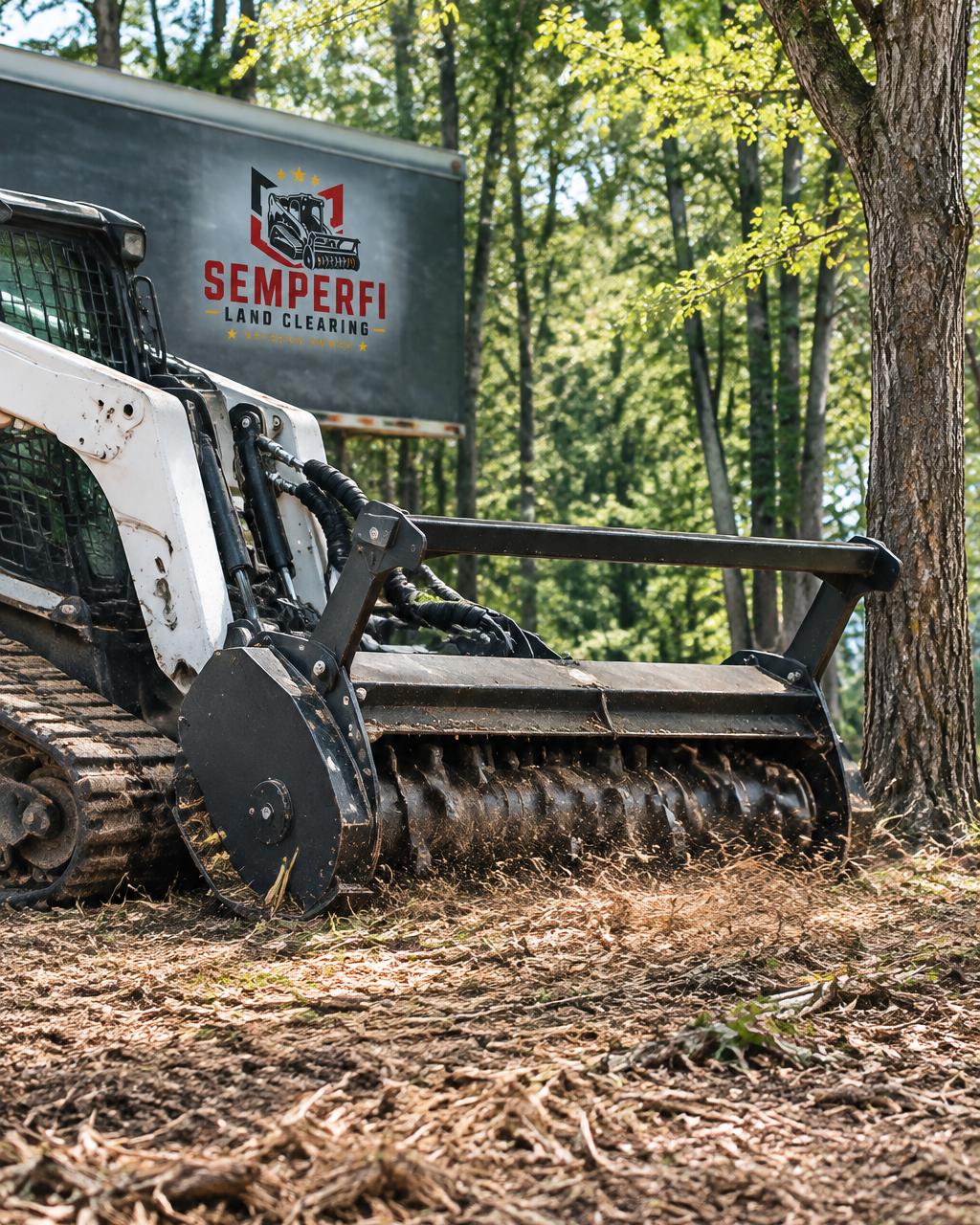
A tracked mulcher grinds brush, saplings, and understory woody vegetation into chips that stay on the ground as organic matter. The risk is never the mulch, it is the machine's path, cut depth, and how close the head comes to a trunk.
Hardwoods are less forgiving than pine: a wound a pine seals in a season can stay open on an oak for years. For the local service overview, cost per acre, and benefits, see forestry mulching in East Texas. See our breakdown of forestry mulching vs bulldozing.
How to Protect Trees During Land Clearing
Protecting trees during clearing comes down to marking a boundary before the machine starts and holding that line for the whole job. A free land assessment is a good opportunity to plan how trees will be protected before work begins.
- Walk the property and tag keepers. Mark every hardwood you want to save with flagging tape at eye level.
- Measure the root zone. Stake a circle around each keeper, sized to the canopy or wider for older trees.
- Set the cut line. Decide which brush comes out and which stays as a buffer.
- Brief the operator. Point out each marked tree and the no-drive zone around it.
- Work from the outside in. Clear away from the keepers so the machine never backs into one.
- Check the trunks after the pass. Look for bark damage while it is still fresh.
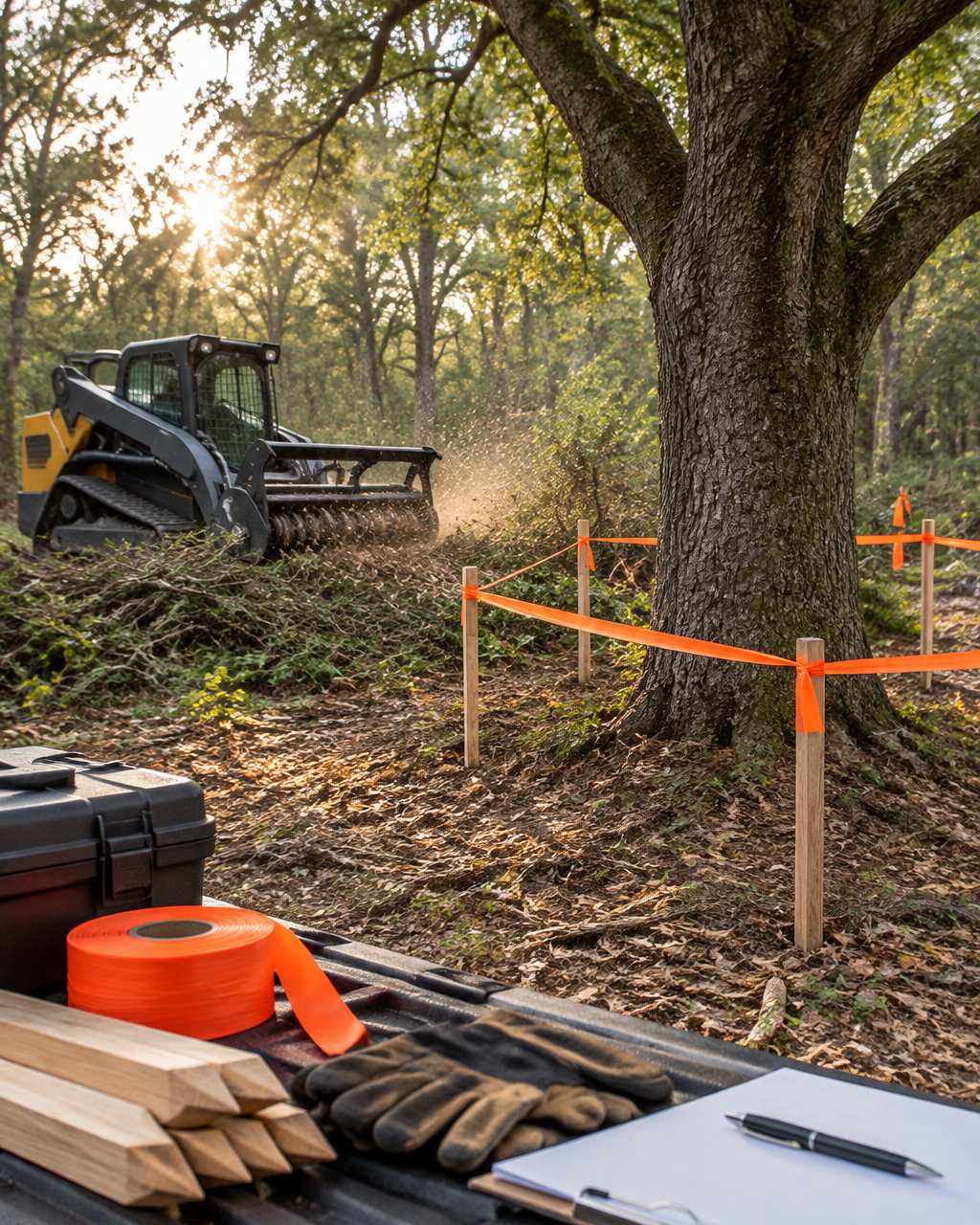
For a full walkthrough of shielding soil and roots while you clear, see our five steps to protect topsoil during land clearing.
Watch out: the most common mistake is marking trees but not the root zone. An operator can thread a machine between trunks and still crush the roots that feed them.
Follow these steps to keep existing hardwoods safe while the mulcher works.
| Step | What to do |
|---|---|
| 1 | Walk the property and tag keepers with flagging tape at eye level |
| 2 | Measure the root zone; stake a circle sized to the canopy or wider |
| 3 | Set the cut line: which brush comes out, which stays as buffer |
| 4 | Brief the operator on each marked tree and no-drive zone |
| 5 | Work from the outside in so the machine never backs into keepers |
| 6 | Check the trunks after the pass for fresh bark damage |
Forestry Mulching Tree Root Damage and Soil Compaction
Root damage from forestry mulching is rare when the machine stays off the root zone, but soil compaction is the quieter problem, repeated passes over wet ground squeeze out the air roots need to take up water.
The fix is mostly prevention: work when the ground is dry, keep heavy machinery on a single route, and leave the chip layer in place so it holds moisture and feeds nutrient cycling. If a slope has already been cleared and rain is coming, our guide on stopping soil erosion after clearing a slope covers the immediate fixes. Our guide to forestry mulching companies explains what to ask before you hire.
What about stump sprouting and regrowth?
Hardwoods sprout from cut stumps, the honest downside of mulching, and no machine solves it in one pass. Some regrowth from cut stems is possible, especially on soft hardwoods.
Does mulch depth affect tree health?
Yes. A thin, even chip layer protects soil and holds moisture, but piles deeper than a few inches against a trunk can trap damp and invite fungal growth. Chips should be kept away from trunks rather than mounded against them.
Frequently Asked Questions
Can forestry mulching damage the roots of mature hardwood trees?
It can if the machine runs over the critical root zone. Most hardwood roots sit in the top 12 inches of soil and spread well past the canopy edge. A mulcher's tracks or tires can shear shallow roots and compact the soil around them. The damage is avoidable: mark a no-go zone around each trunk, keep equipment off it, and cut only woody vegetation inside the protected area by hand. Ask your operator to walk the property and flag trees before any equipment starts.
What are the downsides of forestry mulching?
The main forestry mulching downsides are stump sprouting, soil disturbance, and limits on what the machine can reach. Cut hardwoods and many shrubs regrow from the root collar, so a single pass rarely ends regrowth. Wet ground compacts under heavy tracks, and slopes or tight spaces may be off limits. Mulching also leaves a mat of chips that can smother small plants you wanted to keep. A follow-up treatment plan matters as much as the first pass.
How far should forestry mulching equipment stay from a tree trunk?
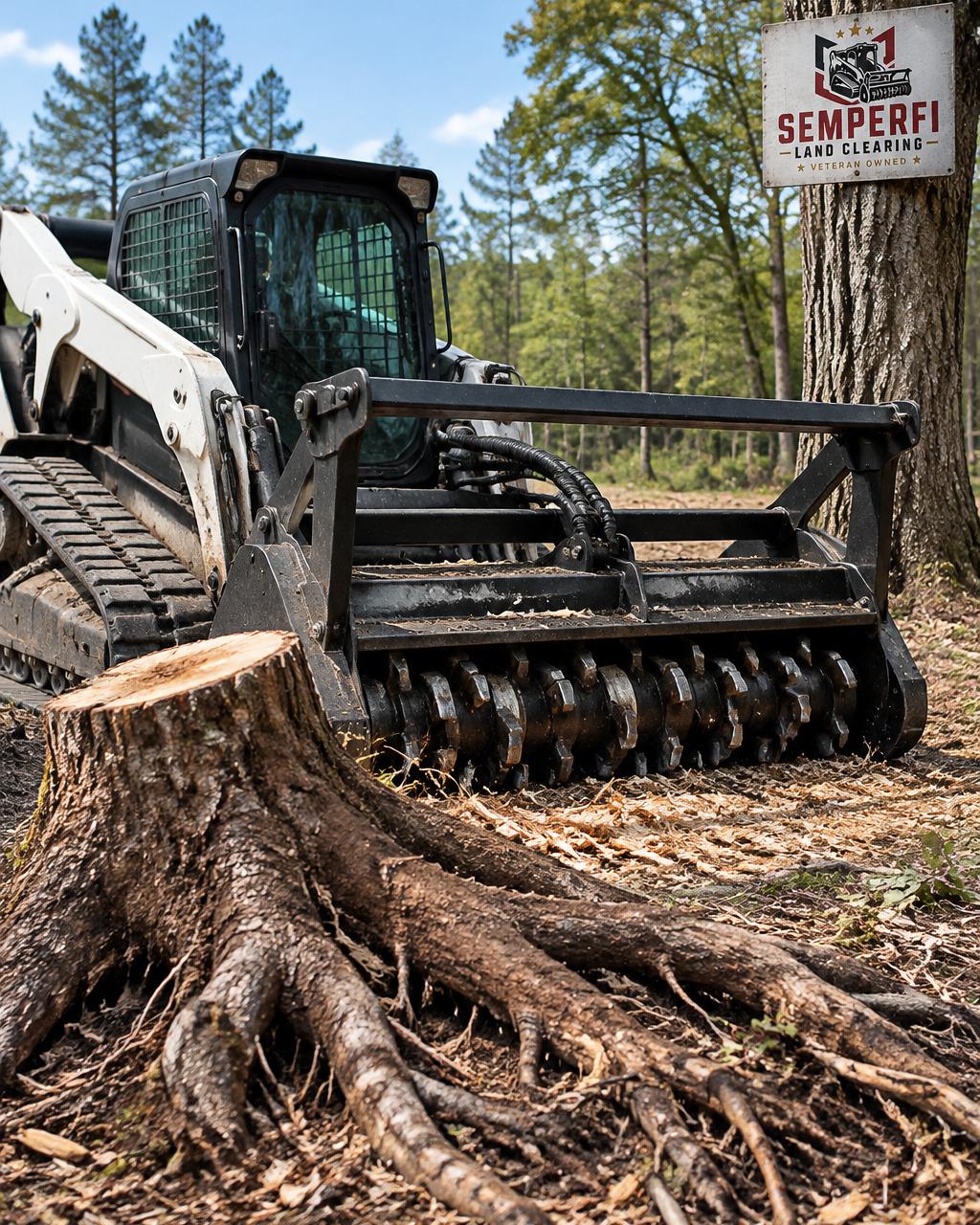
A practical rule is to stay outside the critical root zone, which arborists often define as a circle with a radius of about 1 foot per inch of trunk diameter. A 20-inch hardwood gets roughly a 20-foot radius of protection. Where space is tight, keep at least 10 feet clear and never let the mulcher head strike the trunk, since bark damage opens the tree to insects and fungal growth. Mark the boundary with flags so the operator can see it.
Hardwood trees survive clearing when the work is planned around them, not through them. If you have acreage with trees worth keeping, start with a free land assessment from SemperFi Land Clearing LLC. We are veteran-owned, we clear fence lines and overgrowth with precision, and we build the protection plan before a machine moves. Get an estimate and clear your land without losing the trees you want to keep.