 how-to
5 Steps to Protect Topsoil During Land Clearing
Last Updated: October 25, 2026
Quick Summary
Protecting topsoil during land clearing starts with measuring depth and testing quality before equipment arrives, then selecting a clearing method like forestry mulching or selective clearing that minimizes soil disturbance. Install erosion controls such as silt fences and straw wattles before clearing begins, and establish ground cover quickly afterward to prevent sediment runoff.
- Most residential properties have 4-8 inches of usable topsoil that should be measured before clearing begins
- Forestry mulching chips vegetation and leaves it on-site as mulch, protecting soil from erosion while adding organic matter
- Silt fences, straw wattles, and hay bales trap sediment and slow water runoff on slopes during clearing
- A single storm can wash away months of soil development if erosion controls are not installed before clearing
- Sediment runoff can violate local stormwater regulations, so erosion-control measures must be documented and maintained
Table of Contents
- Step 1: Assess Your Topsoil Depth and Soil Integrity Before Clearing
- Step 2: Plan Your Clearing Method to Minimize Soil Disturbance
- Soil Erosion Prevention During Land Clearing
- Frequently Asked Questions
Step 1: Assess Your Topsoil Depth and Soil Integrity Before Clearing
Protecting topsoil during land clearing starts with knowing what you have. Before equipment arrives, measure topsoil depth and test quality, most residential properties have 4-8 inches of usable topsoil. Dig a small hole, measure the dark layer's depth, and note where it transitions to lighter subsoil; for detailed results, contact your local agricultural extension office.
Step 2: Plan Your Clearing Method to Minimize Soil Disturbance
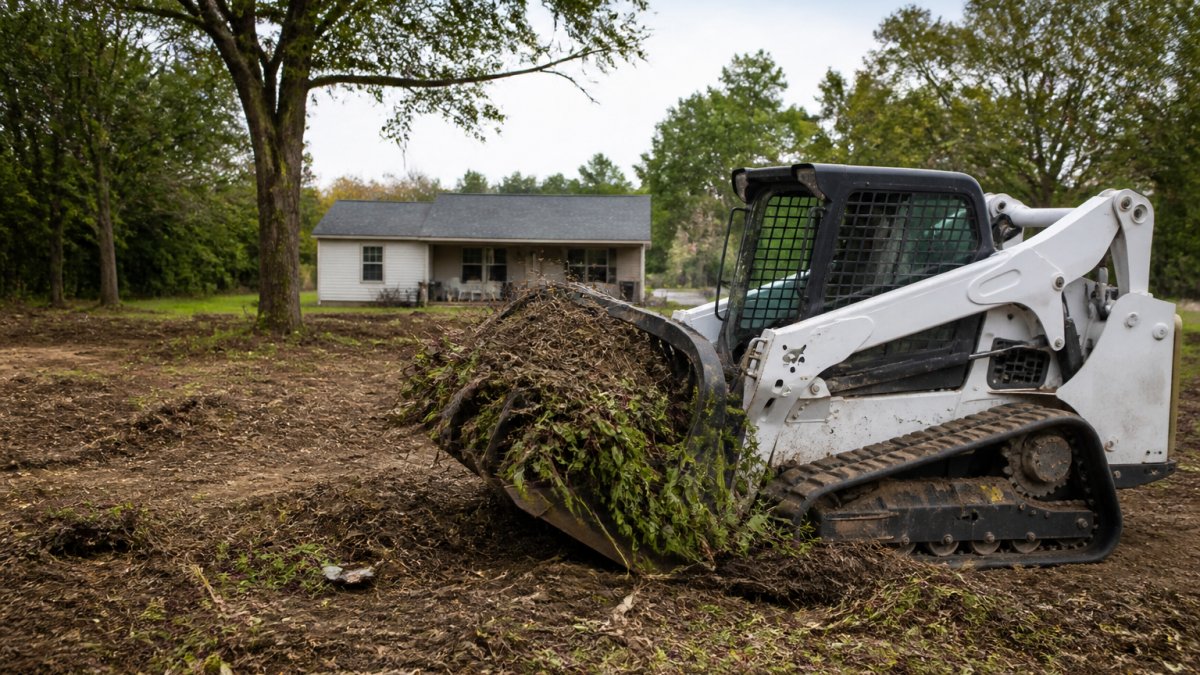
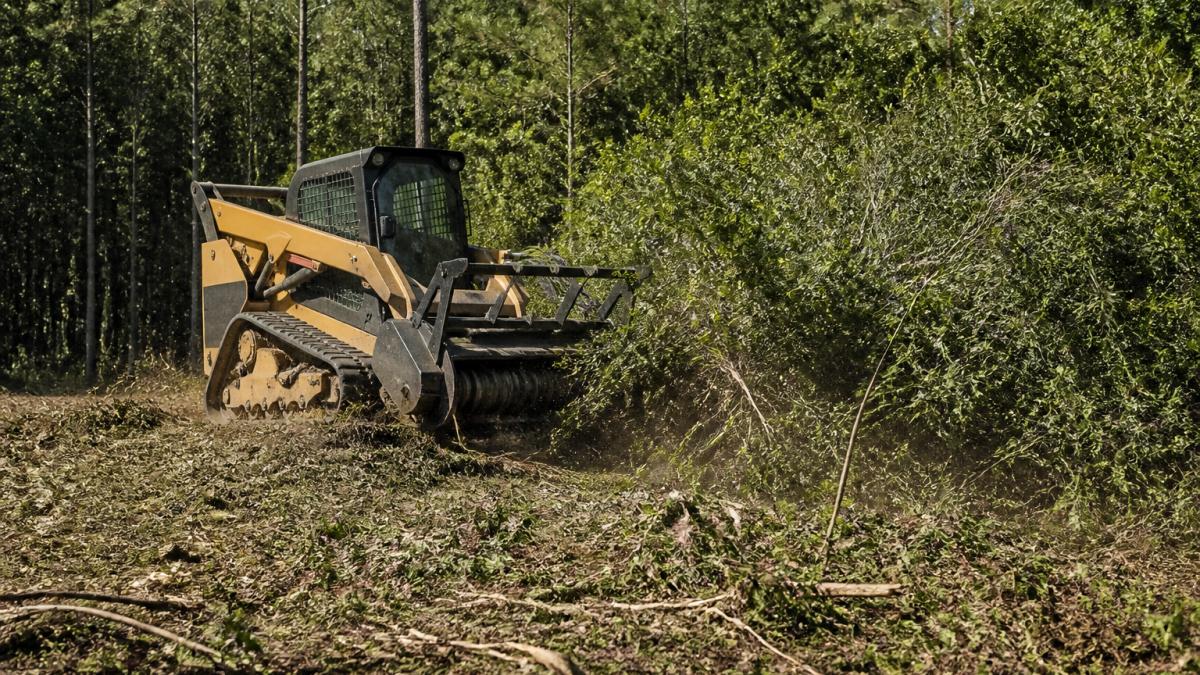
Your clearing method determines how much damage happens to soil below: heavy equipment causes compaction, and selective clearing preserves more topsoil than clear cutting. Gentle clearing keeps equipment on designated paths and avoids repeated passes, while clear cutting is fast but disturbs soil significantly, use it only when major grading or construction follows. Forestry mulching offers a middle ground: equipment chips vegetation and leaves it on-site as mulch, protecting bare soil from rain and erosion while adding organic matter. Learn how to prepare land for construction step by step, from site assessment and permits to grading and drainage to see how clearing fits your project timeline.
Soil Erosion Prevention During Land Clearing
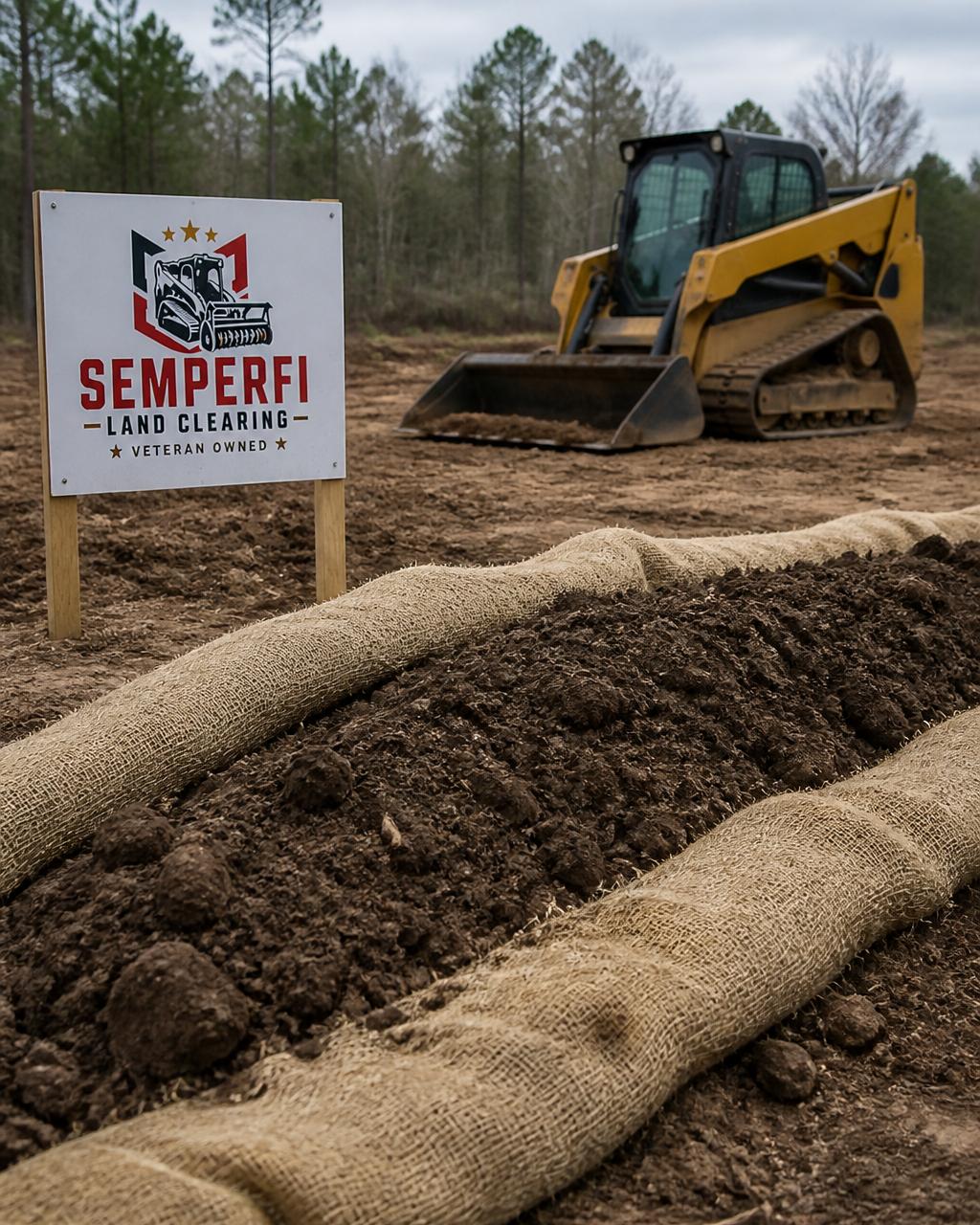
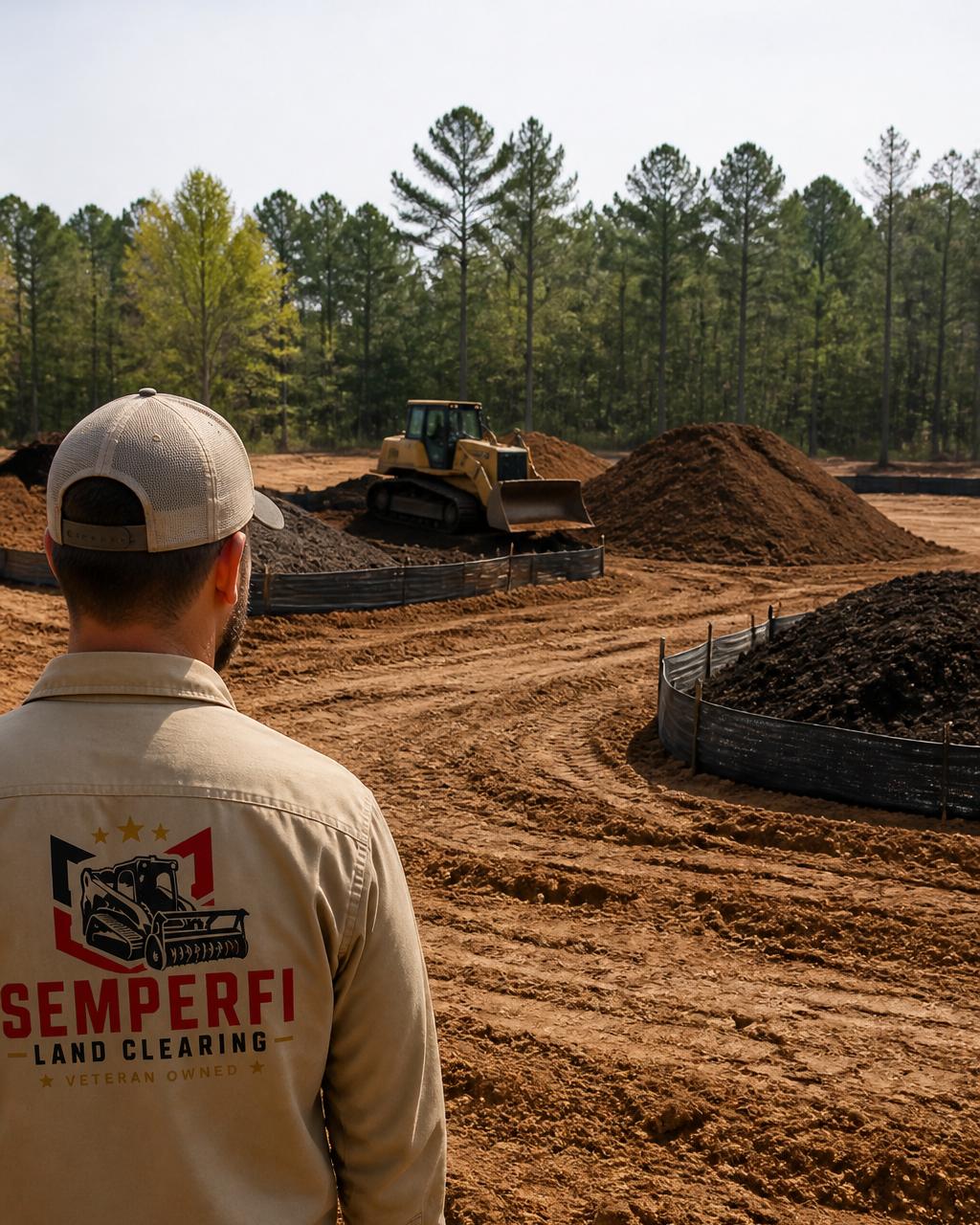
Soil erosion prevention during land clearing requires action before, during, and after vegetation removal, a single storm can wash away months of soil development. Install erosion controls before clearing begins: silt fences trap sediment runoff, straw wattles slow water on slopes, and hay bales suit smaller areas. During clearing, phase work to minimize soil exposure, and after clearing, establish ground cover quickly with mulch, temporary seed, or landscaping fabric. Learn how to manage property drainage after clearing trees to assess runoff, prevent erosion, and install drainage solutions that protect your soil. Learn land clearing soil erosion prevention with 7 proven steps to protect topsoil, manage runoff, and stop sediment from leaving your site for methods tailored to your conditions. Sediment runoff can violate local stormwater regulations, so document your erosion-control measures and maintain them throughout the project.
| Prevention Method | Best For | Maintenance Needed |
|---|---|---|
| Silt fence | Slopes and drainage paths | Check weekly, replace after heavy rain |
| Straw wattle | Perimeter protection | Inspect monthly, replace if degraded |
| Hay bales | Temporary barriers | Move as needed, remove after project |
Protecting topsoil during land clearing isn't optional, it's the foundation for whatever comes next. At SemperFi Land Clearing LLC, we assess every property's soil conditions and plan clearing methods that preserve what matters most. Get an estimate and learn how our forestry mulching and selective clearing protect your topsoil while removing unwanted vegetation.
Frequently Asked Questions
What is the best way to protect topsoil during land clearing?
Protecting topsoil during land clearing begins with a soil assessment to identify depth and quality, followed by selective clearing that avoids unnecessary soil disturbance. Install silt fences and straw wattles to contain sediment runoff, and use erosion-control mulch on exposed areas. Finally, stabilize the site with vegetation or mulch to prevent erosion and restore soil fertility.
How does forestry mulching help prevent soil erosion after land clearing?
Forestry mulching benefits for soil include immediate ground coverage that reduces erosion from heavy rain and stormwater runoff. The mulch layer protects exposed soil from compaction and sediment loss while gradually breaking down to improve soil fertility. Unlike complete clearing, which leaves bare soil vulnerable, mulching retains organic matter on-site, reducing both erosion and the cost of replacing topsoil later. This method works especially well on slopes where sediment runoff is a concern.
Can heavy equipment really damage my topsoil and soil fertility?
Yes, equipment traffic compacts soil and destroys soil integrity if not managed carefully. To protect your land, restrict equipment to designated paths, avoid working when soil is saturated, and plan phased clearing to minimize disturbance. Stripping and stockpiling topsoil before equipment enters protects the most fertile layer. A free land assessment can identify the best clearing method for your soil type and slope, ensuring equipment use preserves soil health rather than creating a muddy, unproductive site.