 how-to
How Long Does Property Cleanup Take Before Listing
Last Updated: October 23, 2026
Quick Summary
How long does property cleanup take before listing depends on acreage, vegetation density, equipment access, and weather, ranging from 1-3 days for a quarter-acre of light brush to 2-4 weeks for 3+ acres of heavy overgrowth with small trees. Planning and hazard assessment before work starts are critical to meeting your listing deadline safely.
- Light brush on a quarter-acre takes 1-3 working days with hand tools or a walk-behind brush cutter.
- Dense thickets covering 1-2 acres require 1-2 weeks with a compact tractor and brush mower.
- Debris handling adds 25-50% to cutting time unless the method mulches material in place.
- Work backward from your listing date: subtract debris handling time and a weather buffer to see what's left for cutting.
- Professional crews are often cheaper on total project cost than DIY rental once labor, disposal, and delay risk are counted for acreage over one acre.
Table of Contents
- How Long Does Property Cleanup Take Before Listing
- Brush Clearing Timeline: What Affects Your Project Duration
- How to Clear Brush and Small Trees Efficiently
- Cost of Brush Removal and Budget Planning
- Property Cleanup Checklist Before Listing
- Soil Health and Environmental Considerations
- Preventing Regrowth After Clearing
- Frequently Asked Questions
How Long Does Property Cleanup Take Before Listing
Understanding how long does property cleanup take before listing isn't one-size-fits-all.
At SemperFi Land Clearing LLC, we've helped property owners prepare their land for sale. The biggest variable isn't effort, it's planning: owners who assess first and choose the right method finish faster.
This guide covers realistic timelines, what affects how long the work takes, the best methods for small acreage, costs, and how to prevent regrowth.
Brush Clearing Timeline: What Affects Your Project Duration
How long property cleanup takes before listing comes down to a few compounding variables. Think in machine-hours or labor-hours the site requires, and how many you can schedule per week.
The four variables that set your timeline
1. Acreage and shape. A square, open quarter-acre clears faster than a long, narrow one wrapped around a house, fence, and septic field, since equipment repositions constantly.
**2.
3. Equipment access and terrain. A brush mower needs a wide enough gate and stable ground.
4. Weather and season. Wet spring ground ruts and compacts; frozen winter ground can speed access but limits cutting.
Realistic duration ranges by scenario
These are working ranges assuming reasonable access and normal weather, planning estimates, not quotes.
- Light brush, quarter-acre, hand tools or a walk-behind brush cutter: 1-3 working days for one person.
- Moderate brush, half-acre, brush mower or compact tractor: 3-5 working days, including debris handling.
- Dense thickets, 1-2 acres, compact tractor with brush mower plus chainsaw work: 1-2 weeks.
Add time for debris: cutting is the fast part; piling, chipping, mulching, or hauling is where schedules slip. Debris handling adds 25-50% to cutting time unless the method mulches in place.
A simple way to build your own timeline
- Walk and map the property. Sketch zones by vegetation type and density; note gates, slopes, wet spots, and possible buried debris.
- Assign a method per zone. Hand tools for tight spots, brush cutter for undergrowth, brush mower for open dense growth, chainsaw plus tractor for woody material.
- Estimate hours per zone using the ranges above, then add debris time.
- Divide by available crew and equipment days. One person with hand tools is roughly one labor-day per quarter-acre of light brush.
- Add a weather buffer of one to two weeks for a spring or fall listing.
Safety and hazard assessment before the clock starts
Timeline estimates are worthless if someone gets hurt or equipment breaks down. Before cutting:
- Walk the site for hazards: hidden wire, rebar, old wells, leaning trees, dead overhead limbs, and wasp nests.
- Dress for the work: chainsaw chaps, eye and ear protection, a hard hat where limbs are a risk, and sturdy boots. Brush cutters throw debris, face shields and leg protection matter.
- Respect safe distances. Keep bystanders clear, and never cut alone on remote acreage without a check-in plan.
A half-day of hazard assessment routinely saves a week of delays, and it's the step most do-it-yourself timelines skip.
How to Clear Brush and Small Trees Efficiently
The method you choose determines how long the work takes and how your property looks afterward.
Hand tools versus mechanized clearing
Hand tools, pruning shears, chainsaws, and cutting saws, give you precision, controlling exactly what gets removed. They work best for small acreage, fence line clearing, or preserving specific trees.
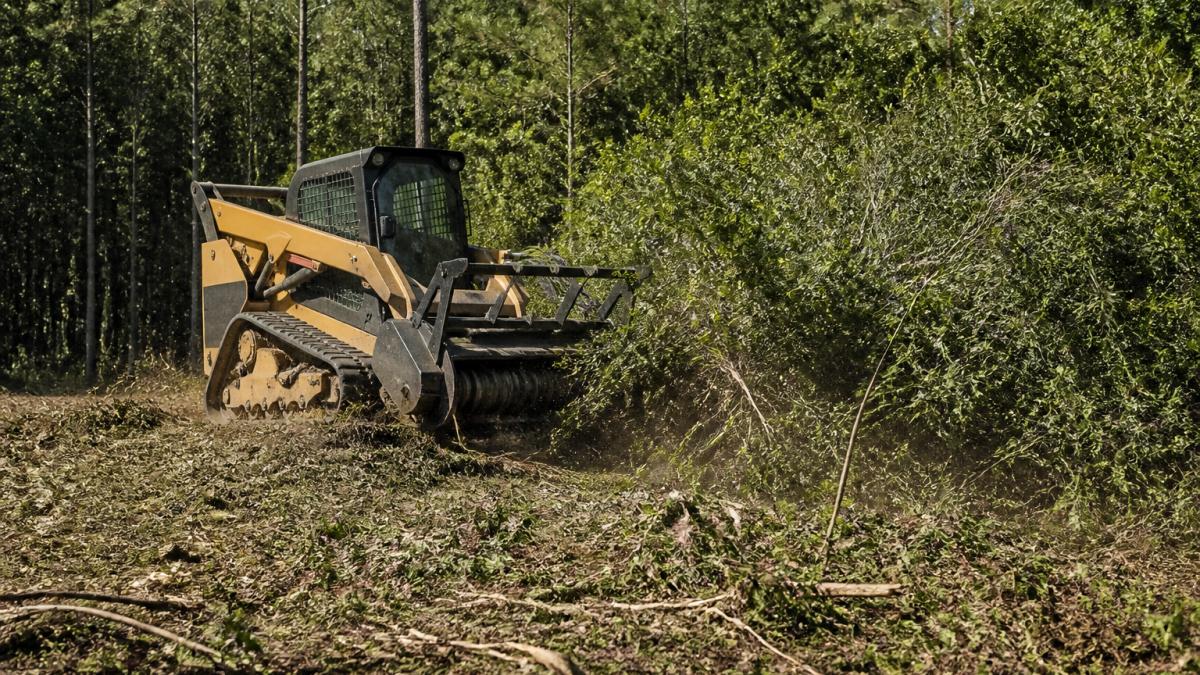
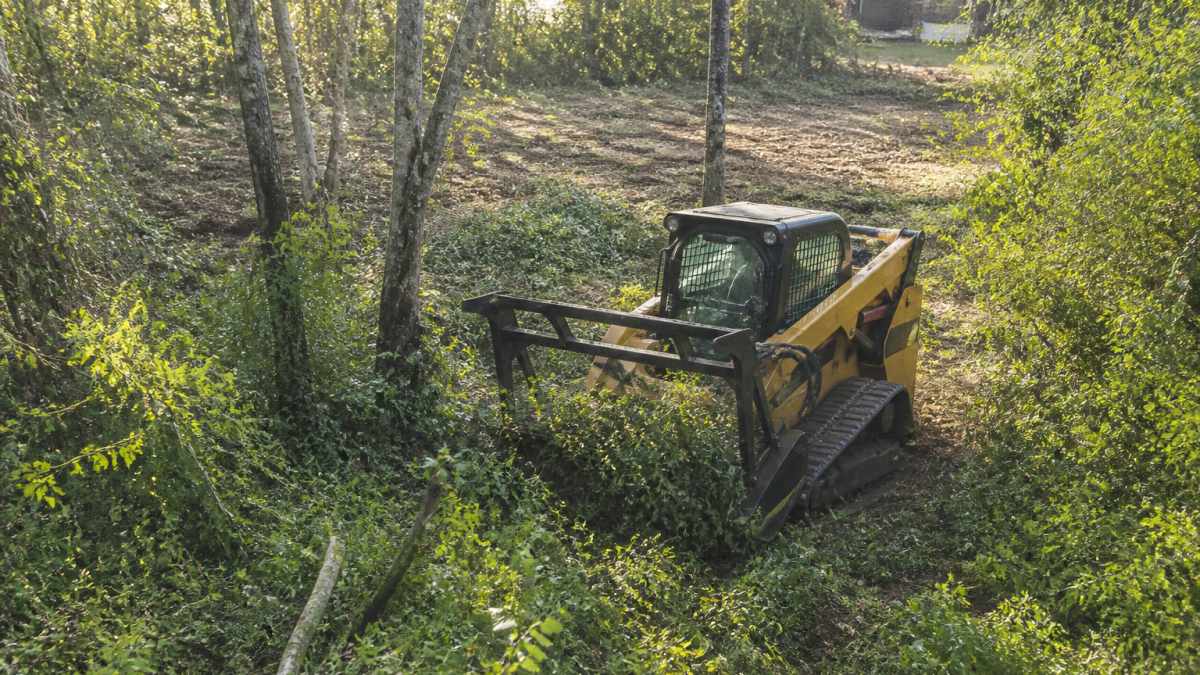
Mechanized clearing uses brush mowers, compact tractors, and mini excavators to cover more ground faster, a brush mower can clear an acre of dense brush in a day or two. The trade-off is less precision.
Brush cutters and brush mowers for dense growth
A brush cutter is a handheld tool for dense vegetation, undergrowth, vines, and thin saplings; one person can clear a quarter-acre in a day. A brush mower cuts and mulches vegetation, leaves the ground cleaner, and handles an acre of dense brush in 1-2 days. Both work best on flat terrain; steep slopes or rocky ground slow progress.
Chainsaws and compact tractors for larger vegetation
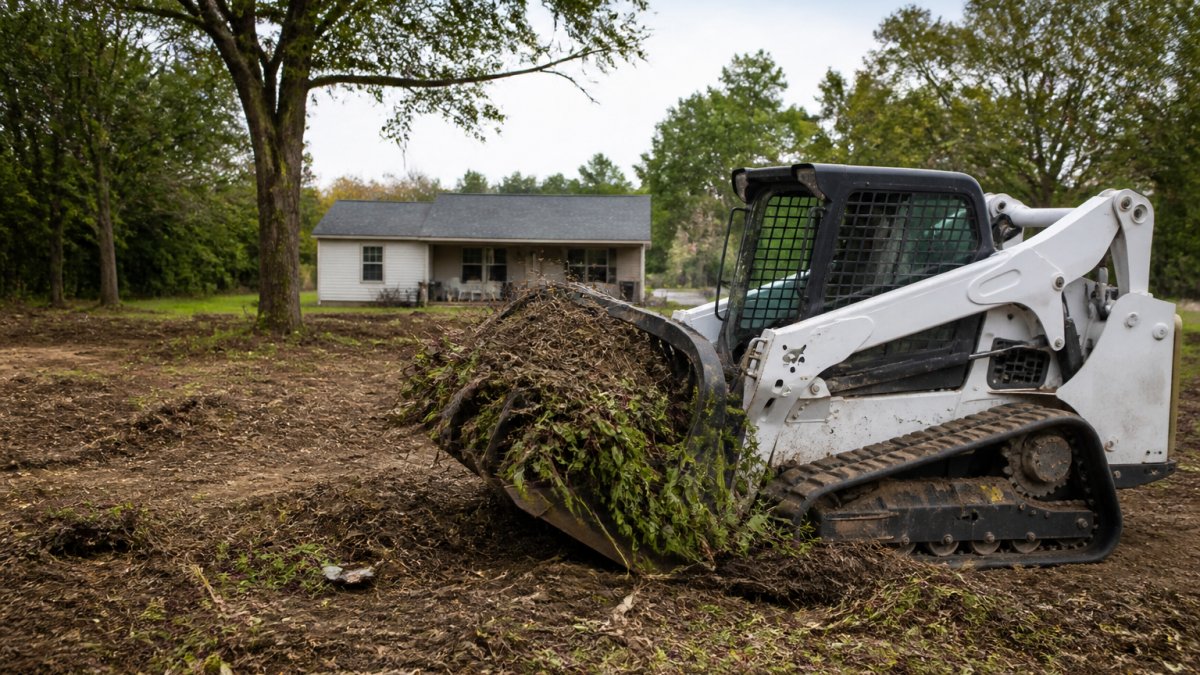
Chainsaws cut woody growth and small trees, though a chainsaw alone means cutting then removing debris. A compact tractor with a bucket speeds things up by grabbing cut vegetation and moving it to a pile, it can clear small trees and brush from a half-acre in 2-3 days. Mini excavators handle steeper terrain and tighter spaces.
Cost of Brush Removal and Budget Planning
Most articles say costs "depend on the property" and stop there, not useful when deciding whether to rent a brush mower, buy a used chainsaw, or hire a crew. Here's a comparison framework.
What actually drives the price
- Acreage and density. Dense brush and saplings cost more per acre than light grass and weeds due to more machine passes and debris handling.
- Method. Hand cutting is cheap per hour and expensive per acre; mechanized clearing is the reverse. The crossover is usually around a half-acre of moderate-to-dense growth.
- Debris disposal. On-site piles are cheapest; chipping or mulching in place avoids hauling; off-site hauling adds trucking and disposal fees.
Method-by-method cost and labor comparison
Get local quotes, prices vary by region and season.
| Method | Typical cost basis | Rough range | Labor profile | Best for |
|---|---|---|---|---|
| Hand tools (loppers, saws, clearing saw) | Your time, or day labor | $0-$500 in tools; day labor commonly $150-$300/day per worker | Slow per acre; high control | Quarter-acre or less, fence lines, precision work |
| Walk-behind or handheld brush cutter | Rental or purchase | Rental commonly $50-$100/day; purchase $300-$1,500 | One operator, moderate pace | Undergrowth, vines, thin saplings |
| Brush mower (tractor-mounted or tow-behind) | Rental or purchase | Rental commonly $150-$400/day; purchase $2,000-$8,000+ | Fast on open ground | Half-acre to several acres of dense brush |
| Compact tractor with bucket | Rental or purchase | Rental commonly $200-$500/day; purchase $15,000-$40,000+ | Fast, handles debris too | Moving cut material, small trees, rough terrain |
| Chainsaw | Rental or purchase | Rental commonly $50-$100/day; purchase $200-$1,000+ | Slow alone; essential for woody growth | Saplings and small trees |
| Professional clearing crew | Per acre or per project | Commonly several hundred to a few thousand dollars per acre depending on density and debris | Fastest; includes equipment and disposal | Anything over about an acre, or tight deadlines |
| Forestry mulching service | Per acre or per hour | Commonly $1,000-$3,000+ per acre for dense growth; hourly rates often $150-$400 | Fast; mulch stays on-site | Dense brush, slopes, erosion-sensitive sites |
Rental vs. purchase vs. hire: how to decide
- Rent for one-time jobs you can do safely, like a half-acre of brush and a weekend of mowing. Factor in pickup, fuel, and the learning curve.
- Buy used when you'll use the tool repeatedly, such as on a small farm or a property you'll maintain after the sale.
- Hire a crew when acreage, density, terrain, or deadline exceeds what you can safely handle. Professional pricing includes equipment, labor, insurance, and disposal.
Budget line items people forget
- Debris disposal or dump fees
- Stump grinding
- Erosion control (seed, straw, silt fence) after clearing
- Equipment transport and fuel
Getting an accurate estimate
The only reliable number comes from someone walking the property. Photos and phone calls miss density, access, and hazards. Ask for a written scope that separates cutting, debris handling, stump work, and restoration so you can compare bids.
The U.S. Environmental Protection Agency's guidance on land management and soil health is a useful reference for how site preparation affects long-term property value and why erosion control belongs in the budget, not the afterthought.
Property Cleanup Checklist Before Listing
A structured approach saves time and prevents missed details. Follow this checklist to prepare your property for buyers.
Assessment and planning phase
Walk your entire property and note dense brush, small trees, undergrowth, vines, debris piles, old equipment, or structures needing removal. Measure acreage if unknown, and identify safe equipment access points. Decide what stays and what goes, keep mature trees but remove saplings, clear fence lines but leave the main area wooded, and document these decisions before work starts.
Clearing, debris removal, and site restoration
Once planned, clearing begins: hand tools for small areas and precision work, mechanized equipment for larger acreage. Debris goes to piles or gets mulched on-site, depending on soil, budget, and timeline. After clearing, smooth rough ground and add erosion control to protect topsoil. Landscaping alternatives for property staging can boost curb appeal without full landscaping costs. For buyers, a clean property with good sight lines looks larger and more valuable.
Soil Health and Environmental Considerations
Heavy equipment can compact soil and damage topsoil, letting erosion wash topsoil away, issues that take years to recover from. Forestry mulching is a better approach: equipment grinds vegetation into mulch that stays on-site, preventing erosion, retaining moisture, and adding organic matter. For steep slopes or sensitive areas, it's the best choice.
Preventing Regrowth After Clearing
Clearing is only half the job: without prevention, brush and saplings grow back within months, hurting resale value.
Preventing regrowth after land clearing covers proven strategies specific to land clearing.
Preparing your property for listing takes planning, but the right approach gets it done on schedule.
SemperFi Land Clearing LLC offers free land assessments that give you an accurate timeline and cost estimate before work begins.
Frequently Asked Questions
How long does it take to clear an overgrown property?
Clearing time depends on acreage, vegetation density, and equipment used. A quarter-acre of light brush may take 1-2 days with a brush cutter, while 3 acres of dense thickets with saplings could require 2-3 weeks. Professional crews with forestry mulching equipment can often complete larger jobs faster than hand tools alone. A free land assessment helps determine your specific timeline.
What factors affect the time needed to clear brush and small trees?
Key factors include acreage size, vegetation thickness (dense brush versus sparse undergrowth), presence of vines and saplings, terrain accessibility, equipment available, weather conditions, and debris disposal method. Steep slopes or waterlogged soil slow progress. Dense thickets with woody growth take longer than light overgrowth. Equipment rental availability and contractor scheduling also affect overall project duration.
Should I clear land before listing it for sale?
Yes, clearing overgrown property improves curb appeal, reveals the true lot size, and increases buyer confidence. Potential buyers want to see the land's potential without dense brush obscuring views or fence lines. Cleared land also shows better in photos and during showings. However, avoid over-clearing; leave mature trees and natural features that add value. Strategic clearing highlights property assets while maintaining visual appeal.
What's the average cost of brush removal?
Brush removal costs vary based on acreage, vegetation density, equipment needed, and disposal method. Factors like equipment rental, labor hours, debris handling, and site restoration all influence pricing. Get a free assessment from a professional to receive an accurate estimate for your specific property. Pricing depends on quantity, dates, and delivery.