 how-to
How to Clear Land for Better Street View
Table of Contents
- Why Street View Matters for Your Property
- Assess Your Land Before You Start Clearing
- How to Clear Overgrown Land Effectively
- Forestry Mulching for Property Visibility
- Property Line Clearing: Know Your Boundaries
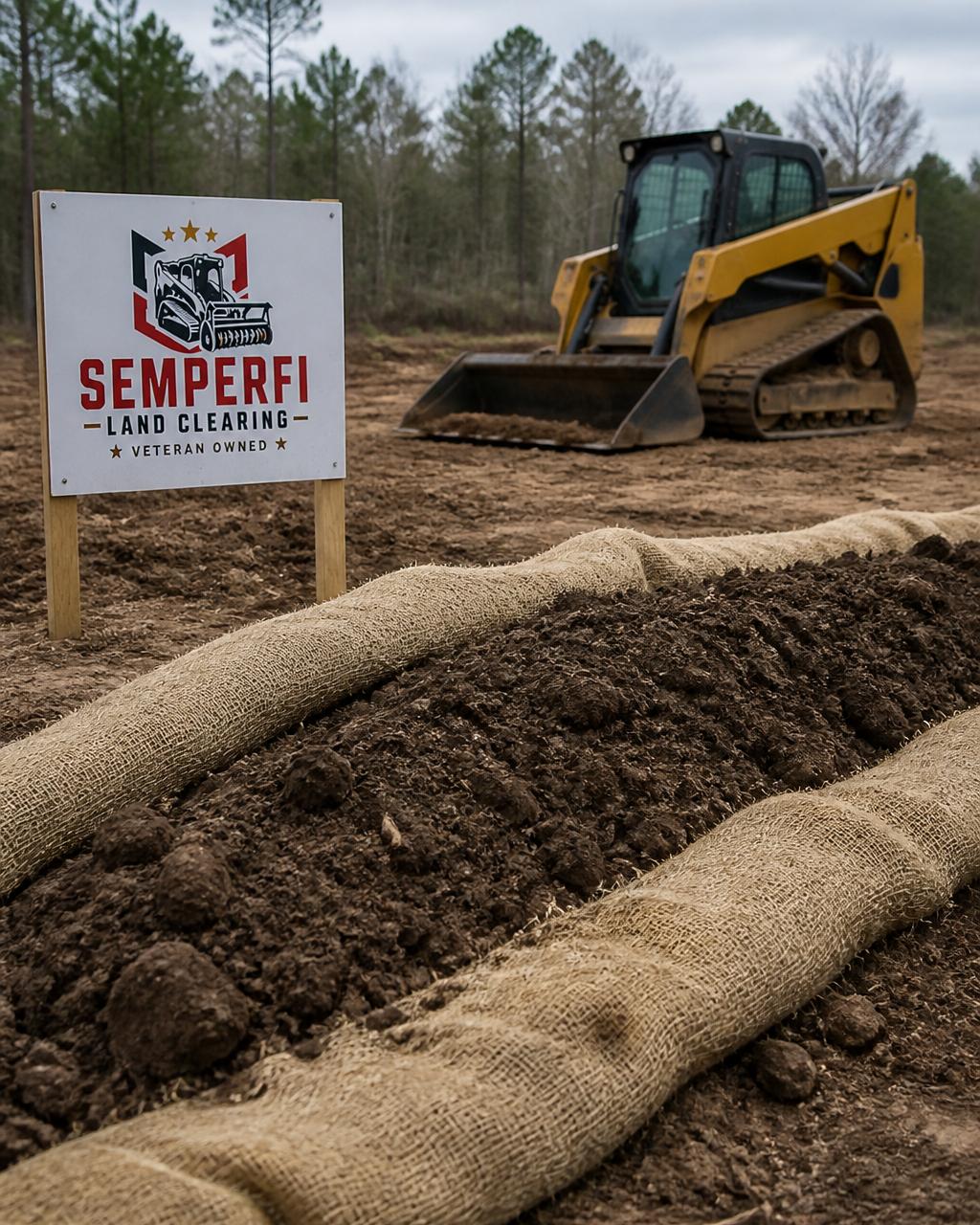
- Land Clearing Erosion Control Practices
- Timeline, Costs, and What to Expect
- Preventing Regrowth After Clearing
- Frequently Asked Questions
Last Updated: October 21, 2026
Why Street View Matters for Your Property
What buyers and visitors see in the first 30 seconds shapes their impression, which is why understanding how to clear land for better street view matters so much.
A clear, visible property signals good maintenance, whether you're selling, leasing, or protecting your investment.
Visibility affects real estate value, hunting appeal, and operational efficiency: visible fence lines make pastures look managed, clear boundaries improve security, and removed overgrowth reveals the land's potential.
Assess Your Land Before You Start Clearing
Before bringing in equipment, get a clear picture of what you're working with. Rushing into clearing without assessment leads to costly mistakes.
Identify property boundaries and obstacles
Walk your property line and mark where your land ends and your neighbor's begins, noting fences, utility lines, water features, and structures to preserve.
Document what's actually yours to clear, owners often clear land they don't own or damage buried utilities.
Note natural obstacles: rock outcrops, mature trees worth preserving, drainage patterns or wet areas, slopes that affect equipment access, and existing structures.
Evaluate overgrowth severity and vegetation type
Not all overgrowth is the same, thick brush, dense saplings, and tangled vines each need different methods, which determines your approach and timeline.
Walk the densest areas: can you see more than 10 feet ahead? Is it solid brush, small trees, or a mix?
Vegetation types matter for clearing strategy:
- Thick brush and small trees: Forestry mulching works well
- Mature trees mixed with overgrowth: Selective clearing preserves valuable timber
- Dense vines and climbing growth: Requires hand work before equipment
Severe overgrowth blocking sight lines needs aggressive clearing; light fence-line growth may need only strategic trimming. The difference affects cost and timeline significantly.
How to Clear Overgrown Land Effectively
Effective clearing balances speed, cost, and results. The method you choose determines how quickly you see improvement and how long results last.
Choose the right clearing method for your situation
A quarter-acre fence line needs a different strategy than three acres of thick brush.
Hand clearing suits small areas, sensitive spots near structures, or preserving specific plants, slower but precise.
Mowing and mulching handles lighter overgrowth but struggles with thick brush or small trees.
Combination approach clears heavy areas with equipment, then hand-finishes sensitive zones.
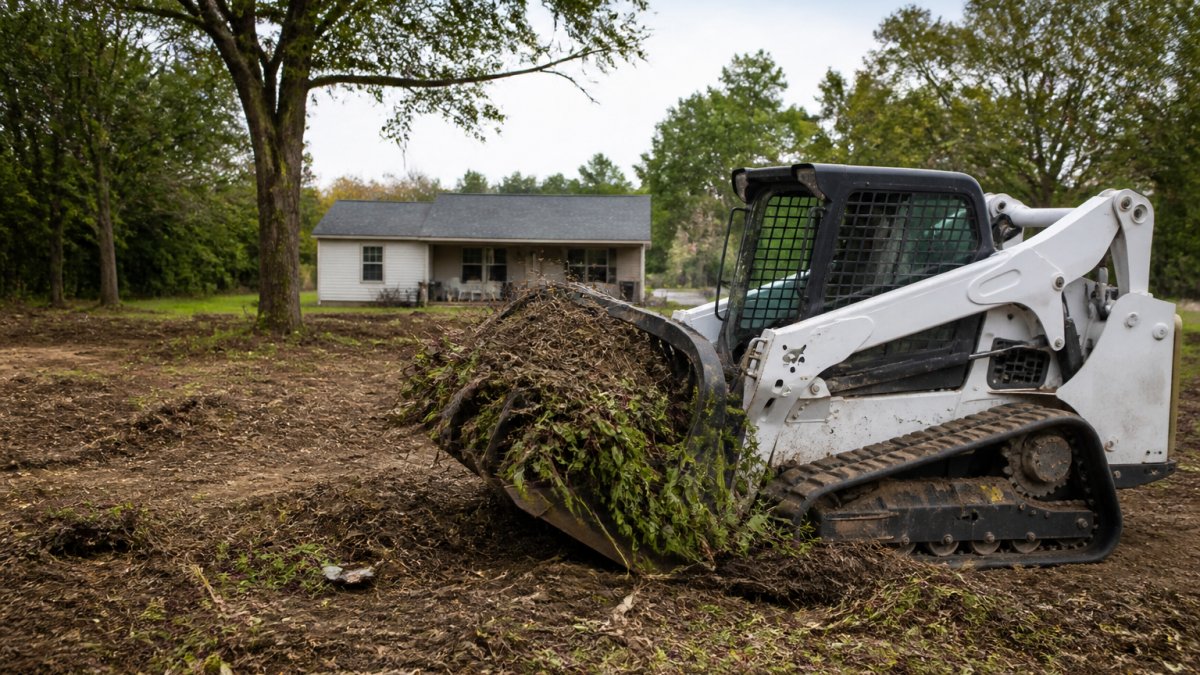
Remove brush, small trees, and dense vegetation
Proper technique removes overgrowth while protecting what you want to keep.
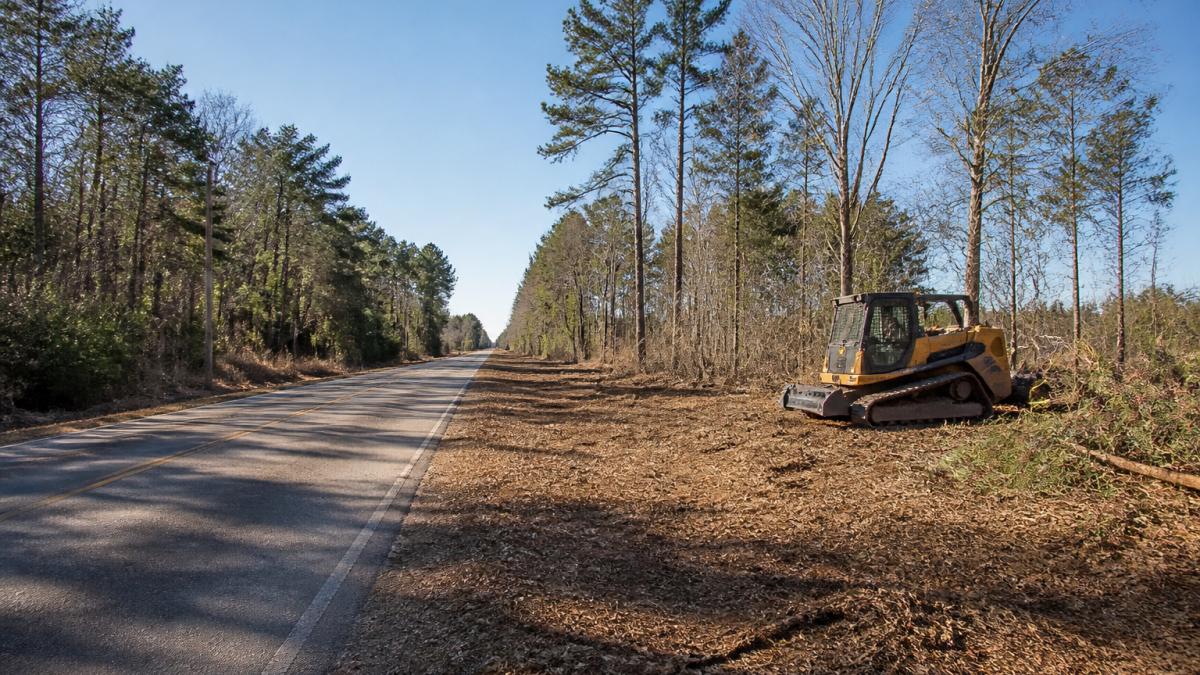
Start from the perimeter and work inward, clearing sight lines first, that's what people see from the road.
For equipment-based clearing:
- Make multiple passes if vegetation is extremely dense
- Work in straight lines for efficiency
- Leave buffer zones around trees you're keeping
For hand clearing:
- Cut vegetation at ground level when possible
- Remove cut material to prevent regrowth from stumps
- Dispose of material properly or chip it for mulch
The goal is removing overgrowth that blocks street view, not sterilizing the land, cleared, visible property, not bare dirt.
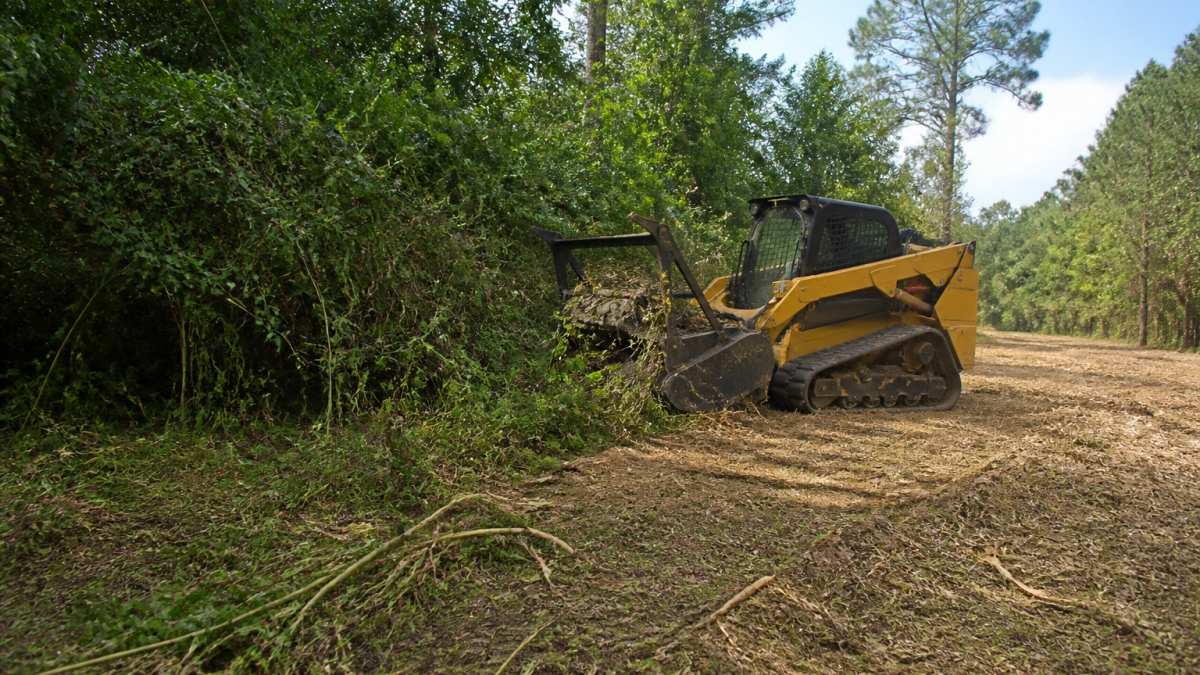
Forestry Mulching for Property Visibility
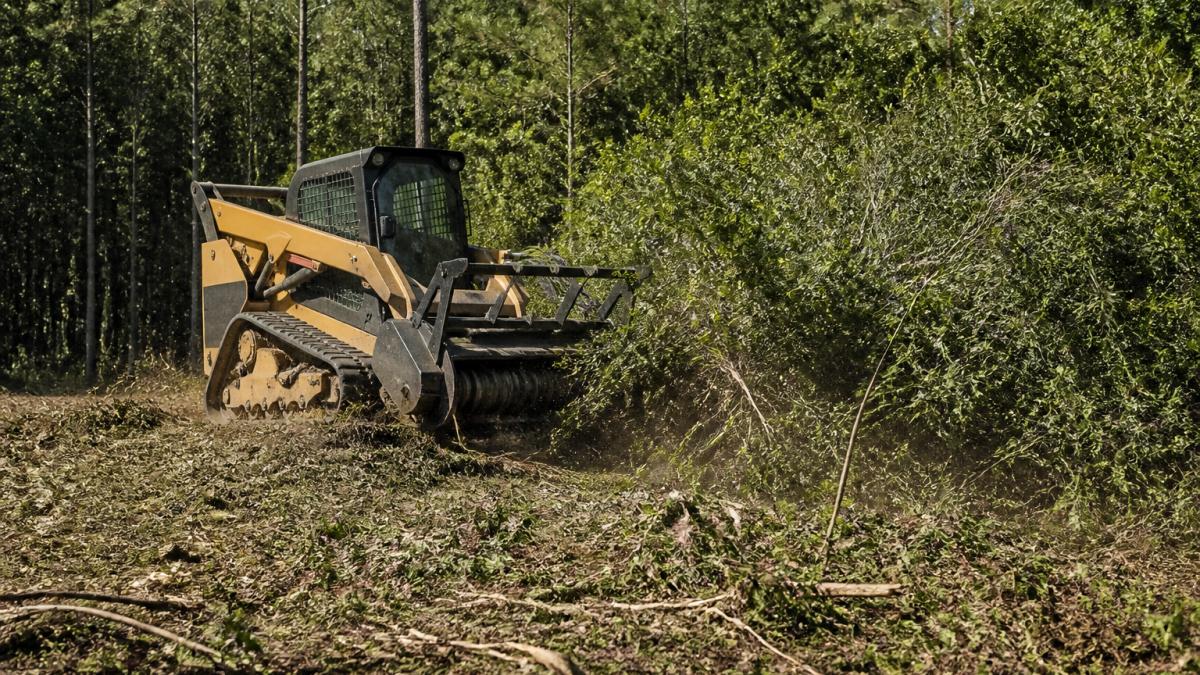
Forestry mulching is one of the most effective methods for clearing land while improving soil health.
Specialized equipment grinds vegetation into chips on-site. The mulch stays on the ground, improving soil structure and reducing regrowth instead of removing beneficial organic matter.
This method works exceptionally well for:
- Heavy brush and overgrowth blocking sight lines
- Mixed vegetation including small trees and dense brush
- Properties where soil health matters (pastures, hay fields, wildlife habitat)
The mulch layer suppresses weeds, improves water retention, and breaks down into organic matter, healthier ground for pasture recovery, new plantings, or better visibility.
Property Line Clearing: Know Your Boundaries
Property-line clearing requires precision: improve visibility without disputes or clearing land you don't own.
Confirm your actual boundaries. If you lack a recent survey, get one before major clearing, a few hundred dollars prevents thousands in potential disputes.
Clear only your side, leave a small buffer, and coordinate with your neighbor about any boundary fence before clearing around it.
Land Clearing Erosion Control Practices
Erosion control is where most clearing projects quietly fail. The visible work is done in a week; the soil damage shows up over the next two rainy seasons. It deserves its own plan, because removing vegetation changes how water hits and moves across your ground, and in many jurisdictions, disturbing ground near waterways triggers legal obligations, not just good practice.
What actually changes when you clear
Vegetation intercepts rainfall, slows overland flow, and its roots hold soil in place. Strip all three at once and the same storm that used to soak in now runs off, on a 5% slope, that shift can turn sheet flow into rill erosion within a single heavy event. You are not just "adding erosion control"; you are substituting mulch cover, roughness, and drainage for the functions the plants performed.
Match the practice to the slope and the soil
- Flat ground (under about 3% slope): Mulch cover alone is usually enough. A uniform 2-to-3-inch layer of shredded mulch intercepts raindrop impact and holds moisture; bare patches are where gullies start.
- Moderate slopes (3% to 10%): Combine mulch with contour-oriented work. Leave strips of undisturbed vegetation, seed exposed ground promptly with a fast-establishing cover, and divert concentrated flow into vegetated areas.
- Steep slopes (over 10%): Do not clear the whole face. Leave strategic vegetation bands, install silt fence or straw wattles on the contour below disturbed areas, and stabilize within days, not weeks, delay here is the most common cause of expensive repair.
The practices that actually work
- Mulch as armor. The shredded material left by forestry mulching is the cheapest erosion control you will get, because it is already on site. Spread it evenly over exposed soil; do not burn or haul it off unless you have to.
- Silt fence and wattles on the contour. Install them below disturbed areas, keyed into the ground, not draped over it. Inspect after every significant rain; a failed silt fence is worse than none because it concentrates flow.
- Temporary seeding. Fast-germinating cover, annual ryegrass, cereal rye, or a quick nurse crop, holds soil while slower perennials establish. Seed immediately after clearing, especially ahead of forecast rain.
Timing is an erosion-control decision
Clearing in late fall or winter, when soils are wet and vegetation is dormant, raises erosion risk and slows stabilization. Late summer or early fall, when soils are drier and there is still growing season for cover to establish, is the lower-risk window. If you must clear in a wet season, stage the work so no more ground is exposed at once than you can stabilize within a few days.
The trade-off nobody puts in the brochure
Every clearing method carries an environmental cost to weigh against the visibility benefit:
- Forestry mulching disturbs soil least and leaves mulch armor behind, but it can spread seeds and does not remove root systems, so some species resprout.
- Bulldozing and grubbing removes roots and gives the cleanest result, but strips topsoil, compacts ground, and creates the highest erosion risk, it demands the most aggressive stabilization plan.
- Herbicide-assisted clearing reduces resprouting and soil disturbance, but carries drift, runoff, and label-restriction considerations around sensitive areas and water.
How to tell whether your erosion control is working
Walk the cleared ground after the first heavy rain. Look for these signals:
- Sheet flow, not channels. Water should move as a thin sheet. Finger-sized channels mean flow is concentrating and the mulch or grading needs attention.
- Clear water leaving the site. Muddy runoff means soil is moving. Check silt fence and buffers immediately.
- Mulch still in place. Bare spots after a storm are the next erosion start point, re-cover them.
Erosion control is not a line item to cut. It is the difference between a cleared property that stays cleared and one that washes into a repair bill.
Timeline, Costs, and What to Expect
Most guides wave at cost and timeline without putting numbers on the page. Here is how the work actually breaks down, what drives the number up or down, and how to sanity-check a quote before you sign.
How long clearing actually takes
Timeline is driven by three variables, in this order of impact: acres, density, and access.
- Light overgrowth (grass, weeds, saplings under 2 inches): A forestry mulcher or heavy-duty mower can typically cover 1 to 2 acres per day in open, accessible ground.
- Moderate brush (2 to 6 inch stems, mixed with vines): Roughly 0.5 to 1 acre per day with a mulcher, slower if vines require hand pre-cutting.
- Heavy brush and small trees (6 to 12 inch stems): Roughly 0.25 to 0.5 acre per day; dense stands with mature trees mixed in can drop below that.
A quarter-acre fence line of light brush is often a single-day job. Three acres of thick, mixed brush with difficult access is commonly a three-to-five-day job, and a full week is not unusual if debris must be hauled rather than mulched in place.
What drives the price
Land clearing is priced either by the acre or by the hour, and the two are not interchangeable. Land clearing is priced either by the acre or by the hour. These are planning ranges, not quotes, your site, access, and debris plan move the number.
Five things move the price most:
- Density and stem size. Grinding a 10-inch tree takes far longer than a 2-inch sapling. Density, not acreage, is usually the real cost driver.
- Access. If equipment can drive straight in, cost drops. If it must be trailered through a gate, around a pond, or down a slope, cost rises.
- Debris handling. On-site mulching is cheapest because nothing leaves the property. Hauling and disposal adds substantially per acre and days to the schedule.
- Slope and soil. Steep ground slows machines and raises erosion risk, meaning more stabilization work afterward.
- Proximity to structures and utilities. Hand work near fences, wells, septic fields, and power lines is slower and priced accordingly.
The return-on-investment question
Clearing for visibility is not just cosmetic spending. Frame it against what the land is supposed to do:
- For sale or lease: Visible fence lines, cleared pastures, and open sight lines from the road reduce the buyer's perceived risk and shorten time on market. A cleared property photographs better and appraises more cleanly.
- For hay or pasture: Removing brush and restoring a stand can raise harvestable acreage and forage quality. Compare clearing cost against establishing a new stand from scratch, renovation is usually cheaper when the existing sod is still viable.
- For hunting or recreation: Cleared lanes and edges improve access and wildlife movement, a value argument for leased and recreational land.
A simple way to test the spend: divide the quoted cost by the additional usable acres you gain, then compare that per-acre figure to local land values and the cost of buying replacement acreage. If clearing costs a fraction of what an equivalent acre costs to buy, the math usually favors clearing.
What to ask before you sign
- Is the quote per acre or per hour, and what happens if the work runs long?
- Is debris mulched in place or hauled? Get the disposal cost in writing.
- Is erosion control included, or billed separately?
Realistic expectations after the machine leaves
You will see the biggest visual change on day one. What you will not see immediately is regrowth pressure, which starts within weeks. Plan a first mowing or spot treatment pass within 60 to 90 days, and budget for it as part of the project rather than an afterthought. Properties that budget a maintenance pass up front consistently hold their visibility far longer than those that treat clearing as a one-time purchase.
Preventing Regrowth After Clearing
Clearing overgrown land is only half the battle. Preventing rapid regrowth determines whether your investment lasts years or months.
Effective regrowth prevention includes:
- Mulch layer: The mulch from forestry mulching suppresses new growth for months
- Mowing schedule: Regular mowing prevents seedlings from establishing
- Herbicide application: Strategic use after clearing prevents dominant species from returning
The best regrowth prevention matches your goals: permanent pasture calls for good forage species, low-maintenance visibility calls for regular mowing, and minimal work calls for heavy mulch plus selective herbicide.
Clearing overgrown land for better street view isn't just about appearance, it's about protecting your property's value and improving how people perceive it.
Frequently Asked Questions
Can forestry mulching really prevent weeds and brush from coming back after land clearing?
Forestry mulching creates a natural barrier that suppresses regrowth by covering bare soil with mulch material, which reduces weed seed exposure to sunlight and retains soil moisture. The mulch also improves soil health over time, creating conditions less favorable for aggressive brush species. However, some follow-up maintenance may still be needed depending on your property's soil type and climate. A free land assessment can help determine the best approach for your specific situation.
Will heavy equipment tear up my soil and topsoil during land clearing?
Professional land clearing operators plan equipment routes carefully to minimize soil compaction and damage. Forestry mulching, in particular, preserves topsoil and soil structure by grinding vegetation in place rather than removing it, which actually improves soil organic matter and water infiltration. The key is working with experienced professionals who understand soil health and use appropriate equipment for your property conditions. Request a free assessment to discuss soil protection strategies specific to your land.
How much does it cost to clear land for better street view?
Land clearing costs depend on several factors: the size of the area, vegetation density and type, terrain difficulty, equipment required, and your location. Pricing varies significantly based on the scope of work required. The best way to understand your actual costs is to request a free land assessment, where professionals can evaluate your property and provide an accurate estimate tailored to your specific needs.
What's the best time of year to clear land for street view improvement?
Timing depends on your region's climate and vegetation growth patterns. Generally, late fall through early spring offers advantages: dormant vegetation is easier to clear, regrowth is slower, and wet soil conditions are less likely to cause damage in many areas. However, the optimal window varies by location and vegetation type. A professional assessment can identify the best clearing window for your property and help you plan the work to maximize results and minimize erosion risk.