 how-to
Cost of Residential Lot Clearing in Longview: 2026 Guide
Table of Contents
- What Residential Lot Clearing Costs
- Land Clearing Cost Per Acre: What to Expect
- Factors That Affect Your Clearing Cost
- Getting an Accurate Land Clearing Estimate
- Forestry Mulching Cost and Benefits
- Land Clearing and Grading: Preparation for What's Next
- Planning Your Residential Lot Clearing Project
- Frequently Asked Questions
Last Updated: October 8, 2026
What Residential Lot Clearing Costs
The cost of residential lot clearing in Longview depends on multiple variables, so no single price applies without assessing your property.
Understanding these drivers helps you compare each contractor's assessment of what your land requires, not just labor rates.
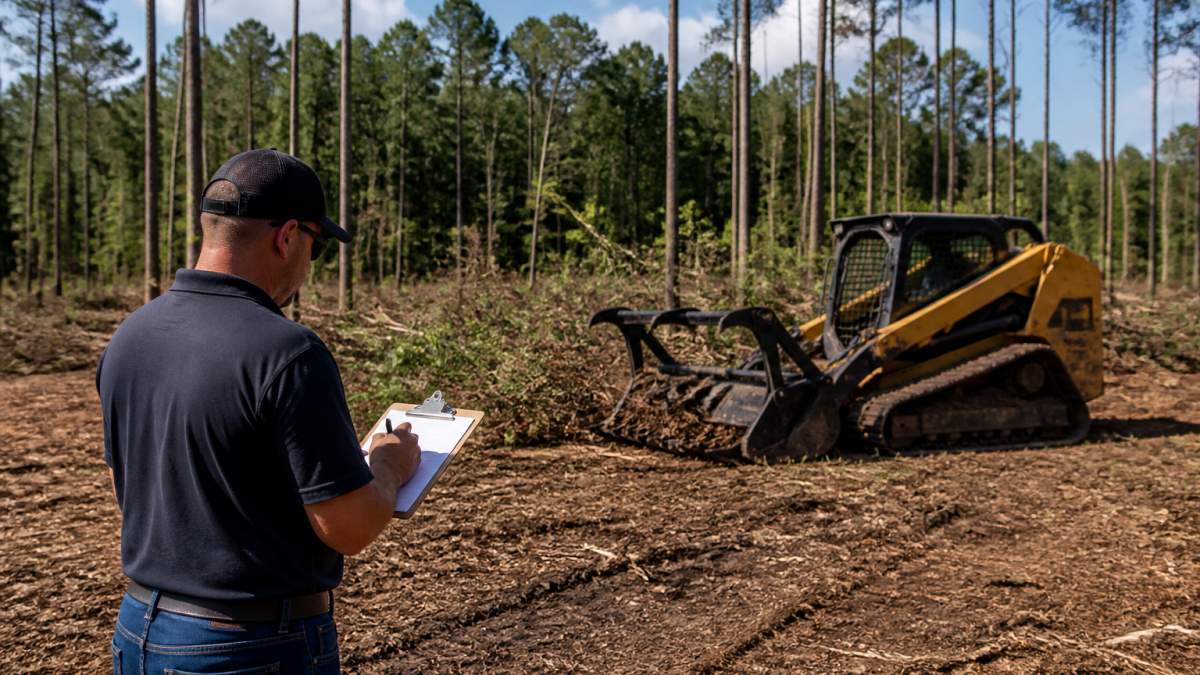
At SemperFi Land Clearing LLC, every project starts with a free land assessment: we walk your property, evaluate vegetation density, check site access, identify obstacles, and explain what needs to happen and why.
Land Clearing Cost Per Acre: What to Expect
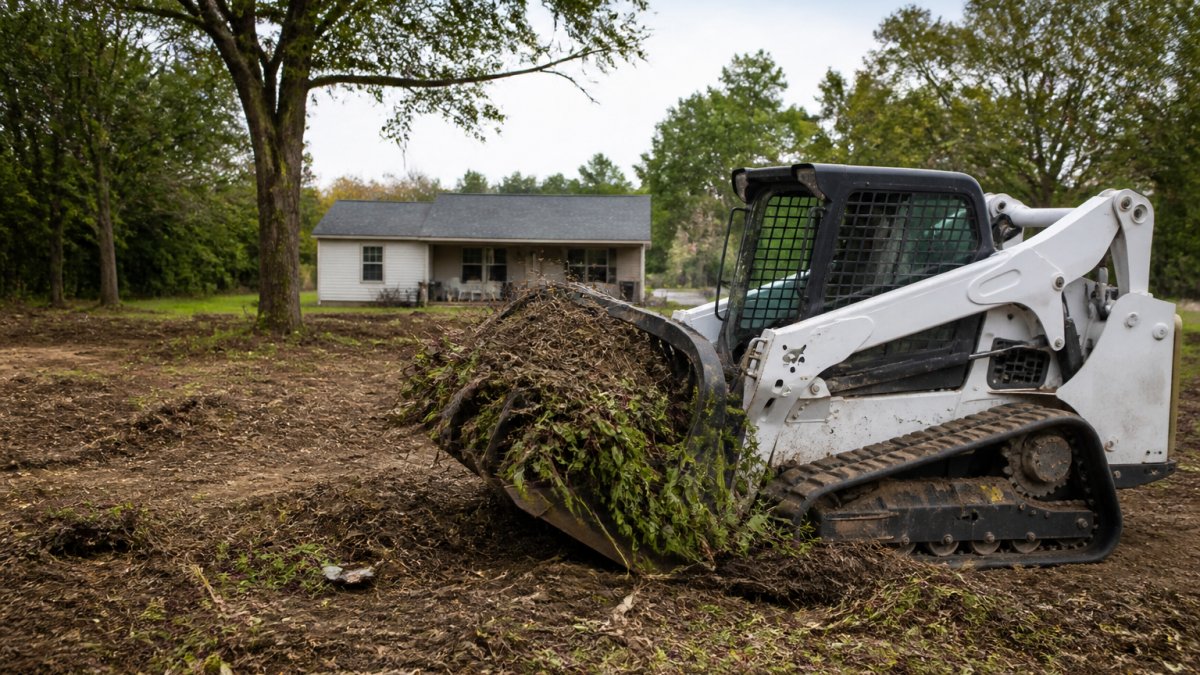
Land clearing cost per acre varies with what you're starting with: sparse vegetation and clear access cost less than dense overgrowth where equipment works harder and hauls debris farther.
Smaller lots often carry a minimum service charge because mobilization costs the same whether you're clearing a quarter-acre or an acre.
Per-acre pricing assumes a certain vegetation density and site condition; a written quote specifying what's included and what conditions it assumes matters more than a per-acre estimate alone.
Before getting quotes, measure your lot accurately and describe the vegetation honestly, light brush, moderate overgrowth, dense trees with undergrowth, or a mix.
Factors That Affect Your Clearing Cost
Several concrete factors determine your clearing cost and explain why two quotes might differ.
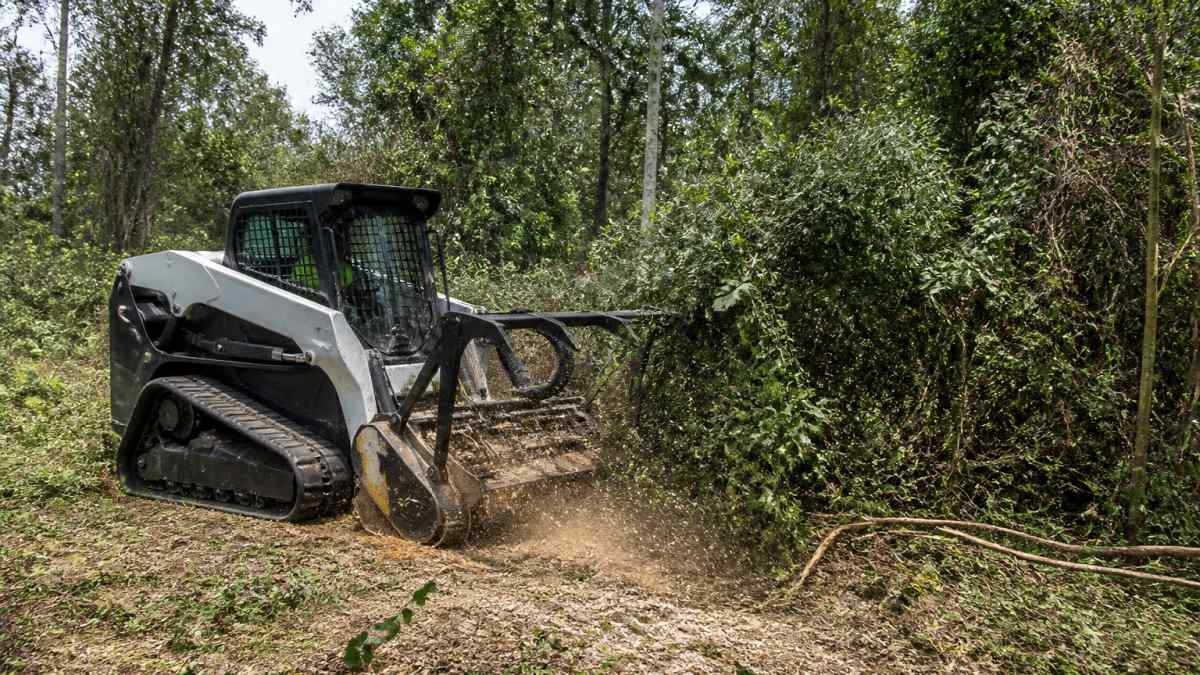
Vegetation Density and Tree Coverage
Dense vegetation costs more than sparse brush.
Protected trees the county requires you to preserve raise costs because the work becomes selective: crews work around specific trees, slowing progress and demanding more careful equipment operation.
Stump removal adds cost, whether ground or pulled entirely. Forestry mulching, grinding trees and brush into chips left on-site, costs differently than traditional clearing with hauled debris, so we cover it separately.
Site Access and Terrain
If heavy equipment can drive directly to the work area, clearing goes faster and costs less.
Steep slopes slow work because equipment runs less efficiently on grades. Wet ground limits movement and rocky terrain can damage equipment or demand different machinery.
Limited access sometimes forces smaller equipment, which takes longer. A narrow driveway or tight corners can block the largest, most efficient machines, pushing costs up.
Equipment and Labor Requirements
Larger jobs justify excavators, bulldozers, and heavy-duty chippers; smaller lots may use smaller machines that cost less to run but work more slowly.
Labor is a major cost component. A three-person crew costs more per day than a single operator, but may finish faster and reduce the total bill.
Specialized equipment for mulching, stump grinding, or grading adds cost but can eliminate separate disposal fees.
Getting an Accurate Land Clearing Estimate
"Get three quotes" is useless if the three quotes describe three different jobs. The real skill is forcing every bid onto the same scope sheet so you can compare apples to apples, and knowing which line items contractors routinely omit to make their number look smaller.
Build a scope sheet before you call anyone
Write down your answers and hand the same sheet to every contractor, the highest-leverage thing you can do to control cost.
- Acreage and boundaries. Use your survey, or pull the parcel from your county appraisal district's public GIS map. Contractors price off acreage, and a half-acre error swings the quote.
- Vegetation description. Be specific: scattered saplings under 6 inches, mixed pine and hardwood over 12 inches, dense yaupon and briar understory, pasture grass only. "Overgrown" means nothing to an estimator.
- What stays. Flag trees to preserve before the site visit. Selective clearing costs more per acre than a clean sweep because crews work around obstacles.
The line items a real quote should show
An estimate that says "clear lot, $X" is a guess, not a quote. Ask for these broken out separately to see what you're buying and where a cheaper bid cuts corners:
- Mobilization and demobilization, hauling equipment to and from the site. Often a flat fee, and often why a quarter-acre job isn't much cheaper than a half-acre job.
- Cutting and clearing, felling, pushing, or mulching standing vegetation.
- Stump treatment, left in place, cut flush, ground, or pulled. Pulling disturbs far more soil than grinding and costs accordingly.
- Debris handling, chipping, burning, hauling, or on-site mulch. Hauling is usually most expensive: trucks, dump fees, and time.
- Grading and finish, rough grade, final grade, drainage shaping, or a compacted building pad.
- Erosion control, silt fence, straw wattles, or seeding, often required if the lot drains toward a street, ditch, or waterway.
- Exclusions, what the contractor is not doing. Surprise charges hide here.
Red flags in a low bid
A bid far under the others usually isn't a bargain. Common reasons:
- Stumps excluded or "left flush" without saying so.
- Debris "disposed of" without specifying on-site versus hauled.
- Assumed access the property doesn't have, becoming a day-one change order.
Questions that separate pros from order-takers
- Are you insured, and can I see a certificate before work starts?
- Will you pull required permits, or is that on me?
- Who calls 811 for buried utilities, and when?
A contractor who answers these without flinching is telling you something. So is one who dodges.
Get it in writing
The final document should state scope, finish level, debris destination, timeline, payment schedule, and conditions that trigger a price change. Tie progress payments to milestones, mobilization, clearing complete, final grade, rather than paying up front.
Forestry Mulching Cost and Benefits
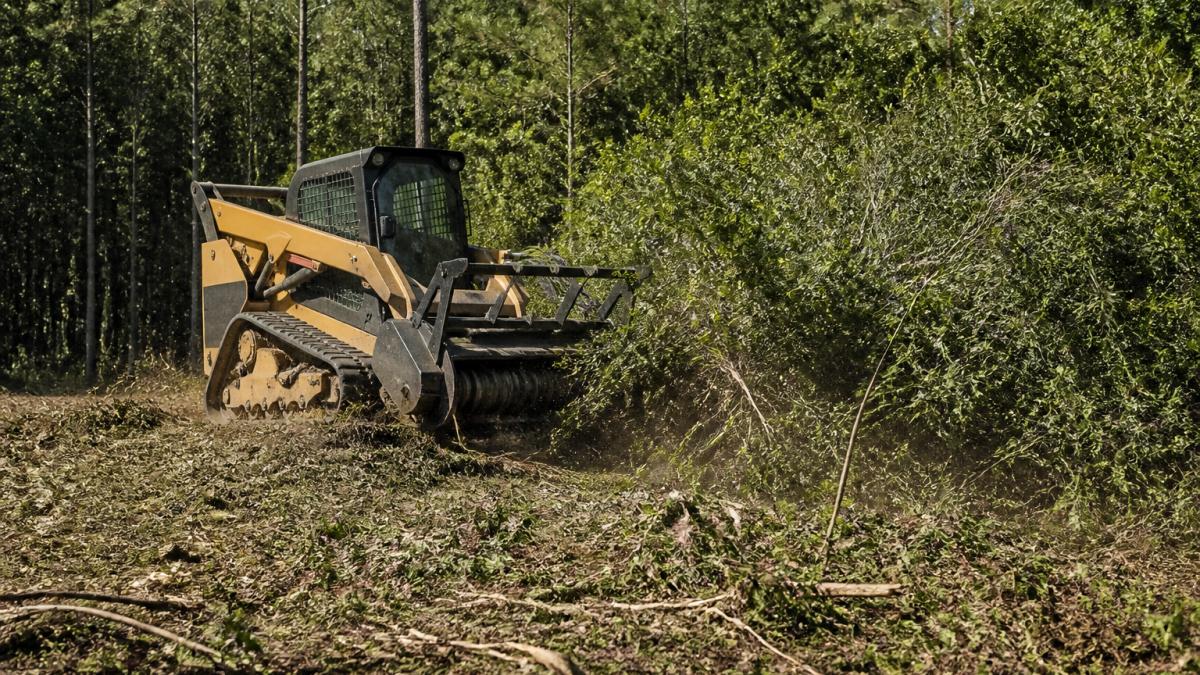
Forestry mulching grinds trees, brush, and undergrowth into chips left on-site as ground cover.
This method costs differently: no disposal fees because there's no debris to haul, and the mulch reduces future maintenance and weed pressure.
Forestry mulching works best where you want to clear vegetation but preserve topsoil and avoid the bare look of heavy grading.
The trade-off: forestry mulching requires specialized equipment and operator skill, and not every contractor offers it.
Land Clearing and Grading: Preparation for What's Next
Clearing removes what's growing; grading decides what the ground does next, where water goes, where a foundation sits, and whether the site holds up through a wet season. Treating grading as an afterthought means paying twice: once to clear, again to fix drainage or rework a pad cut wrong.
Why grading is a separate line item
Grading is earthwork, not vegetation removal. It needs different equipment (dozer, motor grader, or excavator with a bucket rather than a mulching head), different operator skill, and often a different crew, so clearing and grading quotes rarely match, even from the same company.
Grading cost depends on how much dirt moves:
- Light finish grade, smoothing ruts, knocking down high spots, and dressing the surface after clearing. Cheapest, and often all a lot needs if you're not building immediately.
- Rough grade to plan, cutting and filling to approximate elevations so a builder or engineer can work from the site. Requires a plan or staked elevations.
- Building pad, a defined, compacted area at a specified elevation, sized for the structure plus working room. Most demanding and expensive, because it must meet the builder's or engineer's spec, not just look flat.
Drainage and erosion: the part nobody quotes until it's a problem
Stripping vegetation removes the root mass holding soil in place. On any sloped lot, that changes how water moves, and where it deposits.
A few practical points:
- Positive slope matters. Water should leave the pad and lot, not pond against a foundation or seep toward a neighbor. On flat lots, that may mean swales or a drain, earthwork plus materials.
- Erosion control may be required. If your lot drains toward a street, storm inlet, ditch, or waterway, silt fence, straw wattles, or temporary seeding are common requirements. Ask whether the project triggers them and get the cost in the quote.
- Timing matters. Clearing a sloped lot before a rainy stretch and leaving it bare invites rill and gully erosion. If you can't grade and stabilize promptly, plan for temporary cover.
Utilities and buried surprises
Before equipment touches the ground, buried utilities must be located. Call 811, the free locating service and standard first step on any dig or grade project. It marks public lines; private lines, irrigation, septic, a line to an outbuilding, a gas line to a grill, are typically the owner's responsibility to identify and mark.
Other buried features that change scope and cost:
- Septic systems and drain fields. Clearing or grading over a drain field can destroy it. Know where it is before equipment crosses it.
- Old foundations, slabs, and debris pits. Rural and older lots often hide concrete, brick, or buried trash. Removing it is excavation, not clearing, and priced differently.
- Wells, cisterns, and abandoned tanks. Locate them, and in some cases properly abandon them, before grading.
Match the clearing method to what comes next
How you clear determines what you can do afterward, so decide both together:
- Forestry mulching leaves a chip layer on the surface. Great for erosion control and low-disturbance clearing, but it must be dealt with before pouring a slab or laying a driveway base. Budget for stripping it if you're building soon.
- Grubbing and root removal produces bare, clean soil ready for a pad or foundation, but disturbs more ground and leaves the site exposed to erosion until stabilized.
- Selective clearing preserves trees you want, but retained roots can conflict with foundation excavation and utility trenches. Mark keepers early so the layout accounts for them.
Sequence the work to avoid paying twice
A sensible order for a lot headed toward construction:
- Confirm boundaries and locate utilities.
- Clear vegetation to the finish level the next phase requires.
- Remove or grind stumps in the pad, driveway, and utility trench footprints.
- Rough grade to plan, shape drainage, and stabilize exposed areas.
- Build the pad to the builder's or engineer's spec, then re-stabilize.
Clearing to bare dirt and waiting a year to build usually means paying for weed control, re-clearing, and possibly erosion repair. Tell your contractor your timeline up front so they can clear and grade to hold up until the next phase.
Planning Your Residential Lot Clearing Project
Start by defining your goal: aesthetics, construction prep, pasture or wildlife habitat, or fire risk reduction.
Measure your lot accurately, pace it off or use satellite imagery if you lack a survey.
Get three estimates from established contractors to gauge the market and spot outliers.
Ask about timeline. When can they start? How long will the work take?
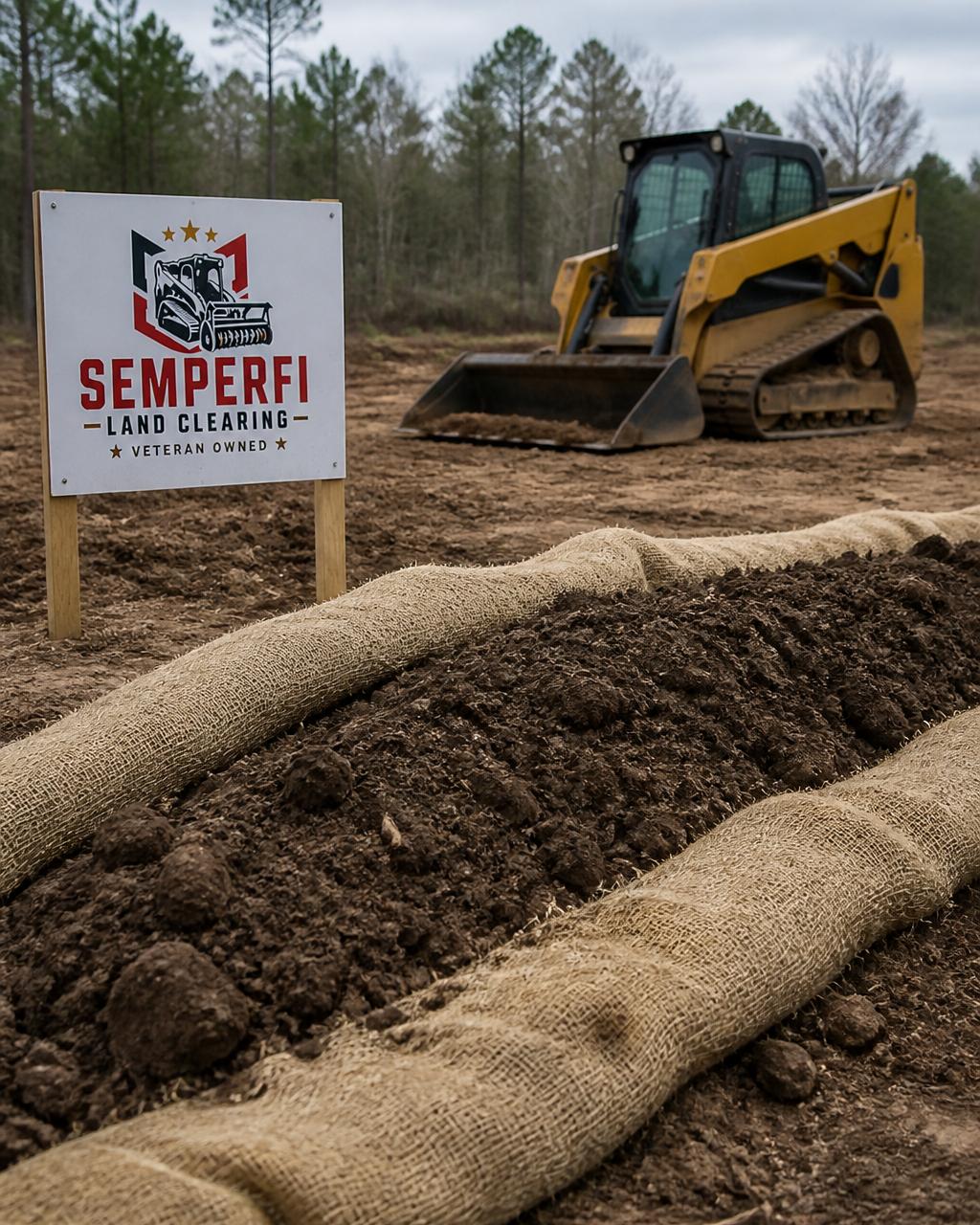
We recommend a free land assessment before committing to any contractor. At SemperFi Land Clearing LLC, we visit your property, evaluate vegetation density and site conditions, and explain what's needed and why. Our veteran-owned team handles everything from fence line clearing to comprehensive overgrowth removal with precision and reliability. Get an Estimate with SemperFi Land Clearing LLC and see how we approach your specific property.
Frequently Asked Questions
How much does residential lot clearing typically cost?
The cost of residential lot clearing depends on lot size, vegetation density, tree coverage, site access, and the clearing method you choose. Pricing varies significantly based on these factors. For an accurate estimate tailored to your specific property, contact a local land clearing professional who can assess your lot and provide a written quote reflecting your project scope.
What factors have the biggest impact on land clearing cost per acre?
Vegetation density and tree coverage are primary cost drivers. Dense brush, large trees, and extensive undergrowth require more equipment time and labor. Site access matters too, difficult terrain or poor road conditions increase mobilization costs. Debris removal and disposal methods, stump removal, and whether you want grading afterward also significantly affect the per-acre price.
Is forestry mulching cost-effective compared to traditional clearing?
Forestry mulching can be cost-effective because it eliminates separate debris removal and hauling steps. The mulch remains on-site, improving soil health and reducing regrowth. However, whether it's the right choice depends on your project goals, lot size, and vegetation type. A free assessment helps determine which clearing method offers the best value for your specific needs.
Do I need a permit for residential lot clearing?
Permit requirements vary by location and project scope. Many residential clearing projects require permits, especially if you're removing protected trees or working near drainage areas. Check with your local building department or code enforcement office before starting work. Your land clearing contractor can often advise on permit requirements and help coordinate the application process.