 how-to
Clearing Dense Brush for Small Farms: A Step-by-Step Guide
Last Updated: October 22, 2026
Quick Summary
Clearing dense brush for small farms starts with walking the land and mapping thickets, saplings, wet spots, and slopes before cutting anything. Match the tool to the job: hand tools for fence lines and small areas, a compact tractor with a brush mower and bucket for full acres, or a forestry mulching contractor for heavy overgrowth. Clear in strips from the outside in, then remove roots and seed bare ground quickly to stop regrowth.
- Cut saplings at ground level so a mower or tractor can pass over the stumps later.
- A rotary brush mower handles saplings up to a couple of inches thick on open ground.
- Forestry mulching grinds brush into mulch on site, leaving no piles to burn or haul.
- Rent equipment before buying if you only clear land once.
- Walk the cleared area monthly during the first growing season and cut resprouts before they seed.
Table of Contents
- Step 1: Assess Your Brush and Make a Plan
- Step 2: Gather Tools and Safety Gear
- Step 3: Choose the Best Tractor Implements for Clearing Brush
- Step 4: Clear the Brush Safely and Methodically
- Step 5: Consider Forestry Mulching for Small Farms
- Step 6: Understand the Cost to Clear Brush per Acre
- Step 7: How to Prepare Cleared Land for Pasture
- Step 8: Manage Debris and Prevent Regrowth
- Frequently Asked Questions
Step 1: Assess Your Brush and Make a Plan
Clearing dense brush for small farms starts with a walk, not a machine. Before you cut anything, map what is actually growing on the property.
Walk the acreage with a notebook. Mark the boundaries of heavy thickets, note the size of the saplings, and flag wet spots or slopes where equipment will struggle. Check for fence lines buried under vines and any trees you want to keep.
A few things to record:
- Size of the area in acres
- Height and thickness of the woody growth
- Access points for a tractor or skid steer
- Wet ground, ditches, and steep sections
- Trees, fences, or structures to protect
This plan decides everything that follows. At SemperFi Land Clearing LLC, we start every project with a free land assessment for exactly this reason: a good plan saves hours of wasted cutting.
Step 2: Gather Tools and Safety Gear
Match the tool to the job, and never skip the safety gear. Brush clearing on a small farm is physical work with real hazards: sharp blades, flying debris, and hidden holes under tall grass.
Basic safety gear for any brush job:
- Safety glasses or a face shield
- Hearing protection
- Cut-resistant chaps when running a chainsaw
- Heavy work gloves and boots
- A hard hat in areas with dead limbs overhead
Hand Tools vs. Machinery
Hand tools are best for small acreage, tight spots, and fence lines. Machinery wins on thick brush and open ground.
Hand tools include loppers, brush hooks, machetes, and hand saws. They are cheap, quiet, and precise. They are also slow on large areas and hard on your back.
Machinery covers brush cutters, brush mowers, chainsaws, and compact tractors. It clears ground fast but needs space, fuel, and maintenance.
A simple rule: use hand cutting for a quarter acre of fence line, and bring in machinery for anything measured in full acres.
Step 3: Choose the Best Tractor Implements for Clearing Brush
The best tractor implements for clearing brush are a rotary brush mower, a front-end bucket, and a grapple or root rake. Each handles a different stage of the work.
A brush mower knocks down thick brush, weeds, and saplings up to a couple of inches thick. A tractor bucket pushes cut material into brush piles and moves dirt.
Match the implement to your tractor's horsepower. A small compact tractor handles a light mower well but bogs down in heavy saplings.
| Implement | Best For | Limits |
|---|---|---|
| Rotary brush mower | Open ground, thickets, saplings | Struggles on rocks and steep slopes |
| Front-end bucket | Moving debris, light grading | Not built for heavy stumps |
| Grapple or root rake | Roots, stumps, brush piles | Needs higher horsepower |
| Brush cutter (walk-behind) | Tight spots, fence lines | Slow on large acreage |
For small acreage, a compact tractor with a mower and bucket covers most jobs. Rent before you buy if you only clear land once.
Step 4: Clear the Brush Safely and Methodically
Clear in strips, working from the outside in, and keep a clear escape path at all times. Methodical cutting beats rushing. It is safer, and it leaves cleaner ground.
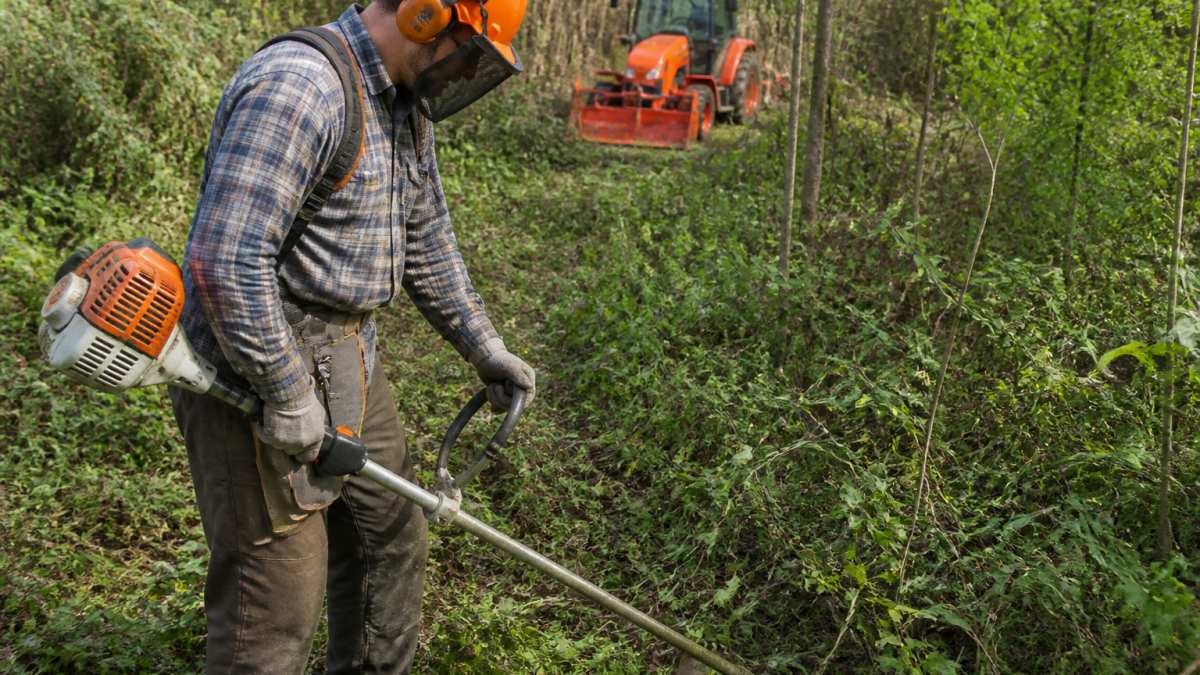
Start with the tallest woody growth and work down. Cut vines at the base so they drop instead of tangling in equipment. Push cut material into piles as you go rather than leaving it scattered.
Watch for these hazards:
- Dead limbs overhead that can fall without warning
- Hidden holes, stumps, and ditches under tall grass
- Poison ivy and other irritating plants
- Wet ground that traps tractors
Step 5: Consider Forestry Mulching for Small Farms
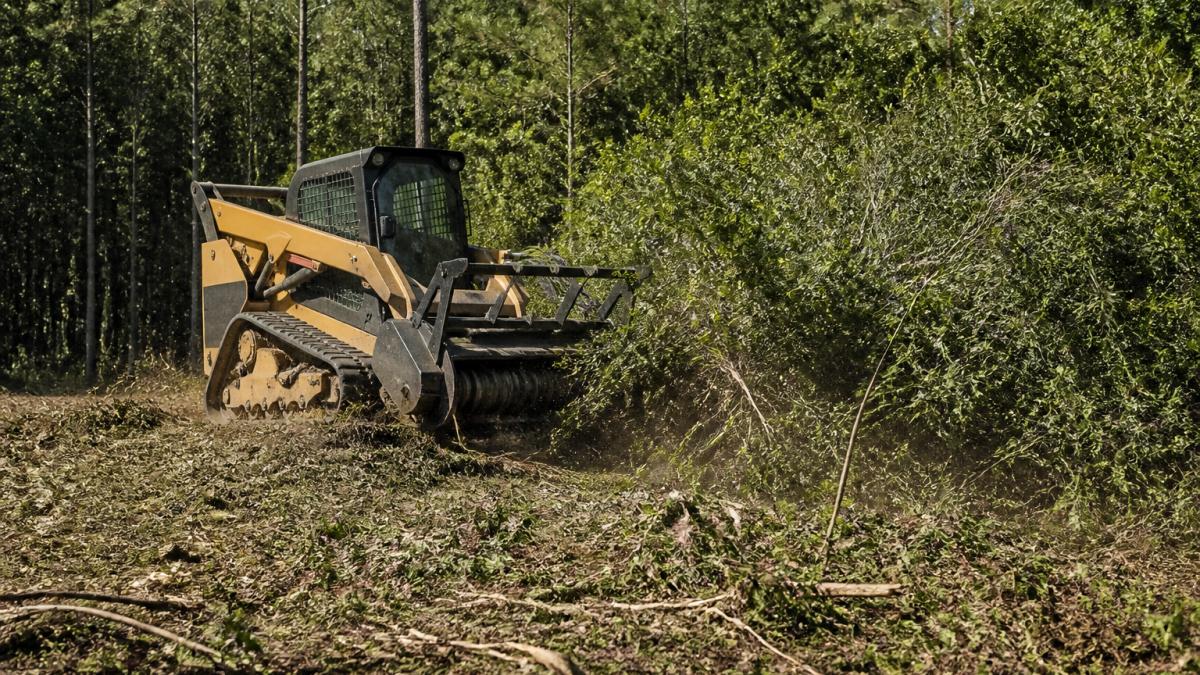
Forestry mulching for small farms grinds brush, saplings, and small trees into a layer of mulch on the spot. It is one of the fastest ways to clear thick brush without hauling debris away.
A forestry mulcher is a machine with a rotating drum that chews woody growth down to the soil. It handles dense brush, thickets, and undergrowth in a single pass.
Why small farms choose it:
- No brush piles to burn or haul
- Less soil disturbance than dozer work
- Clears fence lines and food plots quickly
- Mulch feeds the soil as it breaks down
The catch is access. A mulcher needs room to move, and very wet ground or steep slopes limit where it can work. For heavy overgrowth on small acreage, forestry mulching is often the most practical option.
Step 6: Understand the Cost to Clear Brush per Acre
The cost to clear brush per acre depends on density, terrain, access, and method. No single number fits every property, so get a quote based on your actual land. But you can build a realistic budget by comparing methods on three axes: labor hours per acre, equipment cost per day, and debris handling.
A Practical Comparison Framework
Use this framework to compare methods side by side before you commit. Your actual costs depend on local rental rates, fuel, and how thick the growth is.
| Method | Typical acreage fit | Labor intensity | Equipment cost pattern | Debris handling |
|---|---|---|---|---|
| Hand tools (loppers, brush hooks, hand saws) | Under 1/4 acre, fence lines, tight spots | Very high, many hours per acre | Low; tools are inexpensive | Cut and pile by hand; slow |
| Walk-behind brush cutter | 1/4 to 1 acre | High | Moderate daily rental | Cut and pile; mulching blades reduce volume |
| Compact tractor with rotary mower | 1 to 5 acres of light-to-moderate growth | Moderate | Rental or ownership; implement cost separate | Windrows left in place or moved with bucket |
| Chainsaw plus grapple or root rake | 1 to 5 acres with saplings and stumps | Moderate to high | Higher horsepower needed | Piles, burn, or haul |
| Forestry mulching (contractor) | 1 to 10+ acres of dense brush | Low to you, contractor does the work | Priced per acre or per hour | Mulch left on site; no hauling |
What Drives the Price Up or Down
What drives the price up:
- Thick brush and large saplings
- Steep slopes or wet ground
- Long distances to dispose of debris
- Tight access for equipment
What keeps costs down:
- Open, flat ground
- Light to moderate growth
- Forestry mulching instead of cut-and-haul
- Clearing before brush gets too tall
Rent, Buy, or Hire It Out
Rent before you buy if you only clear land once. A compact tractor and mower rental for a weekend is far cheaper than ownership, and you avoid maintenance and storage. Buy used only if you have a repeat need and can inspect the machine, check the mower deck, hydraulic lines, and tire condition. Hiring a forestry mulching contractor makes sense when the brush is dense, the acreage is more than a couple of acres, or you want the debris handled in one pass.
Always ask for a written estimate and confirm what it includes, travel, fuel, debris disposal, and whether the price is per acre or per hour.
Ask any provider to walk the property before quoting. A price given over the phone without seeing the brush is a guess, and it usually changes once the machine arrives.
Step 7: How to Prepare Cleared Land for Pasture
To prepare cleared land for pasture, remove roots and stumps, grade the surface, test the soil, and seed at the right time. Rushed prep leads to thin grass and bare spots.
Follow this order:
- Remove stumps and large roots so equipment and livestock do not trip on them
- Grade low spots and fix drainage so water does not pool
- Test the soil for pH and nutrients
- Lime and fertilize based on the test results
- Seed a pasture mix suited to your climate and livestock
- Keep livestock off new seeding until it is established
Good prep protects the soil and gives seed a fair start. Skip the grading and you will fight ruts and weeds for years.
Step 8: Manage Debris and Prevent Regrowth
Regrowth is the part most guides skip, and it is the part that decides whether your work lasts. Brush comes back fast if you leave bare soil and roots behind. Handling debris well and planning follow-up are what separate a one-time clearing from lasting usable land.
Disposal and Reuse Options
- Chip or mulch on site. A chipper turns cut brush into mulch you can spread on trails, around trees, or in garden beds. Mulch left in place also protects soil and holds moisture.
- Pile and burn only where allowed. Check local burn bans and permit rules before lighting anything. Burn piles should be small, clear of overhanging limbs, and never left unattended.
- Build brush piles for wildlife. Stacked brush piles provide cover for birds and small mammals. Keep them away from structures and fence lines.
- Haul off only what you must. Hauling is the most expensive disposal option. Chip or burn on site when rules allow to avoid trucking costs.
- Reuse woody material. Straight saplings can become fence posts, stakes, or firewood. Larger trunks can be milled or used for raised beds.
Stop Regrowth Before It Starts
- Pull roots and stumps so plants cannot sprout again.
- Seed bare ground quickly to crowd out weeds.
- Mow new growth before it goes to seed.
- Recheck fence lines and thickets a few times a year.
A Follow-Up Schedule That Works
A common pattern is to walk the cleared area monthly during the first growing season, mow or spot-cut resprouts before they set seed, and then shift to a seasonal check.
Follow local rules for burning and debris disposal, since many areas restrict open burning. For larger regrowth, a follow-up mowing pass keeps brush from reclaiming the land.
The work does not end when the brush is down. A light maintenance pass each season keeps pasture and fence lines clear and saves you from starting over.
Frequently Asked Questions
What is the best way to remove brush and small trees?
The best method depends on density and access. Hand cutting with brush cutters and chainsaws works for light, scattered growth, while a compact tractor with a brush mower handles larger areas. For dense brush, thickets, and saplings, forestry mulching grinds vegetation into mulch in one pass, leaving no brush piles to burn. On small farms, matching the tool to the terrain and vegetation type matters more than buying the biggest machine.
Can a compact tractor clear dense brush?
A compact tractor can clear dense brush when paired with the right implements. A brush mower handles saplings up to about 2 inches, a rotary cutter tackles thicker stalks, and a grapple lets you move cut debris. For heavy overgrowth and thickets, forestry mulching on a dedicated machine is faster. Compact tractors work best on accessible, relatively flat ground and struggle in steep or swampy areas.
How long does it take to clear an acre of dense brush?
The time it takes to clear an acre of dense brush depends on vegetation size, terrain, and access. The cost to clear brush per acre varies depending on the methods used.
How do you prepare cleared land for pasture?
After clearing, remove remaining roots and debris, test the soil, and correct pH and nutrients before seeding. Till or lightly disk compacted areas, then seed a pasture mix suited to your climate and grazing plan. Control regrowth with mowing or grazing during the first season. Fencing and water access should go in before livestock arrive so the new pasture has time to establish.