 ultimate-guide
Small Acreage Land Clearing Services: 2026 Guide
Table of Contents
- What Small Acreage Land Clearing Services Actually Include
- Land Clearing Methods for Small Lots and Overgrown Acreage
- Forestry Mulching Cost Per Acre: What Drives Your Quote
- How to Prepare Land for Construction: Site Prep and Grading Steps
- Permits, Zoning, and Erosion Control Rules to Check First
- DIY vs. Hiring a Professional: A Cost-Benefit Look
- Seasonal Timing and Regrowth: When to Clear and Why It Matters
- Choosing the Right Small Acreage Land Clearing Services Provider
- Frequently Asked Questions
Last Updated: September 10, 2026
What Small Acreage Land Clearing Services Actually Include
Small acreage land clearing services cover the brush management, site preparation, and vegetation management that turns an overgrown few acres into usable ground. At SemperFi Land Clearing LLC, we see the same pattern: a landowner buys 3 to 8 acres, the back half is choked with yaupon and briar, and the fence line hasn't been touched in a decade. It's a different job than pushing over timber on 200 acres, and pricing, equipment, and timeline reflect it.
Most people assume land clearing services are one thing. They aren't, scope splits by property type and intended use of the ground afterward.
Services Built for Tracts Under 10 Acres
On a small tract, the work usually breaks into a handful of tasks:
- Brush and debris removal for overgrown acreage and fence lines
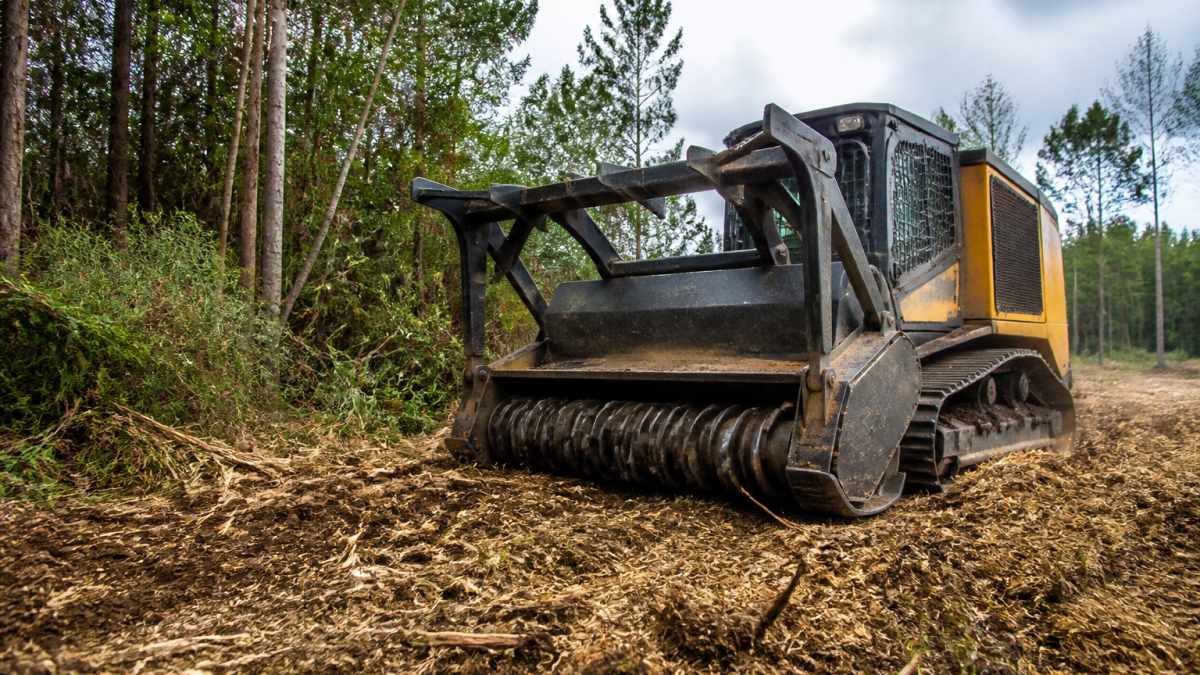
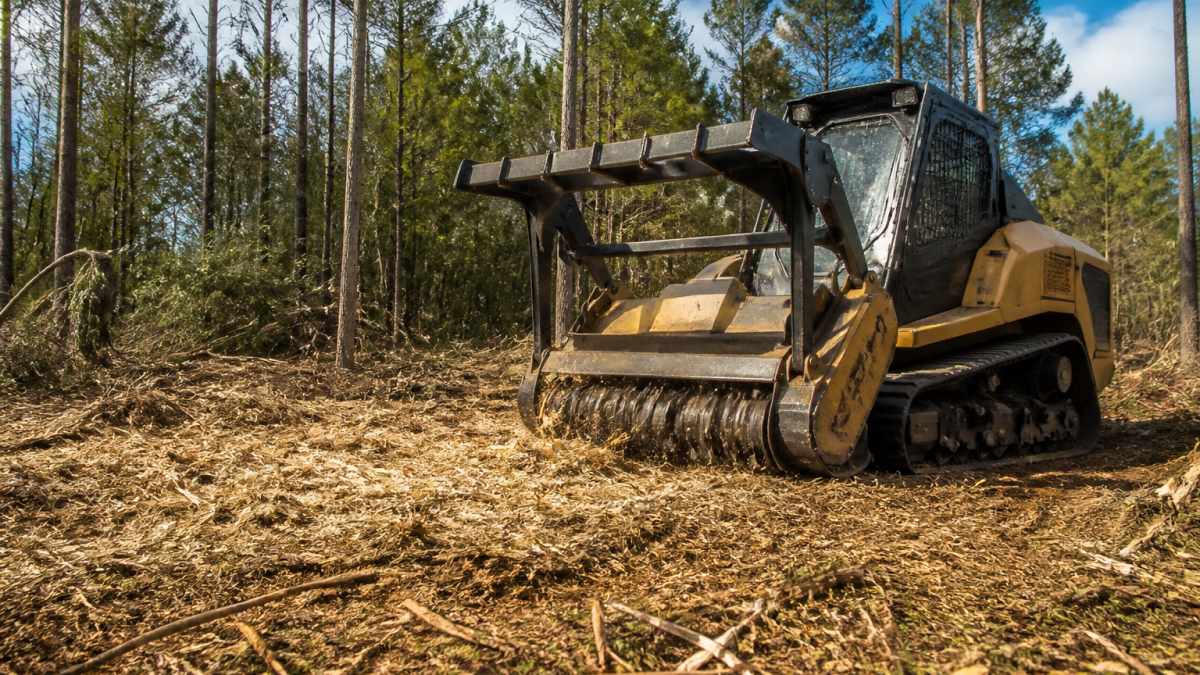
- Forestry mulching to grind standing vegetation into a mulch layer
- Stump removal where the ground will be graded or built on
- Debris hauling when material can't stay on site
- Site preparation and grading ahead of construction or pasture seeding
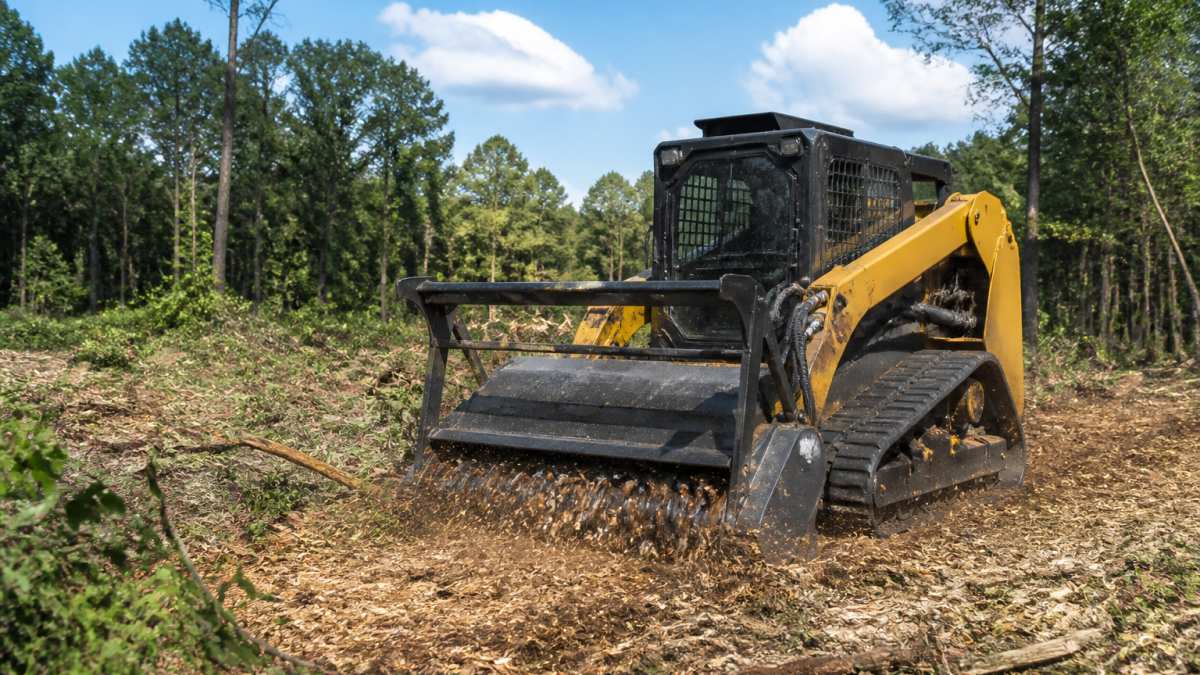
Scale matters. A mini skid steer with a root rake grapple works between trees and along a fence line where a full-size dozer would tear up everything in reach, on tracts under 10 acres, that precision separates a clean result from a scarred property.
Residential vs. Commercial Clearing Scope
Residential tracts prioritize curb appeal and keeping the house, driveway, and septic field untouched. Commercial work prioritizes acreage capacity: how many buildable lots, how fast, and how the finished grade reads for drainage and utilities. That drives equipment and schedule, a homeowner wants a crew in and out in a day, while a developer wants a phased plan tied to permitting.
Land Clearing Methods for Small Lots and Overgrown Acreage
The right method depends on what's growing, how thick it is, and what the land will be used for next. Two approaches dominate.
Forestry Mulching vs. Traditional Clearing
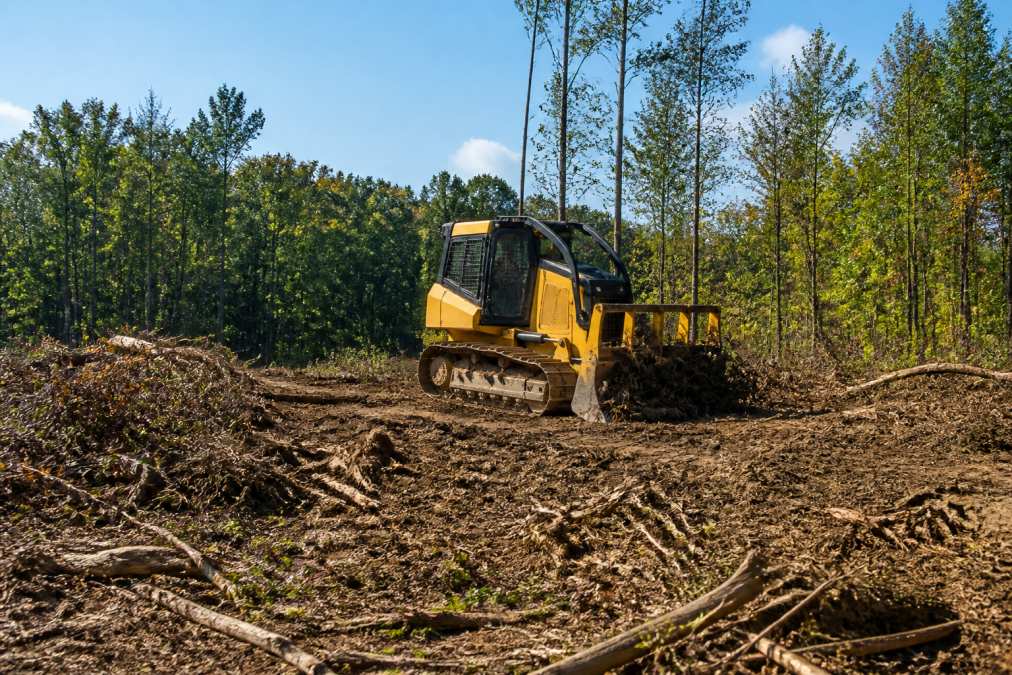
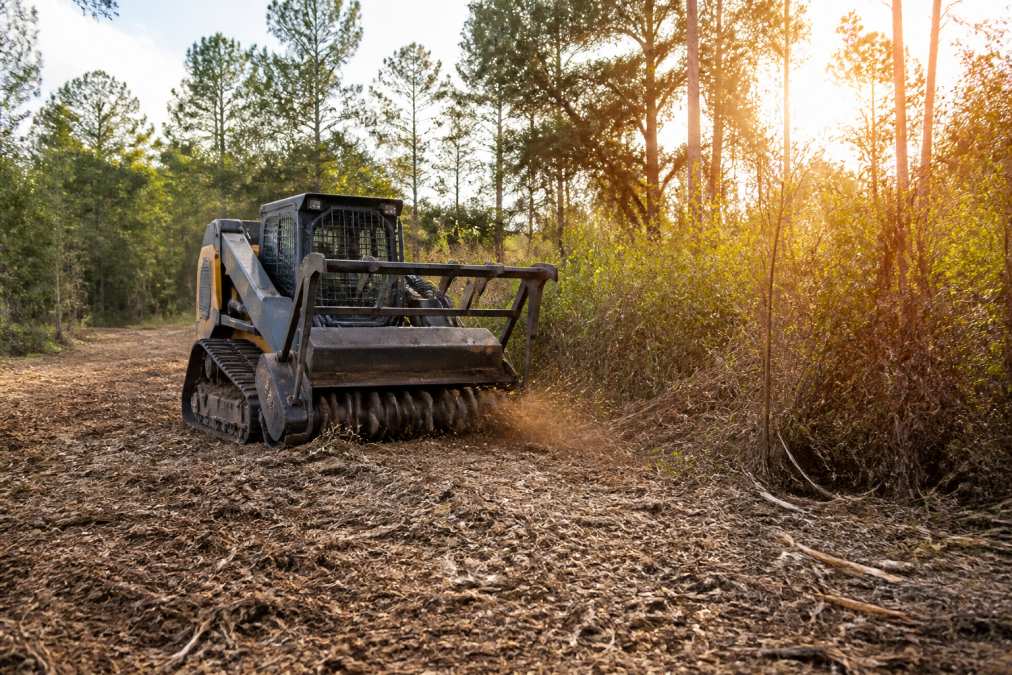
Forestry mulching grinds standing trees, brush, and undergrowth into mulch in a single pass, leaving material on site. Traditional clearing pushes, piles, burns, or hauls debris off the property.
What most guides miss: the mulch layer isn't just a disposal shortcut, it's a soil stabilization tool. Left in place, it slows runoff, holds moisture, and suppresses the weed seed bank that would sprout the moment sunlight hits bare dirt. That's the honest answer to the "won't the brush just come back" worry, and why so many landowners with overgrown acreage choose mulching over dozer-and-burn. Traditional clearing still wins when you need bare mineral soil for a foundation, when stumps must come out entirely, or when the debris itself is the problem.
Equipment Used: Mini Skid Steers, Brush Cutters, and Root Rake Grapples
Equipment selection is where clearing efficiency is won or lost on small tracts. A typical setup:
- Mini skid steer for maneuverability around structures and trees
- Brush cutter attachment for heavy grass and saplings
- Root rake grapple for piling, raking roots, and separating debris from topsoil
- Forestry mulcher head for standing timber and dense undergrowth
Horsepower and head size determine how fast a machine chews through clearing density. A larger machine clears faster per hour but may not fit through a gate or between mature trees. On small lots, fit often beats raw power.
Forestry Mulching Cost Per Acre: What Drives Your Quote
Forestry mulching cost per acre is driven by clearing density, topography, and how much acreage the equipment can realistically cover in a day. There is no single per-acre number, and any quote given before a site assessment is a guess. Here's the framework most crews use, so you can sanity-check any quote.
The Four Cost Buckets Behind Every Quote
Every legitimate quote is built from the same four inputs:
- Machine time, billed hourly or daily, the single largest line item. A forestry mulcher head on a compact track loader typically runs a few hundred dollars per hour once you account for machine, operator, fuel, and wear on teeth, a consumable replaced regularly on rocky or sandy ground.
- Labor, operator plus a spotter or ground crew, especially where the machine cannot see the whole work zone.
- Transportation, hauling equipment to the site. On small acreage this can be a meaningful share of the total, because a 3-acre job still requires the same trailer and truck as a 30-acre job.
- Disposal, usually zero for mulching (material stays on site), but non-zero for traditional clearing where debris is burned, chipped, or hauled to a landfill and tipping fees apply.
Compare quotes bucket by bucket. A low hourly rate with separate hauling and disposal surcharges is often pricier than a higher all-in rate.
Clearing Density: The Variable That Moves the Number Most
Density is described in three tiers, and the tier determines how many acres per day a machine can finish:
- Light, grass, weeds, saplings under a couple of inches, scattered brush. A mulcher can often cover an acre or more per hour in open conditions.
- Medium, dense saplings, thick understory, scattered trees up to roughly 6 inches. Expect the pace to drop to a fraction of an acre per hour.
- Heavy, mature hardwoods, tangled multi-stem regrowth, blowdowns, and decades of deadfall. Progress can slow to a crawl, and the operator may need multiple passes.
This is why two 5-acre tracts a mile apart can carry quotes differing by thousands of dollars. The acreage is identical; the machine hours are not.
Topography, Access, and Acreage Capacity
Beyond density, these factors move the number:
- Slope, a mulcher on a 25% grade is slower, harder on the operator, and limited in safe travel directions. Steep ground adds significant machine hours.
- Access, gate width, driveway condition, low limbs, and whether the machine can reach the work zone. If a mini skid steer is required instead of a full-size loader, the per-hour rate may be lower but acreage-per-day drops too.
- Rock and buried debris, visible rock slows the head; hidden rock, old fence wire, and concrete can destroy teeth and stop the job.
- Distance from the crew's base, transportation is a real line item, and a crew two hours away will price it in.
What to Ask Before You Compare Bottom Lines
A common mistake is comparing per-acre quotes without comparing what's included. Confirm:
- Is stump grinding included, or billed separately?
- Is debris hauled off site, burned, or left as mulch?
- Is grading included, or a separate scope?
- Is the quote firm, or an estimate subject to change once the machine is on the ground?
- What happens if the crew hits unexpected rock, wire, or a buried foundation?
Get answers in writing. A quote $500 lower on paper but excluding stump grinding and hauling is not actually lower.
How to Prepare Land for Construction: Site Prep and Grading Steps
Preparing land for construction means clearing vegetation, removing stumps and roots, grading to a buildable grade, and stabilizing soil so it holds through weather. Skipping any step shows up later as foundation problems, ponding, or erosion. A practical sequence:
- Site assessment to map trees to keep, utilities, and drainage
- Clearing of vegetation, brush, and debris
- Stump removal and root raking to expose clean soil
- Grading to establish pad elevation and positive drainage away from the structure
- Soil stabilization through compaction, mulch, or temporary cover
- Final walkthrough before the builder takes over
Grading is where a lot becomes buildable or stays a problem. Water has to move away from the pad, if it doesn't, you find out during the first heavy rain.
Stump Removal, Debris Hauling, and Soil Stabilization
Stumps left in place rot and settle, fine under pasture, not under a slab or driveway. Where construction is coming, grind them below grade and rake the root mass out.
Debris hauling applies when material can't stay on site, common on tight residential lots where a mulch layer would bury the lawn or block drainage. On larger rural acreage, leaving mulch in place is usually better for soil health.
Soil stabilization closes the loop. Bare graded ground erodes fast. Mulch, temporary seeding, or erosion control blankets hold it until permanent cover establishes.
Permits, Zoning, and Erosion Control Rules to Check First
Permits and zoning rules are the step landowners skip, and the one that can stop a project cold. Before any equipment arrives, confirm what your local jurisdiction requires for land development and vegetation management.
What to check:
- Zoning and land use: whether clearing is allowed for your intended use
- Tree ordinances: some jurisdictions protect certain species or sizes
- Erosion and sediment control: many require a plan before ground disturbance
- Wetlands and waterways: clearing near water typically triggers additional review
- Utility locate: always call 811 before digging or grubbing
Requirements vary by state, county, and city, so verify with your local planning or environmental office rather than assuming. The U.S. Environmental Protection Agency's stormwater program guidance outlines how construction-related runoff is regulated, and the USDA Natural Resources Conservation Service publishes erosion control practice standards that many local plans reference.
Get permits sorted before scheduling. A crew that shows up to a stop-work order wastes everyone's day.
DIY vs. Hiring a Professional: A Cost-Benefit Look
Most guides wave at "it depends" and move on. The honest version: DIY clearing is a real option for a narrow band of small-acreage jobs, and a money-losing proposition outside it.
Where DIY Actually Works
DIY is viable when all of these are true:
- The work is light density, grass, weeds, saplings, and scattered brush, not mature trees.
- The footprint is small, typically under about an acre, often just a fence line or house pad.
- There are no stumps that need to come out, or only a handful.
- No grading or drainage is required, or the grade is already correct.
- You have time, weekends over a season, not a weekend.
- You have somewhere to put the debris, a burn pile where allowed, a chipper, or a trailer and a landfill that accepts yard waste.
A quarter-acre fence line choked with briar and small saplings fits. Five acres of mixed hardwood with stumps and a building pad does not.
The Real Cost of Renting Equipment
DIY cost estimates usually stop at the rental rate and ignore everything else. A realistic accounting includes:
- Machine rental, a compact track loader with a brush cutter or grapple rents by the day, week, or month; the weekly rate is usually the only one that makes sense beyond a day's work. A walk-behind brush cutter is far cheaper but far slower.
- Attachment rental, the grapple, root rake, or mulcher head is often a separate line item from the base machine.
- Fuel and DEF, diesel burn on a compact loader is significant, and rental yards usually require you to return it full.
- Trailer and tow vehicle, you need a truck and trailer rated for the machine, or you pay delivery both ways.
- Disposal, tipping fees at a landfill or transfer station, plus your own hauling time.
- Damage and wear, you are responsible for damaged teeth, bent grapples, and punctured tires. Damage waivers cost extra.
- Your time, hours spent learning the machine, fixing flat tires, and re-doing passes you got wrong.
Add those up and the DIY "savings" often shrink to a fraction of the sticker rental rate, before anything goes wrong.
The Risks Competitors Don't Mention
- Injury, a compact track loader with a grapple can kill an untrained operator. Rollovers on slopes and crush injuries from falling loads are the most common serious incidents.
- Property damage, buried utilities, septic lines, irrigation, and well heads are easy to hit with a grapple or root rake. Calling 811 covers public utilities only; private lines are your responsibility to locate.
- Uneven grade, a pad that drains toward the house instead of away is an expensive fix, and the most common DIY grading mistake.
- Regrowth, cutting brush without treating stumps or leaving a mulch layer usually means the same brush is back within two growing seasons.
- Insurance and liability, if you damage a neighbor's fence, culvert, or trees, your homeowner's policy may not cover equipment you rented and operated.
The Acreage Threshold Where the Math Flips
A useful rule of thumb: DIY stops penciling out around one acre of light brush, any amount of medium-to-heavy density, or any job requiring stump removal or grade correction. Past that line, a professional crew's machine hours, insurance, and experience usually cost less than your rental, fuel, disposal, and rework combined, and they finish in days instead of months.
| Factor | DIY | Professional Crew |
|---|---|---|
| Light brush under 1 acre | Viable with hand tools and a brush cutter | Faster but may not be cost-effective |
| Heavy brush or saplings | Slow, physically demanding, high injury risk | Forestry mulcher handles it in hours |
| Stump removal | Requires rental grinder and skill | Included in most clearing scopes |
| Grading and drainage | Hard to get right without experience | Correct grade the first time |
| Debris disposal | You haul and pay tipping fees | Debris hauling handled on site |
| Equipment rental + fuel + damage | Often exceeds the visible rental rate | Bundled into the quote |
| Liability for damage or injury | Falls on you | Carried by the contractor |
| Timeline | Weekends for months | Usually days |
Seasonal Timing and Regrowth: When to Clear and Why It Matters
Late fall through winter is generally the best window for land clearing in most regions. Vegetation is dormant, sap is down, and equipment moves easier on firmer ground. Clearing in dormancy also stresses regrowth less than cutting at peak growing season. Spring and summer clearing works, but expect faster rebound from cut stumps and a wetter site that can turn equipment access into a mud problem; if you must clear in the growing season, plan follow-up treatment on regrowth.
Regrowth management determines whether your clearing lasts. Forestry mulching suppresses regrowth through the mulch layer but doesn't eliminate it. A maintenance pass in the first year or two keeps the property open instead of letting it revert.
Choosing the Right Small Acreage Land Clearing Services Provider
The right provider for small acreage land clearing services assesses your property in person, explains what happens to the debris, and gives you a written scope before work starts. Anyone quoting firm numbers over the phone without seeing the land is guessing. Ask:
- Do they offer a free land assessment?
- Is stump removal and debris hauling included or extra?
- What equipment will they bring, and will it fit your access?
- Who handles permits and erosion control planning?
- What's the timeline, and how do they handle weather delays?
As a veteran-owned business, we offer free land assessments, specialize in 10 ft fence line clearing for rural and residential tracts, and run expert forestry mulching for soil health rather than bare-dirt scraping. Every project starts with a walk of the property and a clear scope, not a phone estimate.
The U.S. Small Business Administration's guidance on hiring contractors is worth a read before you sign anything, particularly on getting scope and payment terms in writing.
Frequently Asked Questions
What is the most cost-effective method for clearing small acreage?
Forestry mulching is usually the most cost-effective option for small acreage because it clears vegetation and processes it into mulch in a single pass. There is no debris hauling, no burning, and no separate stump removal in most cases. Traditional clearing with excavators and hauling adds transportation and disposal costs that push the total higher. For tracts under 10 acres with moderate brush, mulching keeps the project lean while leaving a usable mulch layer that supports soil health.
What permits or environmental regulations apply to clearing small acreage?
Requirements vary by state and county, so check with your local planning department before work starts. Common items include grading permits, stormwater or erosion control plans, and restrictions on clearing near wetlands or waterways. Some areas also limit clearing during certain months to protect wildlife. Ask your land clearing services provider whether they handle permit coordination or whether you need to file before scheduling. Skipping this step can lead to fines or stop-work orders.
How do professionals determine the cost of land clearing services?
Providers assess clearing density, topography, acreage capacity, and access before quoting. Thick brush, steep slopes, and limited equipment entry raise the daily rate and labor hours. Distance for transportation costs and whether debris hauling is needed also affect the total. A free site assessment is the most accurate way to get a real number. SemperFi Land Clearing LLC offers free land assessments so you get a quote based on your actual property, not a generic per-acre estimate.
Will brush and weeds grow back after forestry mulching?
Regrowth depends on the species, root systems, and how the site is managed afterward. Forestry mulching cuts vegetation at the surface and leaves a mulch layer that suppresses some regrowth, but species with aggressive root systems can return. Most landowners see reduced density in the first season. To keep it clear, plan follow-up maintenance or establish desirable ground cover. A provider experienced in vegetation management can advise on timing and methods to slow regrowth on your specific acreage.
Clearing overgrown acreage is one of those jobs where the wrong approach costs you twice: once for the work, and again to fix what it left behind. If you want it done right the first time, with the mulch layer working for your soil instead of against it, get a free assessment from SemperFi Land Clearing LLC. We'll walk your property, explain exactly what your acreage needs, and give you a scope you can trust. Get an estimate and find out what your land looks like when it's finally usable.