 ultimate-guide
Residential Land Clearing Cost Estimates: 2026 Guide
Table of Contents
- How Residential Land Clearing Cost Estimates Are Calculated
- Factors Affecting Land Clearing Prices on Your Property
- Forestry Mulching Cost Per Acre vs. Traditional Clearing
- How to Prepare Land for Clearing: A Step-by-Step Checklist
- Equipment, Debris Disposal, and Hidden Line Items
- Reducing Your Land Clearing Cost: Timber Salvage and DIY Options
- Frequently Asked Questions
Last Updated: September 23, 2026
How Residential Land Clearing Cost Estimates Are Calculated
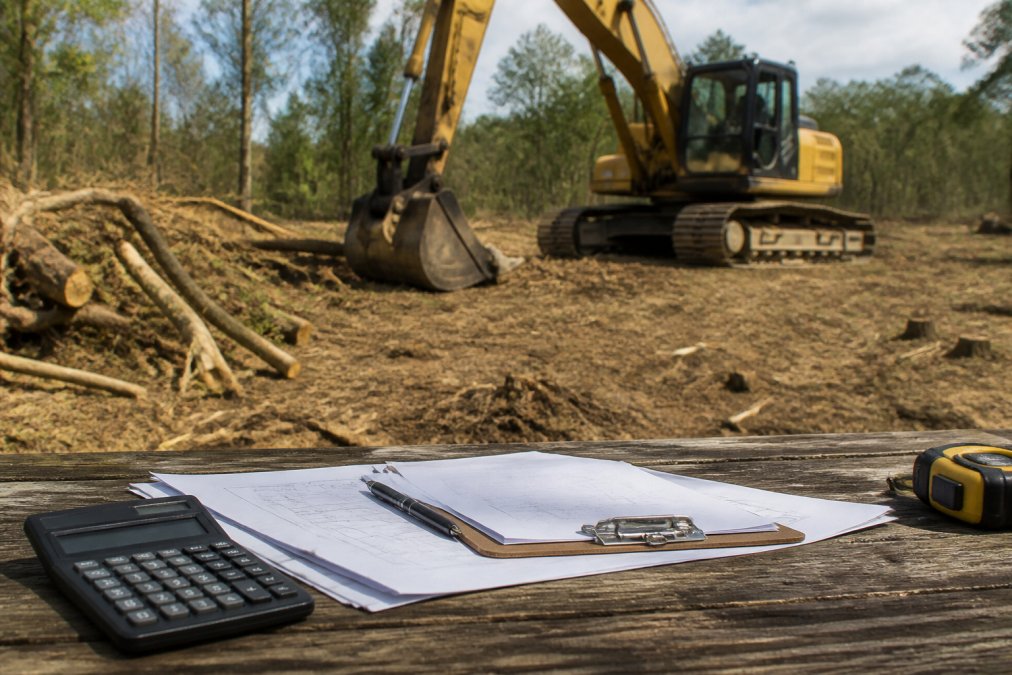
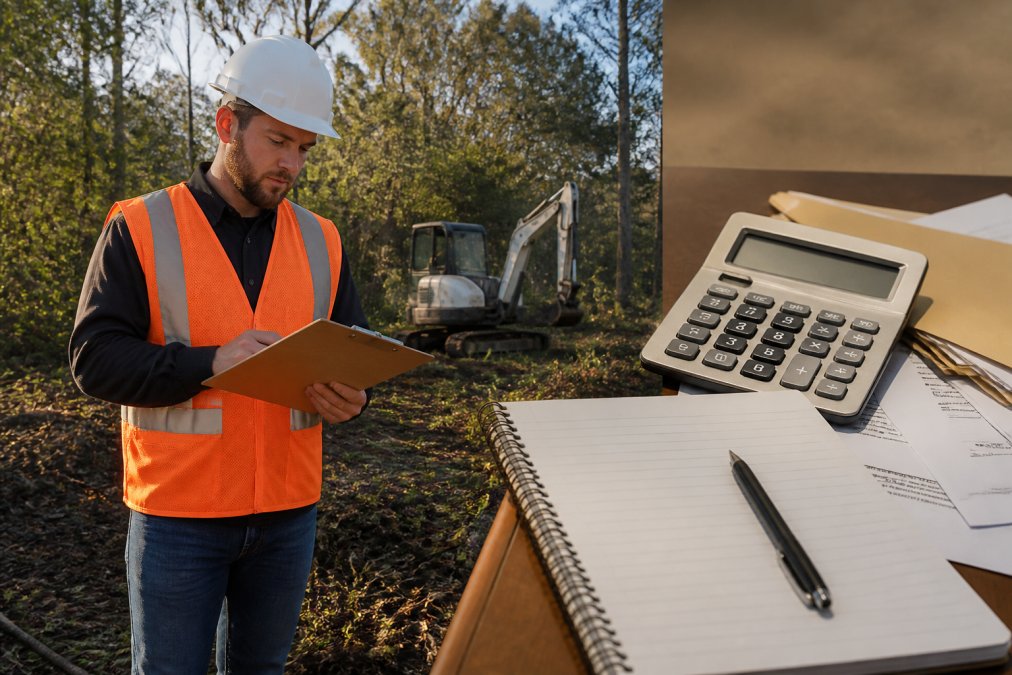
Residential land clearing cost estimates are quotes that reflect the total labor, equipment, disposal, and site-prep work required to remove brush, trees, and undergrowth from a property. At SemperFi Land Clearing LLC, we build every estimate from three inputs: acreage, vegetation density, and site access. A quarter-acre fence line and a five-acre thicket are entirely different jobs, even when the acreage sounds similar.
The Anatomy of a Line-Item Estimate
A real estimate is a stack of line items, not one number. When you read a quote, you should be able to trace each dollar to a specific task and a specific machine. The typical stack looks like this:
- Mobilization, trucking equipment to the site, fuel, and setup time. On small jobs this can be a meaningful share of the total because the crew still has to move a machine for a half-day of work.
- Clearing labor and machine time, the core line, priced by the acre, the hour, or the crew-day.
- Stump grinding, usually billed per stump, with price rising by diameter and by how deep below grade the grind goes.
- Debris handling, chipping, piling, burning, or hauling. This is the line that swings the total the most.
- Grading and site prep, smoothing the surface, cutting access, and restoring drainage.
- Erosion control, silt fence, straw wattles, or blankets on sloped ground.
Per-Acre vs. Hourly Pricing Models
Per-acre pricing works best when vegetation is uniform and the site is accessible. Hourly pricing suits smaller jobs, fence line clearing, or properties where density or terrain varies across the acreage.
The trade-off matters:
- Per-acre: predictable budget, but assumes average conditions. If your site is above average in difficulty, you may pay for work the crew didn't have to do, or the contractor may pad the rate to cover the risk.
- Hourly: fairer on tricky sites, but the total can shift if work runs long. Ask for a not-to-exceed cap so the number can't run away from you.
- Crew-day: a flat rate covering equipment and a full crew, common on larger jobs. Good for multi-day projects where you want cost certainty without per-acre assumptions.
What a Standard Estimate Includes
A complete estimate should list every line item, not a single lump sum. Expect to see clearing, stump grinding, debris disposal, and any grading or site preparation separated out.
Factors Affecting Land Clearing Prices on Your Property
Several variables drive the final number, and understanding them helps you sanity-check any quote you receive. Vegetation density, tree size, terrain, soil composition, and site accessibility are the big five. Each one changes how much heavy equipment time a job requires.
Vegetation Density and Tree Size
Light brush and undergrowth clear quickly with forestry mulching. Mature hardwoods with large root systems take far longer and require different equipment. A property with scattered trees costs less per acre than one choked with dense saplings.
Terrain, Soil, and Site Accessibility
Sloped ground, rocky soil, and soft or wet areas slow equipment and raise the price. So does limited access: if a dozer or skid steer can't reach the work zone, crews may need smaller machines or hand work, both of which take longer.
Forestry Mulching Cost Per Acre vs. Traditional Clearing
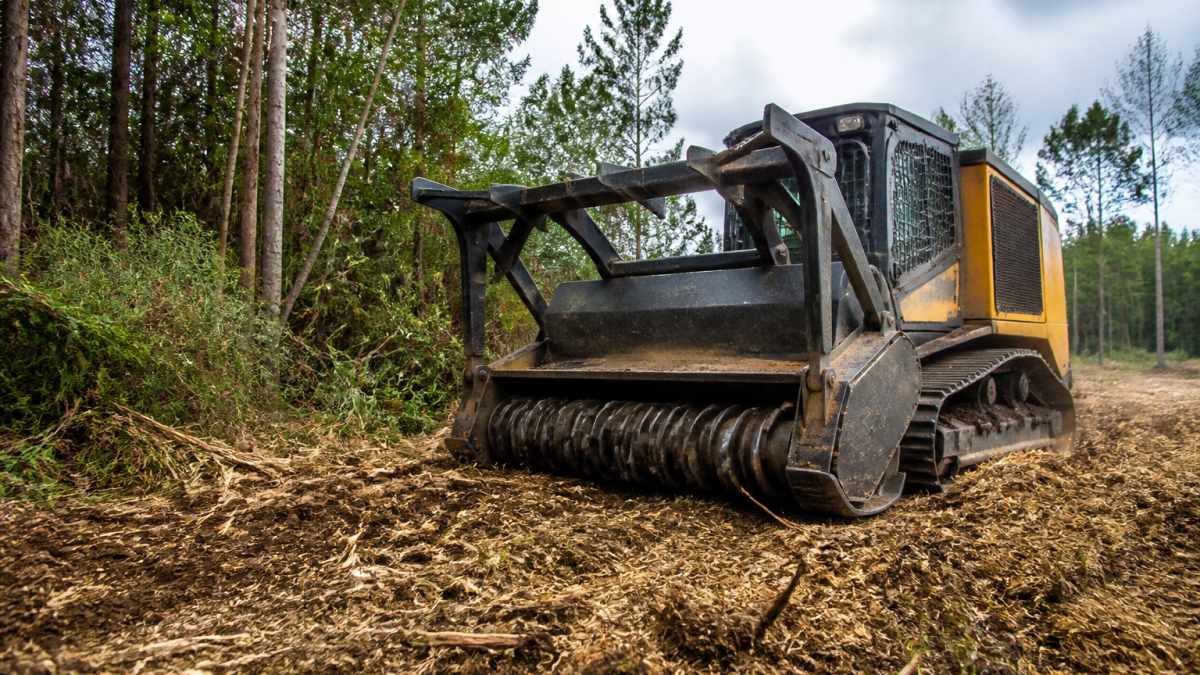
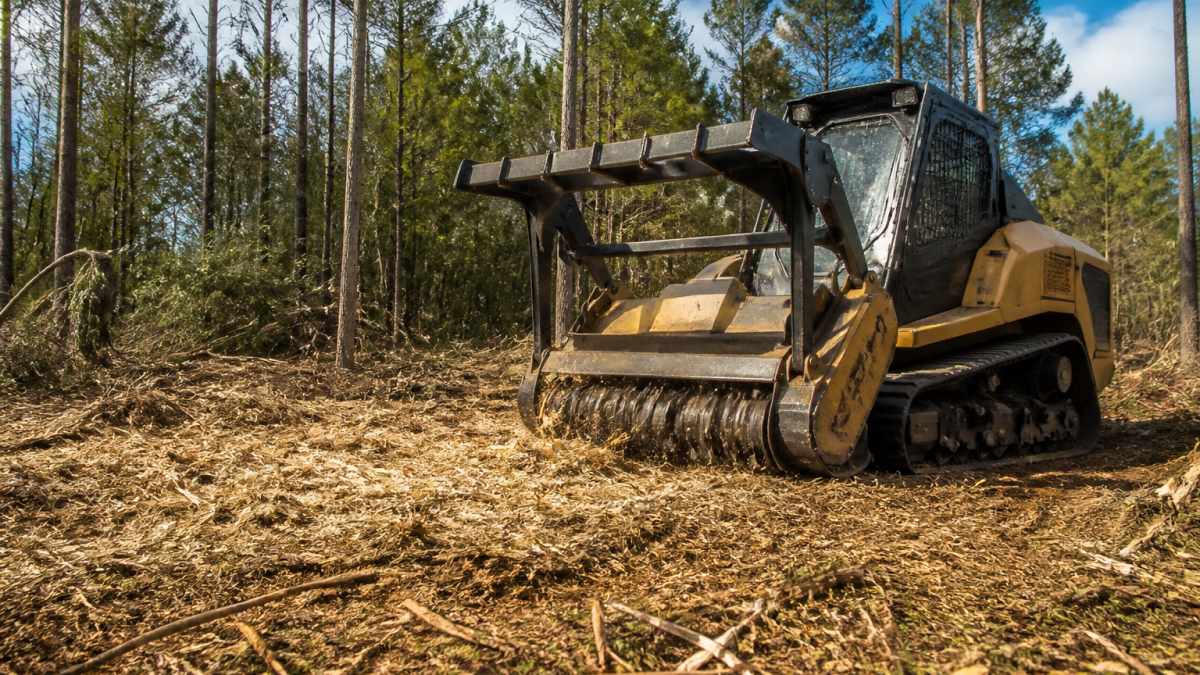
Forestry mulching grinds standing brush and small trees into mulch on site, which is why it usually costs less than traditional clearing. Traditional methods require felling, piling, burning, or hauling debris, and each of those steps adds labor and equipment time.
| Method | Typical Use Case | Debris Handling | Site Disturbance |
|---|---|---|---|
| Forestry mulching | Brush, saplings, fence lines | Left as mulch on site | Low, topsoil preserved |
| Traditional clearing | Large hardwoods, full site prep | Piled, burned, or hauled | High, topsoil disturbed |
| Hybrid approach | Mixed density properties | Mulch small, haul large | Moderate |
How to Prepare Land for Clearing: A Step-by-Step Checklist
Preparation is where most budgets are won or lost. A few hours of groundwork before crews arrive prevents delays, surprise fees, and rework. Here's the sequence we recommend to every property owner.
- Confirm property lines with a current land survey
- Call 811 to have utility lines marked before any digging (811 Before You Dig)
- Check zoning regulations and local permit requirements
- Identify trees you want to keep and flag them clearly
- Clear vehicles, fences, and equipment from the work zone
- Discuss debris disposal and hauling in writing
- Confirm erosion control measures for sloped ground
- Schedule work for dry conditions when possible
Permits, Surveys, and Utility Markings
Permit requirements vary by jurisdiction and by what you plan to do with the land. Clearing brush for land management is often treated differently than clearing for a new build. Always confirm with your local planning office before work begins.
Equipment, Debris Disposal, and Hidden Line Items
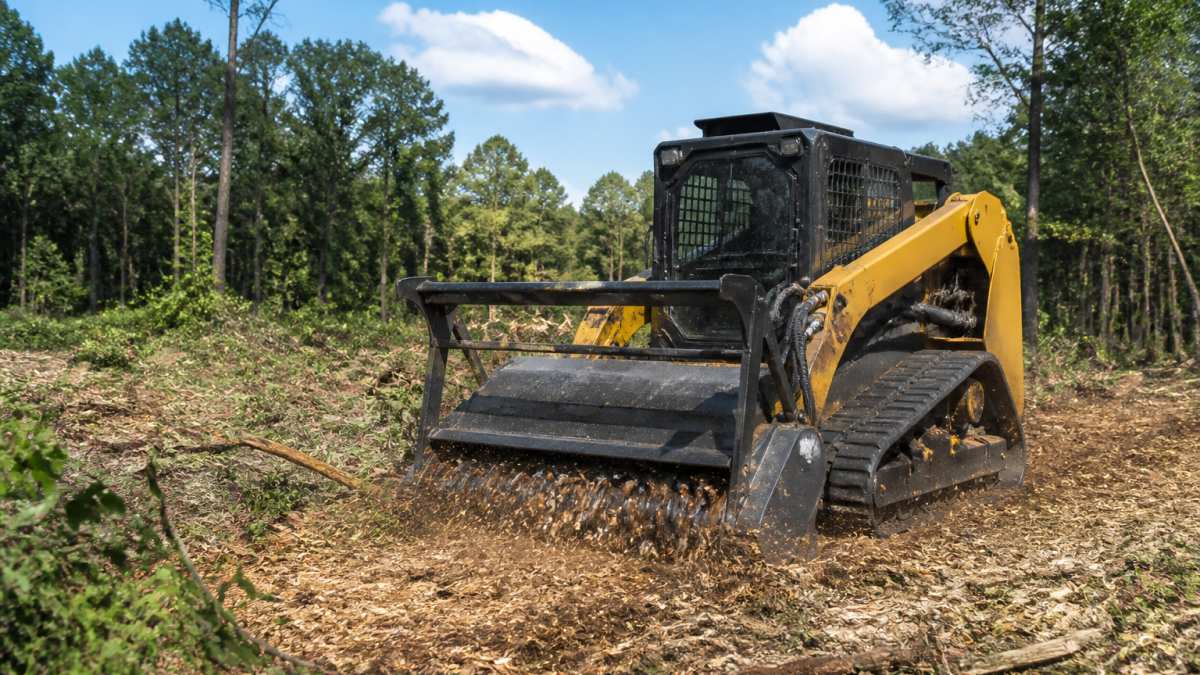
The equipment a crew brings determines what the job costs and how clean the finish looks. Skid steers handle tight spaces and light brush. Dozers move heavy timber and grade sites. Forestry mulchers grind vegetation in place. But if you're weighing DIY against hiring out, the machine choice is also a rental math problem, and most guides skip that math entirely.
Equipment Rental Cost Analysis for DIY Clearing
Renting the wrong machine is the fastest way to erase the savings of doing the work yourself. Here's how the three common options compare on a residential job:
- Walk-behind or compact-track forestry mulcher, the lowest entry point. Best for light brush, saplings, and fence lines under about an acre. Rental yards typically price these by the day or the weekend, and they fit through a standard gate. The catch: they stall out on anything larger than a few inches at the base, so mature trees are off the table.
- Skid steer with a mulching or grapple attachment, the middle option. Handles brush, small trees, and debris piling, and it turns tightly around houses and fences. Rental is priced by the day, often with a minimum, plus a damage waiver and fuel. Attachment choice matters: a mulching head and a grapple bucket are different rentals with different capabilities.
- Compact excavator, the right tool for stumps, root balls, and digging, not for grinding brush. If your job is mostly stump removal, this is the machine; if it's mostly overgrown pasture, it isn't.
Debris Disposal: The Line Item Homeowners Most Often Overlook
Hauling away stumps and timber requires trucks and dump fees, and those costs add up fast on large acreage. Disposal pricing usually depends on volume, weight, and whether the material is clean vegetative waste or mixed with soil and rock. Clean chips and mulch are often cheaper to dispose of, or free to leave on site, than stumps with dirt still attached.
Other Hidden Line Items to Watch For
Beyond disposal, these are the items that quietly inflate a final invoice:
- Stump grinding depth, grinding a few inches below grade versus a foot below grade are different jobs with different prices.
- Grading, rough grading to level the surface is not the same as finish grading to a buildable pad.
- Access roads, gravel, culverts, and any temporary road built so equipment can reach the work zone.
- Erosion control, silt fence, wattles, and blankets on sloped ground, sometimes required by local ordinance.
- Rock and unexpected obstructions, buried concrete, old foundations, and large rock can turn a clearing job into a demolition job.
Reducing Your Land Clearing Cost: Timber Salvage and DIY Options
The real difference between a cheap job and a good one comes down to what's left behind: bare, eroding ground or a manageable, healthy property.
USDA Natural Resources Conservation Service erosion control guidance
Frequently Asked Questions
How do professionals calculate residential land clearing cost estimates?
Most contractors start with an on-site assessment to measure acreage, identify vegetation density, and check terrain and access. They then apply either a per-acre rate or an hourly rate depending on job size. A standard estimate factors in equipment mobilization, labor, debris disposal, and any permit fees. For small or irregular lots, hourly pricing is common; for larger acreage, per-acre pricing gives you a more predictable number.
Is forestry mulching cheaper than traditional land clearing?
Forestry mulching often costs less per acre than traditional clearing because it eliminates the separate grinding and hauling steps. The mulcher cuts and grinds vegetation in place, leaving mulch on the soil. Traditional clearing requires excavators, dozers, and trucks to haul debris away, which adds labor and disposal fees. For residential lots with heavy brush and small trees, forestry mulching is frequently the more economical option.
What factors affect land clearing prices the most?
Vegetation density and tree size drive most of the cost. Thick undergrowth, large hardwoods, and stump removal take more time and equipment. Terrain matters too: slopes, rocky soil, and wet areas slow crews down. Site accessibility is another major factor. If equipment cannot reach the work zone easily, mobilization costs rise. Permit fees and debris disposal requirements also affect the final price.
How should I prepare my land before a clearing crew arrives?
Start by scheduling a land survey and calling 811 to mark underground utilities. Clear any personal items, vehicles, or fencing you want to keep. Check with your local zoning office about permit requirements for residential lot clearing. If you plan to keep certain trees, flag them clearly. Having a written scope of work and a marked property boundary helps the crew work efficiently and reduces the chance of unexpected charges.
Land clearing costs are driven by factors you can actually control: preparation, access, and how you handle debris. SemperFi Land Clearing LLC offers free land assessments so you know exactly what your property needs before you commit to a number. As a veteran-owned team, we bring precision and reliability to every project, from specialized 10-foot fence line clearing to full forestry mulching for soil health. Get an estimate from SemperFi Land Clearing LLC and clear your land with confidence.