 How-to
How Do You Stop Soil Erosion After Clearing a Slope?
Last Updated: November 1, 2026
Quick Summary
Stop soil erosion after clearing a slope by acting before the first rain: inspect the site, redirect runoff with a temporary diversion berm, cover bare ground with straw mulch or an erosion-control blanket, and stabilize the toe of the slope with a silt fence or straw bales. These temporary controls buy time until permanent ground cover takes hold.
- Inspect the site for exposed soil, ruts, and natural water paths within the first 48 hours.
- Avoid driving on soft soil after clearing, which compacts it and kills structure.
- Gentle slopes under about 3:1 can be seeded and mulched; steeper slopes need blankets or netting.
- Seed in two passes: a nurse crop for immediate cover and a perennial mix for lasting protection.
- Redirect roof, driveway, and uphill runoff with gutters, splash blocks, and diversion swales.
Table of Contents
- The First 48 Hours: Stabilizing Bare Soil Before Rain Hits
- Best Ground Cover for Hillside Erosion Control
- Hydroseeding a Hillside: When Spray-On Seeding Makes Sense
- Erosion Control Blankets for Slopes: Netting, Mats, and When to Use Them
- Slope Drainage Solutions: Moving Water Away From Cleared Ground
- Schedule a Free Land Assessment With SemperFi Land Clearing LLC
- Frequently Asked Questions
The First 48 Hours: Stabilizing Bare Soil Before Rain Hits
When you clear a sloped property, you strip away the roots that held the soil together. The clock starts ticking the moment the machines leave.
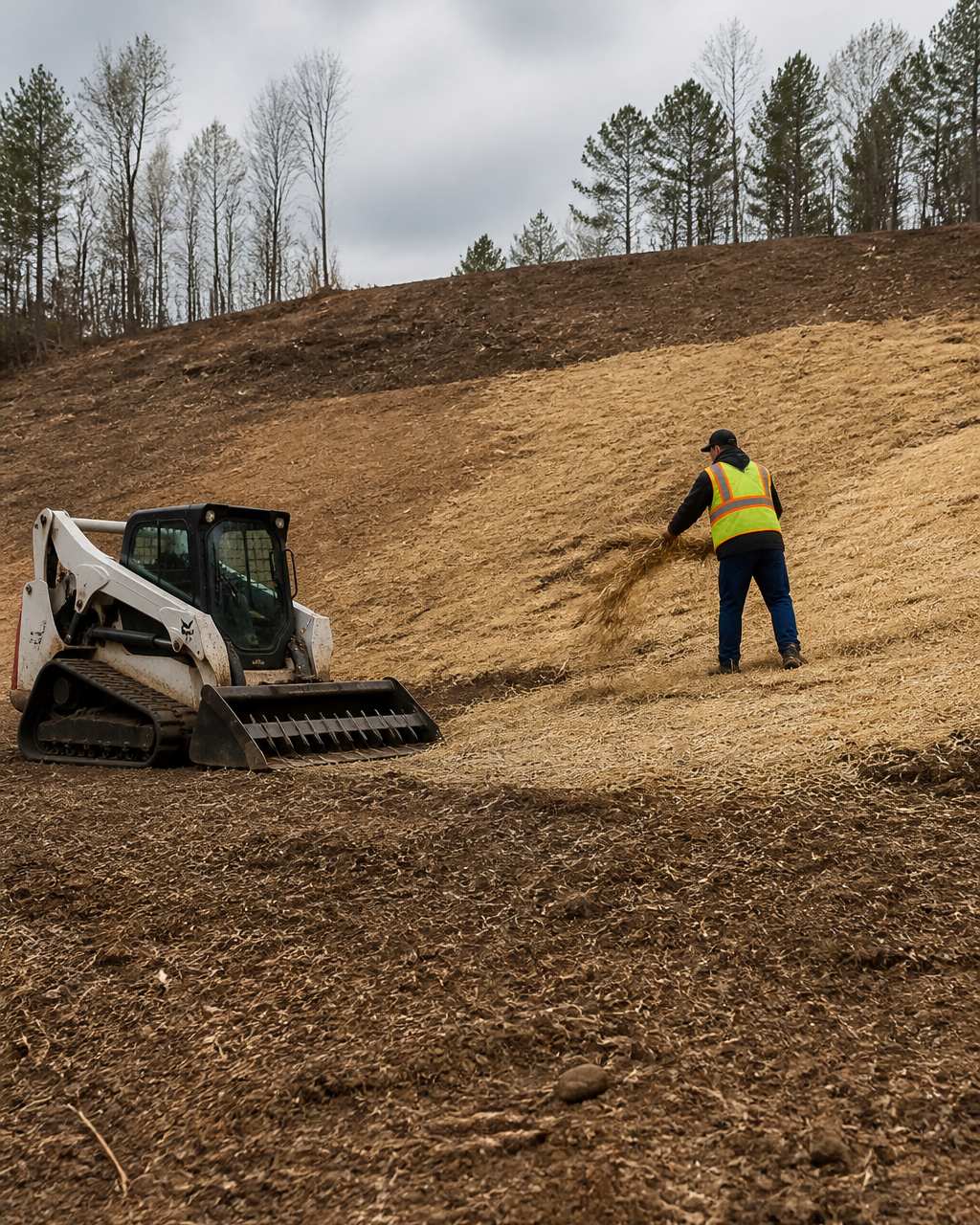
Soil erosion is the detachment and movement of topsoil by water, wind, or gravity. On a slope, water is the main threat.
Here's the part most guides get wrong: they jump straight to planting. But plants take weeks to establish.
Your first-48-hours plan:
- Inspect the site for exposed soil, ruts, and natural water paths.
- Redirect runoff away from bare slopes with a temporary diversion berm.
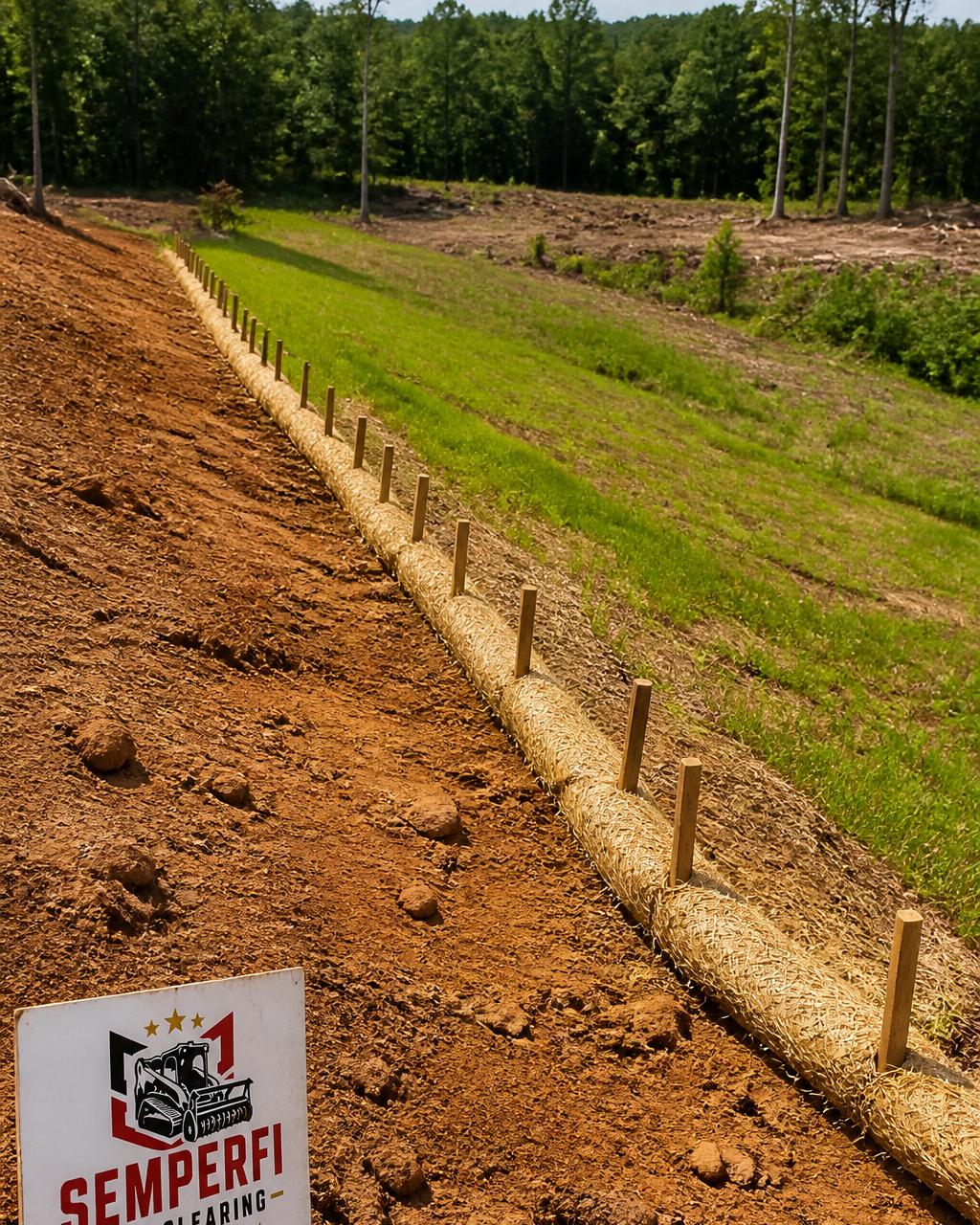
- Cover bare ground with straw mulch or an erosion-control blanket.
- Stabilize the toe of the slope with a silt fence or straw bales.
- Avoid driving on soft soil after clearing, which compacts it and kills structure.
Why Cleared Slopes Erode So Fast
Cleared slopes erode fast because nothing slows the water down. Roots once held soil in place and soaked up rainfall. Remove the vegetation, and surface runoff picks up speed and energy.
Three things make it worse:
- Loss of root structure leaves soil loose and easy to wash away.
- Compacted soil from heavy equipment sheds water instead of absorbing it.
- Steep grades give runoff more energy to carry sediment downhill.
The steeper the slope, the less time you have. If you want the full picture on protecting the soil that's left, our guide on protecting topsoil during land clearing walks through the proven steps.
Temporary Controls vs. Permanent Restoration
Temporary controls handle the emergency. Permanent restoration handles the long term. You need both, but in the right order.
| Control Type | Purpose | Typical Examples | Lifespan |
|---|---|---|---|
| Temporary | Stop soil loss now | Straw mulch, silt fence, diversion berms | Weeks to months |
| Permanent | Rebuild stable ground | Ground cover, native plants, retaining walls | Years |
Temporary controls buy you time. Permanent restoration does the lasting work. Skipping the temporary stage is how slopes fail before plants can take hold.
Best Ground Cover for Hillside Erosion Control
The best ground cover for hillside erosion control is a layered mix: a fast-establishing nurse crop, deep-rooted perennial grasses, low woody shrubs, and a mulch blanket over the bare ground between them. Roots hold soil, top growth breaks raindrop impact, and litter on the surface slows runoff. No single species does all three, which is why seed blends and plant mixes outperform monocultures on cleared slopes.
Match the Cover to Your Slope, Soil, and Shade
Plant choice is a site decision, not a shopping list. Work through these four conditions before you buy seed or plugs.
1. Slope grade. Gentle slopes under about 3:1 (roughly 18 degrees) can be seeded and mulched.
**2.
3. Shade. Full-sun slopes suit tough warm-season grasses and drought-hardy natives.
4. Climate and rainfall timing. Match the seeding window to your local rainfall pattern.
Plant Categories That Pull Their Weight
- Fast annual nurse crops (cereal rye, annual ryegrass) germinate in days and hold the surface while perennials establish. They are temporary, expect them to fade after a season.
- Deep-rooted perennial grasses (native bunchgrasses and warm-season species suited to your region) are the long-term backbone. Their fibrous root mass is what actually pins soil on a slope.
- Rhizomatous spreaders knit loose soil together and fill gaps, but check local guidance before planting aggressive spreaders near waterways or native areas.
Native species generally beat exotic ones on cleared slopes because they are adapted to local rainfall, soil, and pests and establish with less irrigation and amendment. That is a general principle, not a guarantee, confirm what is actually native and non-invasive in your area before ordering.
For slopes you have recently mulched, it helps to know what will grow back on its own. Our article on whether forestry mulching prevents brush regrowth explains the timelines and what to expect.
Hydroseeding a Hillside: When Spray-On Seeding Makes Sense
Hydroseeding a hillside makes sense on large, hard-to-reach slopes where hand seeding is impractical. A slurry of seed, mulch, and soil conditioner is sprayed over the surface in one pass.
It works best when:
- The slope is too big or steep for hand work.
- You need quick, even coverage.
- Rainfall is expected soon and you need protection now.
Heavy seeding and scarifying the surface first improve results. A soil conditioner or bio-stimulant helps roots take hold in poor ground. The catch: hydroseeding needs consistent moisture to work. On a dry, exposed slope, germination can stall.
Erosion Control Blankets for Slopes: Netting, Mats, and When to Use Them
Erosion control blankets protect seed and soil while plants establish. These netting and mat products sit on the surface and absorb raindrop impact, slow runoff, and hold moisture. They're the tool for steep or wind-exposed slopes where mulch alone won't stay put.
Use them when:
- The slope is steep enough that mulch washes off.
- You've just seeded and need to protect germination.
- Wind or heavy rain is likely before plants root.
Match the blanket to the job. Light netting suits gentle slopes. Heavier mats handle steep, high-flow ground. Anchor edges well, or the blanket becomes the problem.
Slope Drainage Solutions: Moving Water Away From Cleared Ground
Slope drainage solutions move water off cleared ground before it can pick up soil. The goal is simple: control where water goes, and slow it down. Good drainage prevents erosion better than any cover alone.
Common approaches:
- Diversion channels steer runoff around bare areas.
- Terraces and garden terraces break long slopes into flatter plateaus.
- Retaining walls hold soil back, with weep holes to release water pressure.
- Rock and erosion barriers slow water at the base of a slope.
Grade the land so water flows away from exposed soil, not across it. Our page on managing property drainage after clearing trees covers runoff assessment and grading in more detail.
Runoff From Roofs, Driveways, and Neighboring Properties
Your slope doesn't only catch rain that falls on it. Water from roofs, driveways, and uphill neighbors adds to the load.
Watch for:
- Roof runoff concentrated at one point.
- Driveway water channeled toward cleared ground.
- Uphill runoff from neighboring properties.
Redirect these flows with gutters, splash blocks, and diversion swales. Fix the source before you fix the slope.
Before you start, check local rules on runoff and protected waterways. For a proven step-by-step approach to holding soil in place, see our guide on land clearing soil erosion prevention.
Schedule a Free Land Assessment With SemperFi Land Clearing LLC
Erosion control starts with knowing your site. At SemperFi Land Clearing LLC, we offer a free land assessment.
Customers have described our work as "on time, on schedule, and on budget." If you want to see the work we do, explore our forestry mulching services.
Get an estimate from SemperFi Land Clearing LLC and protect your cleared slope before the next storm.
Frequently Asked Questions
How soon should you stabilize soil after clearing a slope?
Treat the first 48 hours as the deadline, not the goal. Bare soil on a slope has lost the roots and litter that held it together, so a single heavy rain can start sheet erosion and cut rills. Spread mulch or a temporary cover the same day clearing finishes if rain is in the forecast. Permanent measures like seeding, erosion control blankets, and drainage work can follow, but exposed soil should never sit unprotected through a storm cycle.
Can mulch alone prevent soil erosion on a cleared slope?
Mulch is the fastest, cheapest first line of defense, but it is a temporary control. A layer of straw or wood chips two to three inches deep cushions raindrop impact and slows surface runoff while seedlings establish. On steep slopes or in concentrated water paths, mulch alone can float away in a heavy storm. Pair it with erosion control blankets, a seed mix, and drainage that directs water around the cleared area for lasting protection.
Does hydroseeding adhere to a hillside?
Hydroseeding a hillside works because the slurry includes a tackifier, a sticky binder that helps the seed and mulch mixture grip the soil surface. It covers large or hard-to-reach areas quickly and supports seed germination, which is why it is common on slopes after clearing. Adhesion is weaker on very steep grades, sandy soil, or in direct runoff paths. On those sites, an erosion control blanket or netting over the hydroseeded area holds everything in place until roots take over.
Do you need a permit or an engineer before working on a sloped property?
Sometimes. If the slope drains toward a stream, wetland, or storm sewer, or if the project disturbs a large area, local grading and sediment control rules may apply, and some protected waterways require extra review. A retaining wall above a certain height typically needs engineered design and a permit. Check with your county or city before major earthwork, and bring in a licensed engineer when the slope is steep, the soil is soft, or a wall will hold back significant weight.
Cleared ground on a slope is vulnerable the moment the machines leave. The right cover, drainage, and timing make the difference between a stable property and a washed-out one. SemperFi Land Clearing LLC offers free land assessments, expert forestry mulching, and specialized fence line clearing to help you get it right. Get started with SemperFi Land Clearing LLC and secure your land for the long haul.