 How-to
5 Factors That Decide How Long Mulch Takes to Break Down
Quick Summary
Mulch can decompose in a few months to several years, depending on the material and its particle size. Fine, soft materials like shredded hardwood and compost break down faster, while coarse, resinous wood chips and pine bark nuggets last longer. Mulch decompose slowest when it is large, woody and high in carbon.
- Small pieces expose more surface area to microbes and moisture, so they decay faster.
- Woody, high-carbon materials decay slowly because microbes pull nitrogen from the soil.
- Fine compost absorbs water and rarely mats, but it disappears fast.
- Rubber mulch does not decompose in any practical timeframe.
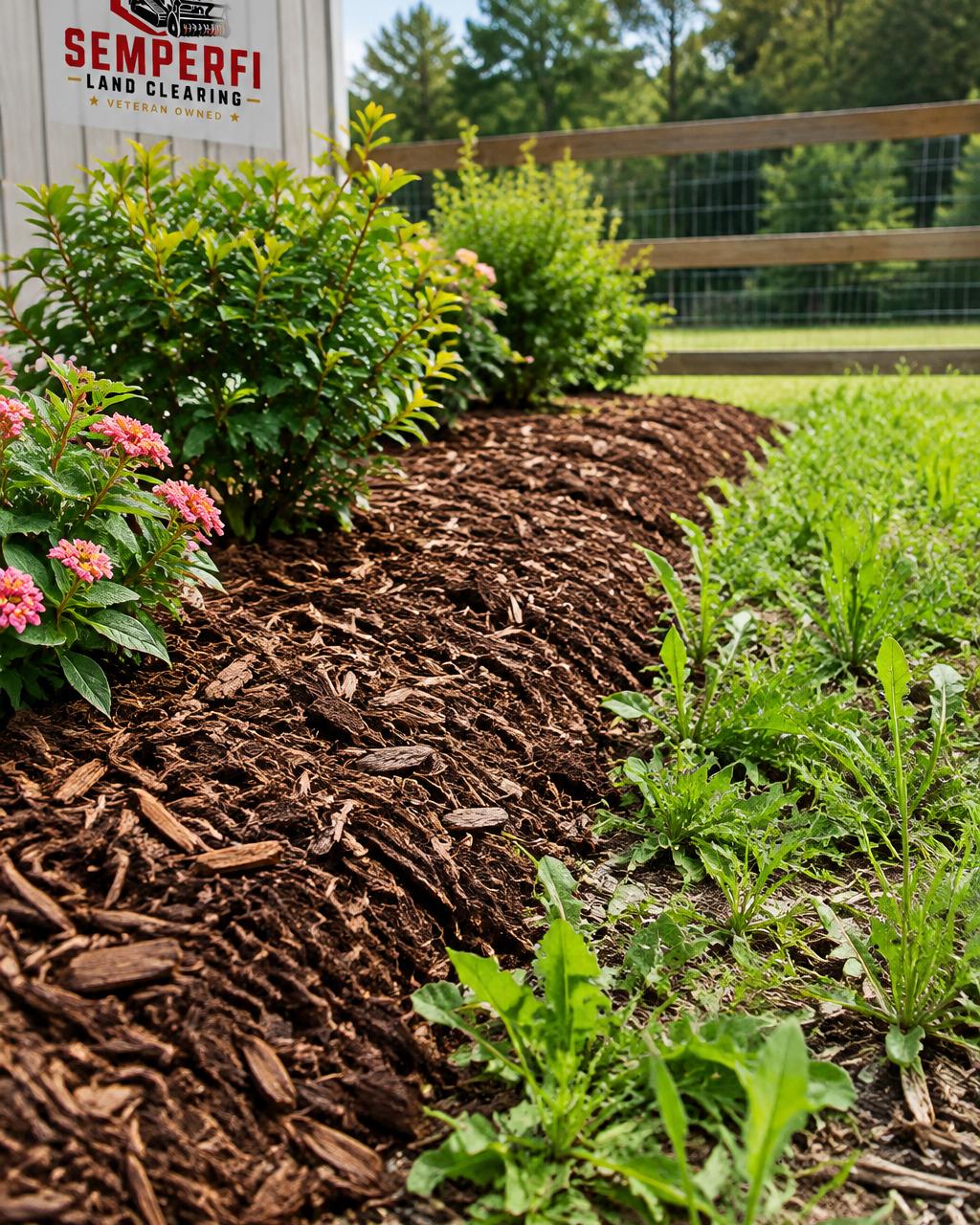
- Keep mulch a few inches back from plant bases, since piling it against trunks or stems can cause rot.
Table of Contents
- How Long Mulch Takes to Decompose by Material
- What Speeds Up or Slows Down Decomposition
- How Long Wood Mulch Lasts and When to Replace It
- Frequently Asked Questions
How Long Mulch Takes to Decompose by Material
Last Updated: November 19, 2026
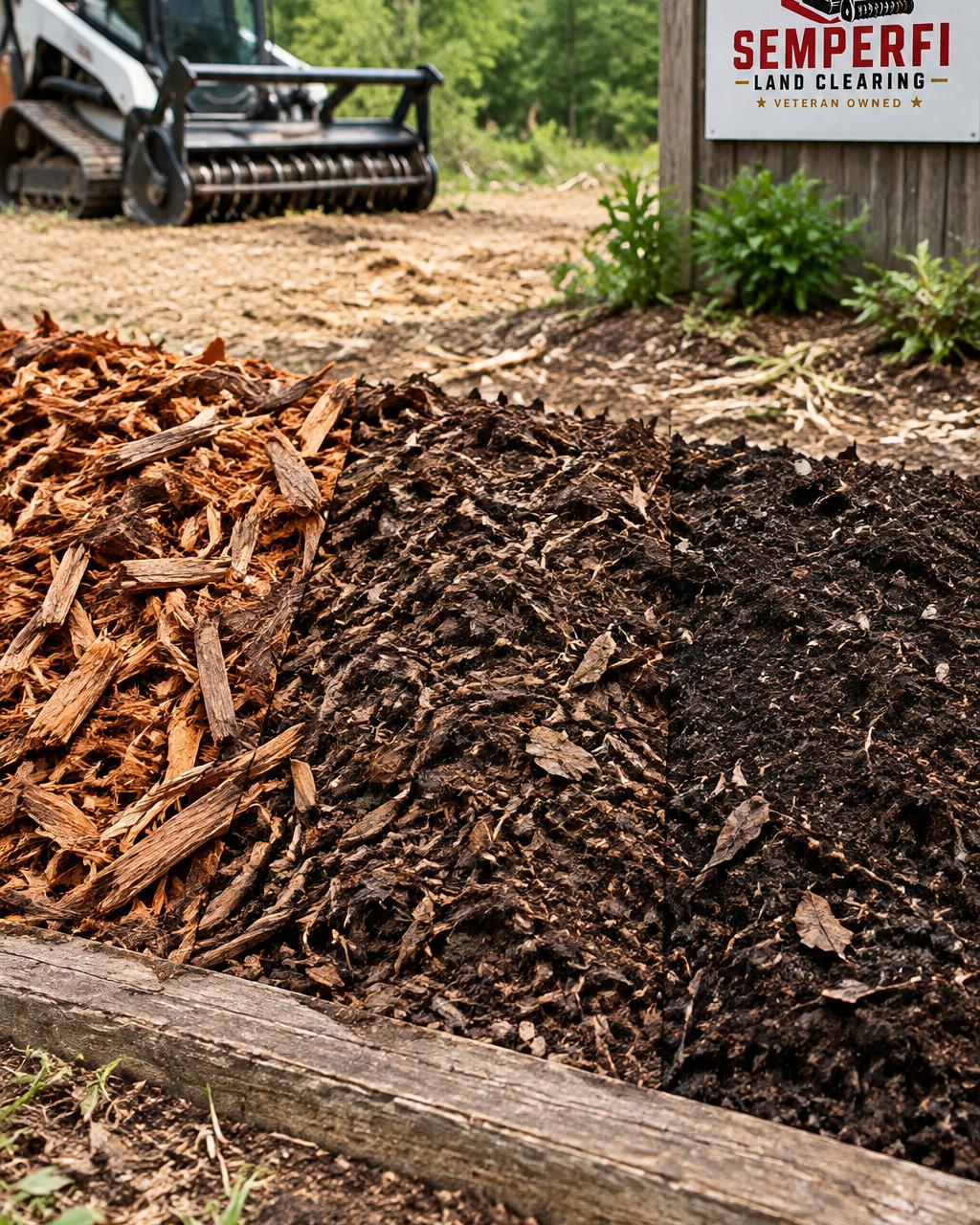
Mulch decompose at different speeds based on particle size and carbon-to-nitrogen ratio. Small pieces expose more surface area to microbes and moisture, so they decay faster; woody, high-carbon materials decay slowly because microbes pull nitrogen from the soil.
The material decides the timeline more than anything else:
- Fine shredded hardwood: Holds moisture but mats after heavy rain.
- Coarse wood chips: Large pieces leave air gaps, but chips float and can wash off sloped beds.
- Pine bark nuggets: High lignin resists decay, but nuggets slide downhill on saturated soil.
- Straw: Mats flat when wet; break it up after rain.
- Leaves: Whole leaves mat and blow around; shredded leaves stay put.
- Fine compost: Absorbs water and rarely mats, but disappears fast.
- Rubber mulch: Does not decompose in any practical timeframe.
Rule of thumb: finer, softer material decomposes faster and needs more moisture and matting management; coarser, more resinous material lasts longer and drains better but floats or shifts on wet, sloped ground.
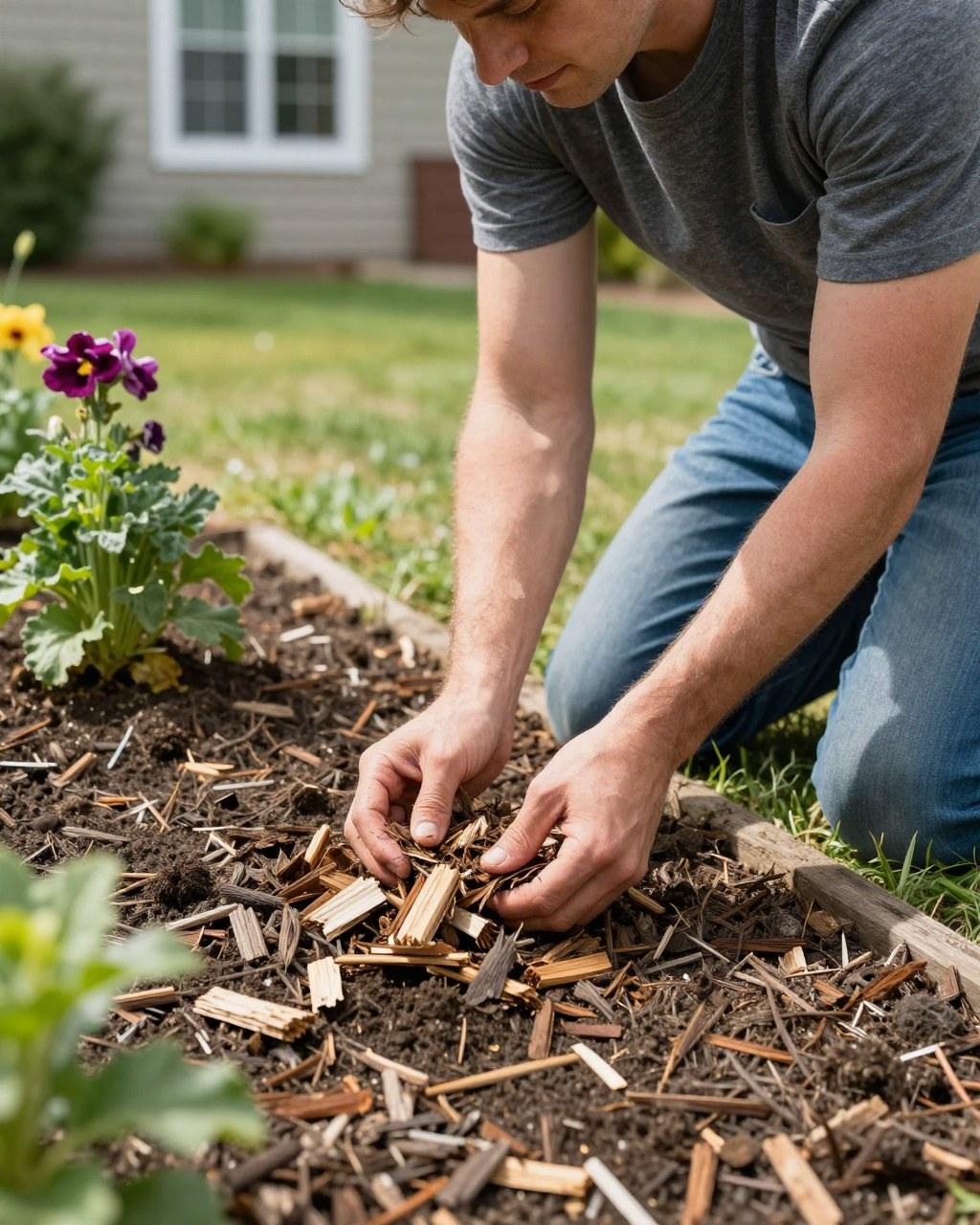
The material you choose shapes how quickly it breaks down and how it behaves in the bed.
| Material | Breakdown behavior | Key trade-off |
|---|---|---|
| Fine shredded hardwood | Holds moisture | Mats after heavy rain |
| Coarse wood chips | Large pieces leave air gaps | Chips float and wash off slopes |
| Pine bark nuggets | High lignin resists decay | Nuggets slide on saturated soil |
| Straw | Mats flat when wet | Break up after rain |
| Leaves | Whole leaves mat and blow | Shredded leaves stay put |
| Fine compost | Disappears fast | Absorbs water, rarely mats |
| Rubber mulch | Does not decompose practically | No breakdown in practical timeframe |
What Speeds Up or Slows Down Decomposition
Several factors control how fast mulch decompose, and local conditions matter as much as the material.
Watch out: mulch piled against tree trunks or plant stems can rot them. Keep it a few inches back from each plant base.
How Long Wood Mulch Lasts and When to Replace It
Wood mulch needs periodic topping up as it breaks down. Check depth each spring: dark, crumbly mulch is still working, while bare soil or weeds mean it is time to add more. Learn whether forestry mulching suppresses brush regrowth and how that affects how often you need to top up.
A quick field test before you add more. Push a finger or trowel into the layer. Loose, crumbly mulch is still functioning; a slick, matted crust that sheds water should be broken up with a rake.
What to do if mulch was already applied to saturated ground. After heavy rain, check for pooling and floated or matted mulch. Pull matted material back from plant crowns and trunks, spread it thinner, and avoid walking on saturated soil. Do not add another layer to fix a soggy spot; remove or redistribute first.
Garden beds versus larger areas. In a flower bed, refresh the layer as it thins. For larger areas, see how forestry mulching keeps pasture maintained over time. On pasture or open land, decomposition is uneven and wet-ground access becomes the limiting factor; hand application or waiting for drier conditions beats heavy equipment that ruts saturated soil. If you'd rather have a crew handle land clearing and forestry mulching locally in Longview, TX, you can request an estimate.
Can you compost old mulch? Yes. Old wood mulch can go into a compost pile or be spread lightly into beds, adding organic matter as it breaks down.
How often should you replace mulch? How often beds need new mulch depends on material and climate. Coarse chips and bark nuggets generally last longer than shredded hardwood and compost. To compare forestry mulching cost per acre for a large area, review the pricing factors.
Does mulch ever need to be removed entirely? Rarely. Persistent matting, mold, or a sour smell usually means the layer is too thick or staying too wet. Rake it loose, thin it out, and let it dry.
Frequently Asked Questions
How often should you replace mulch?
Mulch needs topping up as it thins and breaks down. Fine shredded hardwood breaks down faster than coarse chips. Check depth before spring planting, and rake the surface to break up any matted layer so water can reach the soil beneath it.
Can you compost old mulch?
Yes. Old wood mulch that has turned dark and crumbly can be mixed into a compost pile or worked into garden soil as organic matter. Remove any large unrotted chunks first so the material breaks down evenly.
What is the fastest decomposing mulch?
Straw and shredded leaves break down fastest because they are soft and high in nitrogen. Hardwood chips take longer, and rubber mulch does not decompose in any practical timeframe. Fine materials also decompose faster than large chunks because they have more surface area for microbes to work on.