 How-to
Does Mulching Prevent Weed Growth in Your Garden?
Last Updated: November 16, 2026
Quick Summary
Mulching reduces weed growth but does not stop it completely: a thick layer blocks the sunlight weed seeds need to sprout, though established roots and windblown seeds still find a way. So does mulching prevent weed growth? Largely yes for annual weeds, while deep-rooted perennials push right through.
- Spread mulch 3 to 4 inches deep for weed control; thinner layers let light through.
- Remove existing weeds before mulching, because mulch smothers seeds, not plants.
- Coarse wood chips block light well, while fine mulches like sawdust pack down and let light through.
- Lay plain brown cardboard over cleared ground, wet it, and cover with 3 to 4 inches of mulch.
- Replenish organic mulch to stay 3 to 4 inches deep as it breaks down and thins.
Table of Contents
- Does Mulching Prevent Weed Growth? How It Works
- The Best Mulch to Prevent Weeds
- Do You Need to Pull Weeds Before Mulching?
- How Thick Should Mulch Be for Weed Control?
- Does Mulching Prevent Weed Growth? The Honest Limits
- Barriers Under Mulch: Cardboard and Landscape Fabric
- Keeping Mulch Working: A Simple Maintenance Schedule
- When to Call a Pro
- Frequently Asked Questions
Does Mulching Prevent Weed Growth? How It Works
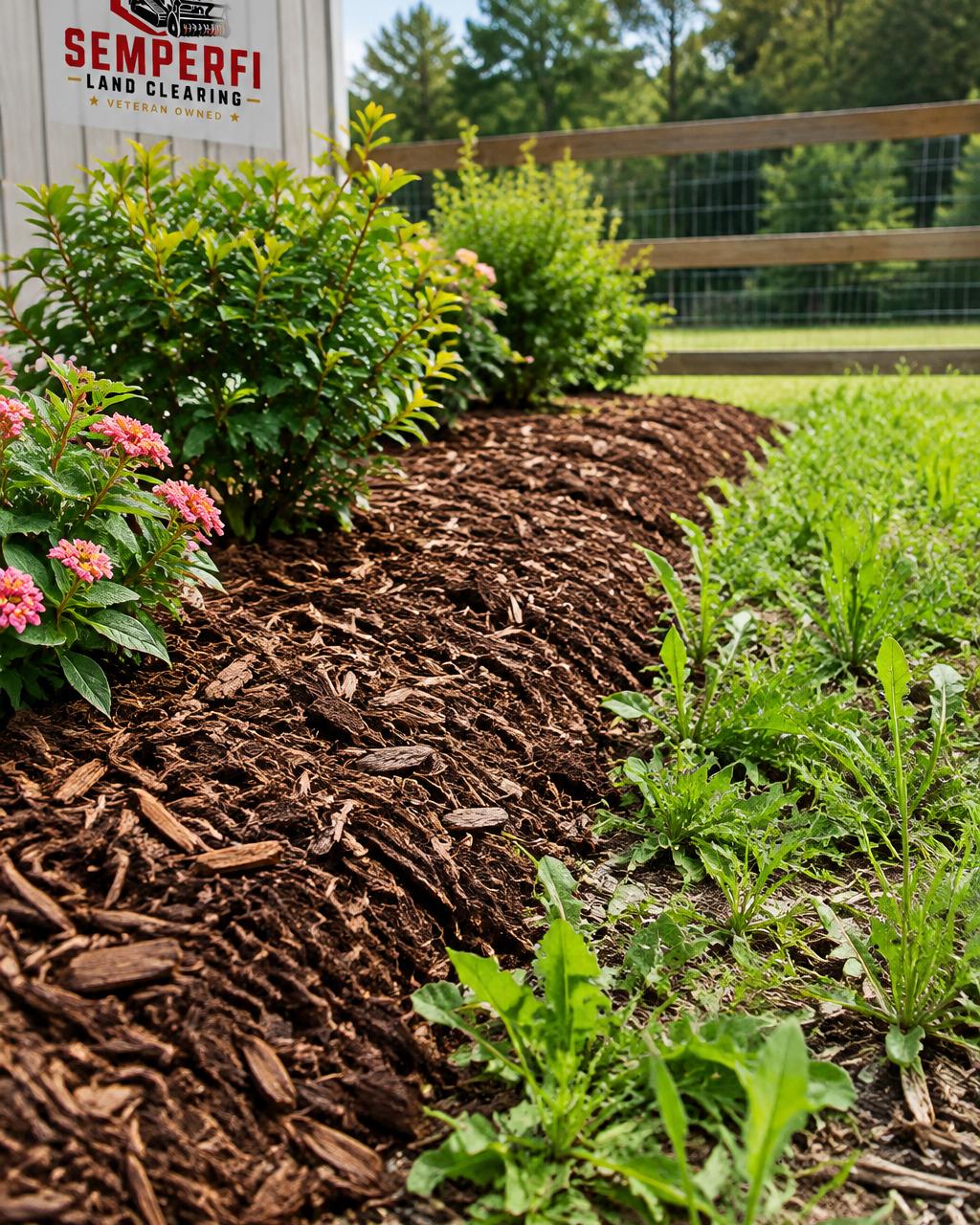
Mulch reduces weed growth but doesn't stop it completely: a thick layer blocks the sunlight weed seeds need to sprout, though established roots and windblown seeds still find a way. For a closer look at what grows back and when, see does forestry mulching prevent brush regrowth. Mulching is spreading organic material over bare soil to block light, hold moisture, and slow weed seed germination. Annual weeds suffer most; deep-rooted perennials push right through.
The Best Mulch to Prevent Weeds
The best mulch for weed control is coarse, chunky organic material spread thick enough to block light, wood chips top the list, while fine mulches like sawdust pack down and let light through.
| Mulch Type | Weed Control | Notes |
|---|---|---|
| Wood chips | Strong | Coarse pieces block light well |
| Pine needles | Good | Knits together, good on slopes |
| Straw | Moderate | Good around vegetables, light |
Skip cheap fine mulch spread thin; coarse wood chips cost a little more but last longer. Keep fresh grass clippings thin or compost them first, piled thick, they mat and shed water.
Do You Need to Pull Weeds Before Mulching?
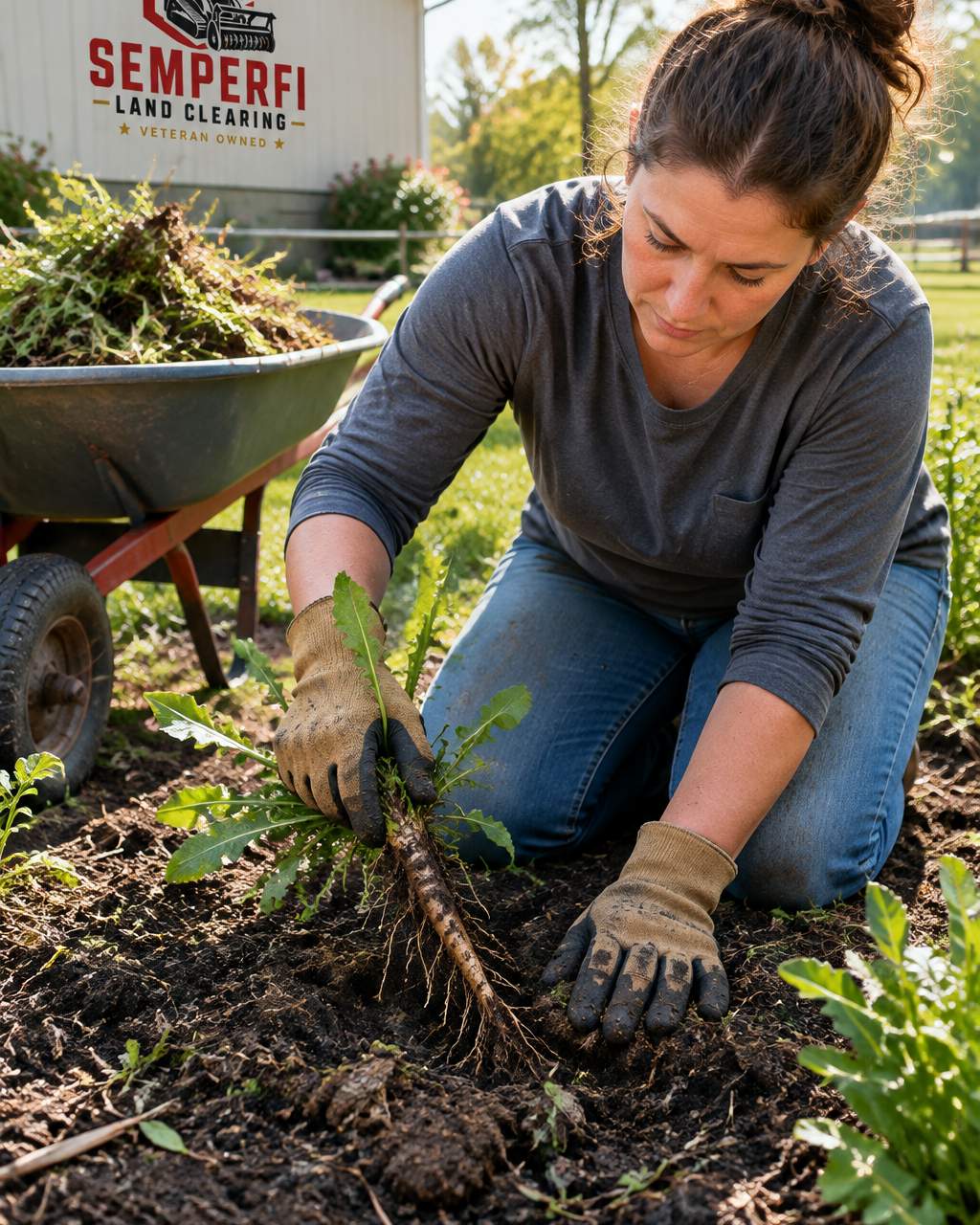
Yes, remove existing weeds before you mulch: mulch smothers seeds, not plants, so any weed already growing will push through.
For heavy brush and overgrown fence lines, our guide on how to clear land for a new garden step by step walks through brush removal, tarping, and no-dig bed prep.
Perennial weeds like nutgrass, bindweed, and briars store energy in their roots, dig the root crown or smother the patch with cardboard under mulch for a full season. See preventing regrowth after land clearing.
If overgrowth covers more ground than you want to fight by hand, our team offers professional land clearing in Longview and East Texas, including a free assessment.
How Thick Should Mulch Be for Weed Control?
For weed control, spread mulch 3 to 4 inches deep; thinner layers let light through, while deeper than 4 inches can smother roots and hold too much moisture against stems. Leave a small gap of bare soil around each plant to prevent rot.
Does Mulching Prevent Weed Growth? The Honest Limits
Mulch cuts weed growth sharply, but no layer is a wall: seeds that land on top still sprout, and perennial roots still push through, so plan on a little hand weeding. Why weeds grow through mulch: the layer blocks light below it, not above, wind, birds, and mowing toss fresh seed onto the surface.
Barriers Under Mulch: Cardboard and Landscape Fabric
Cardboard is a common, plant-safe barrier for beds: lay plain brown cardboard over cleared ground, wet it, and cover with 3 to 4 inches of mulch, it blocks light and breaks down over a season. Landscape fabric lasts longer but seeds root into it and it's hard to remove, so many gardeners use it on paths or under gravel rather than in planting beds.
Keeping Mulch Working: A Simple Maintenance Schedule
Organic mulch breaks down, and as it thins, weeds find the light again. Replenishing mulch to stay 3 to 4 inches deep keeps blocking light year after year. Our guide on whether grass will grow after forestry mulching covers soil prep and seeding timing.
When to Call a Pro
Small beds are a weekend job; acres of brush and overgrown fence lines are a different story, and if weeds and brush keep winning, the ground may need proper clearing before any mulch will hold.
At SemperFi Land Clearing LLC, we are a veteran-owned team serving East Texas property owners. We offer a free land assessment so you know exactly what your land needs before you spend a dime.
Get an estimate from SemperFi Land Clearing LLC and turn overgrown ground into land you can actually use.
Frequently Asked Questions
Is it harder for weeds to grow through mulch?
Yes, when applied correctly. A thick layer of mulch blocks the sunlight weed seeds need to germinate, so most annual weeds never sprout. Mulch also creates a physical barrier that smothers tiny seedlings. However, perennial weeds with established roots can push through, and weed seeds that land on top of the mulch can still germinate. Depth matters: two to four inches is the range where mulch suppresses the most weeds without harming your plants.
Can I just throw mulch over weeds?
You can, but results are mixed. A thick layer can smother small annual weeds, but established perennial weeds often survive and grow right through it. Those weeds also set seed and spread. Pulling or cutting existing weeds first, then applying mulch at the right depth, gives you far better long-term control. For heavy brush and overgrowth, clearing the area before mulching saves repeated work later.
Does mulch prevent grass from growing?
Mulch suppresses grass seed germination by blocking light, but grass is persistent. Rhizome-forming grasses can push through a mulch layer, and grass seed blown onto the surface can still sprout. A three-to-four-inch layer over a prepared soil surface controls most grass regrowth in beds. Keep mulch away from lawn edges, or install a physical edging, to stop grass from creeping into mulched areas.