 how-to
How to Clear Land for a New Garden Step by Step
Last Updated: October 29, 2026
Quick Summary
To clear land for a new garden, start with a 30-minute site assessment walk to map grass, brush, invasives, rocks, and slope, and call 811 before digging. Then match your method to the ground: smother light grass with tarp or cardboard, strip sod by hand or tiller, and cut heavy brush in stages.
- Call 811 before you dig or till; it is free and marks underground lines.
- Smothering light grass with a tarp takes 4 to 8 weeks in warm weather.
- Cardboard and mulch smothering often needs 6 to 10 weeks before planting through.
- Till shallow on the first pass so roots are not chopped into resprouting fragments.
- Walk the cleared bed every week or two and cut regrowth before it seeds.
Table of Contents
- Start With a Site Assessment Before You Cut Anything
- Choose Your Method Based on Site Conditions
- How to Remove Heavy Brush and Overgrown Vegetation
- How to Remove Grass for a Garden Bed
- No-Dig Garden Bed Preparation That Protects Topsoil
- How to Prepare Soil for a Vegetable Garden After Clearing
- Timing, Labor, and Disposal: What the Work Really Takes
- Book a Free Land Assessment Before You Break Ground
- Frequently Asked Questions
Start With a Site Assessment Before You Cut Anything
Learning how to clear land for a new garden starts with looking, not cutting, and the first step is to clear land only after you know what is there. A site assessment is a 30-minute walk that tells you what you are dealing with before you spend a dollar on tools.
Walk the Plot and Map What Is Growing There
Take a notebook and walk the full area in a grid pattern. Write down what you find:
- Grass type. Thin lawn grass is easy. Dense bermuda or fescue takes more work.
- Brush and saplings. Anything woody needs cutting, not mowing.
- Invasive plants. Look for kudzu, honeysuckle, poison ivy, and briars.
Snap photos as you go. You will want them when you plan the bed layout.
Check for Utilities, Rocks, and Slope
Call 811 before you dig or till. It is free, and it marks underground lines. This step is not optional.
Then check three more things:
- Slope. Water runs downhill. A steep plot needs beds that follow the contour.
- Drainage. Low spots hold water and drown young plants.
- Access. Can a tiller or machine get in? A narrow gate changes your plan.
Watch out: cutting brush over an unmarked utility line is the most common and most expensive mistake in this whole process.
Choose Your Method Based on Site Conditions
No single method fits every plot. The right choice depends on what is growing, how big the area is, how much soil disturbance you can accept, and how much time and labor you have. Forestry Mulching vs Bulldozing: Land Clearing Comparison helps readers pick the right clearing method for their site.
Start With Three Questions
- What is growing? Light lawn grass, dense sod, deep-rooted weeds, or woody brush each call for a different approach.
- How big is the area? A 10-by-10-foot bed is a hand-tool job. A quarter acre of brush is a machine job or a multi-weekend project.
- How much soil disturbance can you accept? Smothering and no-dig beds protect topsoil. Tilling and stripping are faster but disrupt soil and bring weed seeds to the surface.
Method-by-Condition Decision Guide
| Site Condition | Best Method | Why | Typical Timeline | Labor Level |
|---|---|---|---|---|
| Light grass, small area (under about 200 sq ft) | Smother with tarp or cardboard | Low cost, protects topsoil, minimal tools | 4-8 weeks in warm weather | Low |
| Dense sod, flat ground | Strip sod by hand or till shallow | Fast route to bare soil | A few hours to a weekend | Moderate to high |
| Heavy brush and saplings | Cut, then chip or smother | Machines cannot reach everything; cutting is the first pass | Several weekends | High |
| Invasive weeds with rhizomes | Smother plus repeated cutting | Roots survive tilling and resprout | One full season or more | Moderate, repeated |
| Sloped or rocky ground | No-dig beds | Keeps soil in place, avoids erosion | 1-2 days to build, weeks to settle | Low to moderate |
| Large area (over about 1,000 sq ft) of mixed growth | Mechanical clearing (mulching or dozing) or staged smothering | Hand tools do not scale | Days for machines, months for smothering | High or hired |
Trade-Offs to Weigh
- Speed vs. soil health. Tilling and stripping are fast but disturb soil structure and wake buried weed seeds. Smothering and no-dig beds are slower but preserve topsoil.
- Cost vs. labor. Tarps, cardboard, and mulch are cheap but demand weeks of waiting. Tiller rental and machine work cost more but compress the timeline.
- DIY vs. hired. Hand tools suit small beds and light growth. Heavy brush, thick fence lines, and large areas outgrow a weekend and call for equipment rental or a crew.
For a garden-sized plot, this guide is usually enough.
How to Remove Heavy Brush and Overgrown Vegetation
Heavy brush comes out in stages: cut the top, kill the roots, then deal with the debris. How to Remove Heavy Brush: A Step-by-Step Guide covers the tools, techniques, and disposal methods.
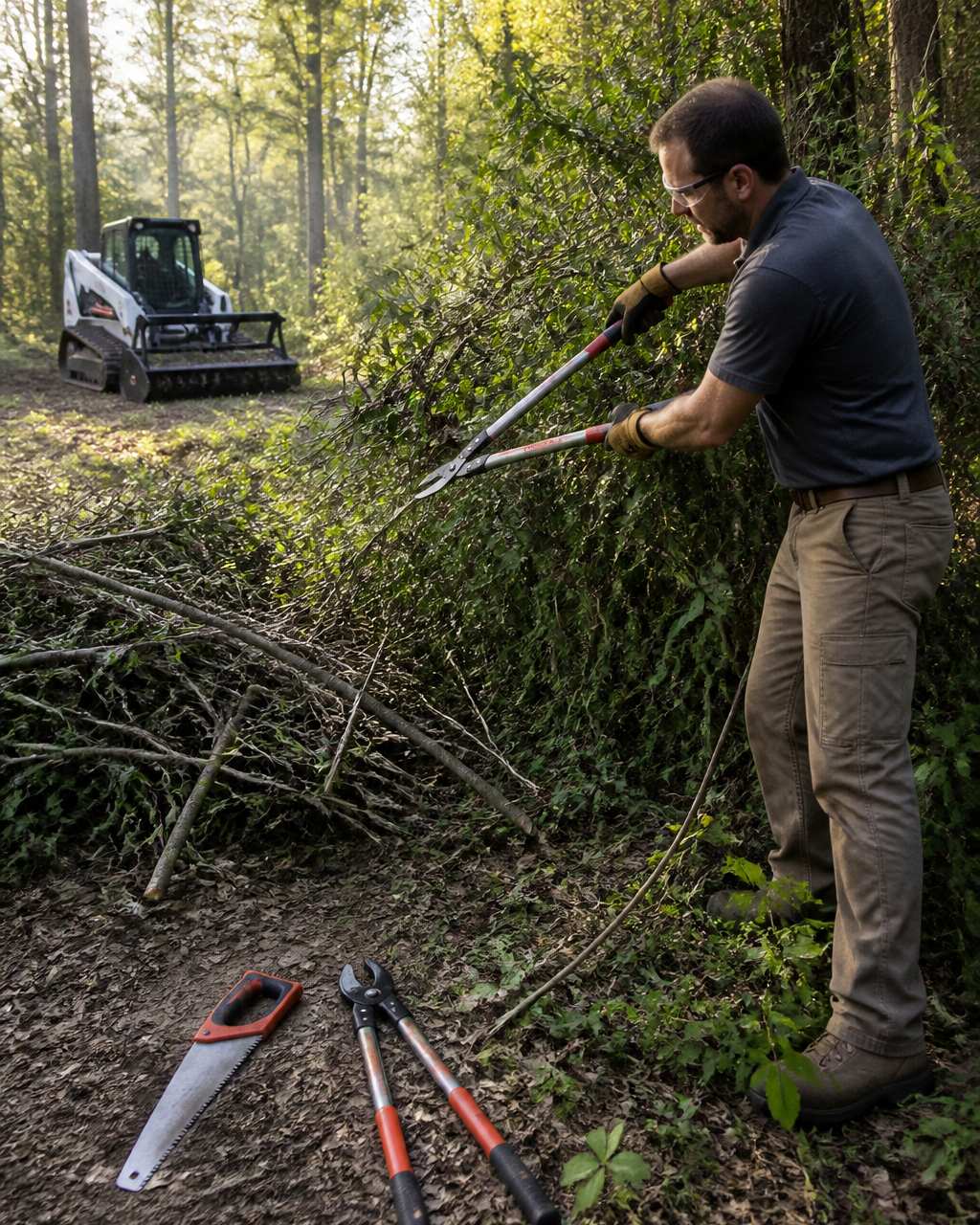
Work in this order:
- Clear a work lane. Cut a path in so you can move safely.
- Cut tall growth first. Use a chainsaw or brush cutter on saplings and thick stems.
- Cut low and close. Pruning shears and loppers handle stems the saw misses.
- Treat cut stumps. Some species resprout from the stump. Cutting alone will not kill them.
- Pile debris away from the bed. Keep cut vegetation off the soil you plan to plant.
A common mistake is leaving cut brush on the bed "to break down." It smothers nothing and harbors pests. Haul it out or chip it.
How to Remove Grass for a Garden Bed
Removing grass for a garden comes down to two paths: smother it or strip it. Smothering is slower but gentler on soil. Stripping is faster but disturbs more.
Smother Grass With Tarp, Cardboard, or Newspaper
Smothering blocks light so grass and weeds die in place. It takes weeks, not days, but it leaves topsoil intact.
- Plastic sheeting or tarp. Lay it flat, weight the edges, and leave it for several weeks in warm weather.
- Cardboard. Overlap sheets by several inches, wet them, then cover with mulch.
- Newspaper. Use thick layers, at least several sheets deep, and wet each layer.
Cover the area completely. Any gap lets grass push through.
This method works best in spring and summer when heat speeds up the kill.
Strip Sod by Hand or With a Tiller
Stripping removes the grass and its roots in one pass. It is the fastest route to bare soil.
By hand, use a flat hand shovel to cut under the sod, then roll it up like carpet.
With a tiller, set the depth shallow on the first pass.
Watch out: tilling wet soil compacts it into clods that stay hard for months.
No-Dig Garden Bed Preparation That Protects Topsoil
No-dig garden bed preparation skips tilling entirely. You build layers on top of the ground and let worms and roots do the mixing, so topsoil stays put and weed seeds stay buried.
The layers, bottom to top:
- Cardboard or newspaper directly on the grass
- Compost spread several inches deep
- Mulch on top to hold moisture
Plant straight into the compost layer. Roots find their way down through the cardboard as it breaks down.
A broadfork helps here. Push it in and rock it back to loosen soil without flipping it. You get air and drainage without wrecking the soil structure.
How to Prepare Soil for a Vegetable Garden After Clearing
Preparing soil for a vegetable garden means testing it, fixing what is off, and giving it time to settle. Freshly cleared land is rarely ready to plant the same week.
Start with a soil test. Your county extension office sells kits, and the results tell you pH and nutrient levels.
Then work through this list:
- Clear plant debris. Rake out roots, sticks, and leftover cut vegetation.
- Level the surface. Fill low spots so water does not pool.
- Fix pH if needed. Lime raises it, sulfur lowers it. Follow the test results.
Do not plant into raw subsoil. If stripping sod exposed clay, mix in compost before anything goes in the ground.
Timing, Labor, and Disposal: What the Work Really Takes
Time and labor scale with area size and how overgrown the land is. A small bed is a weekend project. A quarter acre of brush is not. Plan for these realities so you do not lose a season to a job that was bigger than expected.
Realistic Timelines by Method
- Tarp or plastic smothering. Expect 4-8 weeks in warm weather for light grass, longer in cool weather or for dense sod. Hands-on work is minimal, but the calendar wait is real.
- Cardboard and mulch smothering. Often 6-10 weeks before the cardboard breaks down enough to plant through. Wetting each layer speeds the process.
- Hand stripping sod. A small bed (under about 200 sq ft) runs a few hours with a flat shovel and rake. Larger areas scale with square footage and how rooted the sod is.
Seasonal Timing Changes the Work
- Late summer and early fall. Less regrowth pressure and cooler working weather. Smothering started now can be ready for spring planting.
- Early spring. You can plant sooner, but regrowth is aggressive. Plan follow-up cutting or smothering.
- Mid-summer. Heat speeds tarp smothering but makes heavy labor harder. Work early and keep water on hand.
Invasive and Persistent Weeds: Plan the Follow-Up
Cleared ground does not stay clear on its own. Rhizomes, roots, and seed banks are why a plot looks clean in June and overgrown by August.
- Rhizomatous weeds (such as bindweed and some grasses) spread by underground stems. Tilling chops them into fragments that resprout. Smothering and repeated cutting are more reliable.
- Seed banks can stay viable for years. Tilling brings buried seed to the surface; no-dig and smothering keep it buried.
- Follow-up control is part of the plan. Walk the cleared bed every week or two and cut or pull regrowth before it seeds. A season of vigilance saves years of repeat clearing.
Disposal and Reuse of Cleared Material
Cut vegetation, roots, and sod all have to go somewhere. Options include:
- Chipping. Woody brush and saplings can be chipped and used as mulch or compost feedstock.
- Composting. Grass, leaves, and soft vegetation compost well when piled and turned.
- Hauling. Sod and roots are heavy; a compost site or transfer station may be the practical choice.
Seasonal timing and realistic timelines are where most DIY plans fail. Build the wait into your schedule, plan the follow-up, and the cleared ground will stay cleared.
Book a Free Land Assessment Before You Break Ground
The hardest part of clearing land is knowing when to stop doing it yourself.
We are a veteran-owned crew, and customers have described us as "on time, on schedule, and on budget."
SemperFi Land Clearing LLC offers forestry mulching, specialized 10-foot fence line clearing, and a free land assessment.
Get started with SemperFi Land Clearing LLC and turn that overgrown plot into ground you can actually plant.
Frequently Asked Questions
How long does it take to clear land for a new garden?
A small bed of a few hundred square feet can be cleared by hand in a weekend. A quarter acre of grass and weeds usually takes one to two weekends with hand tools or a tiller. Thick brush takes longer because cut stems and roots have to be hauled off. Smothering with a tarp or cardboard adds weeks of waiting for the vegetation to die back, though the labor itself is short. Plan for the waiting time as part of the schedule, not as a delay.
Can you clear land for a garden without digging?
Yes. No-dig garden bed preparation skips tilling entirely. Mow the vegetation low, lay cardboard or several layers of newspaper over the area, wet it down, and cover with 4 to 6 inches of compost or mulch. Roots and plant debris break down underneath while the cover blocks light. Earthworms and soil life do the mixing. This keeps topsoil structure intact and avoids turning up buried weed seed, which is the main reason tilled plots sprout a new flush of weeds.
What tools do you need to clear land for a garden?
For light work, a rake, hand shovel, pruning shears, and a mattock handle most jobs. Heavy brush calls for loppers, a pruning saw or chainsaw, and gloves. For grass removal, add a flat spade for stripping sod, a broadfork for loosening soil without inversion, and plastic sheeting or cardboard for smothering. A tiller helps on larger plots but disturbs soil more. Rent before you buy if the job is a one-time project.
Will weeds and brush come back after clearing?
Some regrowth is normal, especially from seed already in the soil and from roots left behind. The defense is to cover bare ground immediately with mulch, a cover crop, or a planted bed so weed seedlings have competition. Pull persistent invasive plants by the root before they seed. For heavy brush, mulching the standing vegetation in place leaves a layer that slows new sprouting and protects the soil surface. Expect to spot-check the plot through the first growing season.