 how-to
7 Factors That Drive Land Clearing Price Quotes
Last Updated: October 29, 2026
Quick Summary
A land clearing price quote is built from acreage, vegetation density and tree size, terrain and access, clearing method, debris and stump handling, and project timeline. Access is the factor homeowners underestimate most, since tight gates and soft ground raise labor and equipment time. Ask whether stump removal and debris hauling are included before comparing bids.
- Per-acre rates drop as the job grows because fixed setup and mobilization costs spread over more acres.
- Mulching leaves material on site, which is why it often prices lower per acre than clearing that hauls debris away.
- Stump grinding cuts below grade and leaves roots in place, while extraction pulls the root ball out and costs more.
- Walk the property with the estimator so gates, culverts, wet spots, and overhead lines get priced upfront.
- A low bid that omits stump depth, debris destination, or burn responsibility is not a comparable bid.
Table of Contents
- How Land Clearing Estimates Are Built
- Terrain, Access, and Ground Conditions
- How Clearing Method Affects Forestry Mulching Cost
- Debris, Stumps, and Disposal Charges
- Your Land Clearing Quote Checklist
- How the Land Clearing Project Timeline Shapes the Quote
- Frequently Asked Questions
How Land Clearing Estimates Are Built
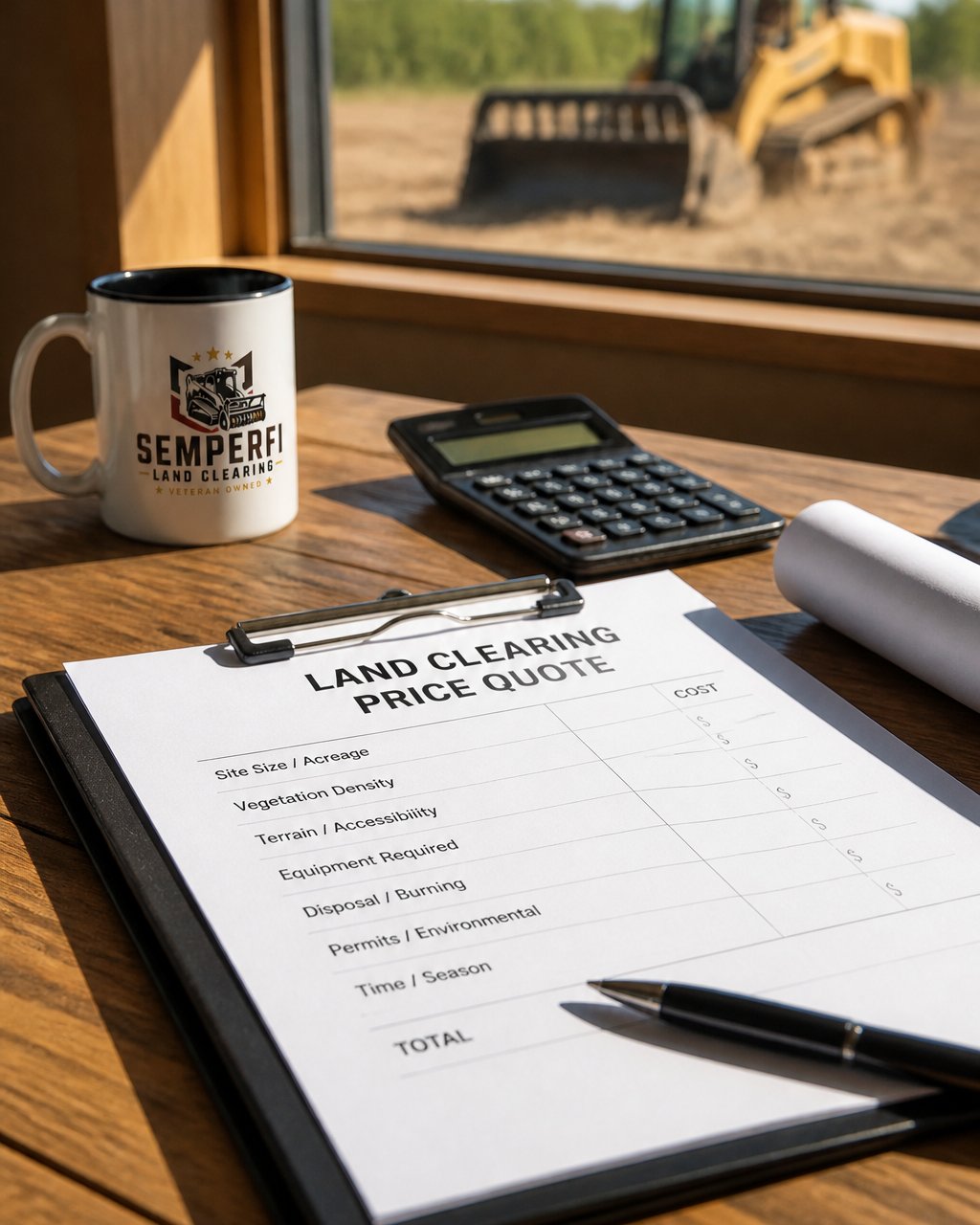
A land clearing price quote is a contractor's written estimate of what it will cost to remove brush, trees, stumps, and debris from your property.
A quote isn't one price for "clearing land." It's a stack of line items, each moving independently. Change one input, like how close a machine can park to the work zone, and the whole estimate shifts.
Acreage and Per-Acre Pricing
Most contractors price by the acre, but the rate drops as the job grows. A small lot spreads setup and mobilization costs over few acres, so the per-acre figure looks high; a larger tract spreads those fixed costs further.
Watch out for a quote that lists one flat per-acre rate across a big property. Dense sections and open sections rarely cost the same to clear, and a good estimate reflects that.
Vegetation Density and Tree Size
Thick, overgrown brush costs more to clear than scattered saplings. Tree size matters just as much. Small stems under a few inches across mulch quickly. Mature hardwoods take longer, wear equipment harder, and often leave stumps that need separate handling.
A common mistake is quoting from a photo. Density on the ground is often worse than it looks from the road.
Terrain, Access, and Ground Conditions
Slope, soft ground, and tight access are the three conditions that quietly inflate a land clearing price. A steep grade slows equipment and raises the risk of erosion. Wet, soft soil can bog down heavy machines. A narrow gate or a fence line hemmed in by structures limits how close equipment can get.
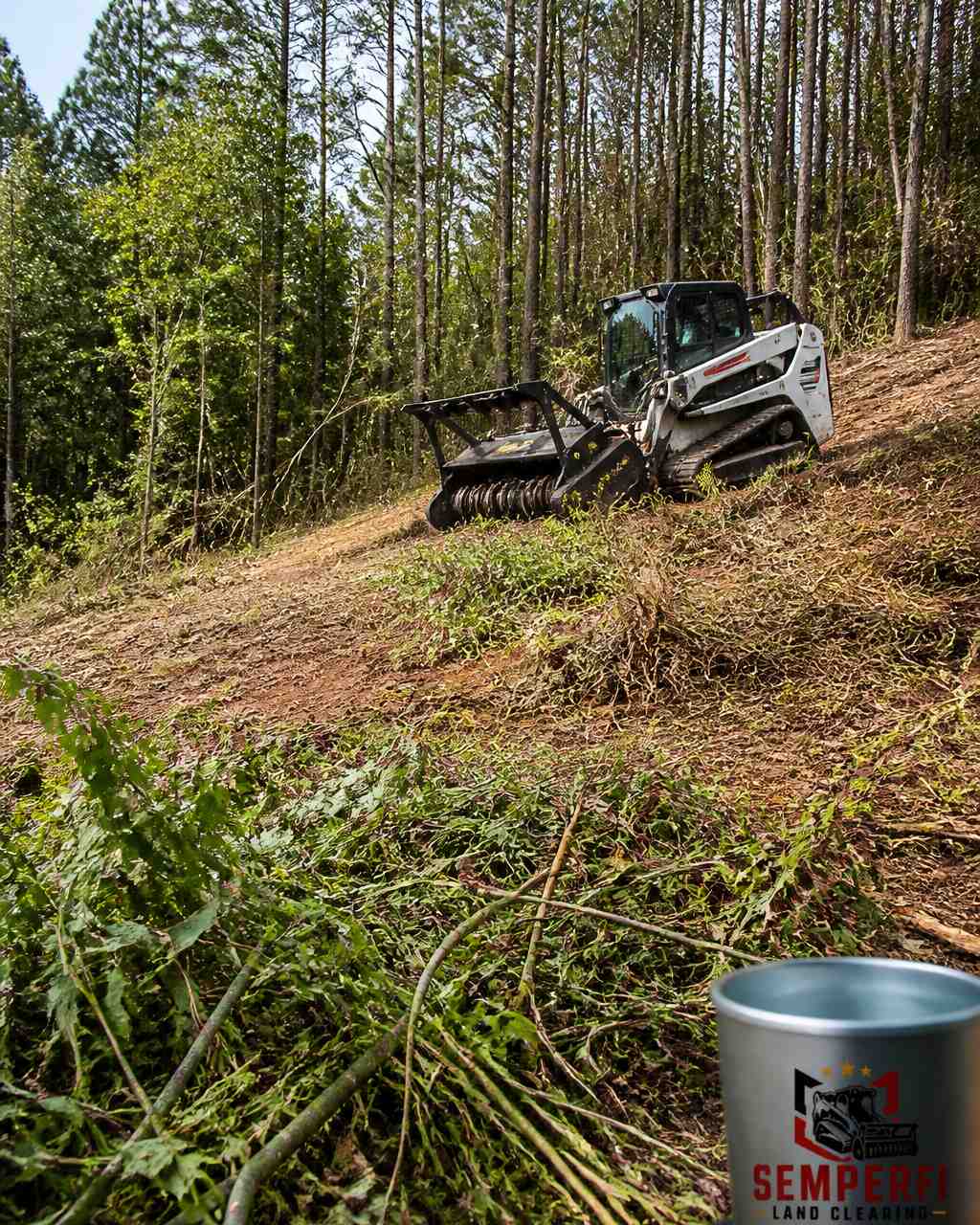
Access is the factor homeowners underestimate most. If a machine can drive straight to the work zone, costs stay down. If it must be trailered in, maneuvered through a tight opening, or worked around structures, labor and time climb.
A real estimate prices these conditions as separate line items. Here's how each typically shows up on a quote:
- Mobilization and equipment hauling. Moving a tracked mulcher or dozer to the site is a fixed cost that doesn't shrink on a small job. A quote that bundles mobilization into a per-acre rate hides it; one that lists it separately lets you compare bids fairly. Ask whether mobilization is included, and whether a second machine adds a second charge.
- Slope and erosion controls. On grades where equipment can't work safely or runoff would leave the property, contractors add time for slower passes and may include silt fence, water bars, or temporary seeding. Those belong on the quote, not in a later change order.
- Soft or wet ground. When soil can't support heavy tracks, options include working in drier conditions, lower-ground-pressure equipment, or timber mats. Each changes price and schedule, so the quote should state which approach is assumed.
To compare bids, ask each contractor to state in writing the equipment they'll use, the access route they assume, and how they'll handle wet ground and slope. Two quotes with the same total can carry very different assumptions, and the lower number often assumes conditions the site doesn't have. For how these assumptions feed into per-acre figures, see our guide to the cost of land clearing per acre.
How Clearing Method Affects Forestry Mulching Cost
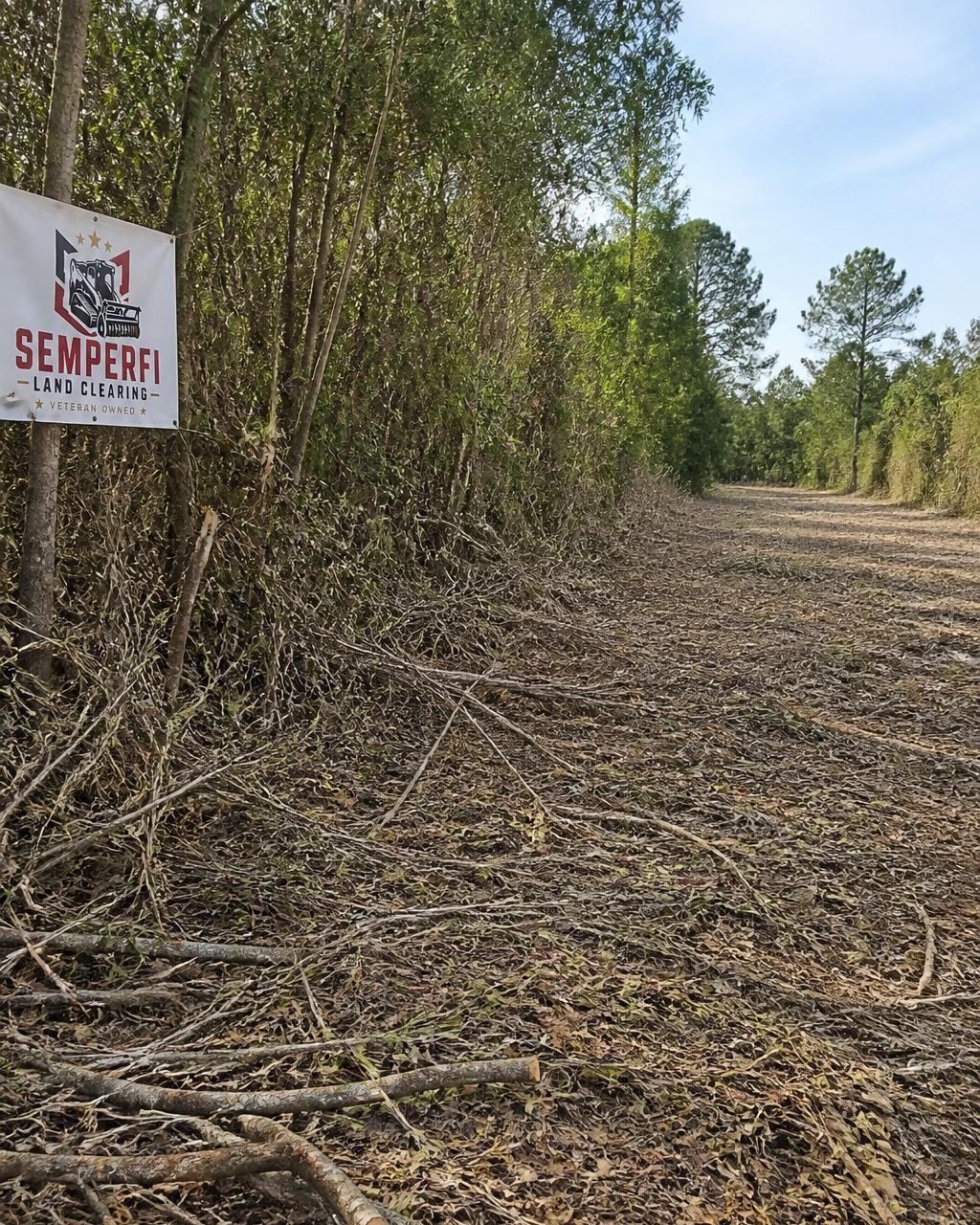
Forestry mulching is a clearing method that grinds brush, saplings, and small trees into mulch on site, leaving the ground covered rather than bare.
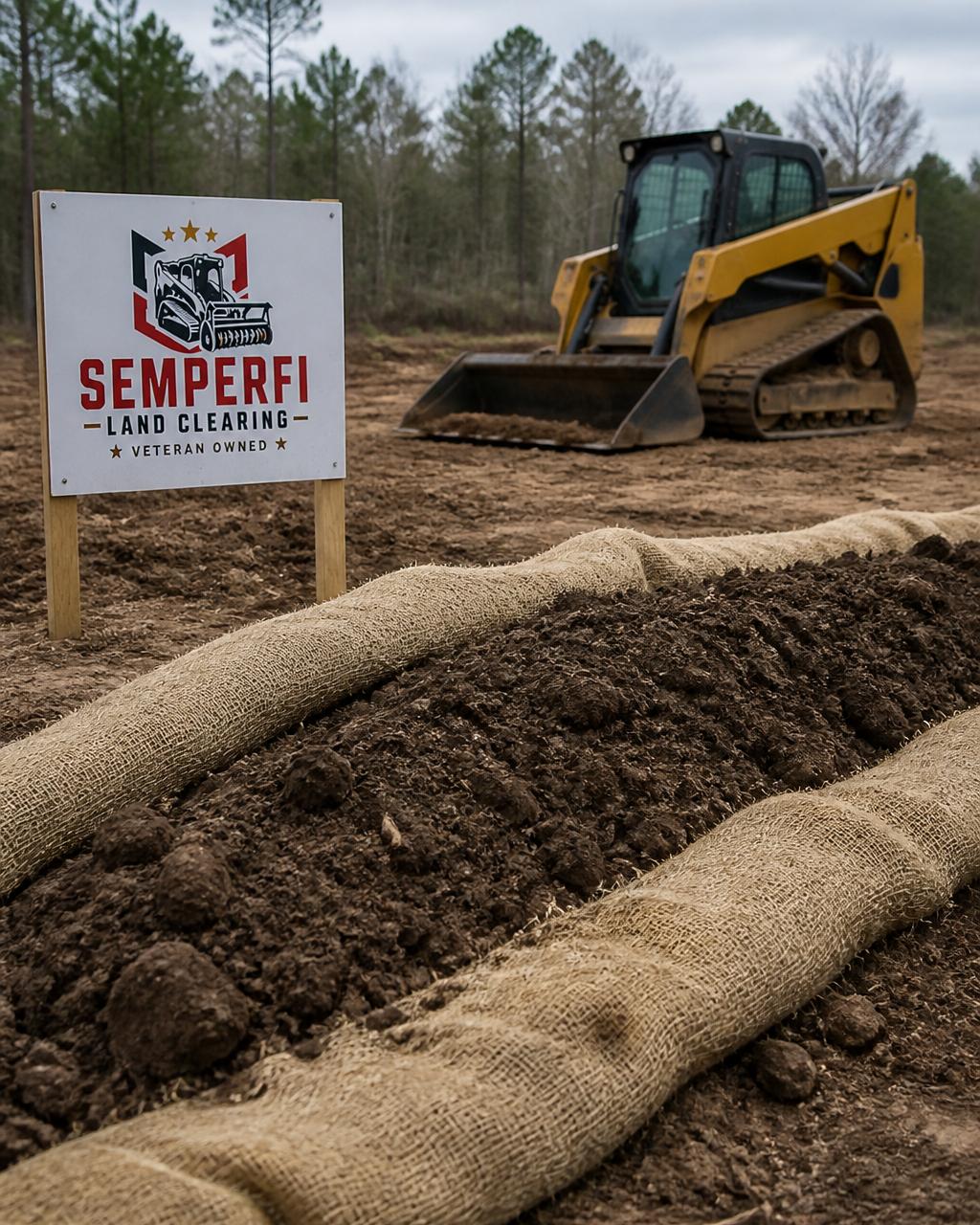
The trade-off: mulching leaves mulch and roots in place, which can help hold soil, while bulldozing pushes topsoil and debris into piles that must be handled.
For how the two approaches compare, see our breakdown of forestry mulching vs traditional land clearing. For the full per-acre breakdown for mulching, our guide to forestry mulching cost per acre walks through what drives the number.
Debris, Stumps, and Disposal Charges
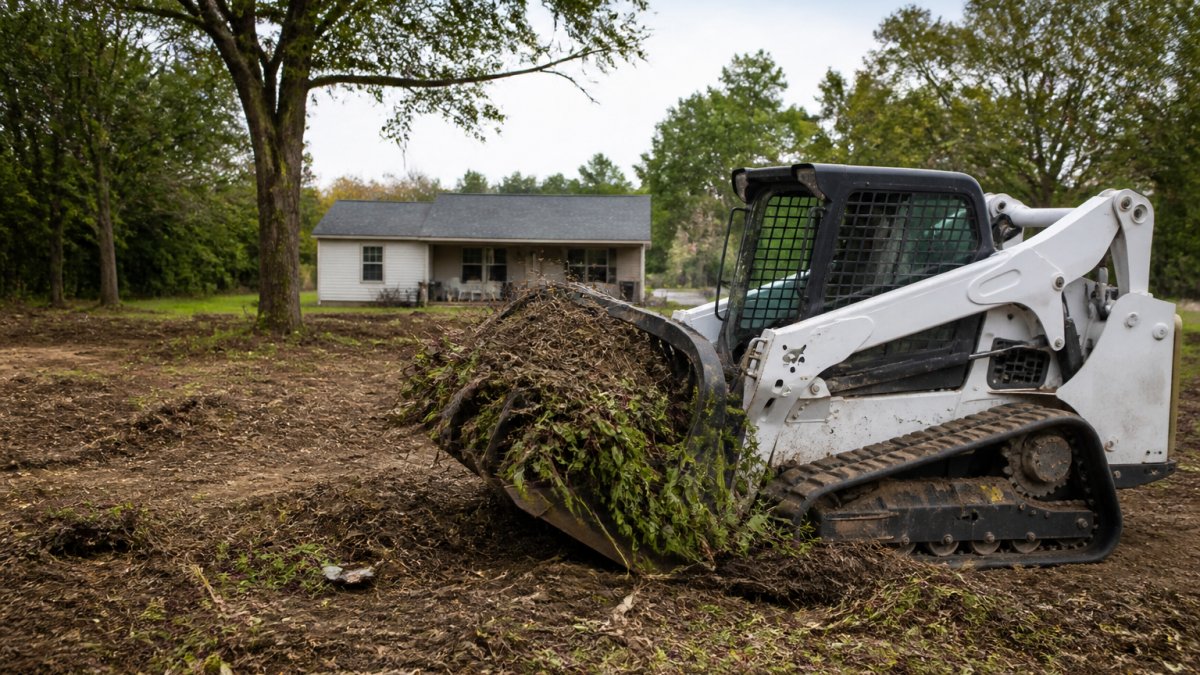
Debris handling is where quotes diverge most. Mulching leaves material on site. Hauling removes it, and that adds trucking, dump fees, and time.
Ask directly: does the quote include stump removal, or just cutting? Does it include hauling and disposal, or will debris be piled and left? Burning may be an option, but it depends on local rules and conditions.
The useful next step is understanding how each disposal choice is priced, so you can tell whether two bids are comparable. Here's how the common options differ:
- Leave the mulch in place. Forestry mulching grinds brush and small trees into a layer of mulch on the soil surface. No hauling, no dump fee, which is why mulching often prices lower per acre than clearing that removes material. The trade-off: mulch and roots stay on site, and the ground isn't bare or graded.
- Pile and burn. Pushing debris into piles and burning avoids dump fees but requires burn permits or compliance with state and local rules, dry enough conditions, and time for piles to burn down. Smoke, wind, and fire restrictions can delay work, and the quote should say who handles the burn and permits.
- Haul and dispose. Trucking debris off site adds a per-load cost covering truck time, tipping fees, and loading labor. Because dump fees and haul distances vary by location, this line is among the least comparable between bids unless each contractor states the loads assumed.
To test a quote, ask what happens to the material: left on site, burned, or hauled. Then ask what happens to the stumps: ground to grade, extracted, or left. Those two answers explain most of the spread between a low and high bid on the same acreage. For the full per-acre breakdown for mulching, see our guide to forestry mulching cost per acre, and our comparison of forestry mulching vs traditional land clearing covers how debris outcomes differ.
Your Land Clearing Quote Checklist
Use this checklist to prepare for an estimate and compare bids fairly. The more site information you gather, the more accurate every quote will be.
- Confirm the exact acreage to be cleared, measured, not estimated
- Note vegetation type: brush, saplings, or mature trees
- Flag any trees you want kept
- Describe slope and wet areas
| Quote Item | What to Confirm | Why It Matters |
|---|---|---|
| Acreage | Measured, not guessed | Sets the base price |
| Vegetation | Density and tree size noted | Drives time and equipment |
| Access | Machine route confirmed | Affects labor and mobilization |
| Stumps | Included or separate | Common add-on charge |
| Debris | Left, burned, or hauled | Big swing in total cost |
| Timeline | Start and finish dates | Ties to weather and season |
A free land assessment can help you discuss your property and project needs. You can also request expert forestry mulching for your project, and read what to expect from a free land assessment before we arrive.
How the Land Clearing Project Timeline Shapes the Quote
Project duration and price move together. A job that finishes in a day costs less in labor and equipment time than one stretching across a week.
Season matters too. Dry conditions let equipment work efficiently. Wet seasons slow progress and can push a start date back. Weather can affect project schedules.
For a full breakdown of how per-acre pricing is calculated, our guide to the cost of land clearing per acre covers the details.
Frequently Asked Questions
What factors affect the cost of land clearing?
A land clearing price quote is shaped by acreage, vegetation density, tree size, stump and root removal, terrain and slope, site access, the clearing method used, and how debris is handled. Labor, equipment requirements, mobilization, and permits add to the total. Two properties of the same size can quote very differently if one is flat open pasture and the other is dense, overgrown brush on a slope with limited equipment access.
How do contractors calculate land clearing quotes?
Most contractors walk the property, measure the acreage, and note vegetation type and density, tree size and count, stumps, terrain, and access points. They then estimate machine hours, labor, mobilization, and debris disposal, and apply per-acre pricing adjusted for difficulty. Ask for the quote broken into these line items so you can see what drives the number and compare bids fairly.
What is usually included in a land clearing quote?
A complete quote should state the acreage and scope, the clearing method, whether stumps and roots are removed or ground, how debris is hauled or burned, grading and site preparation, mobilization, and the project timeline. Watch for exclusions such as stump removal, hauling, or rock and fence removal, which often appear later as add-on charges. Confirm what happens if crews hit unexpected obstacles.
Should I get an on-site assessment before accepting a land clearing quote?
Yes. SemperFi Land Clearing LLC offers free land assessments in the Longview and Tyler area.
Every landowner wants a straight answer on price, and the honest one is that the number depends on your specific ground. SemperFi Land Clearing LLC is a veteran-owned team that builds quotes from a real site assessment, not a phone guess. We handle overgrowth removal, specialized fence line clearing, and forestry mulching with precision and efficiency. Get an estimate from SemperFi Land Clearing LLC and clear your land with a crew that shows up on time, on schedule, and on budget.