 how-to
How Do You Clear Overgrown Brush for Fire Prevention?
Last Updated: October 28, 2026
Quick Summary
Clearing overgrown brush for fire prevention means removing dead grass, fallen limbs, and thick undergrowth, starting with the area within 30 feet of any structure. Prioritize the driveway, utility lines, and fence lines, match the tool to the growth, and plan a way to remove or mulch debris before you cut.
- Clear the first 30 feet around any structure before anything else.
- Keep the driveway and access route open so emergency vehicles can get in.
- Never cut near a utility line you cannot confirm is de-energized.
- Cut stems close to the ground and never cut above shoulder height.
- Avoid burning; use chipping, hauling, or on-site mulching instead.
Table of Contents
- Why Overgrown Brush Raises Fire Risk Around Longview Properties
- Step-by-Step Plan for Clearing Overgrown Brush
- Defensible Space Vegetation Management Around Structures
- Forestry Mulching for Fire Prevention on Heavy Overgrowth
- Safe Disposal of Brush Without Burning and What Brush Clearing Costs
- Booking Your Free Land Assessment for Brush Clearing
- Frequently Asked Questions
Why Overgrown Brush Raises Fire Risk Around Longview Properties
Overgrown brush can be a fire concern. Dead grass, fallen limbs, and thick undergrowth can dry out during hot East Texas summers. When brush grows right up to a house or fence line, it can create a potential path for fire to reach structures.
Step-by-Step Plan for Clearing Overgrown Brush
A brush-clearing plan can include assessing the property, checking for hazards, deciding how to handle debris, and planning follow-up.

Step 1: Assess the Property and Mark Priority Areas
Note where the brush is thickest, where it touches buildings, and where it runs along fence lines, driveways, and the road.
Prioritize in this order:
- Within 30 feet of any structure, the highest-risk fuel, cleared first
- Along the driveway and access route, so emergency vehicles and your own equipment can get in
- Under and around utility lines and poles, never cut near a line you cannot confirm is de-energized
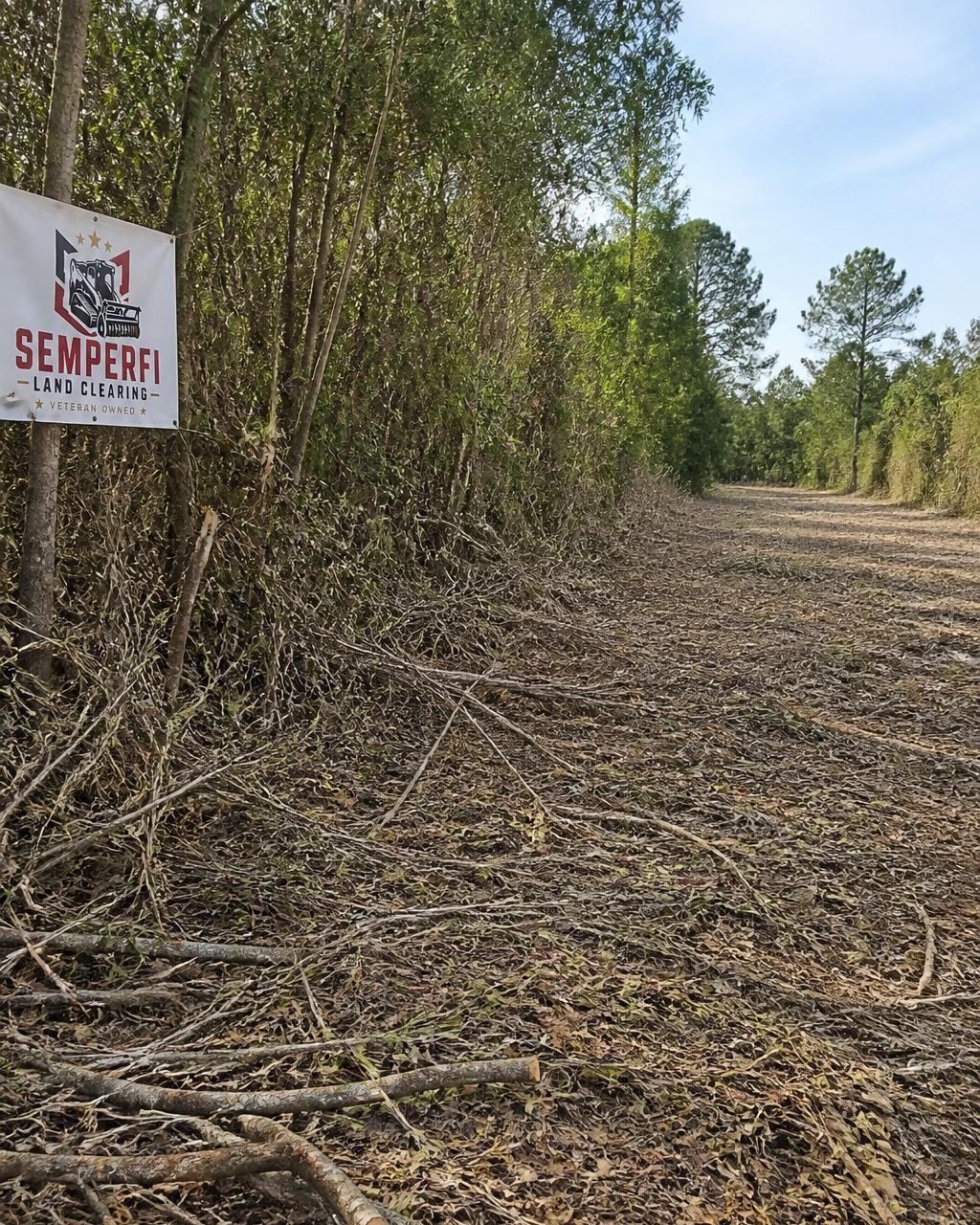
- Fence lines and property edges, where growth is often densest and most neglected
- Dead trees and limbs leaning over roofs, vehicles, or power drops
Step 2: Match the Tool to the Growth
| Growth Type | Practical Tool | What to Expect |
|---|---|---|
| Grass, weeds, light saplings | String trimmer, mower, loppers | Fast, low cost, limited to flat accessible ground |
| Shrubs, saplings up to a few inches | Chainsaw, brush cutter, hand saw | Manageable by hand; debris must be hauled or chipped |
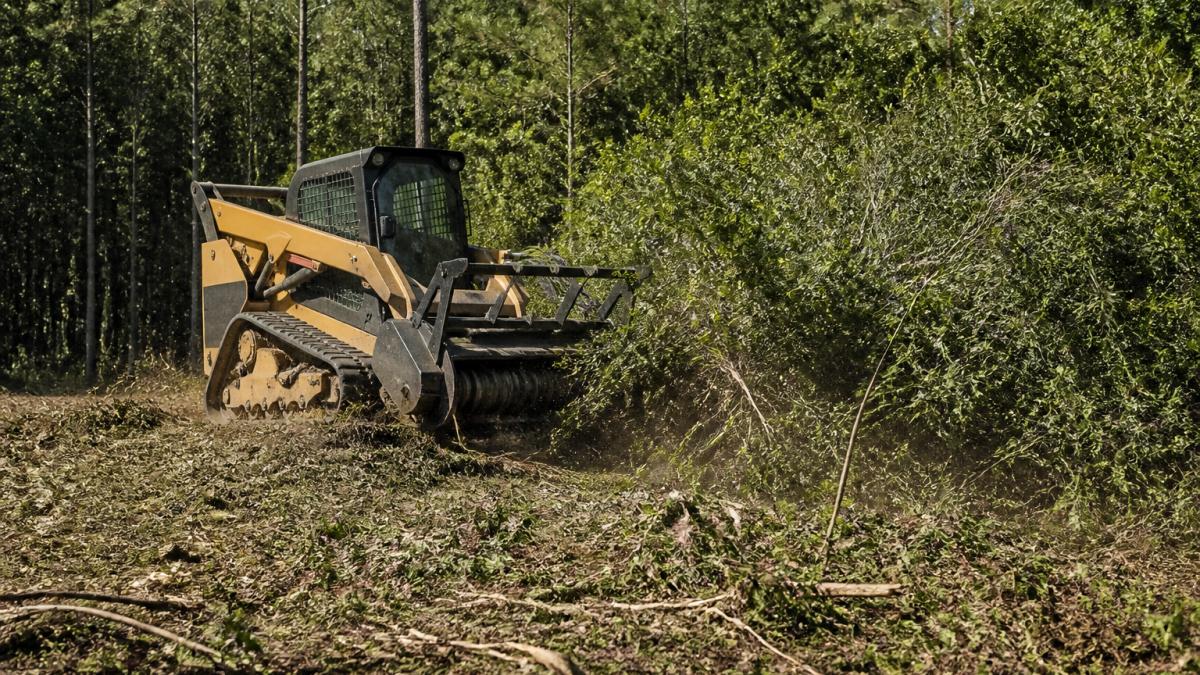
| Dense thickets, heavy stems, fencerows | Forestry mulcher or skid-steer attachment | One-pass grinding; mulch stays on site |
| Steep slopes, wet ground, large acreage | Tracked or specialized equipment | Hand work is unsafe or impractical; call a pro |
A few rules that prevent injuries and callbacks:
- Wear eye and ear protection, long sleeves, and boots, not sneakers.
- Keep a chainsaw's chain brake working and never cut above shoulder height.
- Cut stems close to the ground so you do not leave sharp stobs that damage mower tires or trip people.
- Do not cut on windy days when limbs can fall unpredictably.
- Work with a partner when felling anything larger than a sapling.
Step 3: Cut in the Right Order
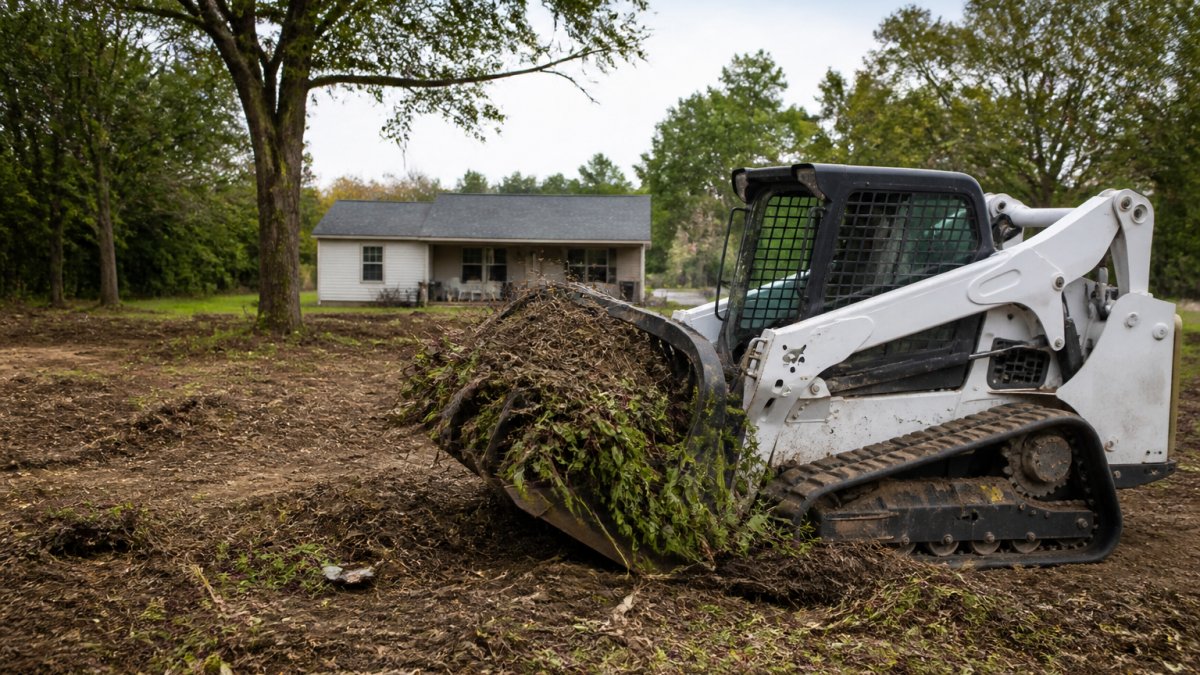
A common mistake is leaving dead debris piled near the house "to deal with later." That pile becomes the fire. Move cut material away from structures as you go, not at the end of the day.
Step 4: Handle Debris Deliberately
Decide the fate of every pile before you make it. Options are chipping, hauling to a transfer station, leaving mulch on site, or, only where allowed and safe, burning. The next section covers disposal in detail, but the planning rule is simple: never create a pile you have no plan to remove.
Step 5: Schedule Follow-Up
Clearing is not a one-time event. Regrowth starts within a season, and fine fuels like grass and small stems return fastest. Learn how forestry mulching suppresses brush regrowth at the root collar and what typical timelines look like. Plan a walk-through after the first growing season, touch up the 30-foot zone around structures, and keep the driveway corridor open. For a deeper walkthrough of wooded lot clearing steps, costs, and permits, see the full guide. A short maintenance pass each year is far cheaper than re-clearing a neglected lot.
Defensible Space Vegetation Management Around Structures
Practical steps include:
- Keep grass cut short within the first 30 feet of the house
- Space shrubs apart so fire cannot jump from one to the next
- Remove low branches on trees near the roof
- Keep firewood and debris stacked away from walls
Forestry Mulching for Fire Prevention on Heavy Overgrowth
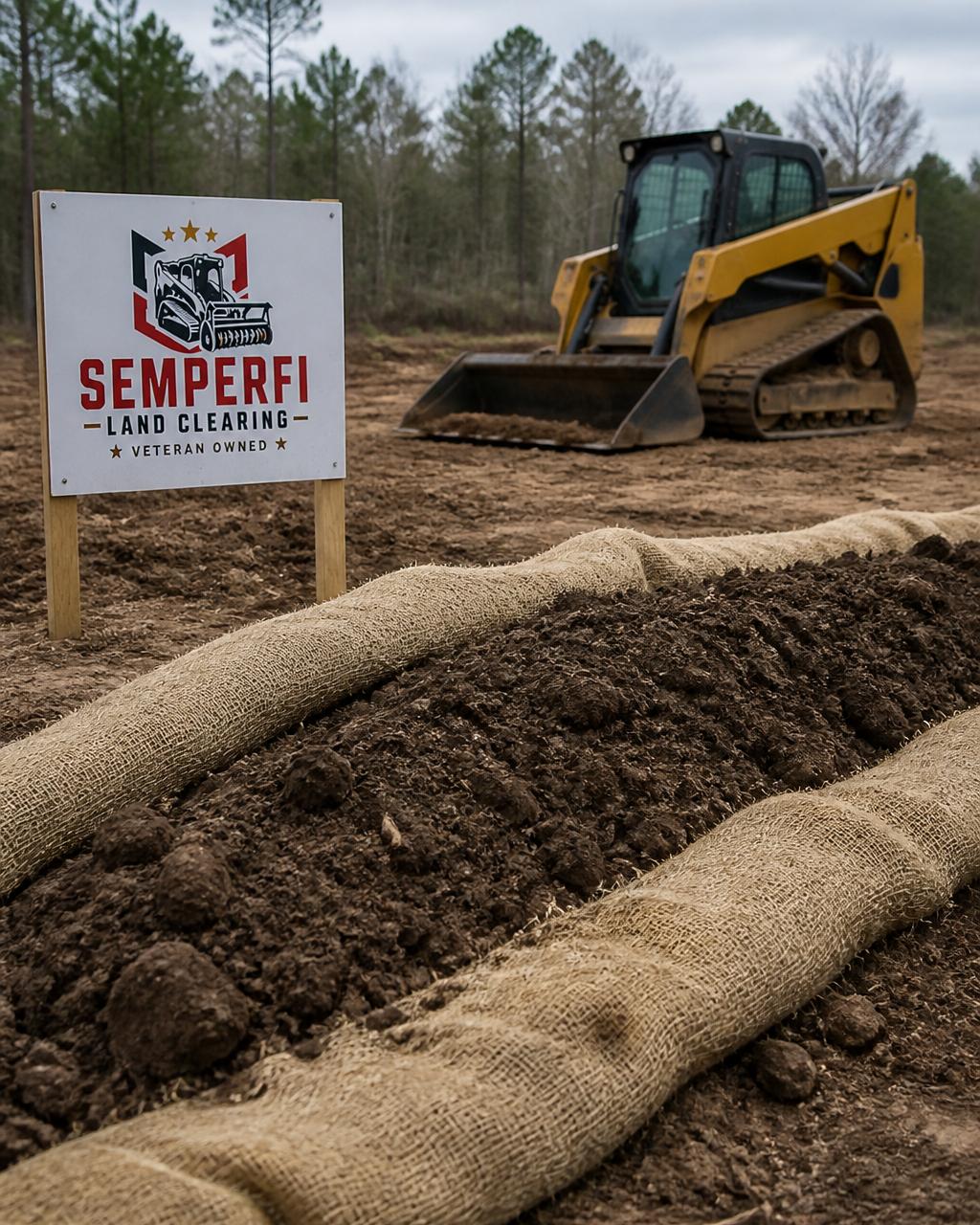
SemperFi Land Clearing LLC offers forestry mulching solutions for land management.
Safe Disposal of Brush Without Burning and What Brush Clearing Costs
Burning is the option most people reach for first, and it is usually the worst one. Smoke complaints, sudden wind shifts, and dry-season restrictions make it risky, and many areas restrict open burning during dry periods or require you to check current fire danger before lighting anything. Call your local fire department before any burn, and treat these alternatives as the default.
Disposal Options, Ranked by Practicality
- Chipping, turns limbs and small stems into mulch you can spread on beds, trails, or erosion-prone ground. Best when debris is woody and you have a place to use the chips.
- Hauling to a transfer station or landfill, reliable but volume-heavy; costs scale with loads and distance. Good for mixed debris that cannot be chipped.
- On-site mulching, forestry mulching leaves the material in place, which avoids hauling entirely and returns organic matter to the soil. Best for large acreage and heavy brush.
- Composting, works for leafy material and small cuttings in a managed pile, but woody brush breaks down slowly and is a poor fit for large volumes.
- Burning, only where allowed, only in calm conditions, only with a water source and tools on hand, and never during a burn ban or high fire danger. Never leave a pile unattended.
What Drives the Cost
For an estimate, contact SemperFi Land Clearing LLC. The forestry mulching cost and site prep guide explains how pricing works for brush and overgrowth.
Booking Your Free Land Assessment for Brush Clearing
SemperFi Land Clearing LLC offers free land assessments. The supplied customer feedback includes "Hardest working crew in East Texas" and "On time, on schedule, and on budget."
To get started, request an estimate from SemperFi Land Clearing LLC.
Frequently Asked Questions
How do you clear overgrown brush to reduce fire risk?
SemperFi Land Clearing LLC offers land clearing and forestry mulching solutions. Request an estimate to discuss your property.
How far should brush and other flammable vegetation be kept from a home?
A common defensible space guideline is to keep vegetation trimmed and spaced around the home in zones, with the area closest to the structure cleared most aggressively. Remove dead material and low branches near the house, and maintain space between shrubs and trees so fire cannot move easily from one to the next. Check local guidance from your county or fire district, since recommended distances can vary with slope, vegetation type, and building materials.
Should I hire a professional to clear brush on my property?
SemperFi Land Clearing LLC offers free land assessments. Visit its website to request an estimate.
What is the brush clearing cost for a typical property?
Visit the SemperFi Land Clearing LLC website to get an estimate for your property.
Need help getting ahead of fire season? SemperFi Land Clearing LLC handles brush removal, forestry mulching, and fence line clearing across East Texas. Get an estimate today and start protecting your property.