 ultimate-guide
Forestry Mulching Longview TX: Cost and Site Prep Guide
Table of Contents
- What Forestry Mulching Does for Overgrown East Texas Land
- The Cost of Land Clearing Per Acre in Longview
- Brush Clearing Services for Fence Lines and Pastures
- Site Preparation for Construction: House Pads and Driveways
- Soil Health, Erosion Control, and Post-Clearing Maintenance
- Permits and Local Rules Before You Clear
- What the Free Land Assessment Covers
- Frequently Asked Questions
Last Updated: September 27, 2026
What Forestry Mulching Does for Overgrown East Texas Land
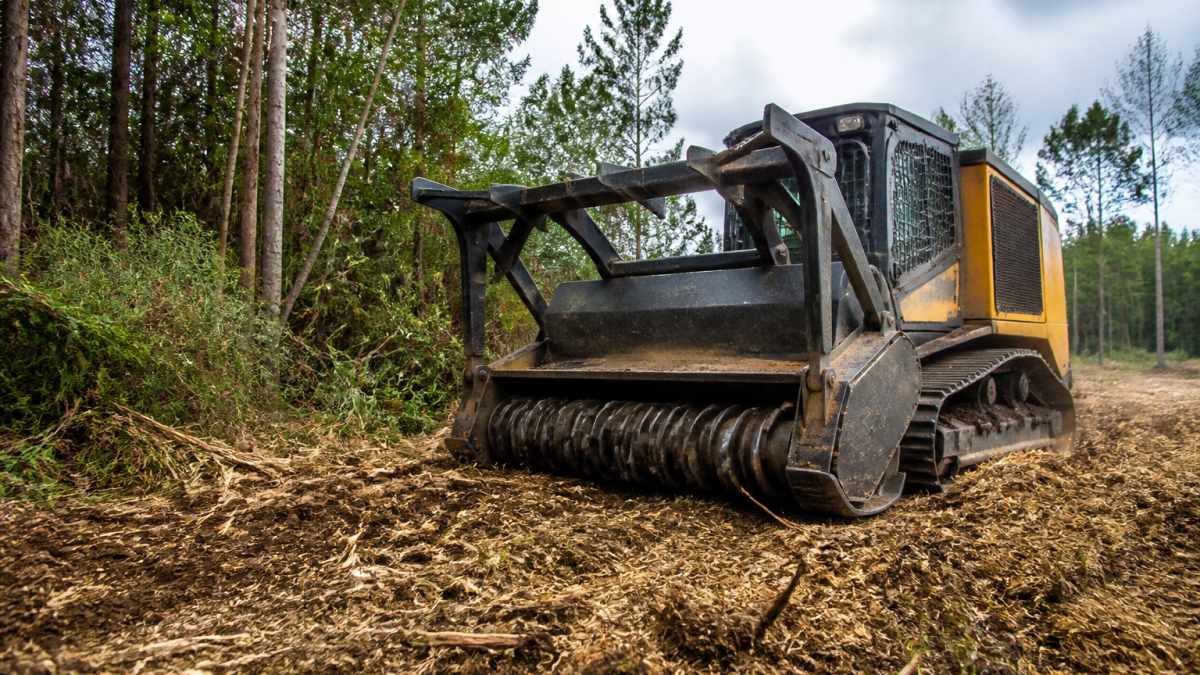
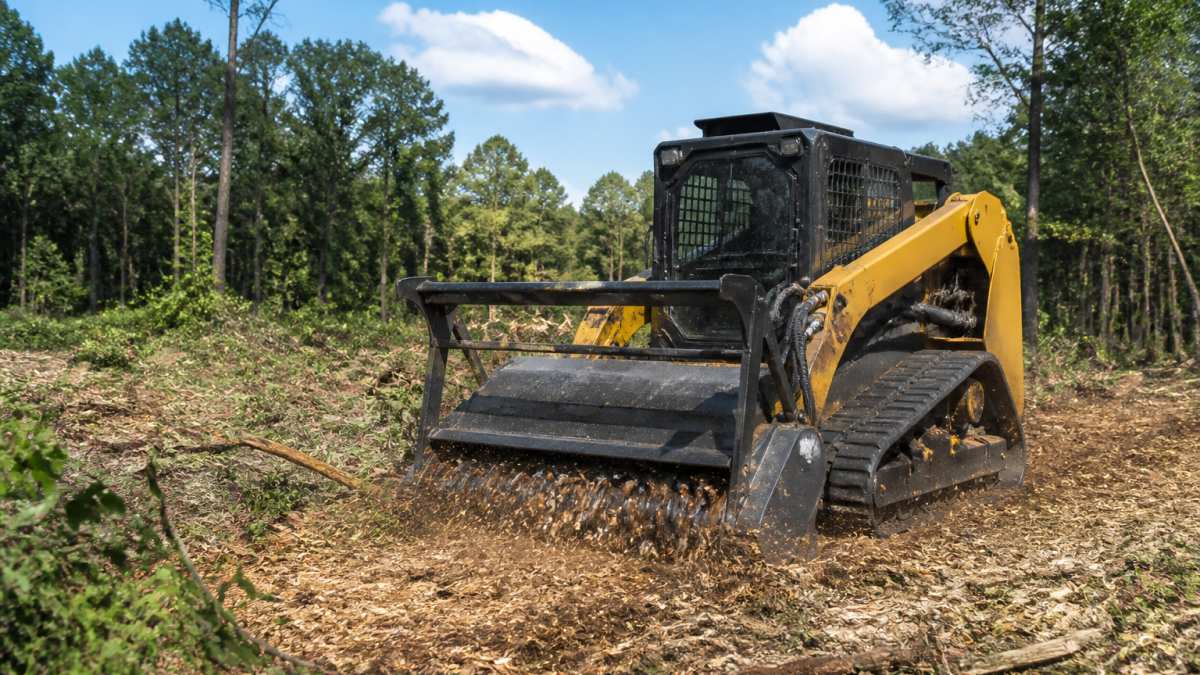
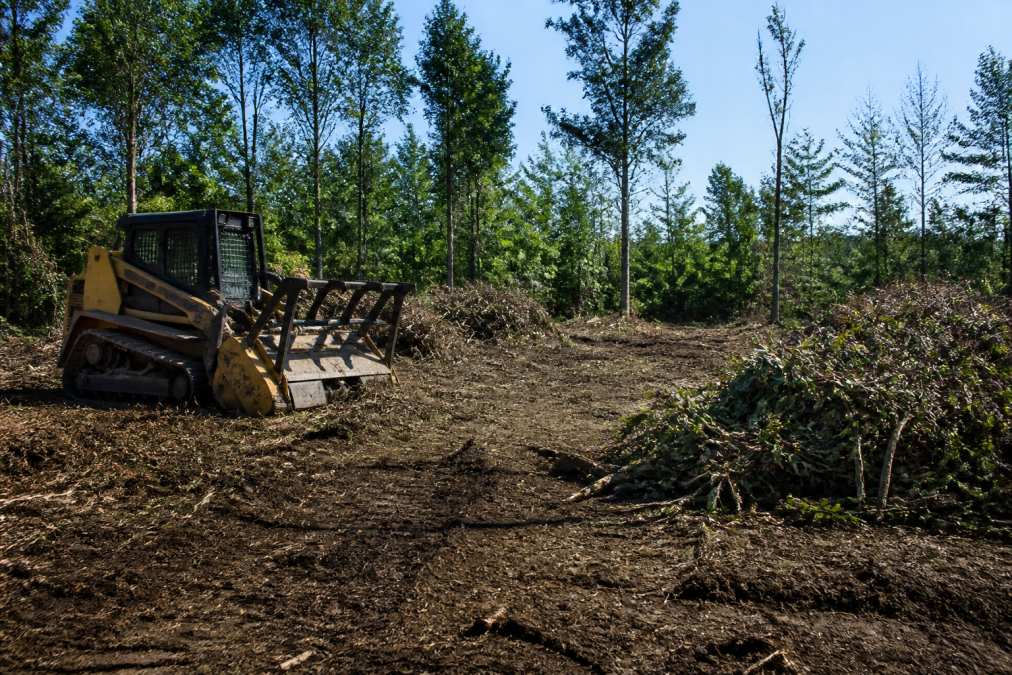
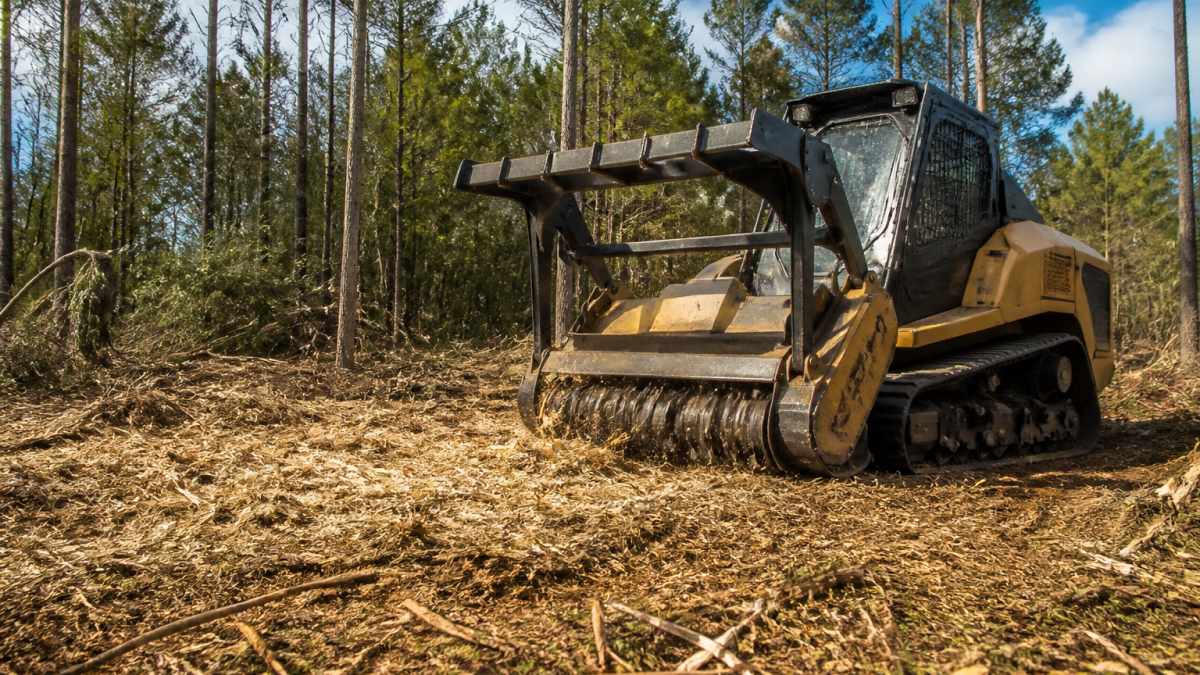
Forestry mulching grinds standing brush, saplings, and small trees into a layer of mulch using a specialized cutting head on a tracked machine. For Longview-area landowners, it turns years of thicket into usable ground in a single pass, with no debris hauling.
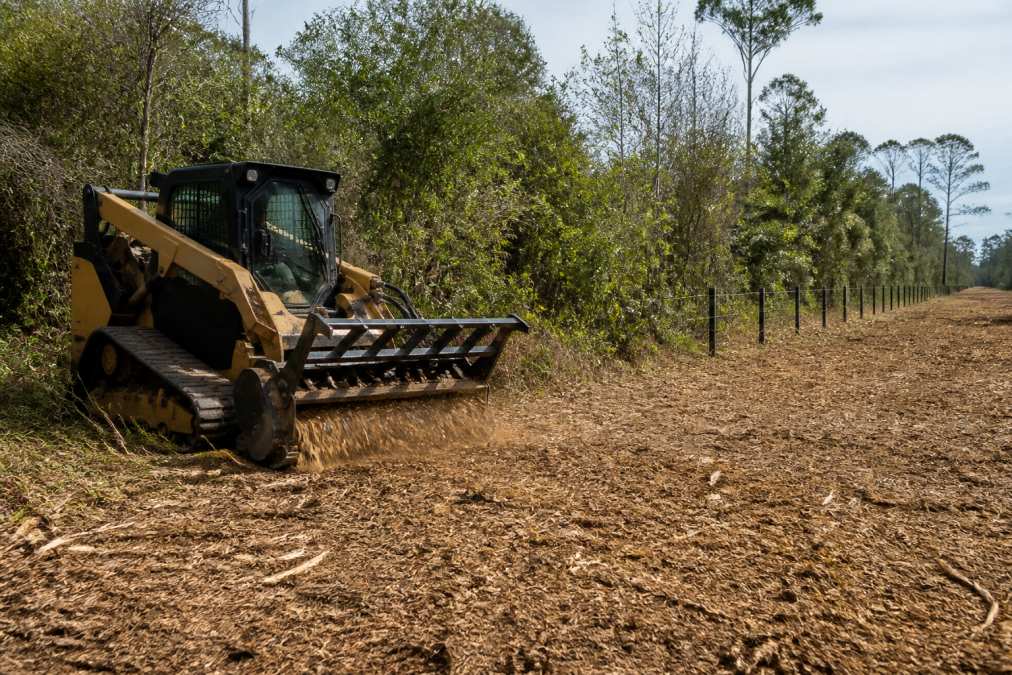
How the Mulching Head Handles Thick Brush
The cutting head is a horizontal drum or disc with fixed carbide teeth spinning against a steel hood. It takes material at ground level and reduces it in place, and a skilled operator tilts the head to shave stumps rather than dig them out, keeping the ground level.
Why It Beats Bulldozing on Most Properties
Bulldozing strips vegetation and pushes topsoil into a pile with it. You lose the organic layer, the ground is left bare and compacted, and the first hard rain carves gullies through it.
The Cost of Land Clearing Per Acre in Longview
There is no single per-acre rate for forestry mulching, and anyone quoting one before seeing your property is guessing. The honest middle ground is a cost framework: what drives the number up or down, and roughly where a given property type lands.
What Drives the Price Up or Down
| Cost Factor | Low End | High End |
|---|---|---|
| Vegetation density | Open pasture, light weeds | Dense yaupon and sapling thicket |
| Stem size | Grass and brush under 2 in | Mixed stems and small trees |
| Terrain | Flat, well-drained | Slopes, creek bottoms, soft ground |
| Access | Wide gate, open approach | Narrow entry, obstacles to work around |
| End goal | Rough brush control | Cleared ground ready for seed or build |
Two adjacent tracts of the same size can land far apart on price. A five-acre pasture with scattered brush is a different job from five acres of solid thicket with a creek running through it.
A Rough Cost-Per-Acre Framework by Vegetation Density
Use this as a planning tool, not a quote. Actual pricing depends on the operator, machine, travel distance, and the site assessment, the point is a realistic mental range before you call anyone.
- Light clearing (open pasture, scattered weeds and brush under 2 inches): the fastest, lowest-cost tier. A mulcher often covers several acres per day.
- Moderate clearing (mixed brush, saplings, occasional stems up to 4 inches): the machine slows on thicker stems and needs more passes. This middle tier is the most common residential job.
- Heavy clearing (dense yaupon, privet, sweetgum thickets, stems 4-8 inches): the slowest, highest-cost tier, with multiple passes, more fuel, and more wear on teeth. Hardwood stumps over roughly 8 inches usually need separate stump grinding, priced separately.
- Fence line and small-parcel work: often quoted hourly or as a flat minimum because the job is too small to price per acre fairly. A quarter-acre fence line job still carries mobilization cost, so the per-acre math looks high even though the total bill is modest.
What to Ask Before You Compare Quotes
When you collect estimates, price each on the same basis so you are comparing apples to apples:
- Is the quote per acre, hourly, or a flat job price?
- Does it include stump grinding, or is that separate?
- Is there a mobilization or travel fee?
- What is the minimum job size or minimum billing?
- What happens if density turns out heavier than the assessment suggested?
Brush Clearing Services for Fence Lines and Pastures
Fence line clearing is the most common request here and the job most often postponed. Brush swallows a fence, then the wire, then the posts, and by the time it is noticed the fence needs repair as well as clearing.
Ten-Foot Fence Line Clearing
A ten-foot clearing width is the practical standard for fence line work, giving room for a machine to operate, a truck or tractor to travel alongside, and fence crews to work without fighting regrowth. Wider strips make sense where a fence sits near a road, driveway, or boundary you want visible.
Site Preparation for Construction: House Pads and Driveways
Site preparation for construction is where mulching stops being maintenance and becomes the first step of a build. Before a house pad is cut, a gravel driveway goes down, or a culvert is set for drainage improvement, the ground must be cleared of everything growing on it.
Soil Health, Erosion Control, and Post-Clearing Maintenance
The most common worry landowners raise is regrowth. Watching a cleared fence line return to thicket within a season is a familiar frustration, and it happens for a predictable reason: only the tops were addressed, not the root systems.
- Seed cleared areas with a ground cover suited to the soil and use, so desirable plants compete with regrowth
- Spot-treat resprouts while they are still small, when they are cheapest to handle
- Plan a maintenance pass on fence lines and pasture edges rather than treating clearing as a one-time event
- Keep the mulch layer intact on slopes, since it is doing the erosion control work
Permits and Local Rules Before You Clear
Landowners are often surprised that clearing is not always a free action on private property. Rules vary by jurisdiction, and the ones that most often apply involve waterways, drainage, wetlands, and protected species. Most routine upland brush clearing on private acreage needs no permit, but the exceptions generate fines when missed.
When a Permit Is Typically Triggered
The triggers fall into predictable categories:
- Work in or near a waterway. Clearing, grubbing, or moving dirt in a creek, stream, drainage ditch, or wetland can require authorization. The U.S. Army Corps of Engineers administers the Section 404 program under the Clean Water Act for discharges of dredged or fill material into waters of the United States, which can reach wetlands and some ditches. If your clearing touches a creek bottom or wet area, check this first.
- Floodplain and drainage. Moving dirt or blocking flow in a mapped floodplain can trigger local review because it affects how water moves onto neighboring property. Even without a permit, altering drainage that floods a neighbor is a civil liability.
- Protected species. The federal Endangered Species Act can restrict clearing where listed species or their habitat are present. In this region, check before clearing near known habitat rather than assuming it does not apply.
- Burning. Pile burning is restricted in many areas and can require a permit or be banned during dry periods. Mulch-in-place avoids the question entirely, one practical reason it has become the default method here.
Where to Check Before You Clear
A few offices cover most of what a landowner needs:
- The U.S. Army Corps of Engineers for Section 404 questions on work in or near waterways and wetlands.
- The Texas Commission on Environmental Quality for water quality matters that can apply to land-disturbing activity near waterways.
- The USDA Natural Resources Conservation Service for erosion control and conservation practice guidance on working land.
- The county and city offices for local floodplain, drainage, and burn rules, since those vary by jurisdiction and are not covered by federal or state agencies.
Two Practical Steps That Cover Most Situations
- Confirm property boundaries before any machine crosses a line, especially on rural tracts where fences and surveys disagree. Clearing a neighbor's timber is an expensive mistake regardless of intent.
- Ask about local burning rules, and if you are near water, ask whether the work area falls inside a regulated buffer or floodplain.
The practical takeaway: routine upland brush clearing on dry ground is usually straightforward, but work touching water, wetlands, floodplains, or protected habitat deserves a phone call before the first pass. A reputable operator flags those situations during the assessment, not after.
What the Free Land Assessment Covers
At SemperFi Land Clearing LLC, the assessment is free with no obligation. As a veteran-owned operation, we pride ourselves on delivering precision, efficiency, and reliability, and the assessment is where that shows up first: a straight read on what the property needs, what it will take, and what it will cost.
Frequently Asked Questions
What is the average cost of clearing an acre of land in Texas?
Pricing depends on vegetation density, terrain, access, and how much of the acreage is actually covered in brush. Dense yaupon and pine regrowth costs more per acre than open pasture with scattered saplings. Rather than quote a flat rate, SemperFi Land Clearing LLC walks the property first and prices the job from what is actually there. Request a free land assessment for a number based on your acreage.
How does forestry mulching help with soil health and erosion control?
The mulching head cuts vegetation at the surface and leaves the shredded material as a ground cover. That layer holds moisture, moderates soil temperature, and slows runoff, so topsoil stays put on sloped ground. Because the machine does not scrape or push dirt the way a bulldozer does, the root structure and soil profile stay largely intact. The result is ground that recovers and regrows rather than sitting bare and exposed.
What types of vegetation can forestry mulching equipment clear?
A high-horsepower mulcher attachment handles saplings, dense underbrush, briars, yaupon, sweetgum, pine regrowth, and thick fence line overgrowth. Grasses and light weeds disappear in a single pass. Larger hardwoods, typically over about 8 inches in diameter, are usually left as shade trees or handled separately. If you have a quarter acre of fence line or 30 acres of overgrown pasture, the same equipment applies, just at different scale.
How do I prepare my property for a professional forestry mulching service?
Mark anything you want left standing: fence posts, gates, culverts, water lines, septic components, and desirable shade trees. Clear vehicles, equipment, and debris from the work area, and make sure the crew can get a truck and trailer to the site. If you know where old stumps or buried utilities run, say so during the assessment. Beyond that, there is no prep work required. The machine handles the overgrowth as it stands.