 How-to
How to Mulch Land When It Is Wet
Quick Summary
You can mulch land wet only if the ground is damp rather than saturated. If water drips from a squeezed handful or boots sink more than an inch or two, wait, since heavy equipment on wet soil causes ruts, compaction, and matting. Sandy and loamy soils firm up quickly after rain, while clay can stay too wet for days.
- Squeeze a handful of soil: if water drips out, the ground is saturated, so wait.
- If boots sink more than an inch or two, traffic will rut the ground.
- Hold off when heavy rain leaves standing puddles on the surface.
- Avoid mulching right before a storm, since mulch can wash, float, or mat.
- Pull mulch back a few inches from stems and crowns if you see fuzz or slime.
Table of Contents
- Can You Mulch Land When It Is Wet? The Short Answer
- Can You Put Mulch Down After Rain?
- Risks of Mulching Wet Ground: Compaction, Matting and Fungal Growth
- Frequently Asked Questions
Can You Mulch Land When It Is Wet? The Short Answer
Last Updated: November 18, 2026
It depends on how wet, how much land, and what you are spreading: damp ground is fine, saturated ground is where jobs go wrong. Whether you can mulch land wet comes down to two questions: is the soil merely moist, or is it holding free water?
Run a simple field test: if water drips from a squeezed handful, it is saturated, wait; if boots sink more than an inch or two, traffic will rut the ground. Scale matters: a garden bed can often be mulched by hand while only damp, but mulching large acreage means heavy equipment that multiplies damage on wet ground. Sandy and loamy soils firm up quickly after rain; clay-heavy soils hold water and can stay too wet for days. USDA Natural Resources Conservation Service soil guidance explains how saturated soil loses its structure under pressure, which is why timing matters more than most people expect.
If you are unsure about your land, a free land assessment can show you whether the ground is ready. Contact SemperFi Land Clearing LLC for a free assessment to talk through your site's drainage.
Can You Put Mulch Down After Rain?
Yes, but timing and material matter: light rain on dry ground is usually harmless, while heavy rain that leaves puddles means hold off until the surface firms up, since you should not mulch land wet with standing water on it. For brush clearing, review forestry mulching costs and site prep in Longview TX.
Check for pooling and rake matted spots, move floating material before it reaches fences and drains, avoid tilling saturated ground, and pull mulch back a few inches from stems and crowns if you see fuzz or slime. Wood chips and bark are heavy and slow to float, but fine particles can mat into a water-resistant crust; straw floats easily and washes into piles; leaves mat badly when wet; fine compost turns slick, so apply thin layers. If heavy rain is expected within a day or two, wait, mulch applied right before a storm is most likely to wash, float, or mat. To judge whether wet-season mulching holds up over time, check how forestry mulching prevents brush regrowth.
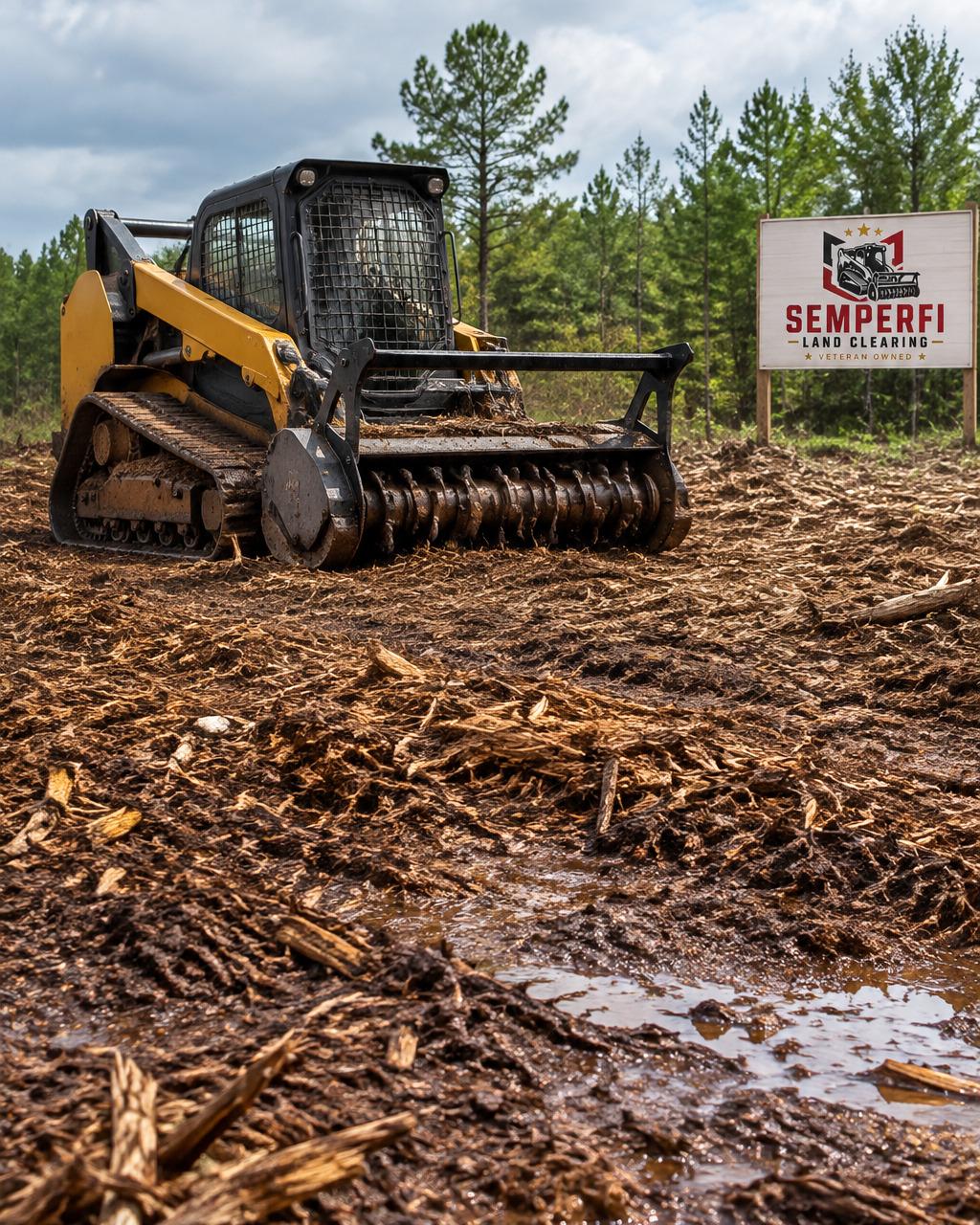
Applying mulch to saturated ground and then walking or driving over it can cause ruts and compaction. To plan drainage after clearing, see how to manage property drainage after tree removal.
Risks of Mulching Wet Ground: Compaction, Matting and Fungal Growth
Compaction: heavy machines press the soil into a dense layer, so roots and water struggle to move. Matting: wet mulch packs into a tight mat that blocks rain and air. Fungal growth: trapped moisture under thick mulch encourages mold and rot.
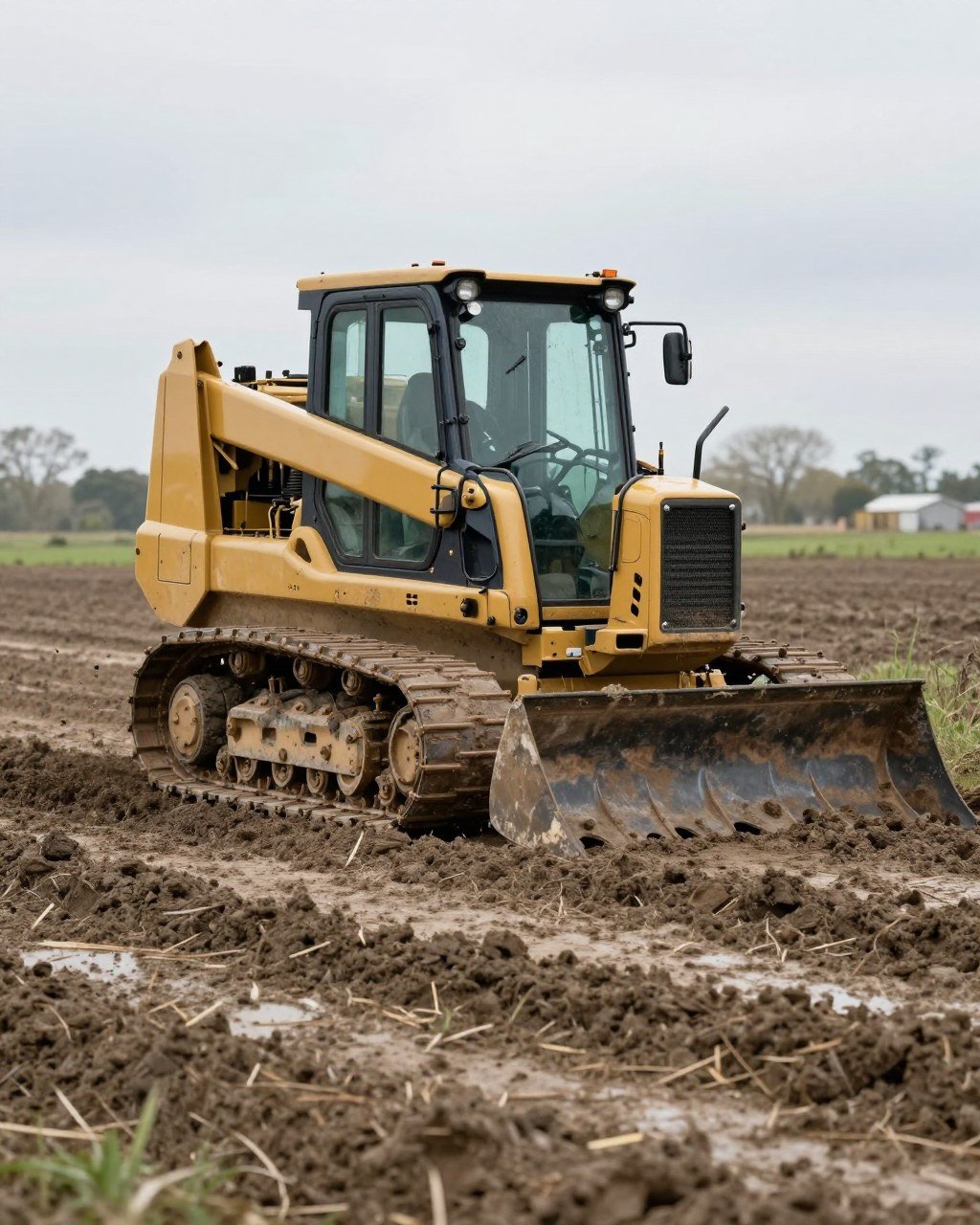
Watch out: rutted ground can take years to recover. Once compacted, you may need to aerate or reseed before anything grows well again.
If you're unsure about your land, a free land assessment can show you whether the ground is ready. Contact SemperFi Land Clearing LLC for a free assessment to talk through your site's drainage.
The main risks of mulching wet ground are summarised below.
| Risk | Cause | Effect |
|---|---|---|
| Compaction | Heavy machines press soil into a dense layer | Roots and water struggle to move |
| Matting | Wet mulch packs into a tight mat | Blocks rain and air |
| Fungal growth | Trapped moisture under thick mulch | Encourages mold and rot |
Frequently Asked Questions
Can you mulch when the ground is wet?
You can, but wet ground is a poor time to do it. Mulch applied to saturated soil can trap moisture, encourage fungal growth, and mat into a dense layer that sheds water instead of absorbing it. Heavy equipment also compacts wet soil quickly. If the soil squishes or water pools when you press on it, wait for it to dry before mulching or spreading any material.
Does forestry mulching work on wet land?
Forestry mulching can be done on wet land in some cases, but it depends on the site. Machines can sink, leave deep ruts, and damage the root zone when the ground is saturated. Access, slope, and equipment weight all matter. A free land assessment is available from SemperFi Land Clearing LLC. For current pricing or a quote, contact us through our website.
How can you tell if soil is too wet to mulch?
Take a handful of soil from about 4 inches down and squeeze it. If it forms a ball that holds its shape and leaves water on your palm, it is too wet. Also step on the surface: if your boot leaves a deep impression or water seeps up around it, wait. Soil that crumbles when squeezed and feels damp but not soggy is generally ready.