 ultimate-guide
Land Clearing in Longview, TX: Full Service Guide
Table of Contents
- What Land Clearing Services Cover
- Brush Removal Services: What to Expect
- Forestry Mulching Cost Per Acre: What Drives Pricing
- Land Grading and Site Preparation for New Builds
- Residential vs. Commercial Land Clearing Projects
- Environmental Impact, Permitting, and Post-Clearing Maintenance
- Why Choose a Veteran-Owned Clearing Contractor
- Frequently Asked Questions
Last Updated: August 28, 2026
What Land Clearing Services Cover
Land clearing removes trees, brush, stumps, and vegetation to prepare property for construction, agriculture, or improved management. In East Texas, thick pine stands and tangled undergrowth make this work demanding and equipment-intensive.
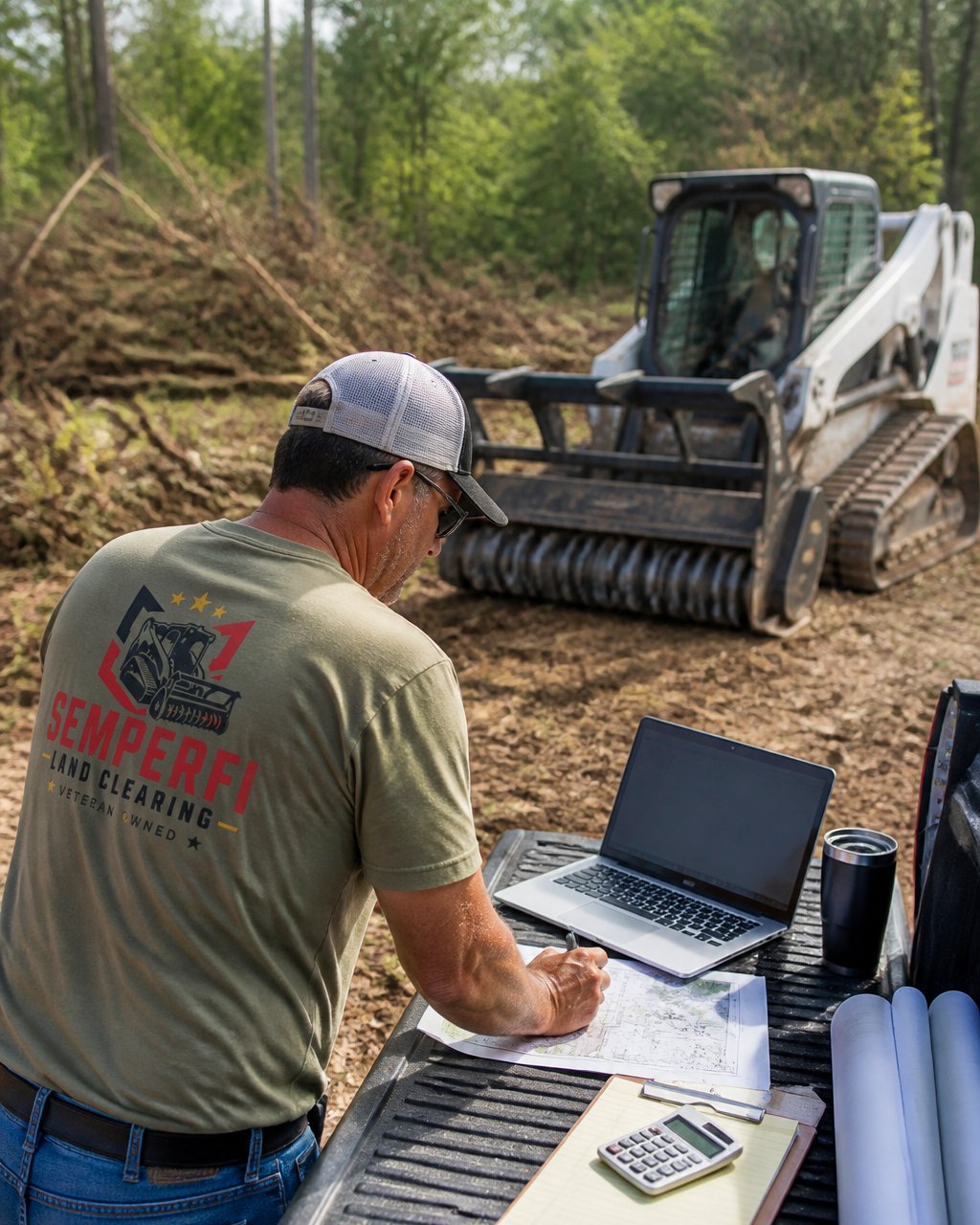
At SemperFi Land Clearing LLC, we handle everything from single fence lines to multi-acre site preparation. Land clearing services generally include:
- Undergrowth and debris removal
- Forestry mulching
- Brush and fence line clearing
- Lot clearing for construction or sale
- Pasture reclamation and vegetation management
Undergrowth and Debris Removal
Dense undergrowth, briars, and invasive species like Chinese tallow and privet are common across East Texas. This vegetation competes with desirable plants, reduces visibility, and blocks fence maintenance.
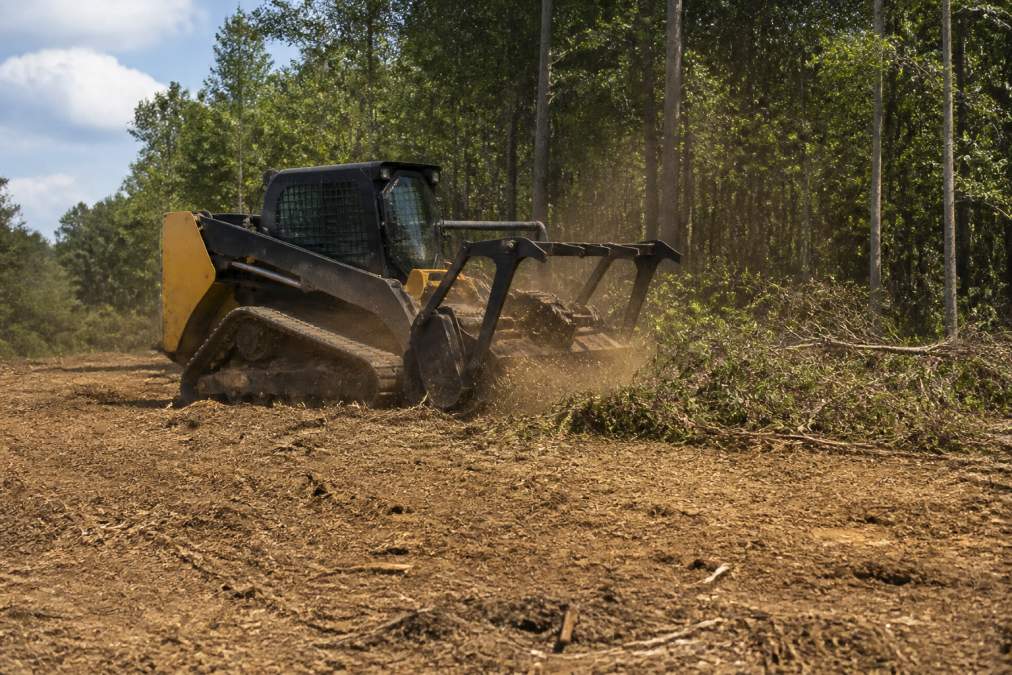
Undergrowth removal uses mechanical clearing with a skid steer or tracked mulcher, or selective hand clearing near structures. The method depends on growth density and intended land use.
Brush Removal Services: What to Expect
Brush removal scope varies dramatically based on neglect duration, species, and terrain. Three acres of thick brush with overgrown fence lines is a different job than light cleanup after timber harvest.
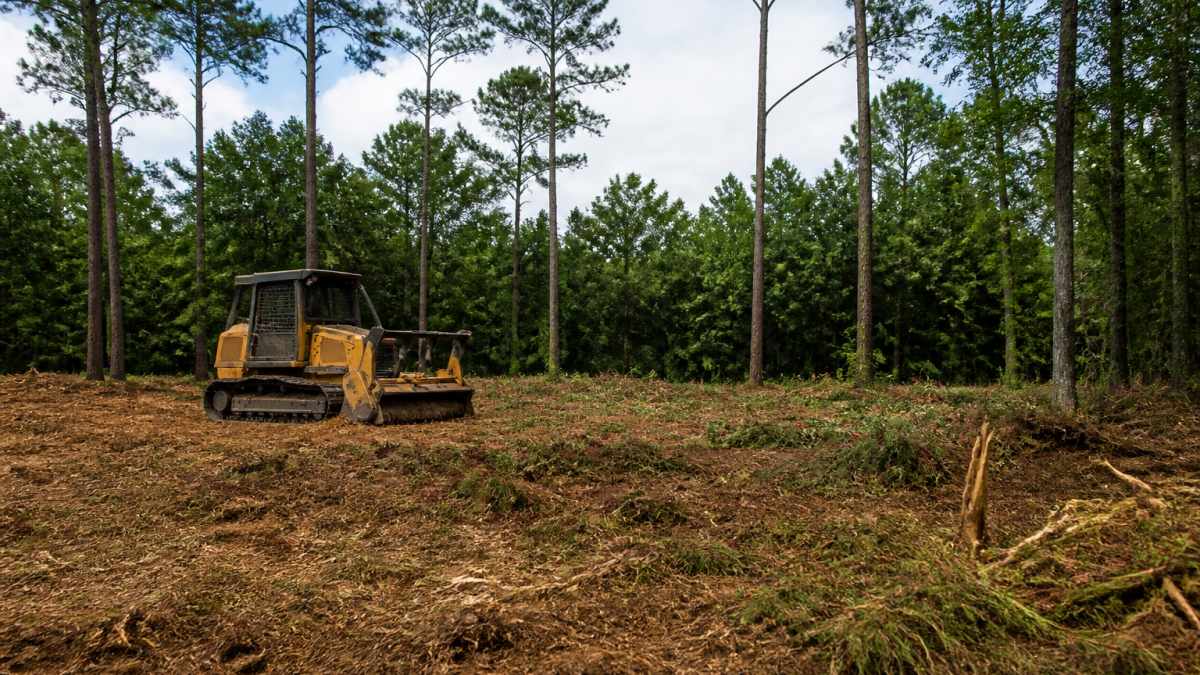
Forestry mulching handles heavy brush most efficiently. The mulcher grinds vegetation in place, leaving wood chip mulch that suppresses weed regrowth, retains moisture, and adds organic matter to soil. For properties concerned about regrowth, this is an effective approach without chemical treatment.
For fence line clearing, a 10-foot width is standard for manageable maintenance and preventing encroachment.
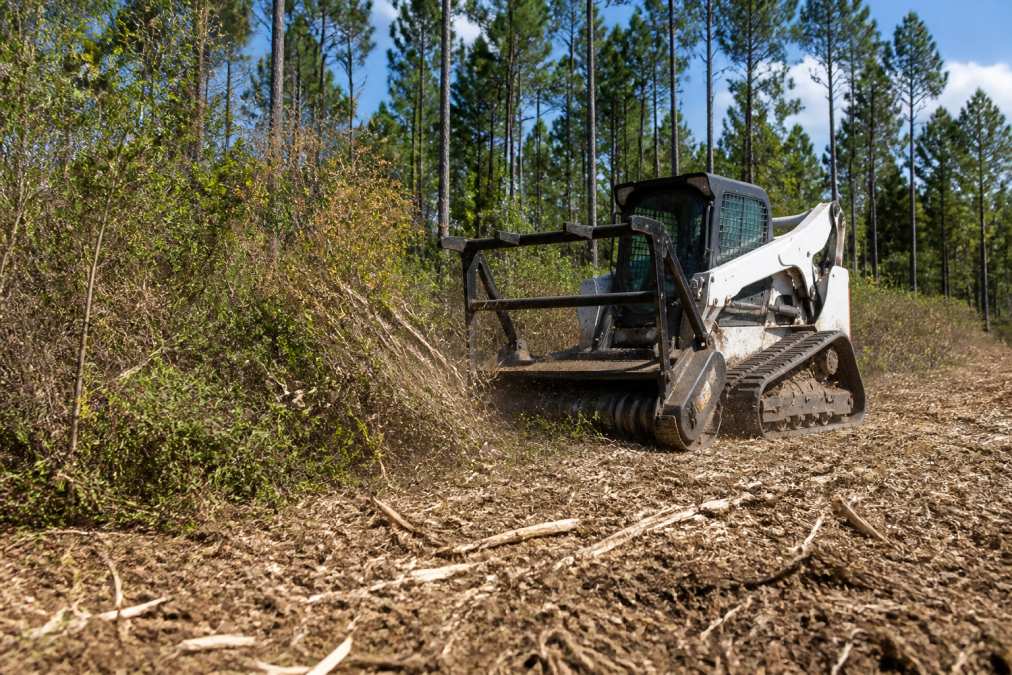
What to expect from professional brush removal:
- Site assessment identifying vegetation types, access points, and obstacles
- Equipment selection for terrain and density
- Systematic clearing from boundaries inward or along corridors
- Debris management: mulching in place, chipping, or hauling
- Final pass addressing remaining stumps or root crowns
Forestry Mulching Cost Per Acre: What Drives Pricing
Forestry mulching cost per acre varies based on factors only clear during site assessment. Pricing is not arbitrary but genuinely variable.
Factor | Impact on Cost | Why It Matters |
|---|---|---|
Vegetation density | High impact | Dense, woody brush takes more machine hours |
Terrain and slope | Medium-high impact | Steep or wet ground slows equipment and raises risk |
Access to the site | Medium impact | Remote or gated properties add mobilization time |
Acreage and job size | Medium impact | Larger jobs often have lower per-acre rates |
Species composition | Medium impact | Hardwoods and large-diameter stems take more passes |
Debris disposal method | Variable | Mulching in place costs less than hauling |
A free on-site assessment provides accurate scope and reliable pricing rather than flat rates that may not reflect your conditions.
According to Texas A&M AgriLife Extension's land management resources, vegetation type and site conditions are the primary drivers of clearing costs.
Land Grading and Site Preparation for New Builds
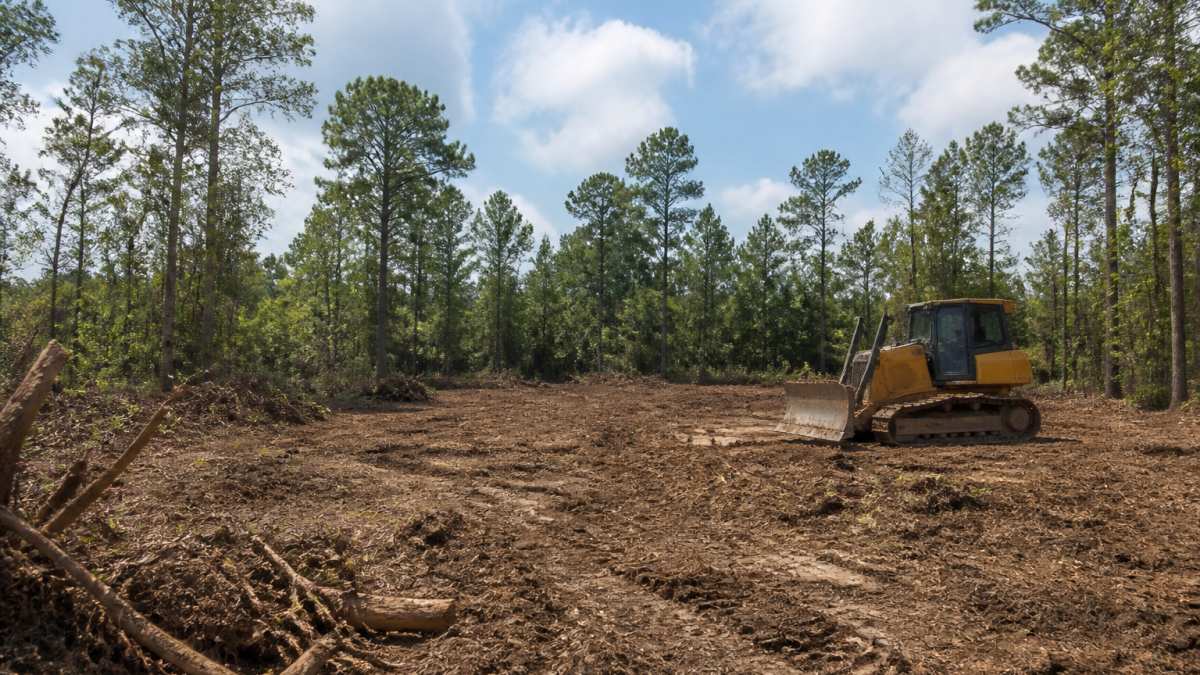
Site preparation shapes the land itself. Clearing removes what is growing; grading establishes correct elevation, creates drainage patterns, and produces a level, compacted surface for construction.
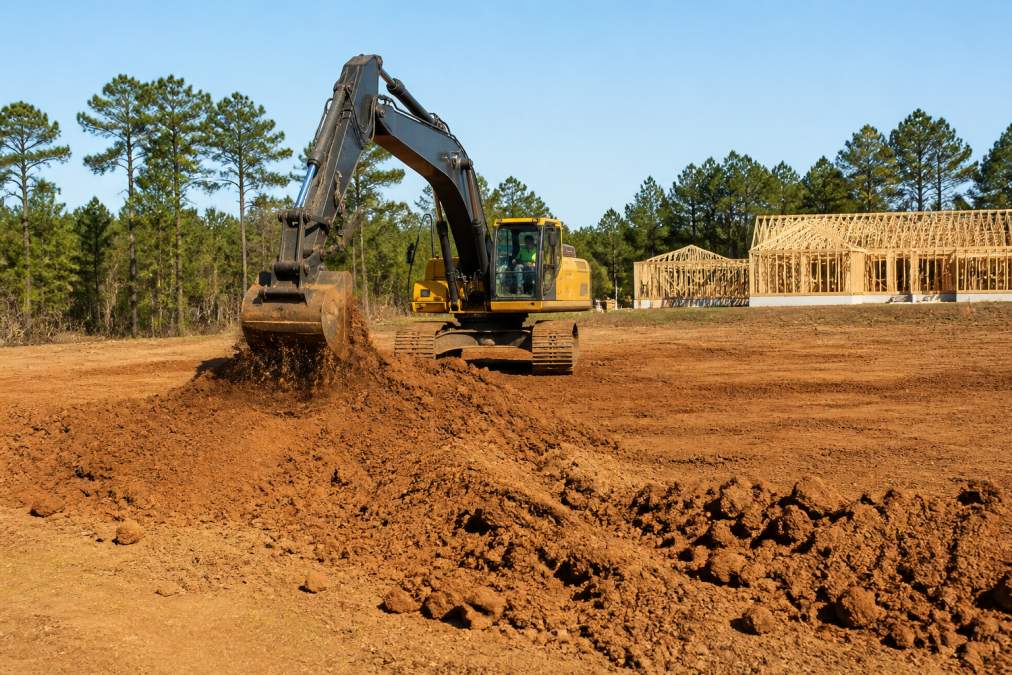
Earthwork typically includes:
- Topsoil stripping: Removing organic layer before grading for later reapplication
- Rough grading: Moving bulk material to achieve desired elevation and drainage slope
- Subgrade compaction: Ensuring soil stability for structures
- Fine grading: Finishing surface to precise tolerances
- Drainage solutions: Installing swales, culverts, or retention areas
Sequence matters critically. Grading before clearing stumps and root masses creates settlement problems months later. Clearing and grading phases must be planned together, not handled by separate contractors.
For developers preparing subdivisions, coordinating clearing and grading under one contractor eliminates scheduling gaps and blame-shifting.
Residential vs. Commercial Land Clearing Projects
The difference between residential and commercial clearing is complexity, timeline, and regulatory environment.
Residential clearing involves smaller acreage, single property owners, and direct contractor relationships. Common projects include lot clearing for new homes, fence line maintenance, pasture reclamation, food plot establishment, and overgrowth removal before listing.
Commercial site prep involves larger acreage, multiple stakeholders, and stricter documentation. Developers need clearing and grading meeting engineering specifications. Timelines are tighter, coordination with surveyors and engineers is standard, and delays carry contract penalties.
A common mistake on commercial projects is underestimating permitting time before clearing begins.
Environmental Impact, Permitting, and Post-Clearing Maintenance
Land clearing involves regulatory considerations beyond physical work.
Permit Requirements in Texas
Permit requirements depend on disturbed area size, waterway proximity, and whether projects trigger federal or state environmental review. The Texas Commission on Environmental Quality's construction general permit program requires a Storm Water Pollution Prevention Plan for land disturbance of one acre or more.
For properties near streams, wetlands, or floodplains, additional review under Section 404 of the Clean Water Act may apply. The U.S. Army Corps of Engineers permitting program determines whether clearing affects jurisdictional waters.
Harrison County and the City of Longview may have additional grading and drainage ordinances. Check with your local planning department before breaking ground.
Start permitting before scheduling equipment. A one-acre residential lot may require no permits; a 10-acre commercial tract near drainage features may require weeks of review.
Keeping Regrowth Under Control After Clearing
Brush regrowth within months is legitimate without management. Forestry mulching suppresses regrowth better than most methods through physical mulch suppression, but follow-up is necessary.
Effective post-clearing maintenance includes:
- Targeted follow-up mulching at six to twelve months on regrowing areas
- Seeding with competitive ground cover before invasive species reestablish
- Selective herbicide application for persistent species like Chinese tallow
- Annual fence line maintenance preventing encroachment
According to Texas A&M Forest Service's invasive species management guidance, invasive woody species in East Texas require consistent management over multiple seasons. A single clearing event rarely eliminates them.
Clearing is the beginning of land management, not the end. Properties receiving maintenance within the first year hold results far longer than those left unattended.
Why Choose a Veteran-Owned Clearing Contractor
Military service builds operational discipline translating directly to field work. Mission completion is not optional. Equipment is maintained. Timelines are commitments, not estimates.
SemperFi Land Clearing LLC operates on that standard. We offer free land assessments with no obligation or pressure. The assessment provides accurate project scope and reliable pricing for informed decisions.
Small jobs receive the same assessment process and quality work as large projects. What sets contractors apart is showing up when scheduled, finishing what they started, and delivering promised results.
Overgrown land does not manage itself, and delay costs more growth and harder clearing next season. Whether preparing a lot for construction, reclaiming pasture, or addressing neglected fence lines, the right crew and equipment make the difference. SemperFi Land Clearing LLC provides expert land clearing, forestry mulching, and site preparation with the precision and reliability of veteran-led operations. Get an estimate and find out exactly what your project requires.
Frequently Asked Questions
Do you need a permit to clear land in Texas, including Gregg County?
Texas does not require a statewide permit for most residential land clearing, but local rules apply. In Gregg County and the city of Longview, you may need a grading or erosion control permit depending on acreage, proximity to waterways, and intended land use. The Texas Commission on Environmental Quality (TCEQ) also regulates clearing near wetlands and water bodies. Always check with your county or city planning office before starting work on larger tracts or sites near drainage areas.
What is the difference between forestry mulching and traditional land clearing?
Traditional land clearing uses bulldozers and brush hogs to push, pile, and haul away vegetation, leaving bare soil that erodes quickly. Forestry mulching uses a single machine to grind trees, brush, and undergrowth directly into a layer of mulch that stays on the ground. That mulch suppresses weed regrowth, retains moisture, and protects topsoil. For most residential and ranch properties, forestry mulching is faster, less disruptive to soil structure, and produces a cleaner finished result without the burn pile.
How long does it take to clear an acre of overgrown brush?
A typical acre of moderate brush and light trees takes a professional forestry mulching crew roughly two to four hours with the right equipment. Dense overgrowth, large-diameter trees, or uneven terrain can extend that to a full day or more per acre. Stump grinding, grading, and debris hauling add time on top of the clearing itself. The best way to get an accurate timeline for your specific property is to schedule a free on-site assessment before work begins.
What should I look for when hiring a land clearing contractor?
Confirm the contractor carries general liability insurance and, if they have employees, workers' compensation coverage. Ask whether they pull required permits and handle erosion control compliance. Look for crews that own their own heavy equipment rather than subcontracting, since that affects scheduling reliability. A contractor who offers a free on-site estimate and provides a written scope of work before you sign anything is a strong signal they operate transparently. Veteran-owned businesses often bring added accountability to project timelines and quality standards.
This article was written using GrandRanker