 how-to
Forestry Mulching for Pasture Maintenance: A 2026 Guide
Table of Contents
- What Forestry Mulching Actually Does to Pasture Land
- The Cost of Forestry Mulching Per Acre: What Drives the Number
- Forestry Mulching vs Traditional Land Clearing for Pastures
- Forestry Mulching Regrowth Management: Stopping the Brush Comeback
- Soil Testing and Seed Selection After Mulching
- Erosion Control During the Transition to Pasture
- Equipment Rental vs Hiring a Professional Crew
- Frequently Asked Questions
Last Updated: September 14, 2026
What Forestry Mulching Actually Does to Pasture Land
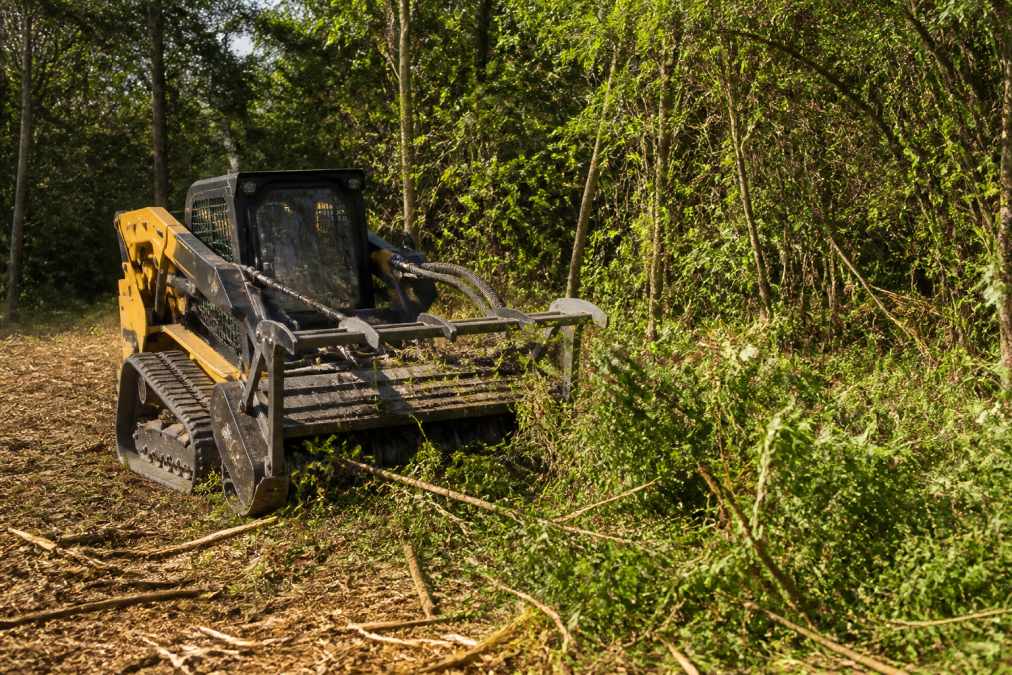
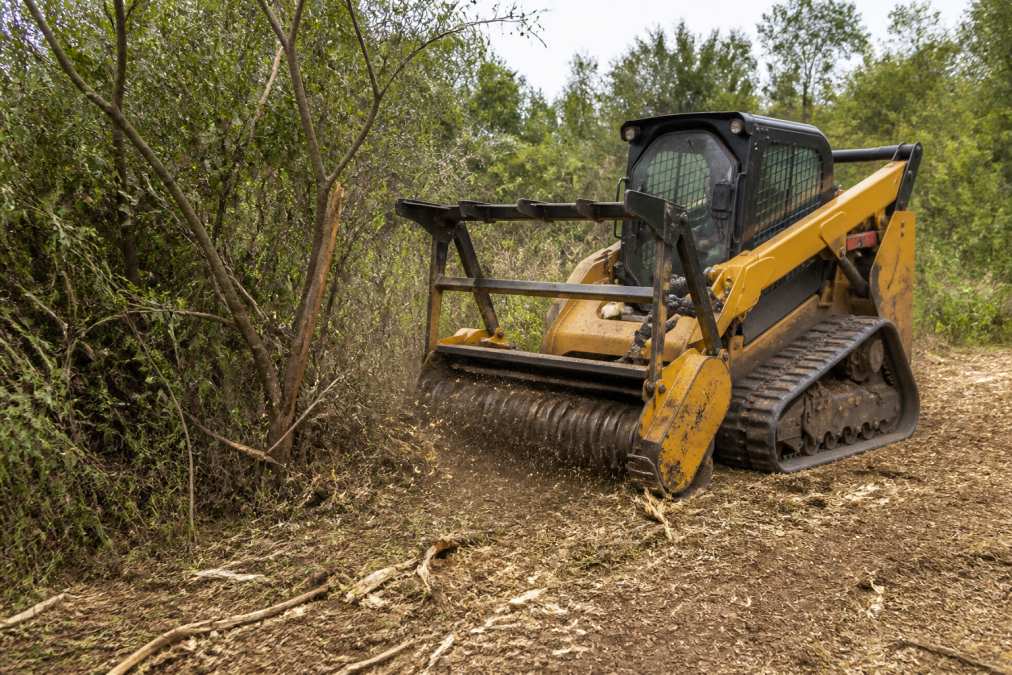
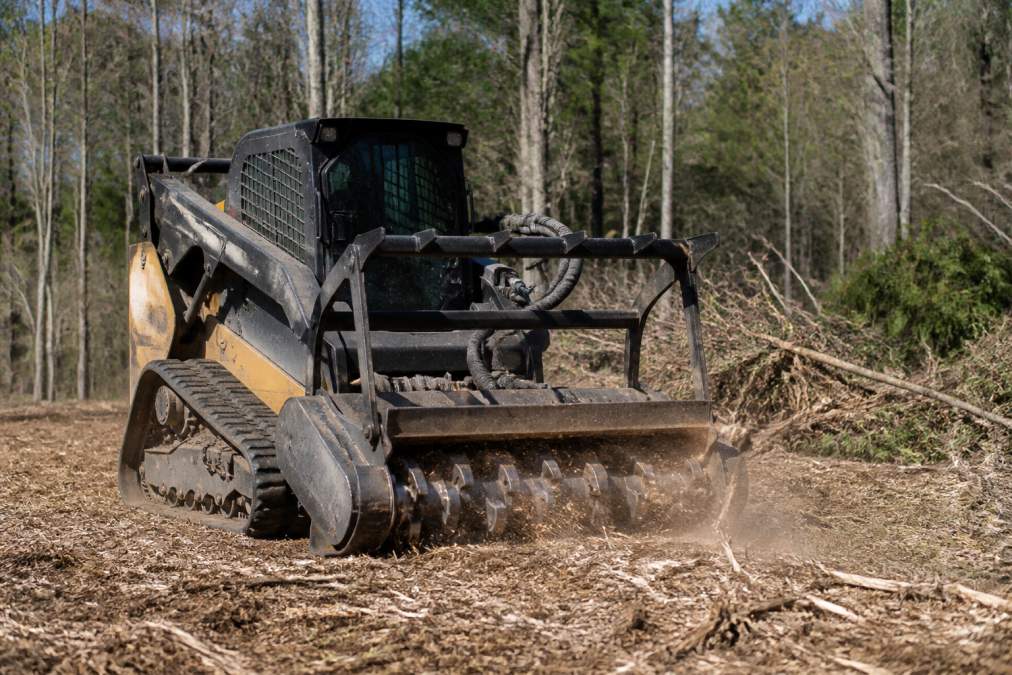
Forestry mulching uses a specialized rotary head to grind standing brush, small trees, and saplings into a layer of wood chips left on the soil surface. For pasture maintenance, one machine handles cutting, shredding, and debris management in a single pass, no burning piles or hauling brush off-site.
This guide from SemperFi Land Clearing LLC covers what that mulch layer does to your soil, what drives the cost of forestry mulching per acre, and how to keep brush from taking the pasture back.
Most landowners assume the machine's only job is removal. The real value shows up months later, as the ground cover breaks down and the soil underneath changes.
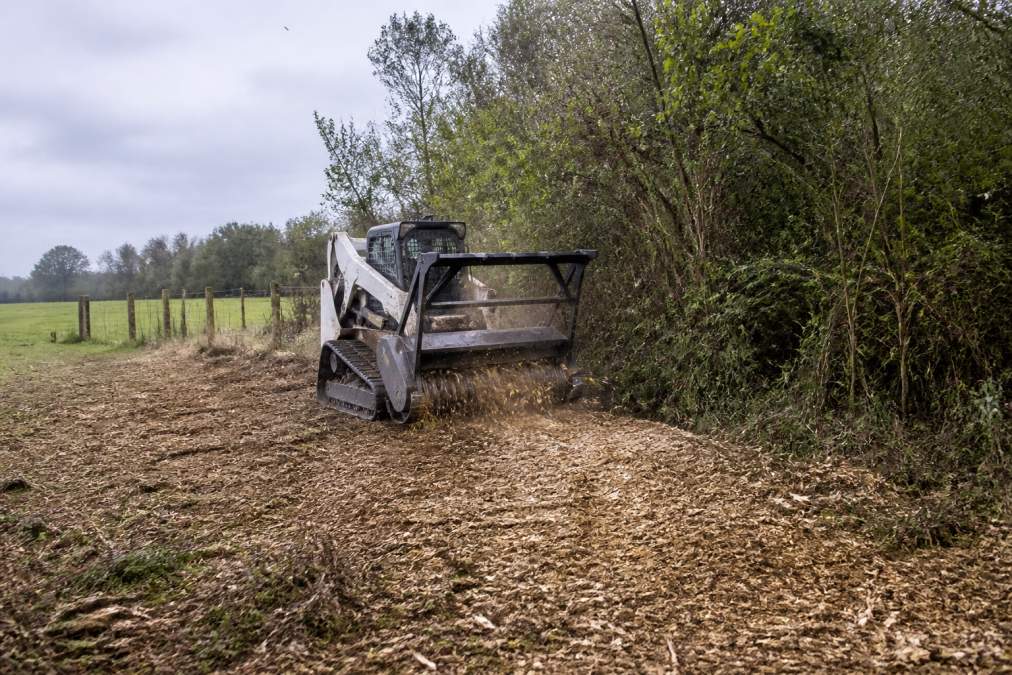
How the Mulch Layer Feeds Your Soil
The shredded material is a slow-release source of organic matter that feeds the soil food web as it decomposes. It shades the soil surface, reducing moisture loss and keeping temperatures steadier through summer, while earthworm and microbial activity work it into the topsoil to improve structure and water infiltration.
The catch is the carbon-to-nitrogen ratio: fresh wood chips are carbon-heavy, break down slowly, and can temporarily tie up nitrogen at the soil surface. Plan re-seeding and amendments around that rather than expecting instant forage.
The Cost of Forestry Mulching Per Acre: What Drives the Number
The cost of forestry mulching per acre varies with the density and size of what is growing on the land, not just the acreage. Two properties of the same size can price very differently depending on how much biomass the machine has to grind.
The biggest cost drivers are:
- Brush density and stem size. Light saplings clear fast. Thick, mature stands with larger trunks slow the rotary head considerably.
- Terrain and access. Slopes, wet ground, and narrow gates limit how efficiently equipment can move.
- Fence lines and obstacles. Clearing around posts, gates, and structures takes more passes and more care.
- Desired finish. A rough pass that knocks down brush costs less than a clean, even finish suitable for immediate re-seeding.
- Distance and mobilization. Getting equipment to the site adds to the total.
Because pricing depends on site conditions, no reputable operator can quote accurately over the phone. SemperFi Land Clearing LLC offers a free land assessment for exactly this reason: someone must walk the property and see what the mulcher is up against before a number means anything.
| Cost Factor | Low Impact | High Impact |
|---|---|---|
| Brush density | Light saplings | Dense mature stands |
| Stem size | Under 4 inches | Over 8 inches |
| Terrain | Flat, dry, open | Sloped, wet, obstructed |
| Obstacles | Open field | Fence lines, gates, structures |
| Finish level | Rough knockdown | Clean, seed-ready |
Forestry Mulching vs Traditional Land Clearing for Pastures
Forestry mulching and traditional land clearing solve the same problem differently, and the right choice depends on what you plan to do with the land next.
Traditional clearing uses bulldozers to push over trees and root them out, then burns or hauls the debris, leaving bare soil that is fast to work but vulnerable to erosion and compaction. Forestry mulching leaves root systems in place to hold soil together and deposits mulch on the surface instead of removing it.
| Factor | Forestry Mulching | Traditional Clearing |
|---|---|---|
| Soil disturbance | Minimal | High |
| Debris handling | Left as mulch | Burned or hauled |
| Erosion risk | Lower | Higher |
| Speed on light brush | Fast | Slower setup |
| Best for | Pasture, fence lines, right-of-way | Construction pads, root removal |
For pasture reclamation and vegetation management, mulching usually wins. It disturbs less soil, leaves ground cover in place, and avoids the bare-earth window that invites erosion.
When Traditional Clearing Still Makes Sense
There is a real case for traditional clearing. If you need stumps removed entirely for a building pad, driveway, or foundation, a bulldozer or excavator does work a mulcher cannot. For site prep where ground must be graded and compacted, traditional methods are the correct tool.
The mistake is defaulting to bulldozing for pasture work because it is what people picture when they hear "land clearing." For pasture, that approach strips the soil you are trying to improve.
Forestry Mulching Regrowth Management: Stopping the Brush Comeback
Forestry mulching regrowth management is the part most landowners underestimate. Mulching knocks brush down but does not kill every root system; some species resprout from cut stumps, and invasive species can return aggressively if nothing follows the initial pass.
Stopping the comeback takes a plan, not a single visit:
- Identify what resprouts. Walk the cleared area a few weeks after mulching and note which species are pushing new growth.
- Follow up within the first season. A second light pass on resprouting stumps is far cheaper than waiting until the brush matures again.
- Establish ground cover fast. Dense, desirable vegetation crowds out weeds and brush by competing for light and water.
- Monitor fence lines and edges. These are where invasive species re-enter first, since seed spreads from adjacent properties.
The goal is to shift the balance: once thick, healthy forage occupies the ground, brush struggles to get a foothold.
Soil Testing and Seed Selection After Mulching
Soil testing separates a pasture that thrives after mulching from one that stalls, and it is the step most mulching articles skip. A fresh mulch layer is not neutral ground, it changes the chemistry and physical structure of the seedbed in ways that dictate which forages establish and which fail.
Why the Mulch Layer Changes Your Soil Chemistry
Fresh wood chips carry a carbon-to-nitrogen ratio of roughly 300:1 to 500:1, depending on species and leaf content, while soil microbes need about 24:1 to 30:1 (extension.psu.edu). Spreading high-carbon material makes microbes pull available nitrogen from the top inch or two of soil to fuel decomposition, nitrogen immobilization. The nitrogen is not gone, just locked in microbial bodies and unavailable to germinating grass seed, which is why seedlings in fresh mulch often yellow and stall even when moisture is adequate.
The effect is concentrated at the surface; subsoil nitrogen and deeper root zones are largely unaffected. That tells you where to intervene: at the seedbed, not across the whole field.
Mulch also shifts pH over time. As it breaks down, organic acids nudge surface pH downward, more so with conifer-heavy material than hardwood. On already-acidic pastures, that pushes you further from the 6.0 to 6.5 range where most cool-season forage grasses and clover perform best; on alkaline soils, the same acidification helps (extension.umn.edu). You cannot know which side of that line you are on without a test.
What to Test, and When
Pull soil cores before you seed, not after. A standard lab test through a state cooperative extension service or private lab reports pH, buffer pH (lime requirement), phosphorus, potassium, calcium, magnesium, organic matter percentage, and cation exchange capacity, with roughly one to two weeks turnaround.
Sample the top 6 inches for pasture renovation, plus a separate 0-to-2-inch sample where mulch is heaviest, since that is where carbon tie-up and pH shift register first. Sample in a zigzag pattern, mix cores in a clean bucket, and submit one composite per management zone, not one per acre.
Cooperative extension soil testing labs by state
Reading the Results Against Mulched Conditions
A few patterns show up repeatedly on mulched ground:
- Low or marginal nitrogen with adequate phosphorus and potassium. The classic immobilization signature. A modest nitrogen starter at seeding, often 20 to 40 pounds of actual N per acre, applied at or just before planting, carries seedlings through the tie-up window. Confirm the rate with your lab recommendation.
- pH below 6.0. Lime is usually the first amendment, incorporated if possible or surface-applied ahead of rain if the field cannot be tilled. Lime moves slowly, so applying it the season before you seed beats applying it the week of.
- Low organic matter despite the mulch. Fresh chips are not yet humus; organic matter percentage rises over years, not weeks. Do not expect a mulch pass to show up on a test the following spring.
Matching Forage Species to Mulched Soil
Seed selection on mulched ground matches species tolerance to the conditions the mulch layer creates: a rough surface, a nitrogen-limited seedbed the first season, and often a slightly acidic trend.
Cool-season options. Tall fescue and orchardgrass tolerate a range of pH and establish well on a rough seedbed when drilled or broadcast-and-packed. Perennial ryegrass germinates fast and acts as a nurse crop while slower perennials root. Red and white clover fix their own nitrogen and offset immobilization, but need pH at or above 6.0 to nodulate efficiently.
Warm-season options. Bermudagrass and bahiagrass are workhorses on grazed Southern pasture and tolerate lower fertility once established, though they establish slowly from seed and often go in as sprigs or plugs. Native warm-season grasses, switchgrass, big bluestem, indiangrass, build deep roots suited to well-drained, sloped sites but are slow to establish and vulnerable to first-year weed competition.
Cover crops as a bridge. Cereal rye, annual ryegrass, and crimson clover can stabilize the seedbed and scavenge nitrogen while perennials establish. Cereal rye in particular germinates in cool soil and holds the surface through winter.
A common pattern is two-stage seeding: a fast annual cover to protect soil and cycle nutrients the first season, then the perennial forage mix once mulch has begun breaking down and lime has reacted. Establishing a slow perennial directly into fresh, high-carbon mulch in the same season is where most failures happen.
Seeding Method on a Mulched Surface
Mulch changes how seed meets soil. Broadcasting onto a thick chip layer leaves seed on top of carbon, not in contact with mineral soil. Options that work:
- No-till drill into the mulch layer where the surface is not too deep or too uneven. This is the most reliable method for even establishment.
- Broadcast followed by light incorporation, a drag, cultipacker, or light harrow pass to work seed through the chips to soil contact.
- Broadcast onto a thinner mulch layer where the mulch is already broken down or was applied lightly.
Seed-to-soil contact is the single variable most likely to determine whether your test-and-seed plan pays off. Test first, amend to the lab's recommendation, then seed with a method that puts seed in contact with soil, not on top of wood chips.
Erosion Control During the Transition to Pasture
Erosion control during the transition phase is where mulched ground has a real advantage over bare-cleared ground, but only if you understand where that advantage runs out. The mulch layer is a temporary erosion barrier, and the window between clearing and established cover is when most topsoil loss on renovated pasture occurs.
Why Mulch Slows Erosion, and When It Stops Working
The mulch layer protects soil three ways: it intercepts raindrop impact, the energy source that dislodges soil particles; it increases surface roughness, slowing overland flow so water infiltrates; and it adds organic matter that improves aggregate stability as it breaks down.
That protection is proportional to depth and coverage. A uniform 2-to-4-inch layer across a moderate slope performs very differently from a thin, patchy scatter where the mulcher passed quickly or material was pushed aside. The failure mode is almost always uneven coverage, bare strips between mulch islands become concentrated flow paths, which do far more damage than sheet flow.
Protection also fades. As chips decompose over the first one to two growing seasons, the layer thins and its roughness decreases. Mulch buys time to get roots in the ground; it does not replace them.
The Slope Threshold That Changes the Plan
Slope steepness drives the entire erosion strategy. A useful rule of thumb:
- Under roughly 5 percent slope. Sheet flow dominates; mulch coverage is usually sufficient and standard seeding timelines work.
- Roughly 5 to 15 percent. Rill formation is a real risk in bare strips and along concentrated flow paths. Uniform mulch depth and prompt seeding matter more.
- Above roughly 15 percent. Concentrated flow, gullies, and rapid soil loss are live risks even with mulch. These sites need structural or vegetative reinforcement beyond mulch alone.
If you do not know your slope, a phone clinometer app or a level-and-string measurement will get you close enough to pick a strategy.
Practices That Actually Hold Soil on Sloped Pasture
- Leave the mulch layer intact and even. Do not rake it away, burn it, or push it into piles. Uniform depth beats a thin strip next to a thick pile.
- Seed within weeks, not months. The mulch protection curve and the germination curve need to overlap; every week of bare, thinning mulch is a week of exposure.
- Seed on the contour, not up and down the slope. Contour seeding and, where practical, contour tillage or drill lines interrupt downslope flow paths.
- Consider temporary cover on steep or exposed areas. A fast annual like cereal rye or annual ryegrass establishes in cool soil and holds the surface through the first winter while perennials root.
- Add structural reinforcement above roughly 15 percent slope. Straw wattles, silt fence, or erosion control blankets along the contour slow and spread flow where mulch alone cannot.
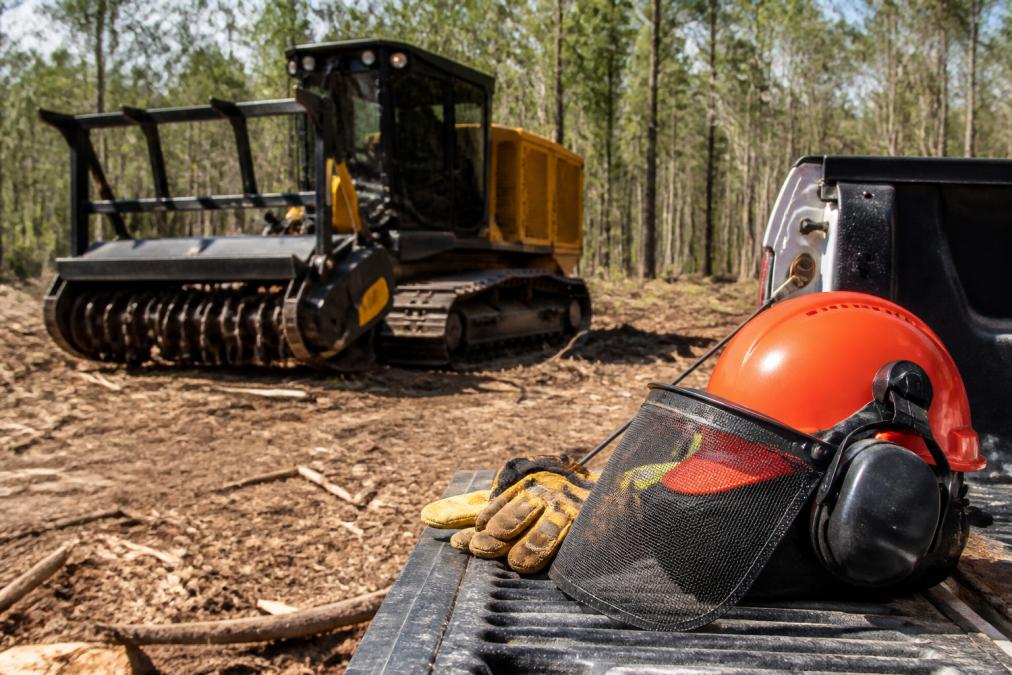
- Keep heavy equipment off wet ground. Compaction destroys soil structure, reduces infiltration, and converts rainfall into runoff. Tracked machines distribute weight better, but timing work to dry conditions matters more than machine type.
Managing the Transition Window
The transition window, from the day the mulcher leaves to the day perennial forage closes canopy, typically runs one to two growing seasons. Properties that come through it well seed within weeks of clearing, keep the mulch layer even, stay off wet ground, and inspect the field after every significant rain for the first season.
A post-rain walk is the cheapest erosion control tool you have. Look for rills, sediment deposits at the bottom of slopes, and any place water concentrates. Small rills caught early can be smoothed and reseeded; left a season, they become gullies that require equipment to fix.
In practice, the transition window is short, and the properties that handle it well treat mulch as a temporary bridge to living cover, not a finished solution.
Equipment Rental vs Hiring a Professional Crew
The equipment rental versus professional crew decision comes down to scale, skill, and risk. A forestry mulcher attachment for a skid steer can be rented, but the machine is only part of the equation.
Renting makes sense when:
- You already own a compatible skid steer or tractor
- The job is small and the brush is light
- You have experience operating heavy attachments safely
- You can complete the work before the rental period ends
Hiring a professional crew makes sense when:
- The brush is heavy, dense, or mixed with larger trees
- Terrain, fence lines, or obstacles add complexity
- You want the job done in a defined timeframe without a learning curve
- You need the finish level clean enough for immediate re-seeding
The hidden cost of renting is not the fee. It is the time learning the machine, the risk of damaged equipment or property, and days lost when weather turns the ground soft. For most landowners with overgrown acreage, a professional crew finishes in a fraction of the time with a more consistent result.
An operator who mulches pasture regularly knows how to read the ground, avoid compaction on wet soil, and leave a finish that seeds well. That knowledge is what you are paying for.
Reclaiming overgrown pasture takes more than knocking down brush. It takes the right method, a plan for regrowth, and soil work that follows the machine. SemperFi Land Clearing LLC brings veteran-owned reliability, specialized 10 ft fence line clearing, and expert forestry mulching solutions to every project, backed by a free land assessment so you know exactly what your property needs before work begins. Get an estimate from SemperFi Land Clearing LLC and turn overgrown ground into productive pasture.
Frequently Asked Questions
What are the downsides of forestry mulching for pastures?
The main downsides are temporary: the mulch layer can lock up nitrogen as it decomposes, and some woody species resprout from root systems the mulcher cannot reach. Pasture grasses may take a season or two to establish through heavy mulch. Soil compaction from equipment is another concern on wet ground. Most of these issues are manageable with soil testing, targeted herbicide on cut stumps, and timing the work for dry conditions.
Will grass grow after forestry mulching?
Yes, but rarely on its own in the first season. The mulch layer suppresses existing seed and can tie up nitrogen while it breaks down. Most pasture owners get better results by soil testing, amending as needed, then drilling or broadcasting grass seed suited to the soil. Native grasses and improved bermudagrass varieties both work when matched to drainage and pH. Expect a transition period of one to two growing seasons before full forage quality returns.
How much does forestry mulching cost per acre?
The cost of forestry mulching per acre depends on brush density, terrain, access, and how much of the material needs to be ground versus left in place. Light pasture cleanup runs lower than heavy acreage choked with mature trees and vines. Fence line work is often priced by the linear foot instead. Because every property differs, the only accurate number comes from an on-site assessment. SemperFi Land Clearing LLC offers free land assessments to give you a firm figure.
How does forestry mulching compare to traditional grubbing for pasture conversion?
Forestry mulching grinds vegetation in place and leaves the mulch on the surface, which protects topsoil and reduces erosion. Traditional grubbing pushes out root balls and topsoil with a dozer, leaving bare ground that needs immediate reseeding and often requires hauling debris off site. Mulching disturbs less soil, costs less in hauling, and supports soil health, but it does not remove roots, so resprouting is possible. Grubbing gives a cleaner slate for construction pads or row crops.