 How-to
How to Use Forestry Mulching to Improve Soil Health
Last Updated: November 11, 2026
Quick Summary
Forestry mulching improves soil health by grinding cut brush, small trees and vines into fine wood chips that stay on the ground. Those chips return stored carbon and minerals to the land and become food for fungi, bacteria and soil fauna, which mix organic matter into the soil and build stable structure over time.
- Wood chips are high in carbon and low in nitrogen, so decomposition differs from leaf litter.
- Fungi dominate coarse material early, with bacteria taking over as it breaks down finer.
- Protozoa, nematodes, mites and earthworms mix organic matter into the mineral soil.
- Mixed brush gives the most balanced result because varied decomposition rates release nutrients longer.
- Spread chips in a thin, even layer, since a thick layer can tie up nitrogen and make plants yellow.
Table of Contents
- How Forestry Mulching Builds Soil Health
- Benefits of Forestry Mulching for Soil Erosion Control
- Forestry Mulching vs. Traditional Land Clearing for Soil
- Cost of Forestry Mulching per Acre and What Affects It
- Frequently Asked Questions
How Forestry Mulching Builds Soil Health
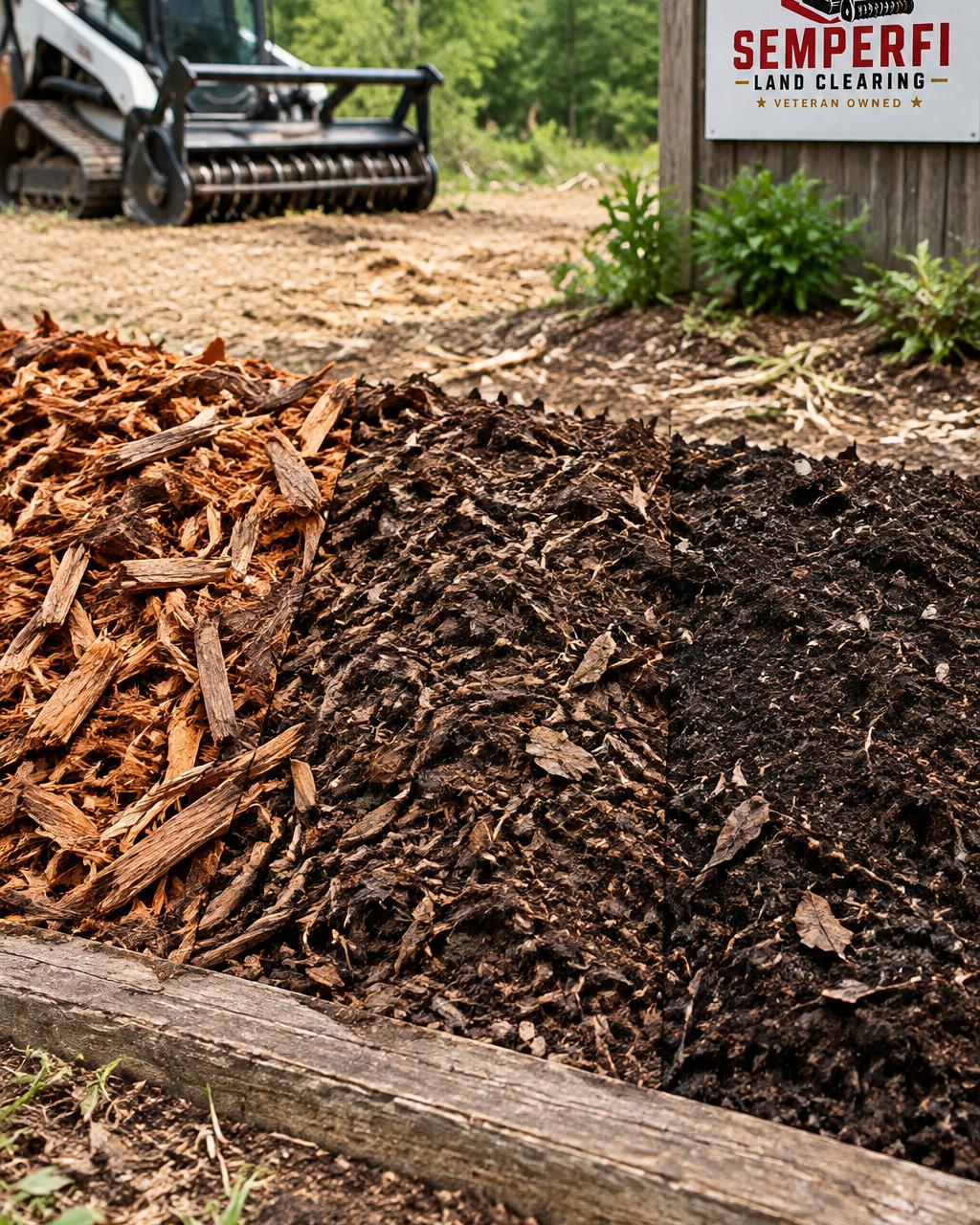
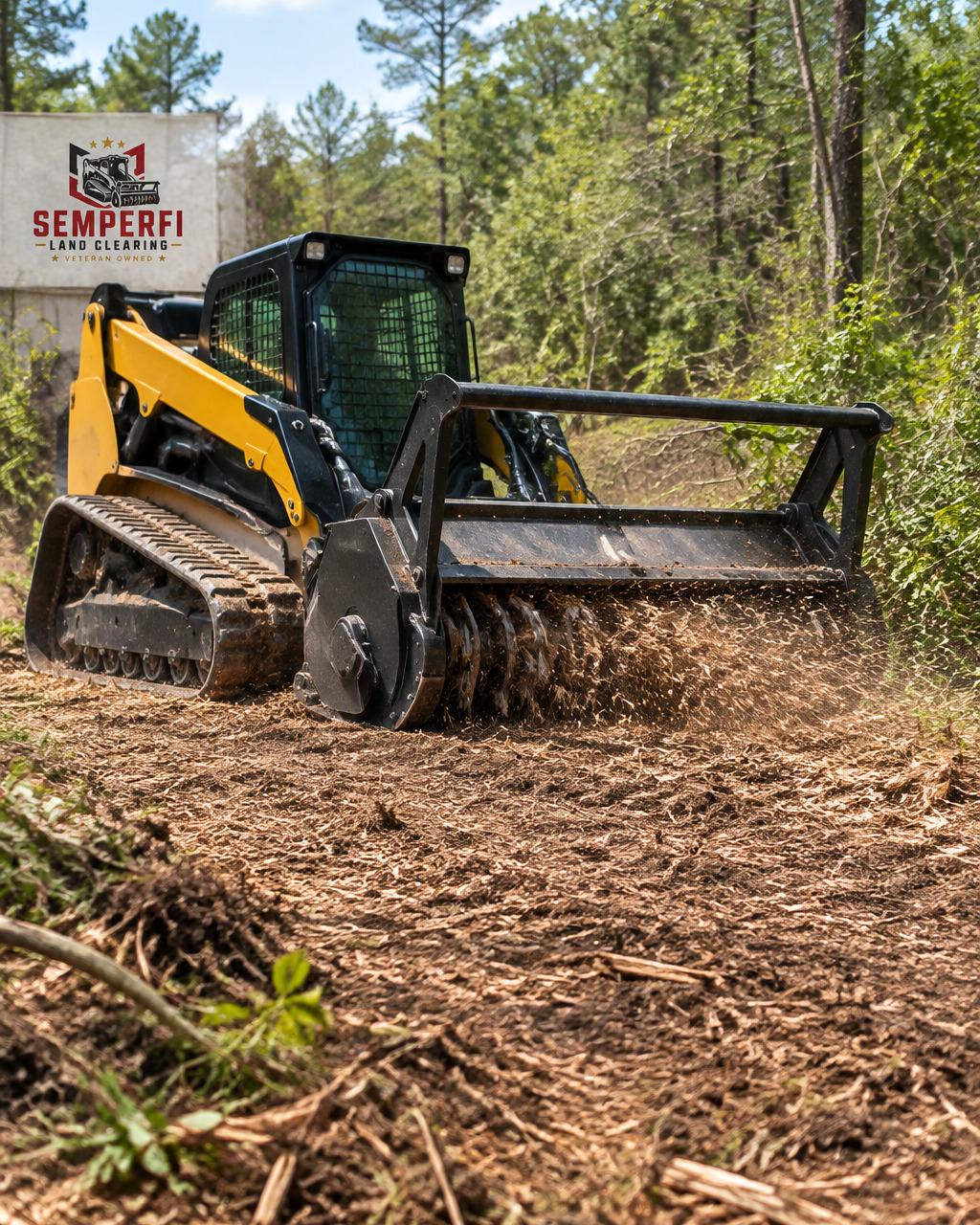
Forestry mulching improves soil health by grinding cut brush, small trees and vines into fine wood chips that stay on the ground. Keeping the wood on site returns its stored carbon and minerals to the land instead of hauling them away, and that debris becomes the substrate for a soil food web.
Wood chips are high in carbon and low in nitrogen, so decomposition differs from leaf litter or grass clippings. Microbes draw nitrogen from surrounding soil as they colonize the chips, which is why the top layer can look nutrient-poor for a period after mulching. Fungi dominate the coarse material over the following months, with bacteria taking over as it breaks down finer and nearer the surface.
As chips break down, they feed protozoa, nematodes, mites and earthworms, whose grazing and tunneling mix organic matter into the mineral soil. Fungal hyphae bind particles into stable aggregates that improve structure, pore space and water retention. Over a few seasons, coarse wood becomes humus, which holds nutrients and water far better than raw chips.
Softwoods such as pine decompose somewhat faster and can add modest acidity as organic acids form, while hardwoods such as oak and hickory break down more slowly and leave a neutral to slightly alkaline residue. Mixed brush usually gives the most balanced result, since varied decomposition rates release nutrients over a longer period.
Watch out: spreading chips too thickly can tie up nitrogen for an extended period, and plants growing in the layer may yellow. A thinner, even layer breaks down faster and gives plants a steadier supply. Where the layer is deep, raking some out or working it into the top few inches speeds decomposition.
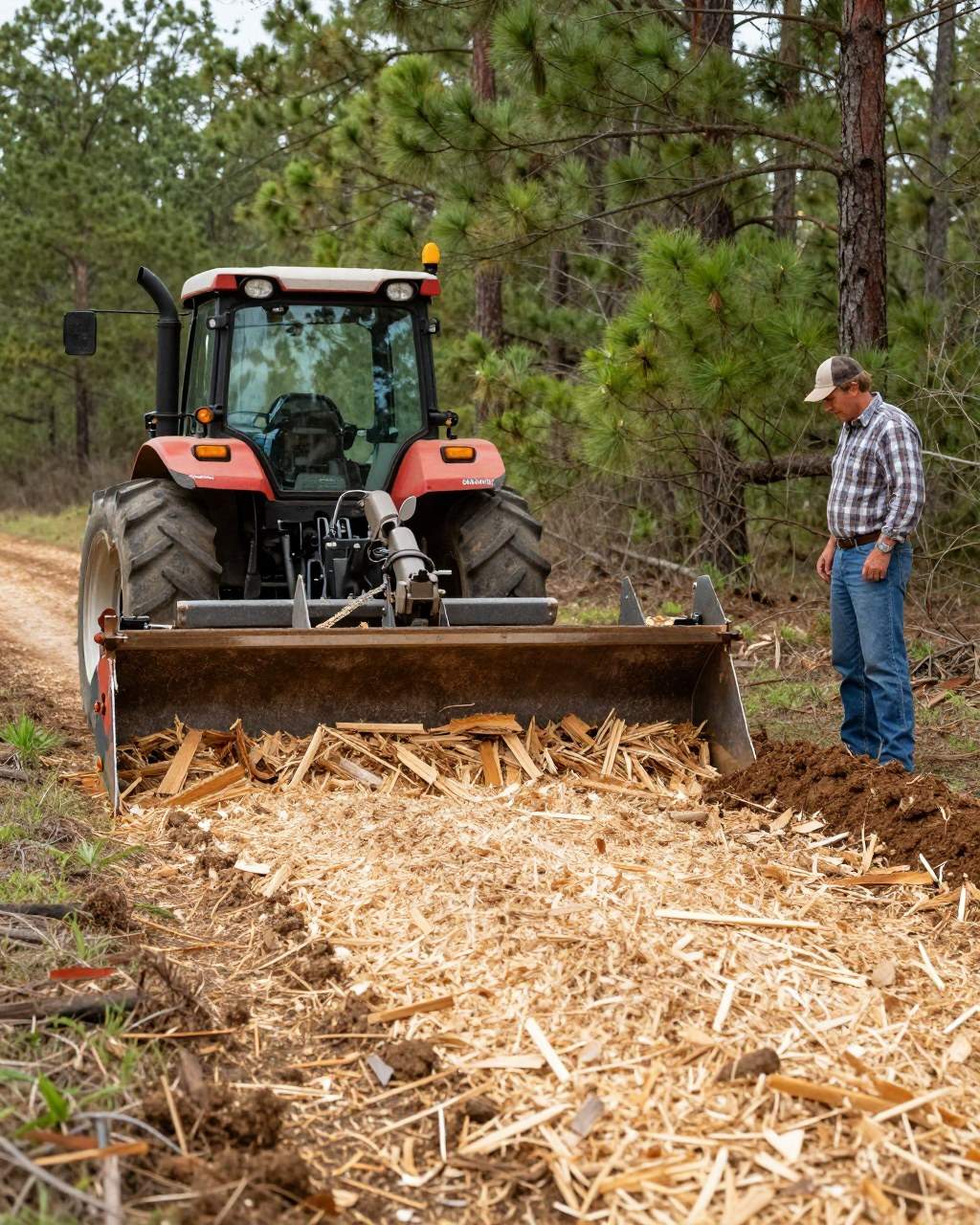
- Shredded material adds organic matter to thin, depleted soil
- Decomposing chips support fungal and bacterial communities that drive nutrient cycling
- Fungal hyphae and soil fauna help bind particles into stable aggregates
- A chip layer keeps soil temperature steadier through hot summers
- Ground left bare after clearing dries out and erodes faster
The article's key soil-health facts about forestry mulching, side by side:
| Soil-health factor | What the article says | Practical note |
|---|---|---|
| Wood chip carbon and nitrogen | High in carbon, low in nitrogen | Microbes draw nitrogen from surrounding soil |
| Dominant organisms over time | Fungi first, then bacteria | Fungi work the coarse material; bacteria take over near the surface |
| Soil fauna | Protozoa, nematodes, mites, earthworms | Grazing and tunneling mix organic matter into mineral soil |
| Softwood (e.g., pine) | Decomposes faster, adds modest acidity | Organic acids form as it breaks down |
| Hardwood (e.g., oak, hickory) | Decomposes more slowly | Leaves a neutral to slightly alkaline residue |
| Mixed brush | Most balanced result | Varied decomposition rates release nutrients longer |
| Overly thick chip layer | Can tie up nitrogen for an extended period | Plants may yellow; a thinner layer breaks down faster |
Benefits of Forestry Mulching for Soil Erosion Control
Forestry mulching can help control erosion because a chip layer shields bare ground from rain, which can otherwise wash topsoil away quickly.
The chips also slow runoff and help rainwater soak in, so less soil moves with it. They suppress weeds, keeping the ground covered while new grass or groundcover takes hold.
Plenty of landowners on slopes worry about this most. How do you stop soil erosion on a cleared slope? Four immediate fixes, from ground cover to drainage, hold soil in place.
For a fuller plan covering topsoil protection and runoff, see seven proven steps for land clearing erosion prevention.
Forestry Mulching vs. Traditional Land Clearing for Soil
Forestry mulching keeps organic material on site, while traditional clearing often removes debris and can leave bare soil exposed.
Traditional clearing often uses dozers and excavators that scrape off the upper topsoil layer, where most organic matter and microbial life sits. Heavy equipment compacts what remains, reducing pore space so water runs off and roots struggle to penetrate. Burning piles can sterilize the top inch or two of soil.
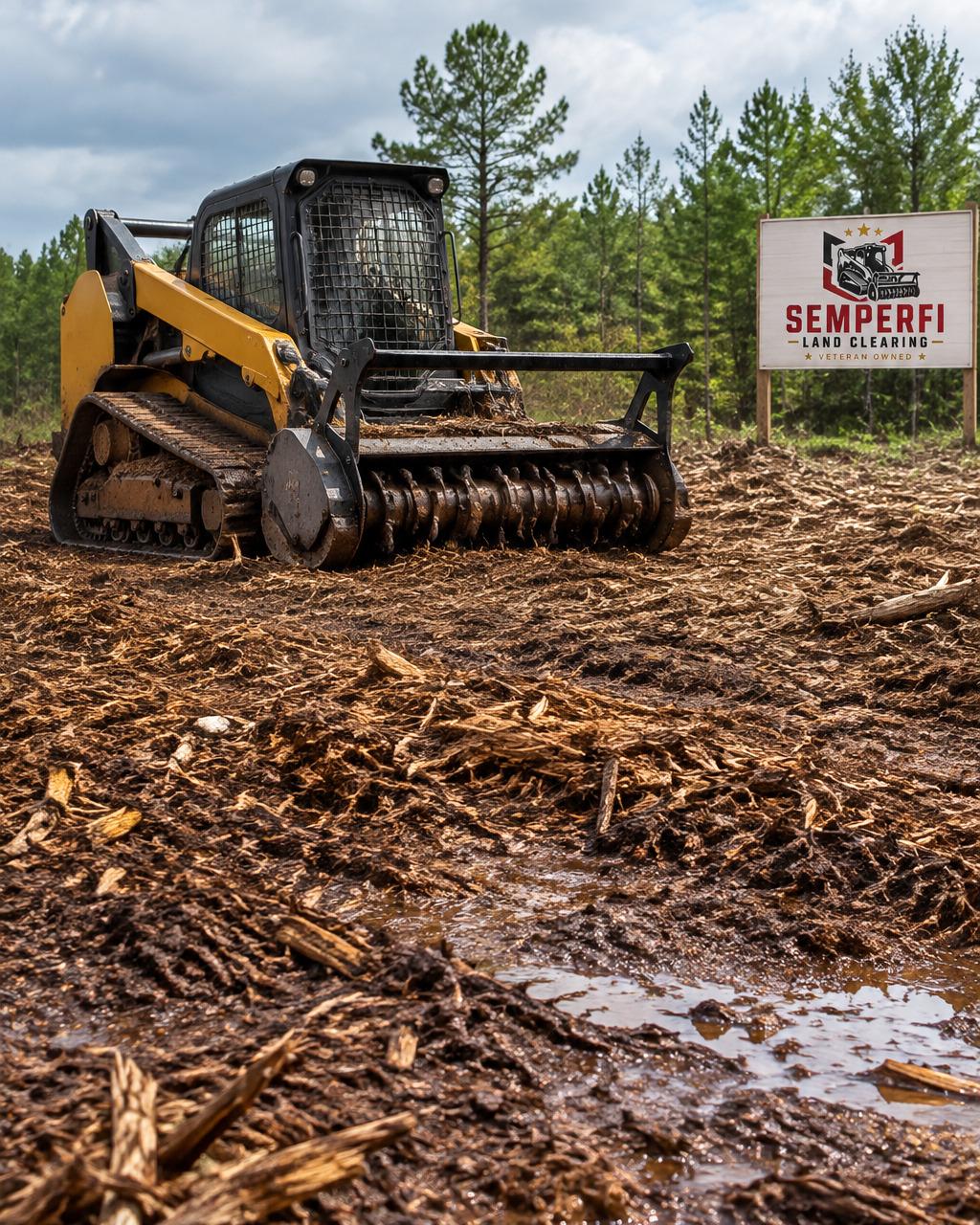
Mulching works differently. A tracked mulcher grinds vegetation in place and can leave the surface largely intact. The resulting chips add organic matter and the decomposition sequence described earlier gradually rebuilds the topsoil layer. Because nothing is hauled off, nutrients stay on the property.
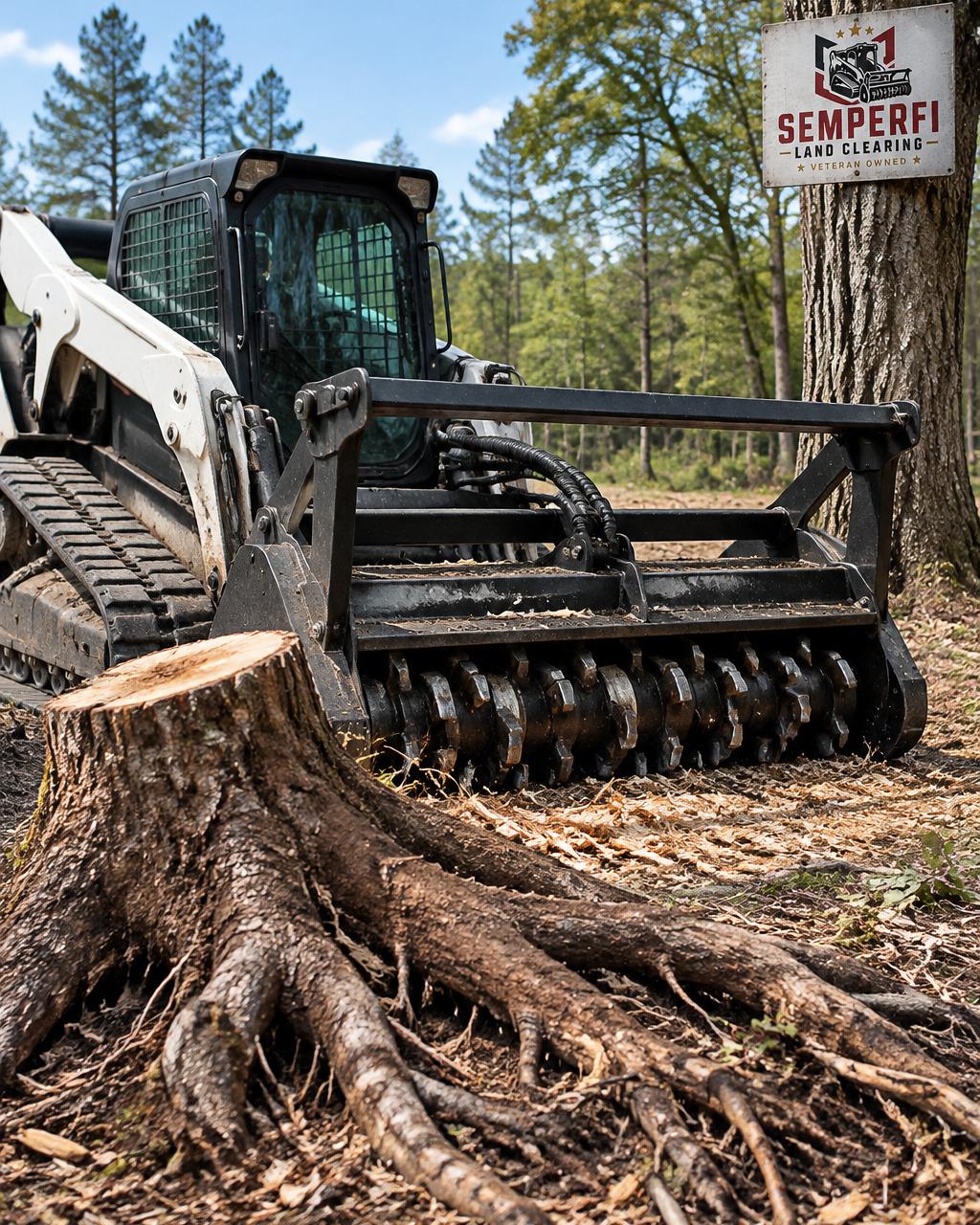
The trade-offs are real. Mulching leaves a rougher surface that some owners find less appealing for immediate use, and chips take months to break down. Large trees and dense stumps may still need other removal methods, and very wet ground can rut under tracked machines.
Cost of Forestry Mulching per Acre and What Affects It
Forestry mulching costs depend on the specific property. Contact SemperFi Land Clearing LLC for a current quote.
Ask any provider for a clear written estimate covering scope, equipment and expected finish before work starts.
Learn what to look for in a clearing service, including permits, equipment and how to get a clear estimate. SemperFi Land Clearing LLC offers a free land assessment to help you plan before you commit.
Ready to improve your soil? Request an estimate from SemperFi Land Clearing LLC and get a clear plan for your East Texas property.
Frequently Asked Questions
Does forestry mulching add nutrients to the soil?
Yes. As shredded wood breaks down, it returns carbon, nitrogen and other nutrients to the soil. Decomposition is gradual, so the benefit builds over months and years rather than appearing right away. Fine mulch breaks down faster than coarse chunks, and the process is driven by fungi, bacteria and other soil microorganisms that convert the material into humus. Pairing mulch with a healthy ground cover helps keep those nutrients from washing away.
Is forestry mulching better than burning or hauling away debris?
For most East Texas properties, mulching is better for soil health. Burning removes organic matter and can sterilize the top layer of soil, while hauling debris strips nutrients away from the site. Mulching leaves the biomass in place as a protective layer that reduces erosion, retains moisture and feeds soil life. Burning can still make sense in some situations, such as certain fire-prevention plans, but the choice depends on local burn rules and site conditions.
How long does forestry mulch take to decompose?
Decomposition timing depends on wood type, particle size, rainfall and temperature. Finely ground mulch can break down noticeably within one to two growing seasons, while larger pieces of hardwood can take several years. Keeping the mulch layer moist and not overly thick speeds the process. Many landowners plant ground cover or grass within a few months to help stabilize the surface while decomposition continues.