 How-to
The Best Way to Remove Vines from a Fence Without Damage
Last Updated: November 13, 2026
Quick Summary
The best way to remove vines from a fence is to cut the main stem at the base with garden clippers or pruning shears, then let the top die for one to two weeks before pulling the brown vines away. Cutting first prevents damage to fence fabric and posts.
- Pulling a live vine can rip fence fabric or snap a wooden post.
- Dead vines peel away with far less force than green ones.
- For lasting control, apply liquid herbicide to the freshly cut stem and follow the product label.
- On wood fences, keep herbicide off the posts to avoid soaking into them.
- On vinyl fences, pull gently and skip metal scrapers entirely.
Table of Contents
- Step-by-Step Vine Removal: Tools, Safety, and Cutting at the Base
- The Best Way to Remove Vines from a Fence Naturally and What Kills Vines Permanently
- Best Way to Remove Vines from a Fence DIY by Fence Material
- Frequently Asked Questions
Step-by-Step Vine Removal: Tools, Safety, and Cutting at the Base
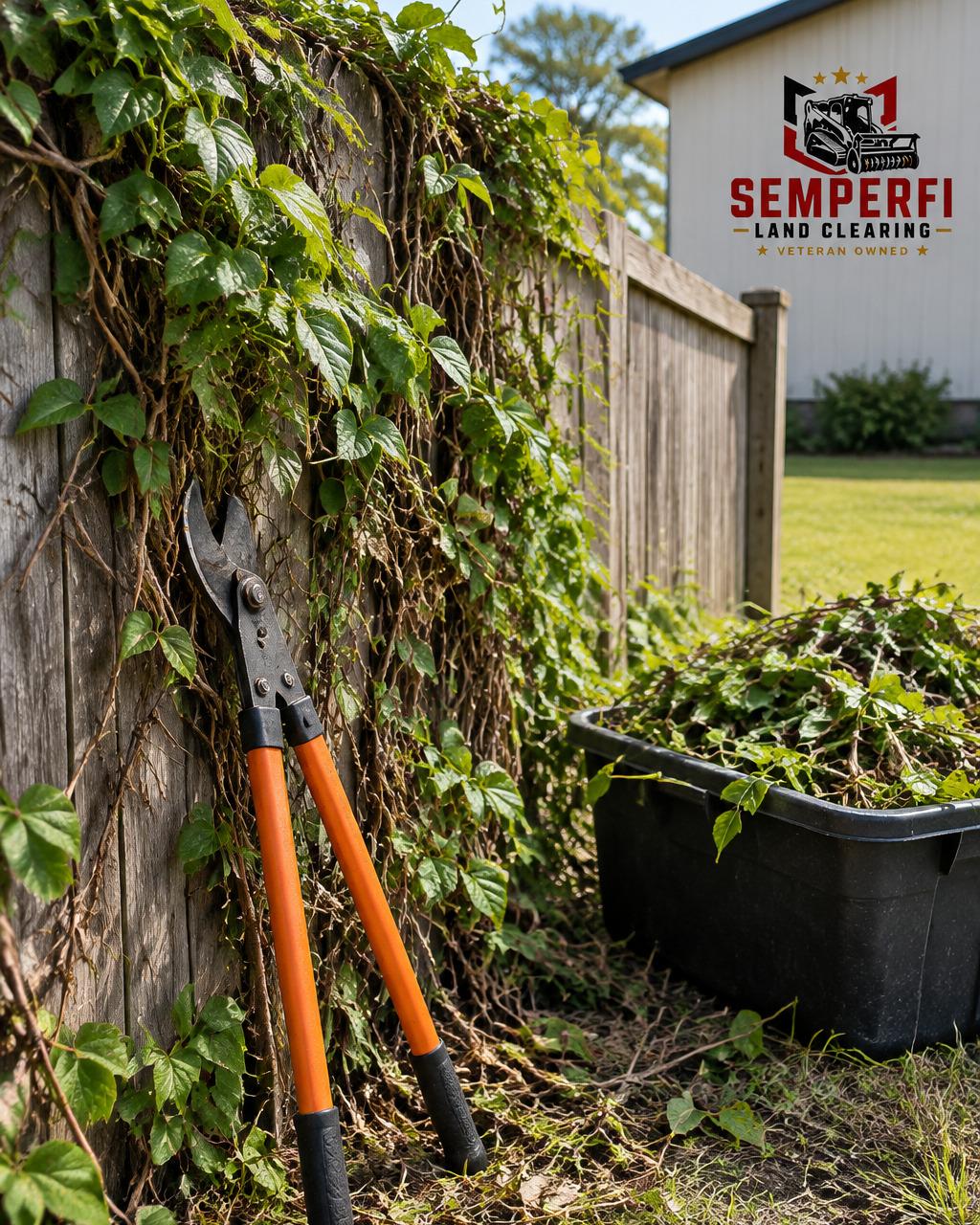
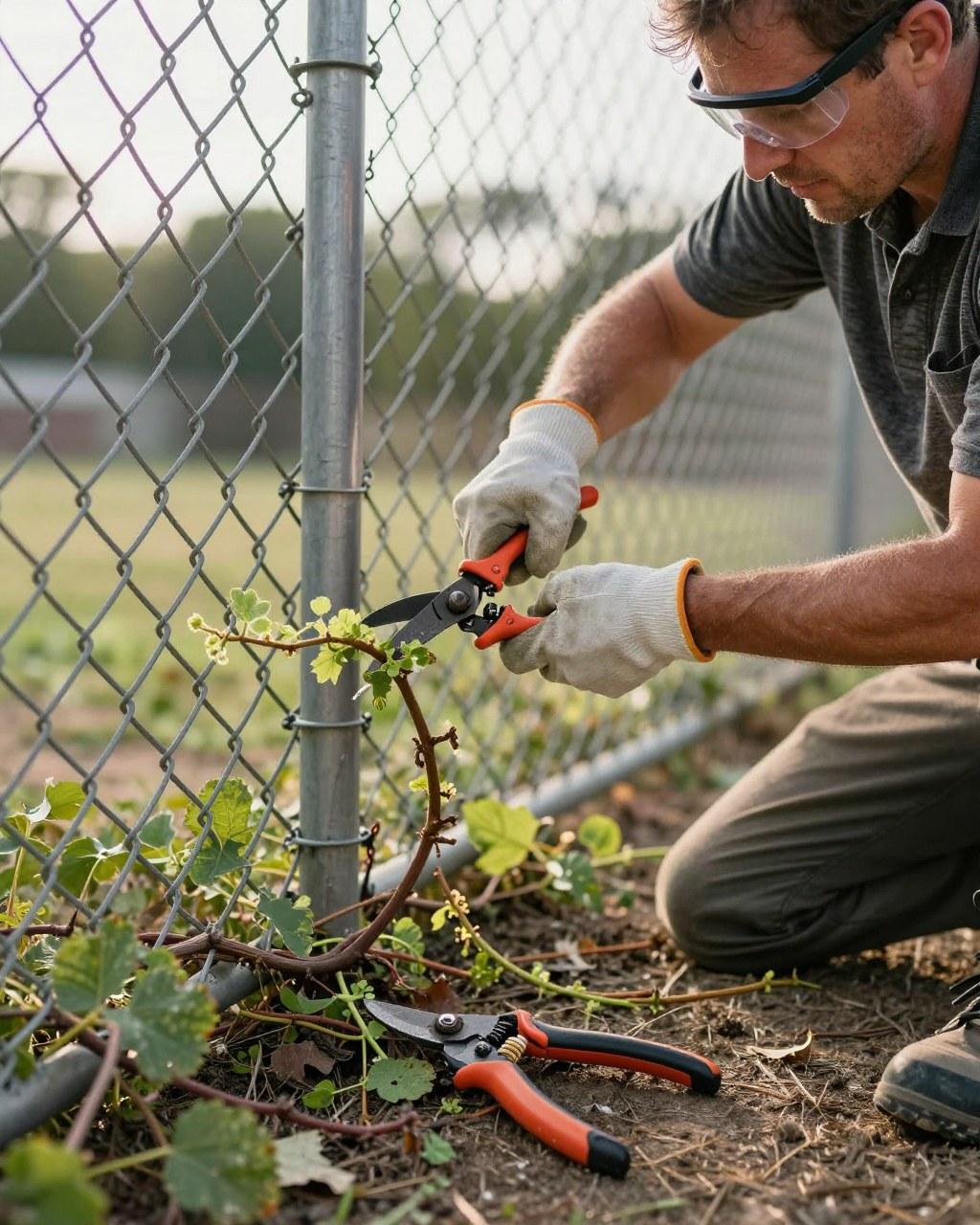
Cutting the main stem near the ground is a common first step in vine removal, because it interrupts the root supply line.
- Put on safety gear. Gloves, safety glasses, long sleeves, boots.
- Find the main stem. Trace the thickest vine to the ground.
- Cut at the base. Use garden clippers or pruning shears.
- Leave the top to die. It dries out over one to two weeks.
- Pull vines out once brown. Dead vines peel away with far less force.
Pulling a live vine can rip fence fabric or snap a wooden post. Always cut first.
For a fuller walkthrough, see our guide on how to clear overgrown fence lines, and our list of essential tools for maintaining cleared fence lines.
The Best Way to Remove Vines from a Fence Naturally and What Kills Vines Permanently
Hand pulling and cutting work on light growth, but they may not remove the root system, and some vines can resprout from roots left in the ground.
For lasting control, some people use cut-stem treatment: cutting the vine at the base and applying liquid herbicide to the freshly cut stem. Always follow the product label.
Glyphosate is the common active ingredient used this way. Follow the label exactly, and check current guidance from the U.S. Environmental Protection Agency on safe use.
Once the vines are dead, keep them gone. Our guide on preventing regrowth after land clearing walks through the full sequence.
Best Way to Remove Vines from a Fence DIY by Fence Material
Fence type changes the method. The wrong tool or herbicide can damage the fence itself.
| Fence Type | Removal Method | Watch Out For |
|---|---|---|
| Chain-link | Cut at base, pull dead vines by hand | Snagging and bending the mesh |
| Wood | Cut at base, scrape, avoid harsh chemicals | Herbicide soaking into posts |
| Vinyl | Cut at base, pull gently, no scraping | Scratches and stains |
On chain-link, cut the vine low and let it die before pulling. On wood, keep herbicide off the posts. On vinyl, skip metal scrapers entirely.
If growth is too heavy for hand tools, compare options in our guide to forestry mulching vs hand clearing for fence lines, or see what fence line clearing involves from a professional crew.
Vines win when they are cut high and pulled green. Cut low, treat the fresh stem, and stay after the regrowth. If the fence line has gone too long, SemperFi Land Clearing LLC offers a free land assessment, specialized 10 ft fence line clearing, and forestry mulching. Our veteran-owned crew shows up on time, on schedule, and on budget. Get started with SemperFi Land Clearing LLC and get your fence line back.
Frequently Asked Questions
What kills vines permanently?
Permanent control combines cutting the vine at the base and treating the freshly cut stem with a liquid herbicide such as glyphosate. For nonchemical options, repeated cutting and smothering with cardboard or heavy mulch can kill vines over time. The key is to remove the root system and prevent regrowth by monitoring the area for new growth and repeating treatment as needed.
How do you remove vines from a chain-link fence without damaging it?
Cut vines at the base with garden clippers or pruning shears, then gently pull the vines off the chain-link by hand. Avoid pulling forcefully, which can bend the wire. For stubborn vines that cling tightly, use a putty knife or flat tool to loosen tendrils. If vines have grown through the mesh, cut them into smaller sections before pulling. Repeat treatment on any regrowth.
What tools work best for removing vines from a fence?
A good vine removal tool kit includes garden clippers or pruning shears for cutting stems, work gloves for protection, a putty knife for loosening clingy vines, and a shovel for digging out roots. For chemical control, add a small spray bottle or floral tube for cut-stem treatment. For DIY vine removal, these basic tools handle most fence types without damage.