 blog
5 Essential Tools for Maintaining Cleared Fence Lines
Last Updated: November 7, 2026
Quick Summary
The 5 essential tools for maintaining cleared fence lines are a hedge trimmer, a brush cutter, a chainsaw, a brush mower, and a basic hand tool kit. A hedge trimmer suits light brush and saplings, a brush cutter handles heavy weeds and thick stems, and a chainsaw takes woody growth and limbs. Keep the line clear with a spring pass, a mid-summer check, and a fall cleanup before winter.
- A brush cutter handles stems up to about thumb thickness, while a chainsaw takes anything woody and larger.
- A string trimmer with monofilament line will not cut woody stems, so switch to a steel blade.
- Cut an invasive vine at the base first, let the top die back, then pull the dead growth free.
- Never pull a live vine on chain link, because it grips the mesh and takes the wire with it.
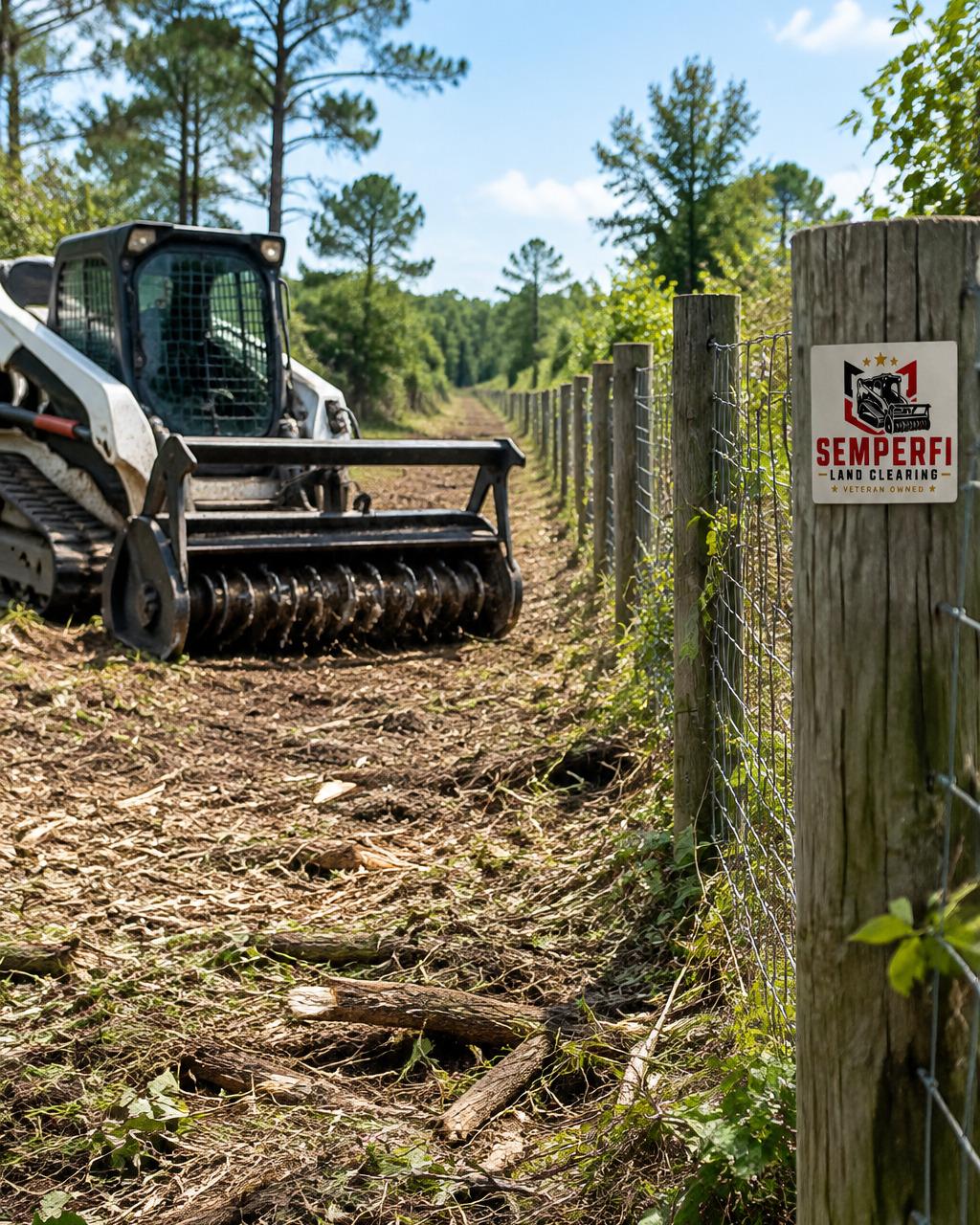
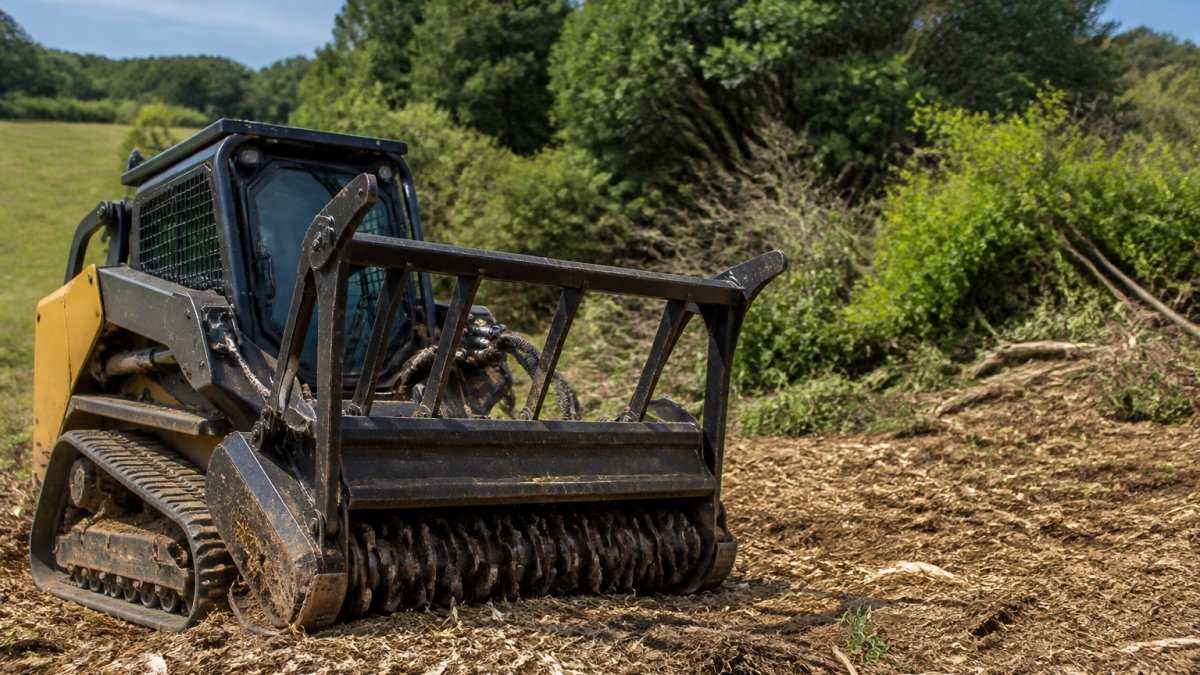
- For acres of dense brush, a forestry mulcher on a skid steer clears faster than any handheld tool.
Table of Contents
- The 5 Essential Fence Line Tools for Every Property
- The Best Tool for Clearing Underbrush and Overgrown Vegetation
- Removing Invasive Vines from Chain Link Fences Without Damaging the Wire
- How to Keep Fence Lines Clear with a Maintenance Schedule
- Frequently Asked Questions
The 5 Essential Fence Line Tools for Every Property
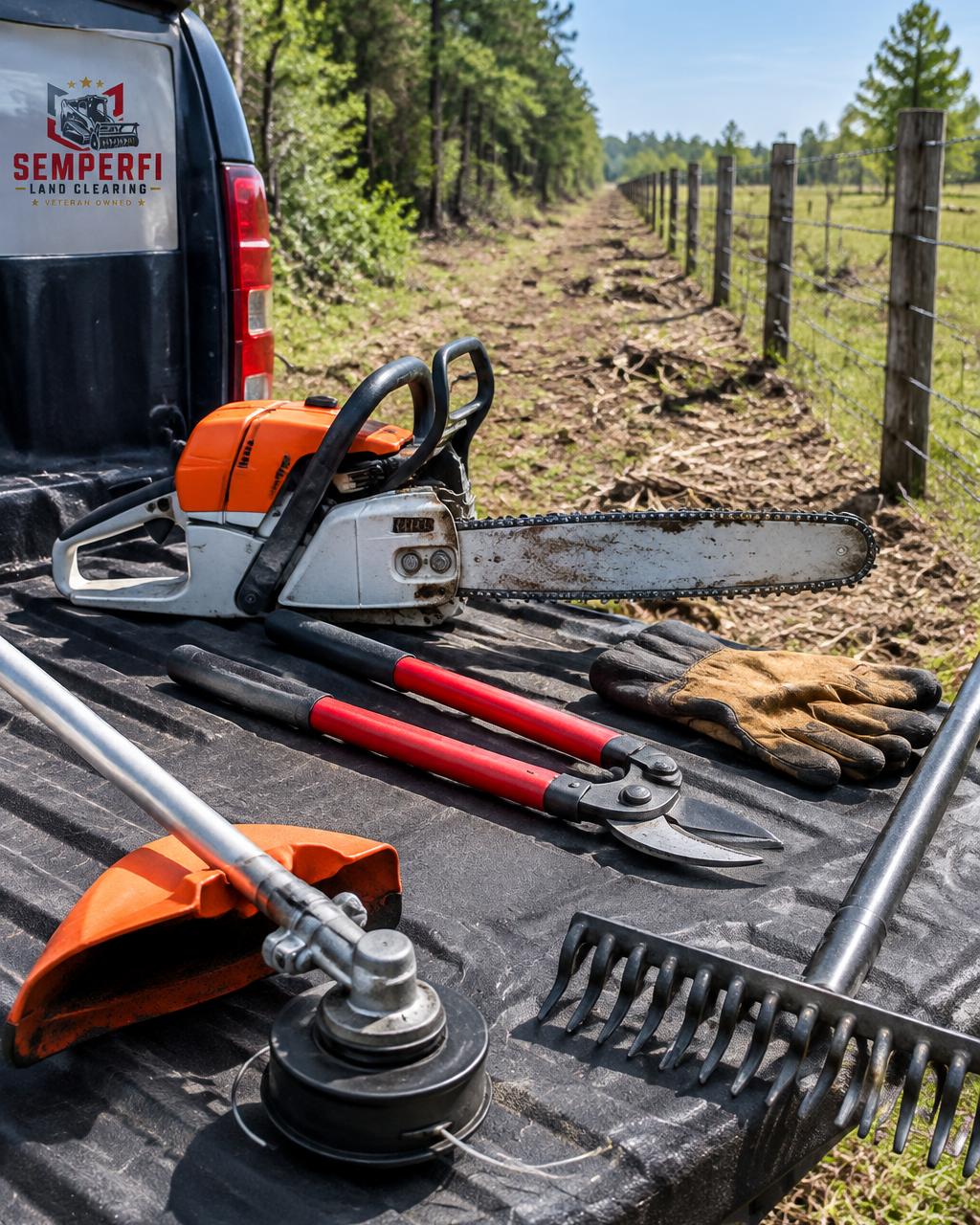
When it comes to 5 essential tools for maintaining cleared fence lines, it comes down to these: a hedge trimmer, a brush cutter, a chainsaw, a brush mower, and a basic hand tool kit.
Fence line maintenance keeps the strip along your fence free of brush, weeds, and woody growth so the wire stays visible and the fence stays sound.
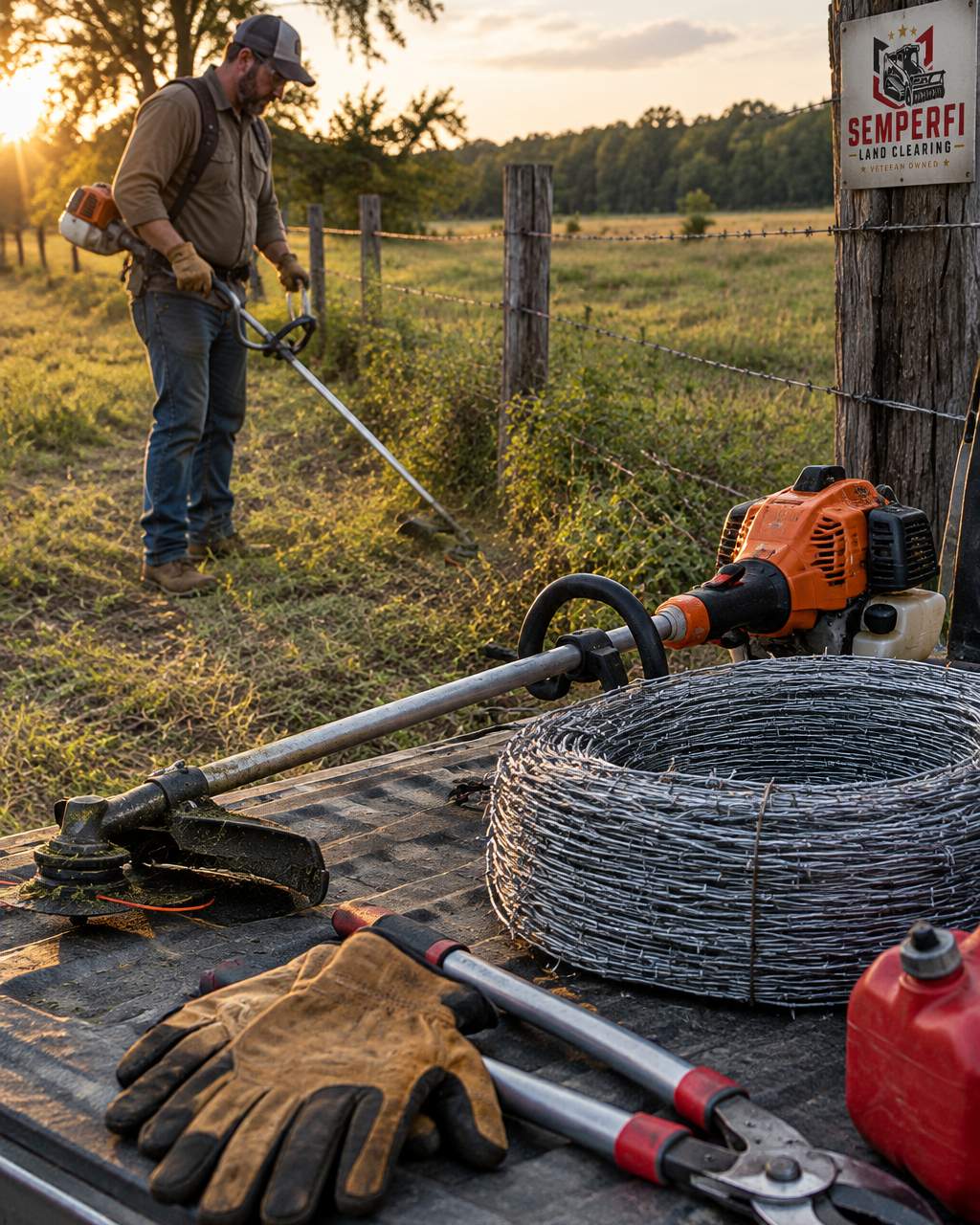
| Tool | Best For | Fence Type | Job Size |
|---|---|---|---|
| Hedge trimmer | Light brush, saplings | Any | Small to medium |
| Brush cutter | Heavy weeds, thick stems | Any | Medium |
| Chainsaw | Woody growth, limbs | Any | Medium to large |
For the full method, see our guide on how to clear overgrown fence lines, and for planning, estimating how long fence line clearing takes.
The Best Tool for Clearing Underbrush and Overgrown Vegetation
The best tool for clearing underbrush depends on stem size: a brush cutter handles stems up to about thumb thickness, a chainsaw takes anything woody and larger, and for acres of dense brush a forestry mulcher on a skid steer clears faster than any handheld tool.
Handheld cutting is a maintenance job, not how you reclaim a boundary that has grown up for years. A string trimmer with monofilament line will not cut woody stems, it wraps, binds, and burns the clutch, so switch to a steel blade before you damage the machine.
Our comparison of forestry mulching versus hand clearing for fence lines lays out cost, speed, and regrowth control, and for larger acreage see what professional fence line clearing in East Texas involves.
Removing Invasive Vines from Chain Link Fences Without Damaging the Wire
Removing invasive vines from chain link fences without damaging the wire means cutting the vine at the base first, letting the top die back, then pulling the dead growth free. Never pull a live vine, it grips the mesh and takes the wire with it.
Vines come back, and our guide on preventing regrowth after land clearing covers the steps that actually work.
How to Keep Fence Lines Clear with a Maintenance Schedule
A fence line stays clear when you walk it on a schedule: a spring pass, a mid-summer check, and a fall cleanup before winter.
Light upkeep is a homeowner job with the 5 essential tools for maintaining cleared fence lines; reclaiming an overgrown boundary is heavy work, and that is where we come in. SemperFi Land Clearing LLC is veteran-owned and offers a free land assessment. Get an estimate from SemperFi Land Clearing LLC and get your fence lines back under control.
Frequently Asked Questions
How often should you clear brush along a fence line?
Most properties need a walk-through twice a year, once in late spring and once in early fall, to catch regrowth before it thickens. Fast-growing vines and briars may need a mid-summer pass. A yearly deep clearing with a brush cutter or forestry mulcher keeps woody growth from crowding the wire and makes smaller touch-ups quick. Properties with heavy overgrowth or invasive species often benefit from a professional assessment to set a realistic schedule.
Can you maintain a fence line without heavy machinery?
Yes, for light growth. Hand tools like loppers, a string trimmer, and fencing pliers handle small jobs and spot repairs well. Heavy machinery such as a forestry mulcher or brush mower is the better choice for thick brush, saplings, and long runs of fence where hand work would take days. Matching the tool to the job size and vegetation type saves time and prevents strain.
What is the best tool for clearing underbrush along a fence?
A brush cutter with a steel blade is the go-to for most fence line underbrush, cutting through saplings, briars, and thick weeds close to the wire. For larger acreage or dense stands of woody growth, a forestry mulcher attachment on a skid steer clears and grinds vegetation in one pass. Choose based on how thick the growth is and how many feet of fence you need to cover.