 blog
7 Ways to Keep Fence Lines Clear Naturally: A Practical Guide
Last Updated: November 16, 2026
Quick Summary
You can keep fence lines clear naturally by blocking light, changing the soil surface, or removing plants entirely with heat, smothering, and hand tools instead of herbicide. Properties that stay clean use two or three methods together, since no single method wins year after year.
- Household vinegar with dish soap burns back seedlings but not established grass.
- Lay cardboard or landscape fabric under wood chips to smother grass within a few weeks.
- Hand tools suit fence rows under a few hundred feet and protect coated wire.
- A mow strip 8 to 10 feet wide is wide enough to run a mower safely.
- Rotational grazing keeps grass short and stops brush from getting a foothold.
Table of Contents
- Why Overgrown Fence Lines Cost You More Than Time
- The Natural Way to Kill Grass Along a Fence Line
- How to Remove Grass From a Fence Line With Hand Tools
- Building a Fence Line Grass Barrier That Lasts
- The Mow Strip Along Fence: Your Cheapest Long-Term Defense
- Choosing the Right Method for Your Property
- Frequently Asked Questions
Why Overgrown Fence Lines Cost You More Than Time
A brushy fence line is one of the most expensive things a rural property can carry.
The good news: you can keep fence lines clear naturally, without a jug of herbicide every season.
The honest version most guides skip: no single method wins year after year. Properties that stay clean use two or three methods together.
If your lines are already past the point of a trimmer, our guide on how to clear overgrown fence lines walks through the full clearing process step by step.
The Natural Way to Kill Grass Along a Fence Line
The natural way to kill grass along a fence line is to block light, change the soil surface, or remove the plant entirely. Heat, smothering, and physical cutting all do this without synthetic herbicide. Each one works best on a specific kind of growth.
Method 1: Vinegar and Dish Soap Spray
Best for: young weeds, gravel drives, and thin grass in cracks.
Household vinegar sprayed on a hot, sunny morning can burn back small weeds. Add a squirt of dish soap so the liquid clings to the leaves instead of beading off.
Watch out: this works on seedlings, not established grass. It also kills anything green it touches, including your good plants.
Method 2: Boiling Water and Salt
Best for: small patches, fence posts, and hard-to-reach spots.
Pour boiling water directly on the base of weeds. It cooks the roots and leaves no residue. Salt works too, but use it sparingly and keep it off your garden beds. Salt builds up in soil and can stop anything from growing there for a long time.
Method 3: Mulch and Smothering
Best for: larger strips along the fence and long-term control.
Lay cardboard or heavy landscape fabric flat over the grass, then cover it with wood chips or hay. Light-starved plants die within a few weeks. Keep the mulch a few inches thick and reapply as it breaks down.
How to Remove Grass From a Fence Line With Hand Tools
You can remove grass from a fence line by hand with pruners, hedge clippers, and a scythe. It is the cheapest method and the kindest to your soil, but also the slowest, so it suits short runs and light growth.
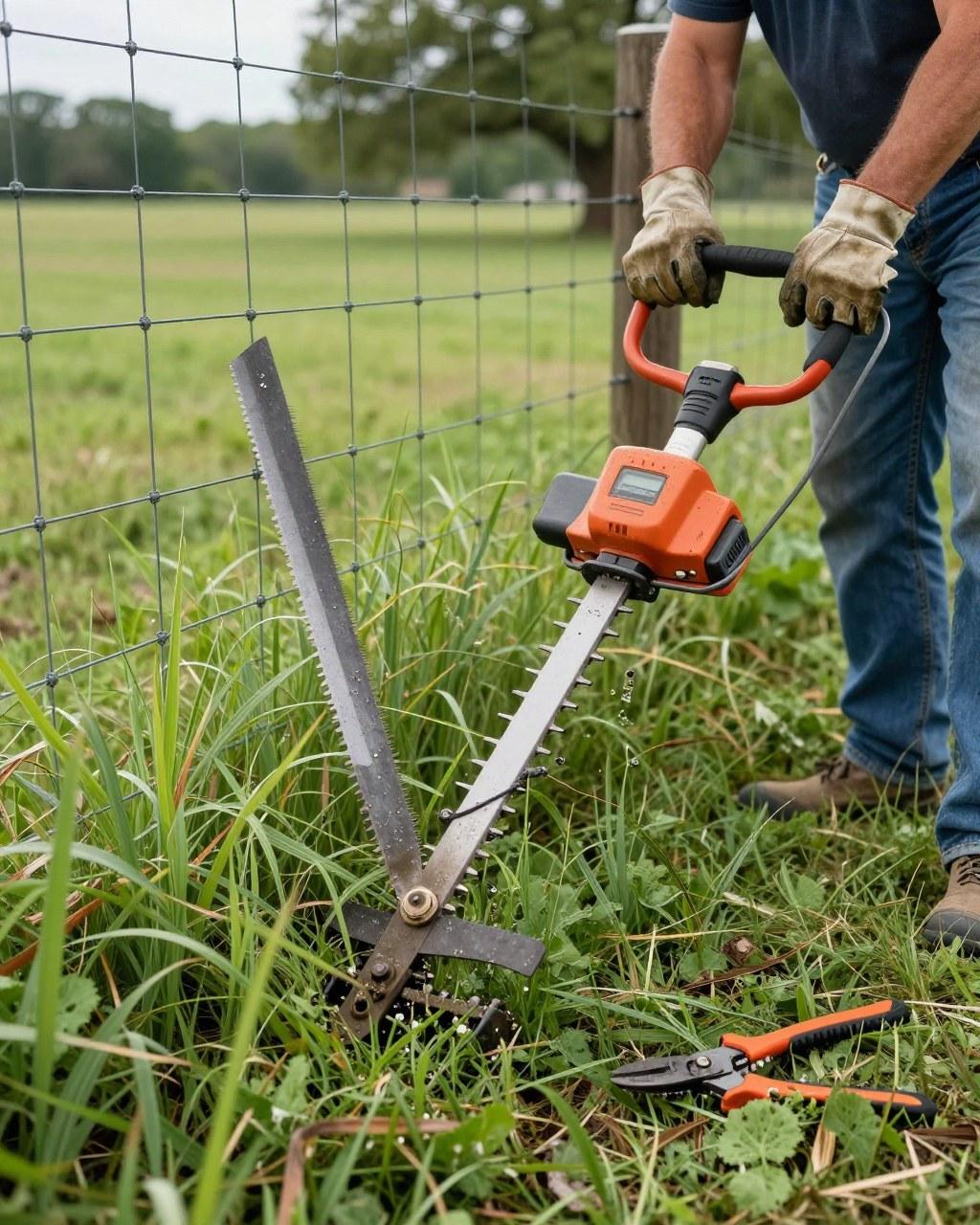
Method 4: Hand Pruners, Hedge Clippers, and a Hand Scythe
Best for: fence rows under a few hundred feet, woody stems, and fences you cannot risk nicking.
Match the tool to the growth:
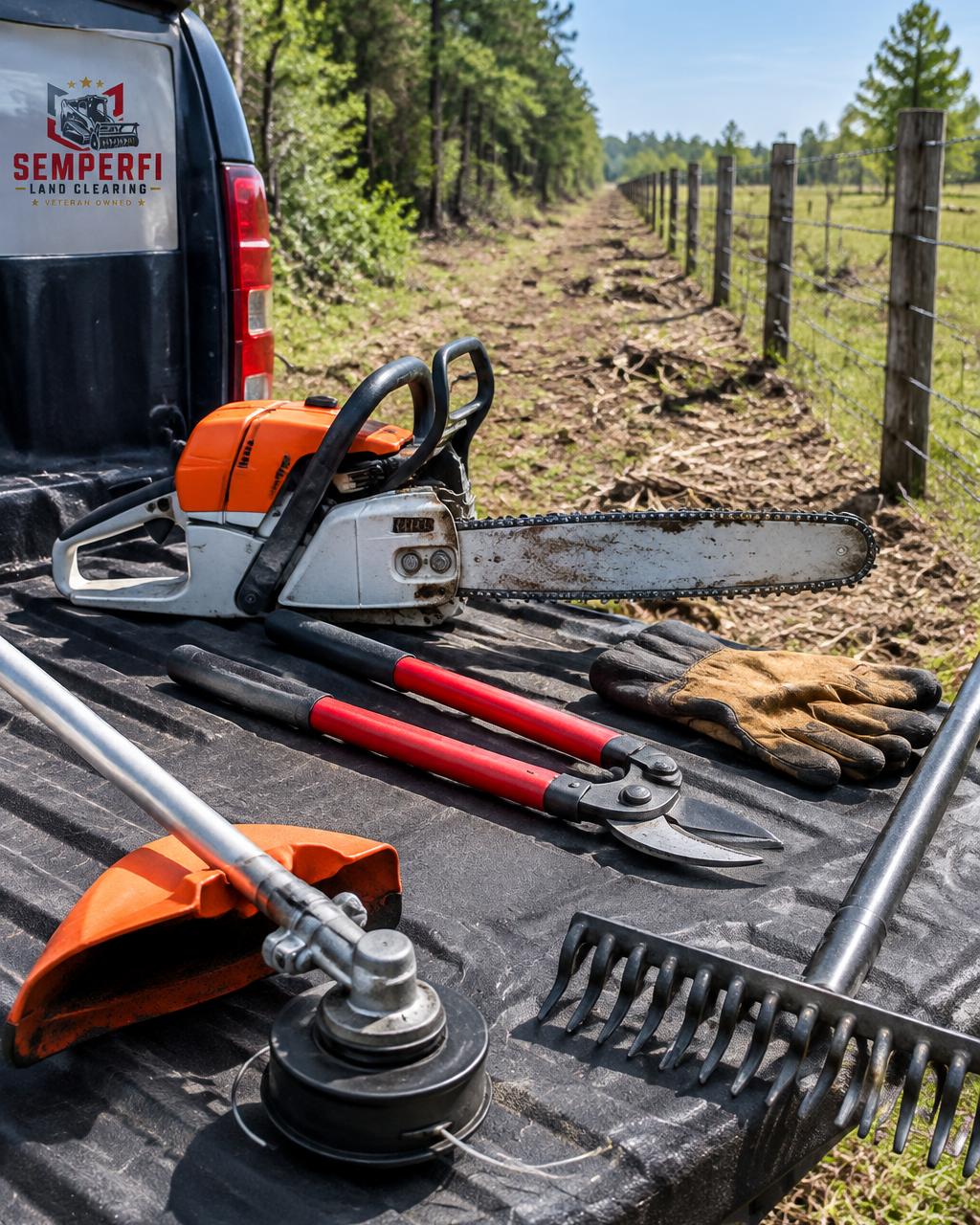
- Bypass hand pruners: cut vines and saplings up to about the thickness of your thumb. Cut at the base, not mid-stem, so the plant cannot resprout.
- Loppers: give you the leverage for woody stems pruners cannot handle. Use them on saplings and thick briars before they harden off.
- Hedge clippers: shear back briars and tall weeds in a sweeping motion. Keep the blades parallel to the fence so you do not hook wire.
Wear leather gloves, long pants, and eye protection.
Watch out: never cut toward your body or toward the wire. A glancing blade against a tensioned wire can snap back, and a chain-link or woven-wire edge can slice a glove and the hand inside it.
Protecting the Fence While You Cut
Hand tools are the safest option for the fence itself, but they still do damage if you are careless:
- Coated wire and vinyl posts: keep metal blades off the coating, a nick is where rust starts.
- Wood posts: cut vegetation at the soil line rather than chopping into the post, which opens the wood to moisture and rot.
- Chain-link: cut vines at the base and pull them down rather than yanking the fence, which bends the fabric and loosens the tension bar.
If you plan to go this route, our rundown of essential tools for maintaining cleared fence lines covers the full kit and a three-season plan.
Method 5: String Trimmer and Rotary Cutter
Best for: long runs, heavy grass, and larger acreage.
A string trimmer handles grass and light weeds along wire and chain-link; for thick brush, a rotary cutter behind a tractor covers ground quickly.
Watch out: rotary cutters throw debris hard. Walk the fence row first for wire, rocks, and stumps, and never run a cutter over a downed fence you have not located and marked.
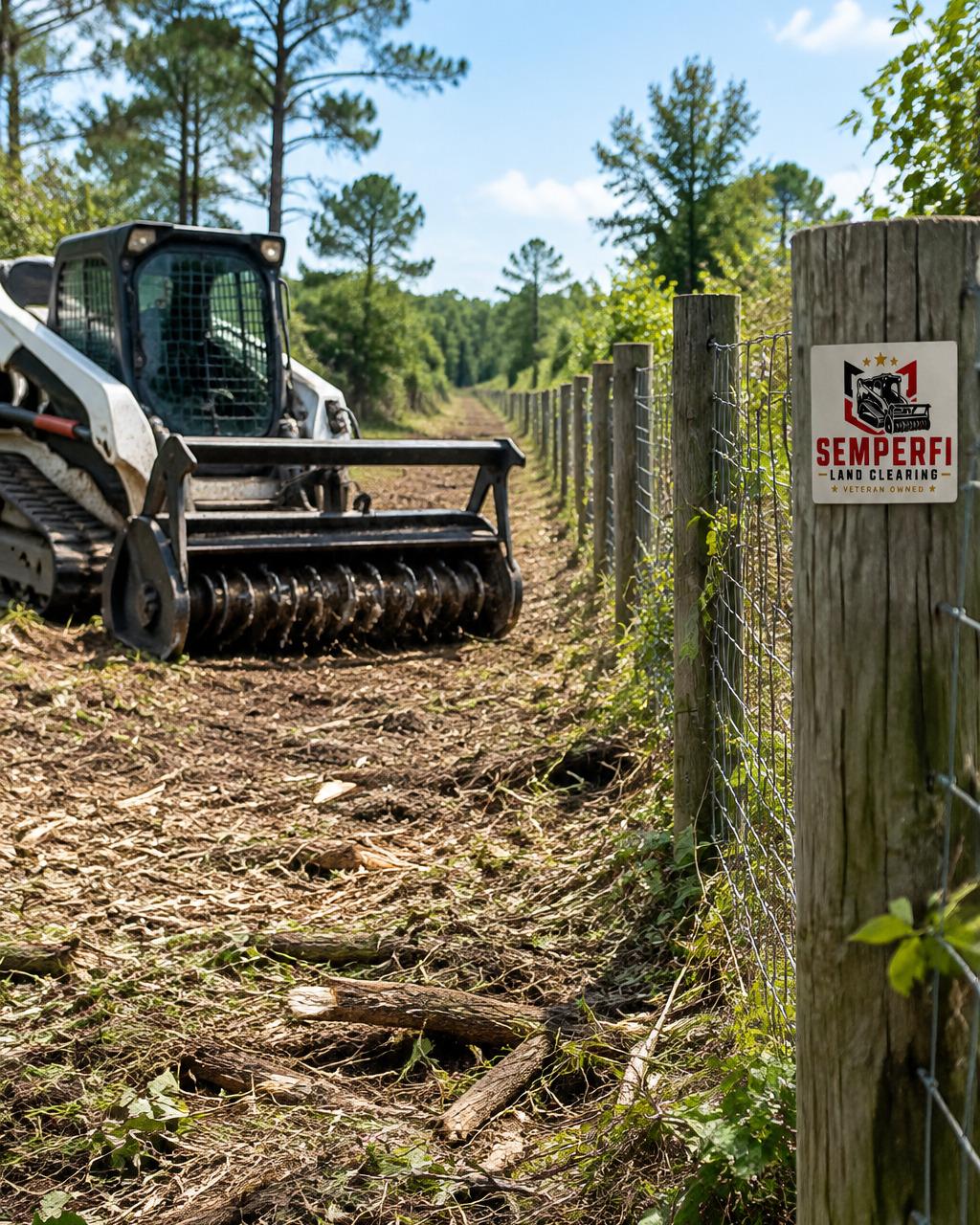
Weighing powered DIY against hiring a crew? See our comparison of forestry mulching vs hand clearing for fence lines.
Building a Fence Line Grass Barrier That Lasts
A fence line grass barrier is a permanent strip that stops grass and weeds from creeping back to the wire. It costs more up front and saves the most time over the years.
Method 6: Gravel, Landscape Fabric, and Ground Cover
Best for: high-traffic lines and property boundaries you want to stay clean.
Dig out a strip, lay landscape fabric, and top it with gravel. Grass cannot push through fabric, and gravel drains well. For a softer look, plant low ground cover that crowds out weeds on its own.
Method 7: Managed Grazing and Ground Cover
Best for: livestock operations and larger acreage.
Rotational grazing keeps grass short and stops brush from getting a foothold; move animals through small paddocks and let each recover before you return. On land without livestock, low-growing ground cover does similar work by shading out weeds.
The Mow Strip Along Fence: Your Cheapest Long-Term Defense
The mow strip along fence is a narrow, cleared band you maintain with a mower or trimmer all season. It strips the vegetation that shorts an electric fence and hides damage.
Here is what a working strip looks like:
- Width: 8 to 10 feet, wide enough to run a mower safely
- Surface: cut low and kept low, not scalped
- Schedule: mow before growth gets ahead, not after
A shorted electric fence stops doing its job. Vegetation touching the wire drains the charge, and livestock learn they can push through. For a realistic schedule, see how often you should clear fence lines.
Choosing the Right Method for Your Property
Match the method to the growth, the fence type, and how much time you have. What actually decides success is what is growing and what the fence is made of, so start there.
Match the Method to the Plant
Different growth needs different treatment, and using the wrong natural method is why people conclude "natural doesn't work":
- Thin grass and seedlings: vinegar and dish soap spray, boiling water, or a string trimmer. Fast and cheap, but regrowth is likely, so plan to repeat.
- Established grass and sod: smothering with cardboard and mulch, or a maintained mow strip. Household vinegar mostly burns the top and it comes back.
- Woody saplings: cut at the base with loppers or pruners, then smother the stump or keep it cut, cutting alone invites resprouting.
Match the Method to the Fence
- Electric fence: the mow strip comes first, vegetation touching the wire drains the charge and trains livestock to push through.
- Woven wire and barbed wire: hand tools and a trimmer at an angle. Avoid smothering materials that trap moisture against the wire.
- Chain-link: cut vines at the base and pull down; never yank the fence to free growth.
Quick Reference
| Method | Best For | Effort | Speed | Regrowth Risk |
|---|---|---|---|---|
| Vinegar and soap | Seedlings, cracks | Low | Fast | High |
| Boiling water and salt | Small patches | Low | Fast | Medium |
| Mulch and smothering | Wider strips, established grass | Medium | Slow | Low |
| Hand tools | Short runs, woody stems, coated fence | High | Slow | Medium |
| Trimmer and cutter | Long runs, heavy grass | Medium | Fast | Medium |
| Gravel and fabric | Boundaries, high traffic | High | Slow | Low |
| Managed grazing | Acreage with livestock | Medium | Steady | Low |
A few rules of thumb we give landowners:
- Short run, light weeds: hand tools and vinegar.
- Long run, heavy brush: a rotary cutter or a professional crew.
- Electric fence: keep the mow strip clean first.
Safety and Livestock Considerations
Natural does not mean risk-free. Heavy salt can harm soil and should stay away from garden beds and stock water. Homemade mixtures are not automatically safe for pets or grazing animals; keep animals off treated patches until dry and settled.
When the growth is too heavy or the acreage too big, call in help. Landowners who hire out can read our guide to fence line clearing in East Texas for what a professional crew provides.
Frequently Asked Questions
What is the best natural way to kill grass along a fence line?
Vinegar and dish soap is the most common homemade option, but it only works on small weeds and needs repeated application. For a longer-lasting result, smother the strip with mulch or gravel, or cut a mow strip along the fence so you can keep it trimmed. Heavy, established grass usually needs mechanical clearing, and a professional assessment can tell you which route saves time.
How do you keep grass from growing along a fence?
The most reliable approach is to remove the grass first, then install a fence line grass barrier such as landscape fabric covered with gravel or mulch. Keep a mow strip along the fence so a mower or trimmer can reach it without hitting posts or wire. Touch up the edges two or three times a season, and pull vines before they wrap the wire. Stopping regrowth early is far easier than clearing a fence row that has been ignored for years.
How often should you clear a fence line?
Walk the fence row at least twice a year, in spring and late summer, and pull or cut anything that is starting to climb the wire. In East Texas, where brush and vines grow fast through the warm months, a monthly trim during peak season keeps the line passable. If the fence row has gone several years without attention, a one-time mechanical clearing followed by a maintenance schedule is usually the fastest way back.
Will natural methods work on thick brush and vines, or only on grass?
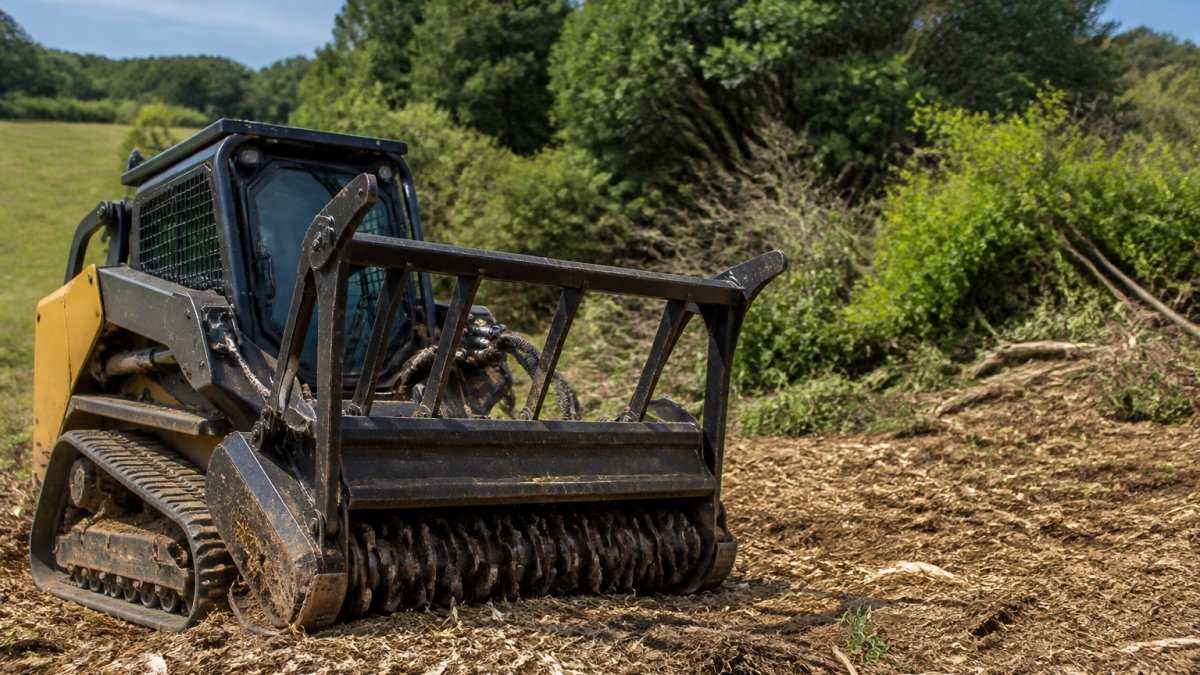
Vinegar, salt, and smothering work best on grass and small weeds. Woody growth, vines, and thick brush need cutting with hand pruners, a hand scythe, a string trimmer, or a rotary cutter, and vines should be cut at the base and pulled off the wire. On heavy overgrowth, forestry mulching clears the fence row in one pass and leaves the material on site as ground cover.