 how-to
How to Clear Overgrown Fence Lines: A Step-by-Step Guide
Table of Contents
- Why Clearing Overgrown Fence Lines Matters
- Best Tools for Clearing Fence Line Brush
- Step-by-Step Process for Clearing Overgrown Fence Lines
- Does Mowing Fence Lines Prevent Damage to Fencing
- Forestry Mulching for Fence Lines: A Long-Term Solution
- Preventing Regrowth and Maintaining Your Cleared Fence Line
- Common Mistakes to Avoid When Clearing Fence Lines
- Frequently Asked Questions
Last Updated: September 3, 2026
Why Clearing Overgrown Fence Lines Matters
Overgrown fence lines cost you money and create liability risks. Vegetation pressing against posts and wire accelerates rot and rust, while vines work their way into the structure itself, making repairs exponentially more expensive than simple maintenance.
Overgrowth signals poor land management to neighbors, buyers, and appraisers, directly impacting resale value and curb appeal. For farmers and ranchers in East Texas, it also creates problems for livestock management and pasture rotation.
At SemperFi Land Clearing LLC, we've seen countless properties where owners delayed fence line maintenance until damage became structural. The longer you wait, the more aggressive, and costly, removal becomes.
Best Tools for Clearing Fence Line Brush
Your choice of tools depends on the density and type of overgrowth. Light overgrowth responds well to hand tools, while heavy brush with woody vegetation demands mechanical equipment.
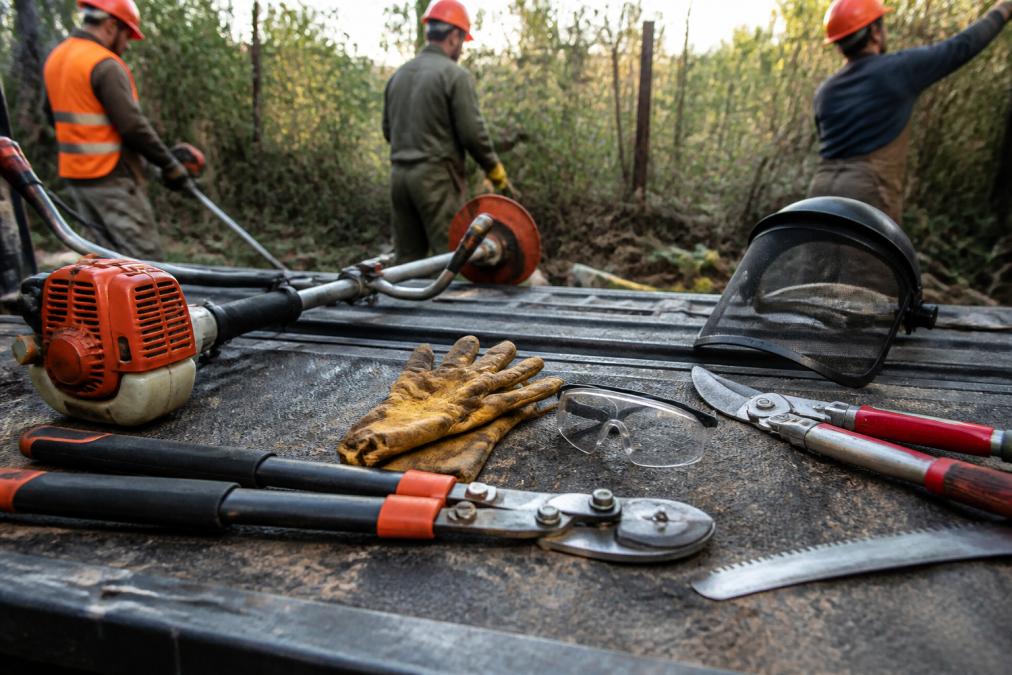
Hand Tools for Light Overgrowth
Pruning shears with sharp blades cut branches up to an inch in diameter with minimal effort. Keep them sharp; dull shears crush vegetation rather than cutting cleanly.
A folding pruning saw extends your reach to branches up to three inches thick. A 10-inch blade offers the best balance between reach and control.
A mattock or grub hoe becomes essential for root systems and stumps. The pointed end breaks compacted soil and digs around roots, while the flat end pries and lifts.
Leather gloves protect your hands from thorns and splinters. Invest in heavy-duty work gloves rated for landscaping.
Safety goggles keep debris out of your eyes when cutting overhead branches and during herbicide application.
Mechanical Equipment for Heavy Brush
A brush hog (flail mower) is the workhorse for fence line clearing. This tractor-mounted implement pulverizes vegetation up to three inches in diameter and handles uneven terrain well.
A mulcher grinds material into fine chips suitable for soil amendment, eliminating the debris disposal problem entirely.
A tractor with front-end loader and grapple attachment lets you grab and remove larger woody material and stumps.
For smaller properties or tight spaces, a walk-behind brush cutter handles overgrown fence lines without the footprint of tractor-mounted equipment.
Step-by-Step Process for Clearing Overgrown Fence Lines
Step 1: Assess the Overgrowth and Plan Your Approach
Walk the entire fence line and document what you're dealing with. Take photos and note vegetation density, plant types, and visible fence damage.
Identify problem areas: sections with barbed wire entangled in growth, erosion damage, or lifted posts.
Check for underground utilities by calling your local utility locating service before any mechanical work. This step takes 24-48 hours.
Measure total linear footage and estimate clearing width needed. Most residential fence lines need 3-4 feet of clear space on each side.
Determine your approach: hand tools only, mechanical equipment, or a combination.
Step 2: Gather Safety Gear and Equipment
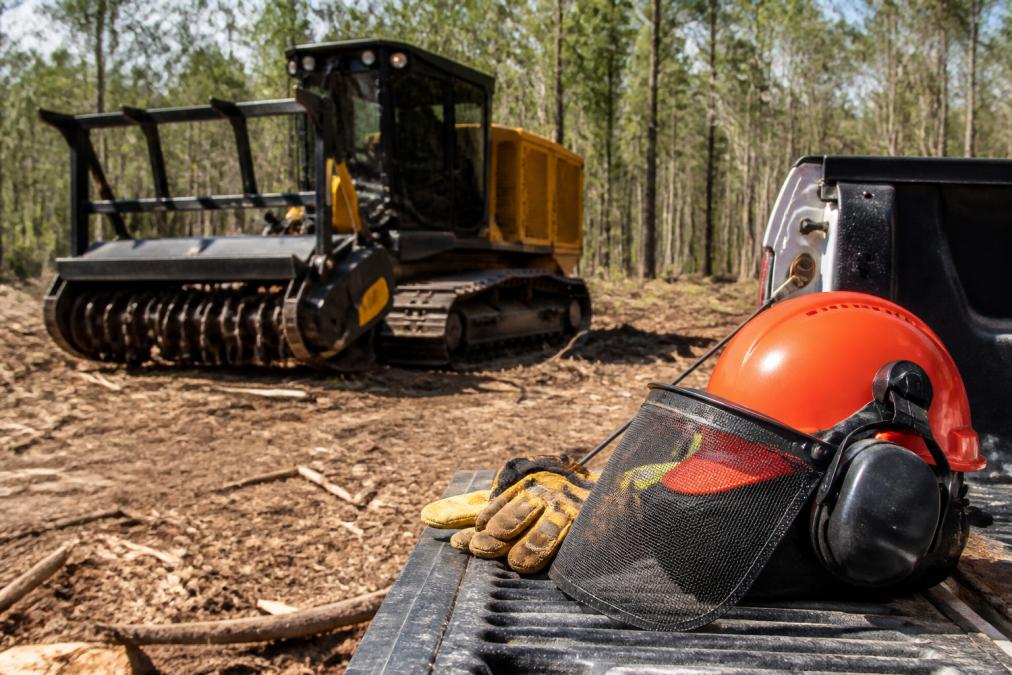
Leather gloves rated for landscaping work protect against thorns and splinters.
Safety goggles keep debris out of your eyes and protect during herbicide application.
Long pants and long-sleeved shirt protect your skin from scratches and plant oils.
Sturdy boots with ankle support keep you stable on uneven terrain.
Hearing protection is essential with gas-powered equipment. Use earplugs or earmuffs rated for 85+ decibels (osha.gov).
Keep a first aid kit nearby with bandages, antiseptic, tweezers, and hydrocortisone cream.
Step 3: Remove Vines and Woody Vegetation
Cut vines at ground level and at the top of their climb, then pull them away from the fence. For vines attached to the fence, use a putty knife or flat pry bar to gently lift them before cutting.
Move to saplings and woody brush next, cutting at ground level with pruning shears or a saw depending on diameter. Stack cut material in a designated area away from the fence line.
Work methodically from one end to the other to avoid missing sections.
Step 4: Clear Brush and Smaller Growth
A brush hog or flail mower handles remaining brush efficiently on larger properties. For smaller areas, use a weed trimmer or brush cutter.
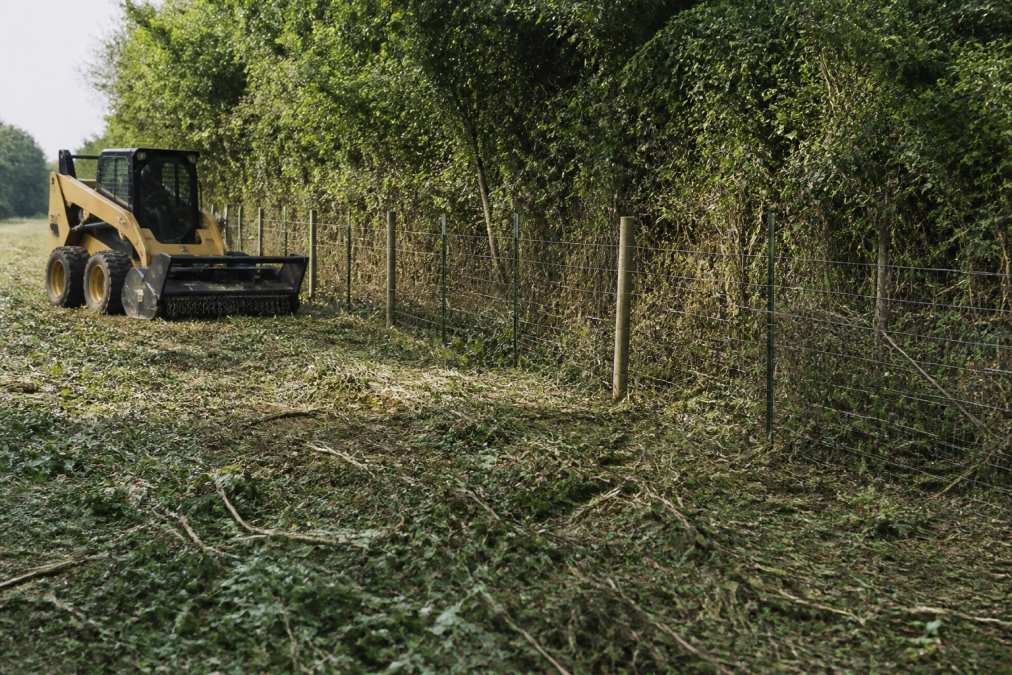
Make passes parallel to the fence line, working away from posts to minimize accidental damage.
Clear to the base of fence posts. Vegetation at the post base traps moisture and accelerates rot.
Step 5: Address Stumps and Root Systems
For small stumps (less than three inches), a mattock or grub hoe lets you dig around roots and pry them out.
Larger stumps require a stump grinder (which you can rent) or professional removal. After removing a stump, treat the remaining root system with brush killer or stump treatment herbicide immediately after cutting.
Step 6: Manage Debris and Disposal
For small quantities, chipping on-site produces mulch that improves soil health. Larger quantities require renting a dumpster or arranging landscape waste pickup.
Check local regulations before burning. Never burn near structures or power lines.
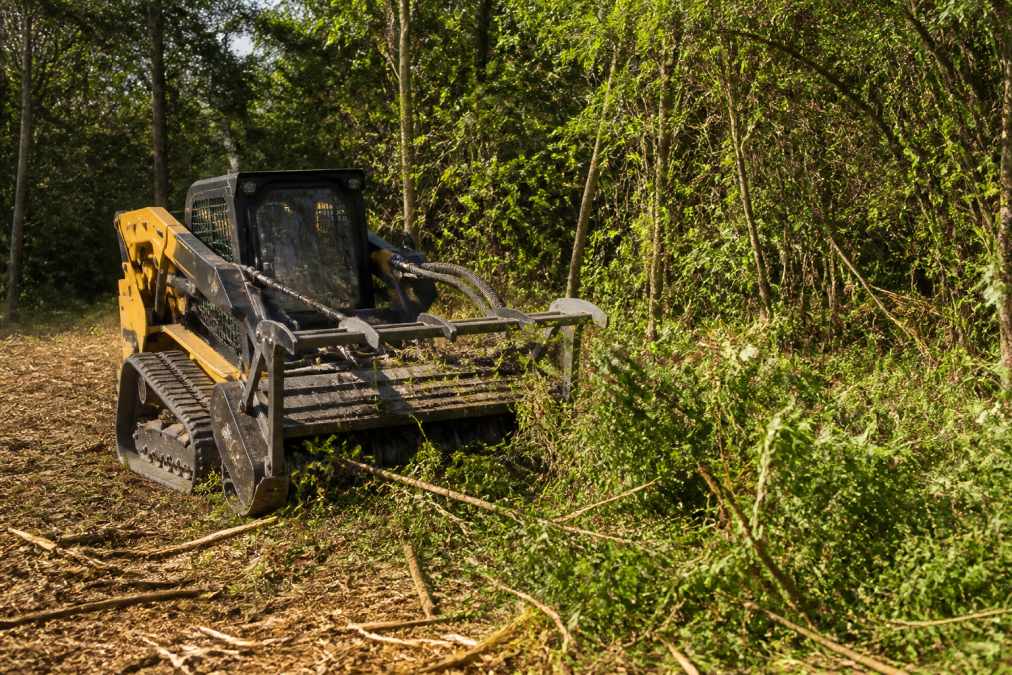
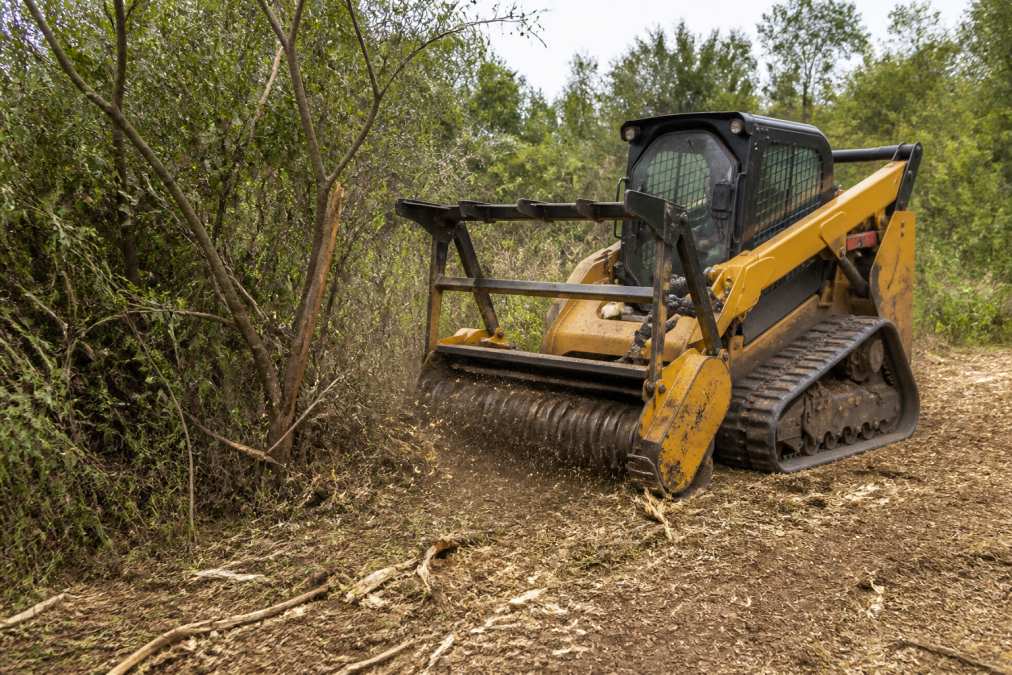
Forestry mulching eliminates the disposal problem entirely by grinding material on-site.
Does Mowing Fence Lines Prevent Damage to Fencing
Regular mowing prevents regrowth and protects your fence by keeping the fence line clear and preventing moisture buildup at post bases. This maintenance dramatically extends fence lifespan compared to unmowed lines.
However, mowing doesn't address existing overgrowth or remove vines and woody vegetation already established. Clear the overgrown fence line first, then use mowing as part of your maintenance routine.
Mow every 4-6 weeks during the growing season to prevent vegetation from becoming established (extension.oregonstate.edu). For fence lines with persistent woody growth or invasive species, periodic herbicide application or mechanical removal is necessary to address root systems.
Forestry Mulching for Fence Lines: A Long-Term Solution
Forestry mulching grinds material on-site, creating a protective layer that improves soil structure and reduces erosion. This method works especially well for properties with heavy overgrowth or compromised soil health.
The mulch layer suppresses new growth by blocking light and moderating soil temperature for 12-18 months, depending on climate (peer-reviewed research). It also retains moisture and prevents regrowth of grass and small vegetation.
This approach eliminates debris disposal entirely, with material staying on your property to improve soil rather than filling landfills. It also works on slopes and uneven terrain that would be difficult to access with traditional equipment.
Preventing Regrowth and Maintaining Your Cleared Fence Line
Mowing every 4-6 weeks during the growing season remains the simplest prevention method.
For persistent woody growth or invasive species, herbicide application provides longer-lasting suppression. Apply glyphosate-based products to freshly cut stumps immediately after cutting for maximum effectiveness.
Some property owners combine mowing with selective herbicide application, using chemicals only on problem areas.
Mulch layers from forestry mulching suppress regrowth for 12-18 months. As mulch breaks down, reapply or use mowing to maintain the clear line.
For agricultural properties, rotational grazing near fence lines keeps vegetation controlled while improving pasture health.
The key is consistency. Pick a maintenance schedule and stick to it.
Common Mistakes to Avoid When Clearing Fence Lines
Clearing too close to the fence damages posts and wire. Leave at least 6-12 inches of clearance around posts when using mechanical equipment.
Ignoring stump treatment leads to rapid regrowth. Apply herbicide immediately after cutting.
Underestimating debris volume surprises most first-timers. Plan for disposal before starting.
Skipping safety gear turns minor injuries into serious ones. Wear protective equipment every time.
Attempting mechanical clearing without utility locating invites disaster. Call for locating before any equipment work.
Working alone on large projects creates safety risks. Have someone present or nearby.
Clearing during wet conditions creates ruts and soil compaction. Wait for dry soil if possible.
Neglecting maintenance after clearing leads to rapid regrowth. Establish a mowing schedule or herbicide plan before finishing initial clearing.
Overgrown fence lines won't clear themselves, and ignoring the problem costs you money through accelerated fence deterioration and reduced property value. Systematic clearing followed by consistent maintenance keeps your fence line manageable indefinitely.
SemperFi Land Clearing LLC specializes in transforming neglected fence lines into maintained, productive property edges. Our team handles everything from assessing overgrowth severity to mechanical clearing, stump removal, and debris management. We offer free land assessments so you understand exactly what your property needs, no pressure, no hidden costs. Get an Estimate today and see how professional fence line clearing can improve your property's appearance, protect your investment, and reduce long-term maintenance costs.
Frequently Asked Questions
What is the best tool for clearing heavy brush along a fence?
The best tool depends on brush density and type. For thick woody vegetation, a chainsaw handles larger branches efficiently, while a brush hog or flail mower works well for dense brush coverage across longer fence rows. Hand tools like pruning shears and loppers suit smaller areas or delicate work near fence posts. For heavy overgrowth, forestry mulching equipment removes brush in a single pass while creating mulch that prevents regrowth and protects soil health.
Does mowing fence lines prevent damage to fencing?
Regular mowing maintains fence integrity by removing vegetation that can hide damage and prevent rot. However, mowing itself can damage fences if done carelessly, operators must maintain proper clearing width and keep equipment at safe distances from posts and wire. Forestry mulching offers a safer alternative for overgrown fence lines because it removes woody vegetation without the impact risk of repeated mowing, reducing long-term fence stress.
How often should you clear fence lines to prevent overgrowth?
Most properties benefit from annual fence line clearing, typically in late winter or early spring before new growth begins. Properties with invasive species or aggressive vegetation may need clearing twice yearly. Forestry mulching creates a natural barrier that slows regrowth, extending the time between maintenance cycles. A free land assessment helps determine the right maintenance schedule for your specific property and vegetation density.
Is forestry mulching better than manual clearing for fence lines?
Forestry mulching offers significant advantages for overgrown fence lines: it handles heavy vegetation in one pass, creates mulch that suppresses weeds, improves soil health, and requires less ongoing maintenance. Manual clearing works for small areas or light overgrowth but becomes time-intensive with thick brush. The best choice depends on acreage, vegetation type, and your long-term maintenance goals. Professional assessment identifies which method suits your property.