 how-to
Fence Line Clearing East Texas: A Landowner's Guide
Table of Contents
- Why Fence Line Clearing Matters for East Texas Landowners
- Forestry Mulching Benefits for Fence Rows and Pastures
- What Affects Land Clearing Cost Per Acre
- Property Boundary Maintenance After the Crew Leaves
- Legal and Surveying Steps Before You Clear
- DIY vs. Hiring a Professional Crew: Risks and Trade-Offs
- How to Prepare Your Property for a Clearing Service
- Conclusion
- Frequently Asked Questions
Last Updated: October 1, 2026
Why Fence Line Clearing Matters for East Texas Landowners
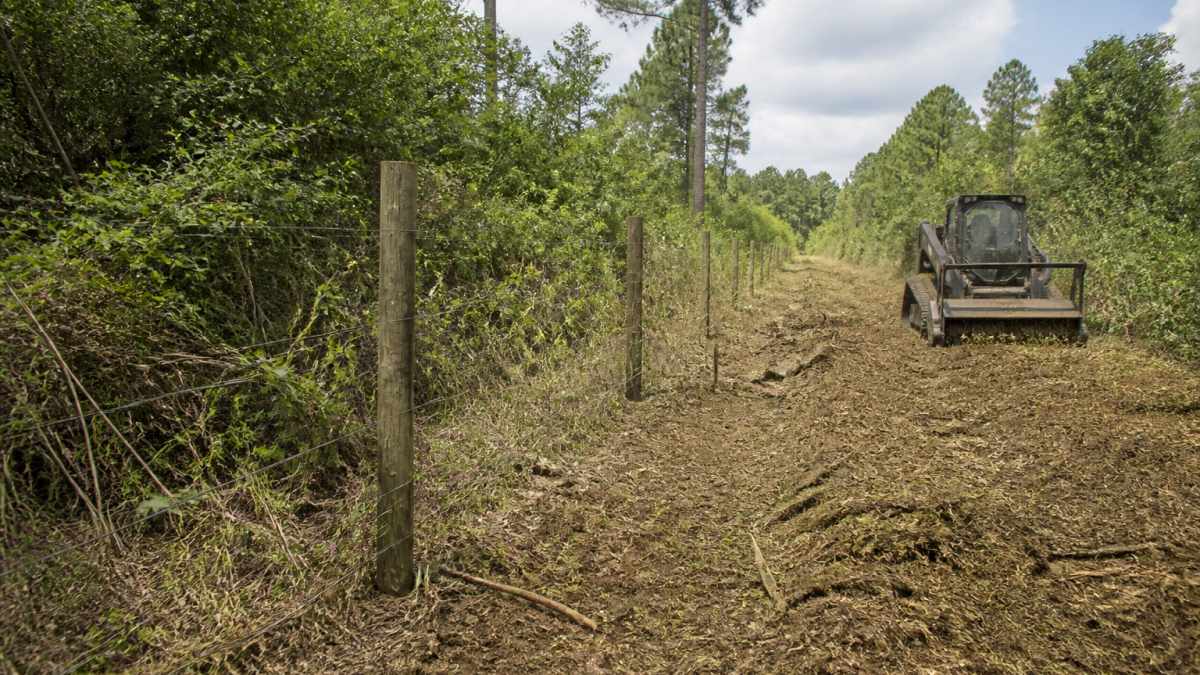
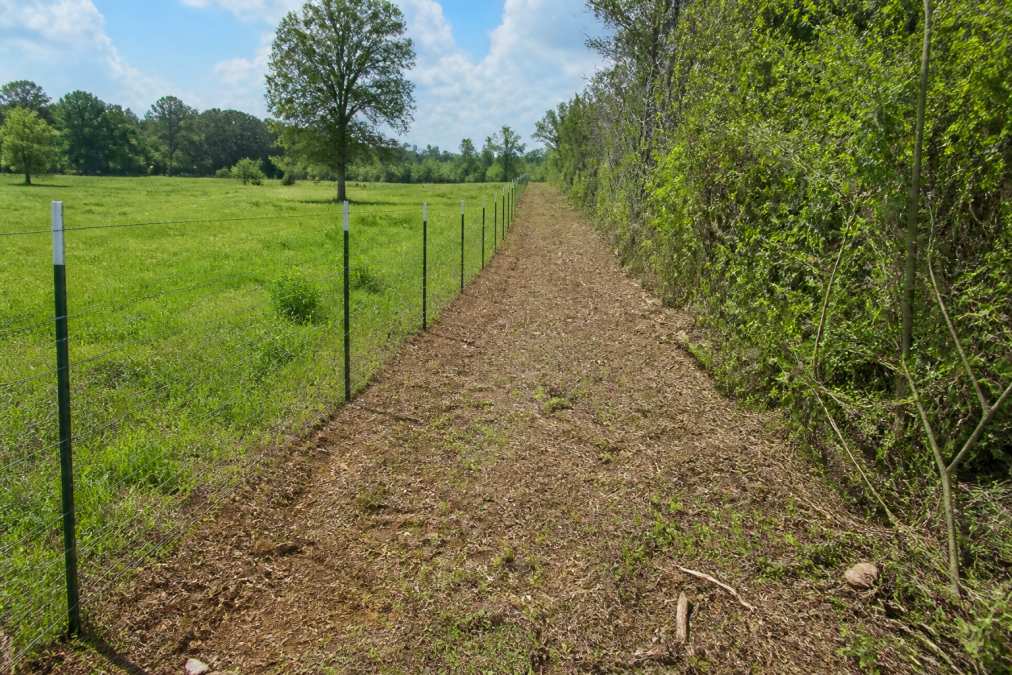
Fence line clearing is the practice of removing brush, saplings, and undergrowth from the strip of land along a fence so the fence stays visible, accessible, and functional. In East Texas, where rain and heat push fast regrowth, that strip can swallow a fence in a single season. This guide from SemperFi Land Clearing LLC covers what fence line clearing East Texas landowners deal with, what it costs, and how to keep a cleared line clear.
Access, Security, and Property Appeal
A buried fence fails at the worst time: you can't inspect it, repair it, or see where livestock pushed through.
Clearing the fence row fixes three problems at once:
- Access: You can walk or drive the line and check it in minutes.
- Security: A visible fence marks the property line clearly.
- Appeal: Clean fence rows make acreage look managed, not abandoned.
Common Signs Your Fence Row Is Overdue
Most landowners wait too long. Watch for these signals:
- Saplings taller than the fence posts
- Vines climbing and pulling on wire
- Brush so thick you can't see the next post
- Fence wire sagging under hidden limbs
- Tracks or gaps you only notice up close
If you spot two or more, the row is past due. The longer you wait, the heavier the equipment and the higher the cost.
Forestry Mulching Benefits for Fence Rows and Pastures
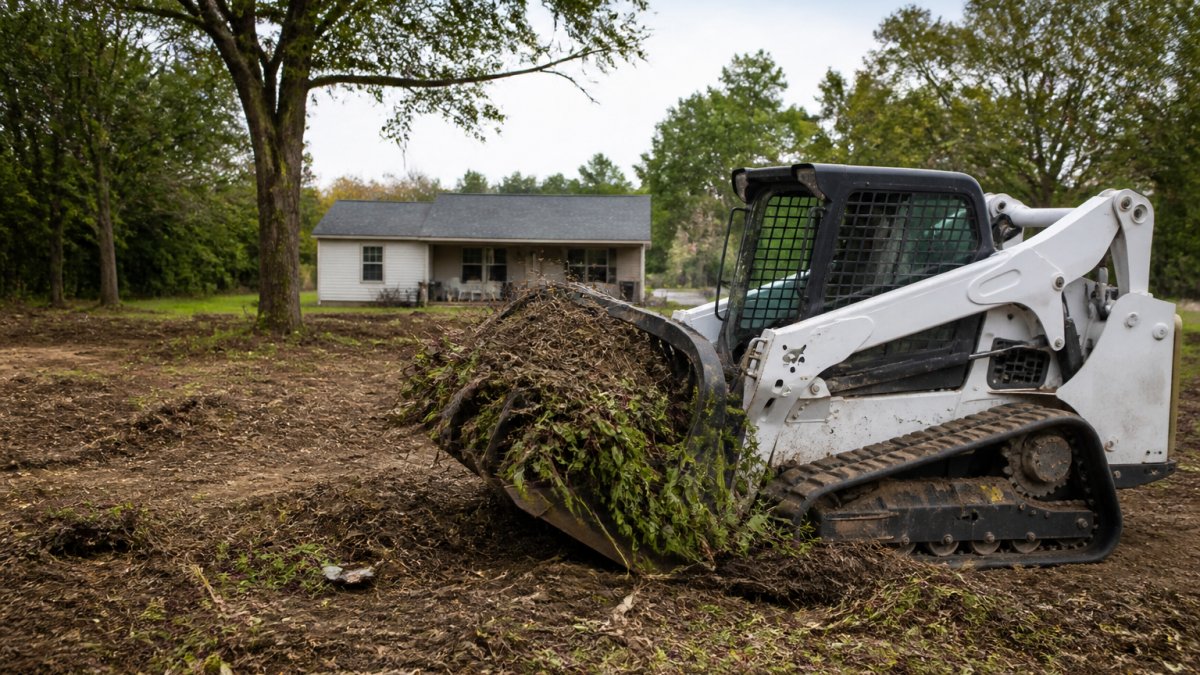
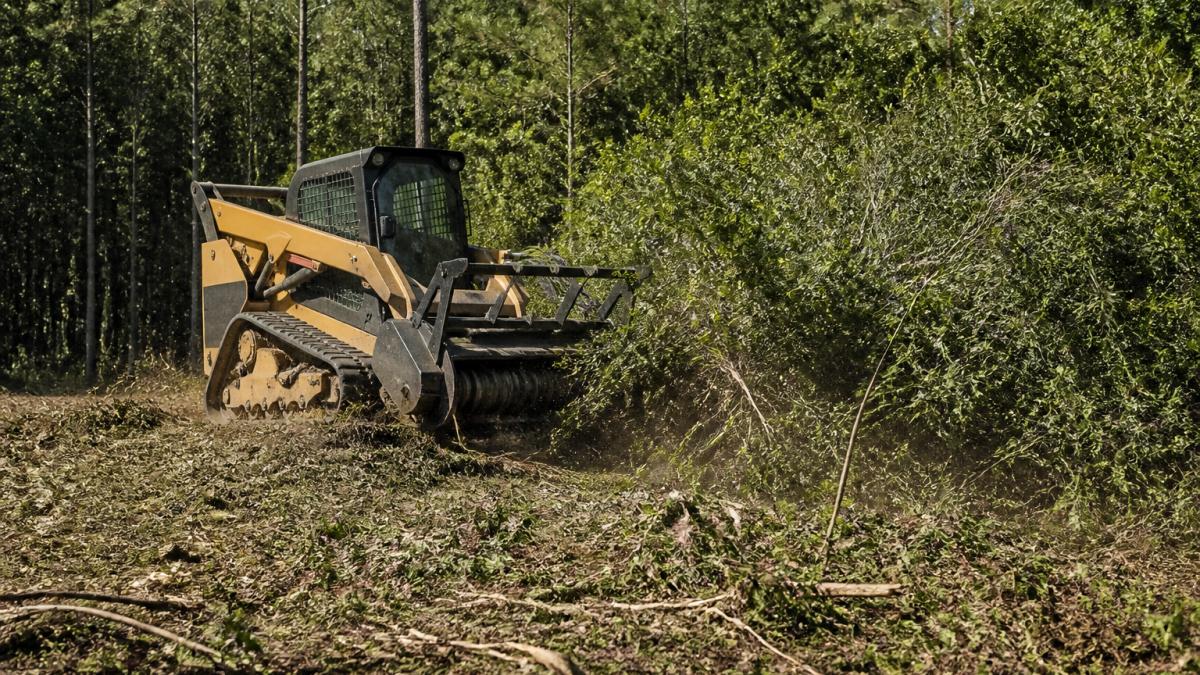
Forestry mulching grinds standing brush, saplings, and small trees into a layer of mulch on the spot. It's the fastest way to clear a fence row without hauling debris off site, and for East Texas landowners, that speed and low soil disturbance are the main draws.
The benefits stack up quickly:
- No burn piles and no debris hauling
- Less soil disturbance than dozer work
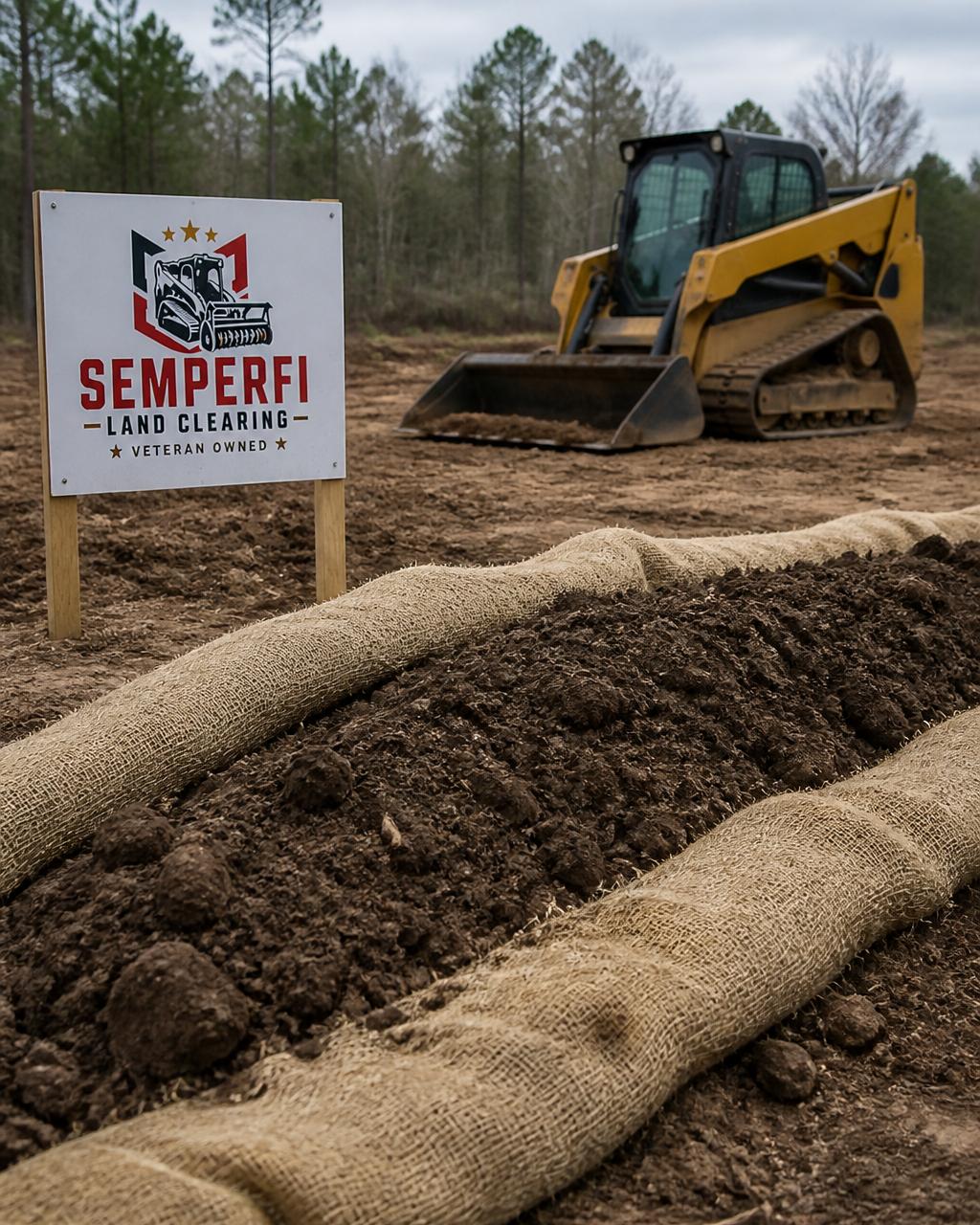
- Mulch left in place feeds the soil
- One machine handles cutting and grinding
- Cleared ground is usable the same day
How the Mulch Layer Helps Soil and Slows Regrowth
The mulch layer holds moisture, shades bare soil, and breaks down into organic matter over time.
Forestry Mulching vs. Traditional Clearing Methods
Traditional clearing means chainsaws, dozers, and burn piles. It works, but it moves more soil and leaves a bigger mess.
| Method | Best For | Debris Handling | Soil Impact |
|---|---|---|---|
| Forestry mulching | Fence rows, pasture, selective clearing | Ground into mulch on site | Low disturbance |
| Dozer clearing | Full site prep, stumps and all | Pushed and piled | High disturbance |
| Chainsaw and haul | Small jobs, tight spots | Cut and hauled off | Medium disturbance |
What Affects Land Clearing Cost Per Acre
Land clearing cost per acre depends on brush density, terrain, acreage, access, and debris handling. No honest crew quotes a flat number before seeing the land, a light, flat quarter acre and a steep, overgrown five acres can differ three or four times in per-acre rate. Here is what drives the price:
- Density and stem size: Light grass and weeds clear fast. Saplings under 2 inches mulch quickly. Once you are into 6-inch hardwoods and dense yaupon or sweetgum thickets, production drops and the hourly cost climbs. Density is measured in stems per acre, not just height.
- Terrain: Slopes over about 15 percent, creek bottoms, and wet spots slow equipment and sometimes require a different machine. A track mulcher handles soft ground better than a wheeled unit but costs more per hour.
- Acreage and linear feet: Fence line work is often quoted by the linear foot, because a 10-foot-wide strip along 1,000 feet is only about a quarter acre of ground but a lot of machine travel. Larger acreage jobs usually cost less per acre because setup and mobilization spread across more work.
- Access: A 10-foot gate, a low wire, or a soft driveway can add time or force a smaller machine. If the crew cannot get the mulcher to the line, they may have to cut a path first, and that costs money.
- Debris handling: Mulching in place is cheapest because the material never leaves the site. Hauling, burning, or chipping adds labor, fuel, and sometimes a disposal fee.
- Rock and hidden debris: Limestone outcrops, old fence wire, abandoned pipe, and buried concrete can damage teeth and stop a job. A crew that hits wire mid-pass may need to stop, repair, and restart.
- Minimum job charges: Most crews have a minimum, often a half-day or a set dollar floor, because mobilizing a machine for a 30-minute job costs the same to get there and back.
How Quotes Are Usually Structured
You will see three common pricing models:
- Per acre: Best for open pasture and large tracts. Typical for jobs over an acre or two.
- Per linear foot: Common for fence rows, right-of-ways, and trails. A 10-foot-wide strip is the standard width for fence line work because it clears the fence, the posts, and enough room to work.
- Hourly with a cap: Used when density is unknown. Ask for a not-to-exceed number so the job cannot run away from you.
How to Get an Accurate Estimate
A real estimate comes from a site visit, not a phone call. A crew needs to see the brush, walk the line, and check access before quoting, photos hide slope, soft ground, and stem size.
Ask for these in writing:
- The scope: which lines, how many feet or acres, and the width of the cleared strip
- Whether mulch stays on site or is hauled
- Any access limits, exclusions, or assumptions (for example, "price assumes no buried wire")
- A clear start and finish window, and what weather could delay
- Whether the price includes cleanup of any cut material that cannot be mulched
Property Boundary Maintenance After the Crew Leaves
Property boundary maintenance is the ongoing work of keeping a cleared line clear after the first pass. Clearing is not a one-time fix in East Texas. Heat and rain push regrowth fast, so the line needs attention every year or two.
A simple schedule keeps it cheap:
- First 6 months: Walk the line, spot-check for new sprouts.
- Yearly: Mow or mulch the regrowth while it's still thin.
- Every 2-3 years: A light touch-up pass on heavy sections.
Legal and Surveying Steps Before You Clear
Before any crew cuts a single stem, you need to know exactly where your line is. Clearing past a boundary can create a dispute, and in the worst case, a trespass claim.
Do these first:
- Pull your deed and any survey on file.
- Find your corner pins and flag the line.
- If pins are missing or unclear, hire a licensed surveyor.
- Talk to your neighbor before work starts.
- Check for any easements or utility lines.
DIY vs. Hiring a Professional Crew: Risks and Trade-Offs
DIY fence line clearing with a chainsaw, brush cutter, and weed eater is possible on small, light jobs, but it is slow and carries real risk. Downed limbs, kickback, and hidden hazards in thick brush cause injuries every year, and a fence row is worse than open woods because you work next to wire, posts, and often a property line you cannot fully see.
The Hazards Competitors Do Not Mention
Before you start a saw, know what is in that brush:
- Overhead and buried utilities: A fence row often runs near a service drop or a buried line to a well, barn, or meter, and cutting into a live line is life-threatening. Call 811 before you cut, it is free, and in most states required by law before digging or mechanized clearing near buried utilities. Overhead lines require a spotter and a no-cut buffer.
- Kickback and pinching: A chainsaw kicking back into your leg or shoulder is the most common serious DIY injury, and bar pinch happens constantly when cutting brush under tension or tangled with wire.
- Hidden debris: Old fence wire, T-posts, barbed wire, and abandoned pipe are common in overgrown rows. A saw or mulcher hitting wire throws metal and ruins teeth. You will not see it until you hit it.
- Dead limbs and widow-makers: Standing dead trees along a fence line drop limbs without warning. Look up before you cut down.
- Vines and poison ivy: Thick vines pull limbs toward you and hide the cut. Poison ivy and sumac are common here, and the smoke from burning them can cause serious respiratory reactions.
- Fatigue: Most DIY injuries happen in the last hour of a long day. Brush work is more physical than it looks.
The Legal and Permitting Layer
This part matters before any cutting starts:
- Confirm the line first. Pull your deed and any recorded survey. Find your corner pins. If pins are missing or unclear, hire a licensed surveyor. Clearing past a boundary can create a trespass claim, and in the worst case you can be liable for the value of timber or improvements you removed.
- Check for easements. Utility, pipeline, and drainage easements may cross your fence line, and clearing inside one without permission can violate its terms.
- Know your local rules. Some municipalities and counties have tree preservation or setback rules, and clearing near a creek, wetland, or floodplain may require a permit or buffer. Rules vary widely, so check with your county and, if a water feature is involved, the relevant state or federal agency before you cut.
- Talk to your neighbor. A five-minute conversation before work starts prevents most boundary disputes. If the fence is a boundary fence, both sides often share maintenance responsibility under local custom and, in some cases, state law.
The Honest Trade-Off
- DIY: Cheaper on paper, slow, higher injury risk, and you still have debris to deal with. Realistic for a few hundred feet of light brush with a clear line and no utilities nearby.
- Professional crew: Faster, insured, handles heavy brush, and leaves the site clean. The right call when brush is over head-high, stems are over a couple of inches, the line is long, or you cannot see the ground.
The deciding factor is density, length, and what is hidden in the brush. A quarter acre of light brush along a short run is a weekend project; three acres of thick saplings with old wire in it is a machine job, and a job for someone whose insurance covers the risk, not yours.
How to Prepare Your Property for a Clearing Service
Good prep makes the job faster and the estimate tighter. You don't need to do much, but a little work goes a long way.
Before the crew arrives:
- Mark any survey pins, stakes, or monuments.
- Flag sprinkler heads, septic lids, and buried lines.
- Move vehicles, trailers, and equipment out of the way.
- Unlock gates and clear the driveway.
- Point out any trees or plants you want saved.
- Note any wet or soft areas.
Conclusion
Overgrown fence lines cost you access, security, and money the longer they sit. Get ahead of it with a clear plan, an accurate estimate, and a crew that shows up and finishes.
Frequently Asked Questions
What is the best method for clearing fence lines?
For most East Texas properties, forestry mulching with a dedicated brush mower is the best method for fence line clearing. It grinds brush, saplings, and underbrush into a mulch layer that stays on site, protecting soil and slowing regrowth. Traditional dozer clearing moves topsoil and leaves bare ground. A specialized 10 ft fence line clearing setup lets a crew work tight to the wire without damaging posts or fencing, which matters when you have miles of fence row to maintain.
How much does it cost to clear a fence line?
Land clearing cost per acre depends on brush density, terrain, access, and how much debris removal is required. Dense saplings and heavy underbrush take longer than light grass and weeds. Rather than quote a flat rate, a reputable company will walk the property and give you a same-day estimate based on actual conditions. Ask for a free land assessment so the number reflects your acreage, not a guess over the phone.
Does forestry mulching damage the soil?
No. Forestry mulching leaves a mulch layer on the surface, which holds moisture and protects topsoil from erosion. Because the machine cuts vegetation at ground level instead of scraping it away, the root structure and soil profile stay largely intact. That is one of the main forestry mulching benefits for pastures and hunting land. On slopes and creek-adjacent fence rows, this approach is far gentler than pushing dirt with a dozer.
How often should you clear fence lines to prevent overgrowth?
Most East Texas fence rows need attention every two to three years, depending on rainfall and how fast saplings take hold. Properties with sandy soil and heavy spring growth may need annual maintenance. A simple property boundary maintenance schedule, such as a walk-through each fall and a touch-up pass in late winter, keeps brush from shading out the fence and hiding damage. Catching regrowth early is far cheaper than clearing mature trees later.