 How-to
How to Estimate How Long Fence Line Clearing Takes
Last Updated: October 30, 2026
Quick Summary
Most fence line clearing takes between a few hours and several days, depending on the length of the line, vegetation density, equipment used, and fence condition. A two-person DIY crew with hand tools and a brush cutter can realistically clear 300-500 linear feet of light-to-moderate growth in a full day.
- A forestry mulcher on a skid steer clears 1,500-2,500 linear feet per day in light growth.
- Plan by density first and length second, since 100 feet of vine-choked chain-link can outlast 400 feet of grass.
- Setup and staging eat 30 to 60 minutes of an eight-hour clearing day.
- Vines are the slowest part of any job because they grip the mesh and regrow from roots.
- Measure the line in linear feet before calling anyone for a more reliable timeline.
Table of Contents
- What Fence Line Clearing Involves and Why Time Varies
- How to Prepare for Fence Line Clearing
- Fence Line Clearing Equipment: Manual vs Mechanized
- How Much Fence Line Can Be Cleared in a Day
- Removing Vines from a Chain-Link Fence: Why It Takes Longer
- Get a Free Land Assessment and Firm Timeline
- Frequently Asked Questions
What Fence Line Clearing Involves and Why Time Varies
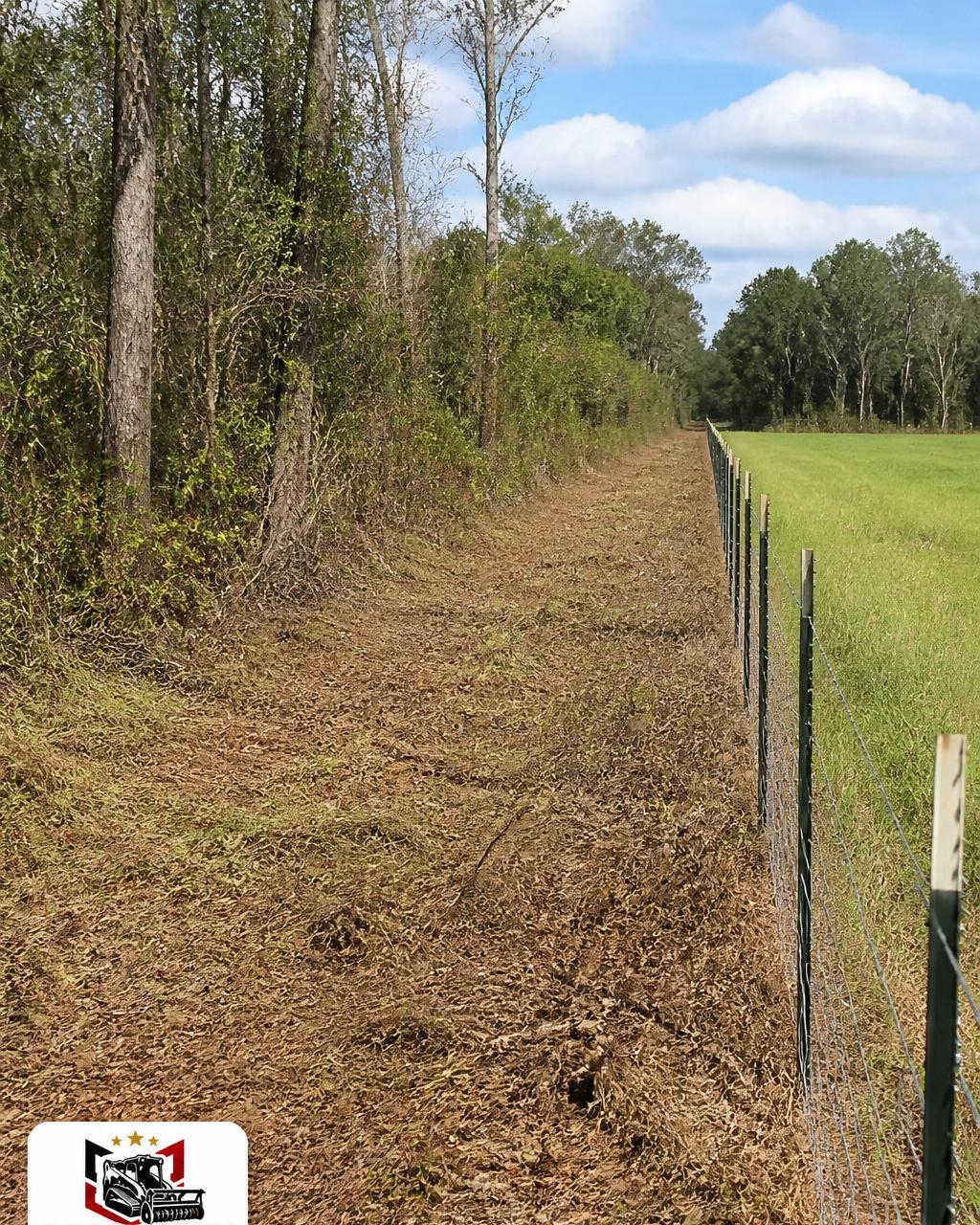
Fence line clearing is the process of removing brush, vines, saplings, and woody growth from the strip of land along a property boundary so the fence stays visible, accessible, and in good repair. Most residential and agricultural jobs take somewhere between a few hours and several days, depending on length, density, and how you clear it.
That range is wide because four things drive the schedule: how many linear feet you're clearing, how thick the vegetation is, what equipment you use, and whether the fence itself is in the way. A clean quarter-acre line of grass and weeds is a weekend chore. A neglected lot with mature vines woven into chain-link is a different job entirely.
We run free land assessments for exactly this reason. The only reliable time estimate comes from walking the line and measuring what's actually growing on it.
What Is Included in a Typical Clearing Job
A complete job covers more than cutting. Expect these steps:
- Site assessment to measure fence-line length and note density
- Access checks for gates, terrain, and equipment entry points
- Cutting and mulching of brush, saplings, and woody growth
- Debris removal or vegetation disposal
- Cleanup of the fence itself and any damaged sections
- Ground preparation and seeding where bare soil needs stabilizing
Ask any provider what's included before you compare timelines. A crew that skips debris removal finishes faster but leaves you the second half of the work.
How to Prepare for Fence Line Clearing
Preparation is where most DIY projects lose a weekend. Handle these steps first, and the actual clearing goes faster.
- Walk the full fence-line length and measure it in linear feet. Note gates, corners, and any sections where the fence is leaning or broken.
- Check your property boundary against a plat or survey. Clearing the neighbor's side of the line is a dispute waiting to happen.
- Confirm permits and any utility easements. Call 811 before any digging, and check local rules if you're near wetlands or protected areas.
- Plan vegetation disposal before you cut. Piles of brush sitting in the sun become next season's problem.
- Stage your tools at the most accessible entry point so you're not hauling equipment down the line.
If you want a full walkthrough, our guide on how to clear overgrown fence lines covers tools and methods step by step.
Fence Line Clearing Equipment: Manual vs Mechanized
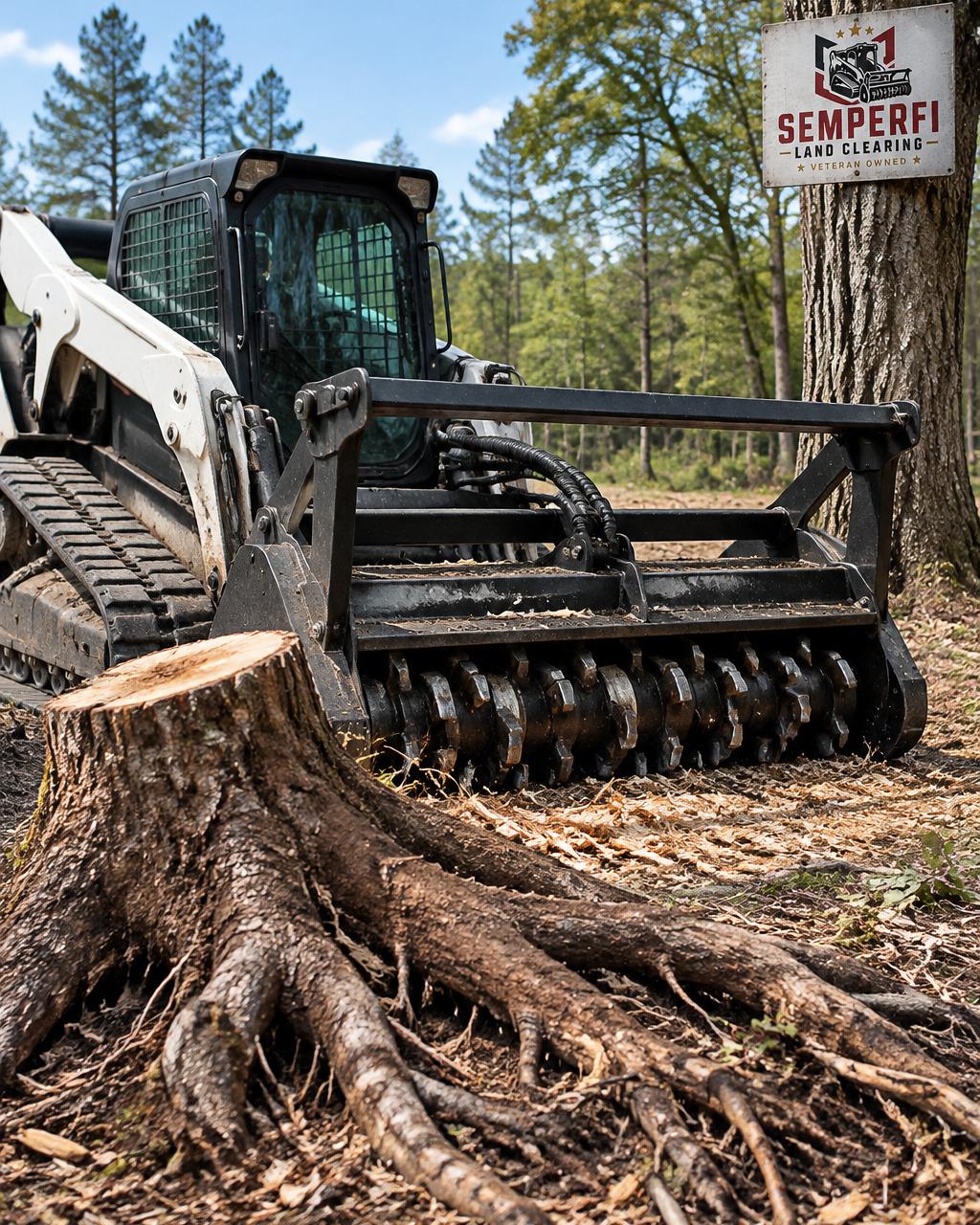
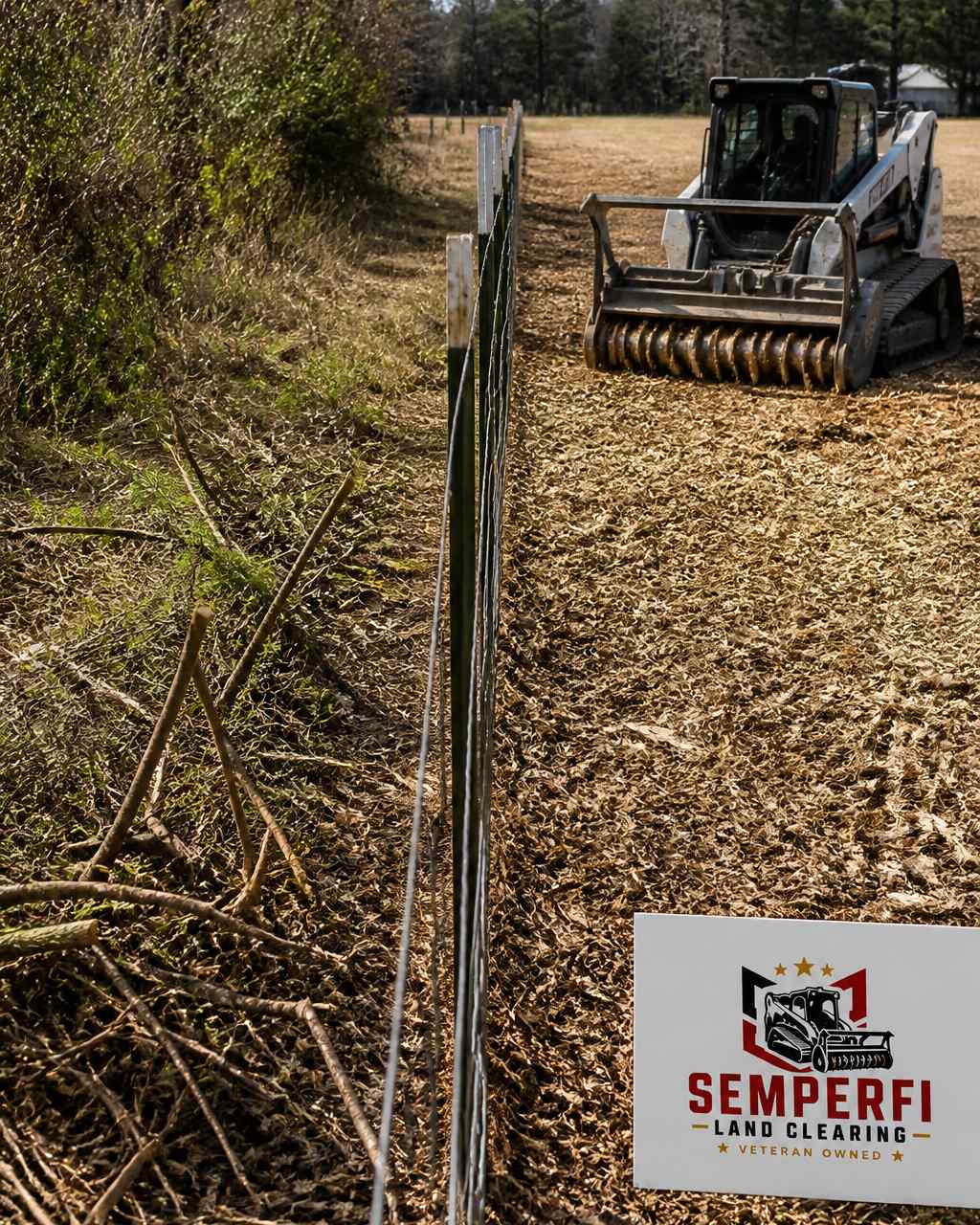
Manual clearing uses hand tools and small power equipment: loppers, chainsaws, brush cutters, and weedeaters. Mechanized clearing uses heavy equipment, most often a forestry mulcher that grinds brush and small trees into mulch on site.
The trade-off is simple. Manual clearing costs less per hour but takes far longer and works best on light to moderate growth. Mechanized clearing handles dense brush and saplings quickly, mulches as it goes, and leaves a cleaner result.
| Method | Best For | Relative Speed | Cleanup Needed |
|---|---|---|---|
| Hand tools | Light weeds, small saplings | Slowest | High |
| Brush cutter / weedeater | Grass, thin brush | Moderate | Moderate |
| Chainsaw | Small trees, thick trunks | Moderate | High |
| Forestry mulcher | Dense brush, heavy overgrowth | Fastest | Low |
For professional methods and what they involve, our fence line clearing guide covers the regional picture in more detail.
How Much Fence Line Can Be Cleared in a Day
This is the number most people actually want, so here it is in linear feet per eight-hour day. These are planning ranges, not guarantees, a common pattern among crews is that the first 100 feet of any line runs slower than the rest because of setup, and wet ground or a fragile fence can cut a day's output by a third or more.
| Method | Light Growth (grass, weeds, vines under 1 in.) | Moderate Brush (saplings 1-3 in., scattered vines) | Heavy Overgrowth (dense saplings, vine mats, downed limbs) |
|---|---|---|---|
| Hand tools (loppers, hand saw, rake) | 150-300 linear ft/day | 75-150 linear ft/day | Not practical |
| Weedeater + brush cutter | 400-700 linear ft/day | 250-400 linear ft/day | 100-200 linear ft/day |
| Chainsaw + brush cutter | 300-500 linear ft/day | 300-500 linear ft/day | 200-350 linear ft/day |
| Compact track loader with forestry mulcher | 1,000-1,500 linear ft/day | 800-1,200 linear ft/day | 500-900 linear ft/day |
| Skid steer with forestry mulcher | 1,500-2,500 linear ft/day | 1,000-1,800 linear ft/day | 700-1,200 linear ft/day |
A two-person crew with hand tools and a brush cutter is the realistic DIY ceiling: figure 300-500 linear feet of light-to-moderate growth in a full day, and less if you are hauling debris by hand.
What Eats the Day Besides Cutting
A day on the line is not all cutting. A realistic eight-hour block breaks down roughly like this for a 500-foot moderate-brush job with a two-person crew:
- Setup and staging, 30 to 60 minutes. Unloading, fueling, stringing a boundary line, and walking the route.
- Cutting, 4 to 5 hours. The actual brush, sapling, and vine work.
- Pulling vines and freeing the fence, 1 to 2 hours. The slowest part on chain-link and woven wire.
- Piling, hauling, or mulching debris, 1 to 2 hours. This is the step DIY crews most often underestimate.
- Cleanup and a final walk, 30 minutes.
The Four Things That Move the Number Most
- Density, not length. A 100-foot stretch of vine-choked chain-link can take longer than 400 feet of grass. Plan by density first, length second.
- Access. If the only gate is at one end, every load of debris travels the full line. A second entry point can save an hour or more on a long run.
- Terrain and ground condition. Slopes slow walk-behind equipment and can rule out a skid steer entirely. Wet ground ruts easily and may push the job to a track machine or a later date.
- Fence condition. A leaning or damaged fence means slower work near the wire and possible repair time you did not schedule.
If you want machine production in acre terms instead, see how many acres a forestry mulcher can clear per day.
Removing Vines from a Chain-Link Fence: Why It Takes Longer
Vines are the slowest part of any fence line job. They grow through the mesh, wrap the posts, and root into the ground, so you can't just cut at the base and walk away.
Plan on extra time for three reasons:
- Vines grip the mesh, so pulling them free takes hands-on work
- Cut vines regrow from roots left in the soil
- Heavy vine mats hide fence damage you'll need to repair afterward
The fix is to cut at the base, then pull the growth off the mesh rather than yanking the fence with it. For heavy vine tangles, forestry mulching is often the faster route.
Get a Free Land Assessment and Firm Timeline
Estimates from a phone call are guesses. A site assessment turns them into a schedule.
Book your free land assessment and get a real timeline for your property.
Frequently Asked Questions
How long does it take to clear a mile of fence line?
A mile is 5,280 feet, so expect a wide range. Site conditions, terrain, and access matter as much as length, so the actual duration depends on what is growing on the line.
How much fence line can be cleared in a day?
Dense saplings, heavy vines, and rocky ground tend to slow the work, and a site assessment is the best way to get a realistic timeline for your specific property.
Can fence line clearing be done without heavy machinery?
Yes, but it takes longer and suits lighter overgrowth. Manual clearing uses chainsaws, brush cutters, loppers, and weed eaters. It works for grass, weeds, and small saplings but struggles with thick brush and woody growth. Mechanized clearing with a forestry mulcher handles heavy overgrowth faster and leaves mulch that slows regrowth. For a quarter-acre fence line, manual work is realistic; for acres of thick brush, machinery saves days.
Does clearing vines from a chain-link fence take longer?
Yes. Vines weave through the mesh, so you cannot just cut at ground level. You have to pull, unwind, and cut in sections, which can double or triple the time compared to open brush. Clearing the fence itself also risks damaging the wire, so slower, careful work pays off.
Guessing at timelines costs you weekends and stalled projects. SemperFi Land Clearing LLC offers free land assessments, specialized 10-foot fence line clearing, and forestry mulching that handles heavy overgrowth in one pass. As a veteran-owned operation, we show up when we say we will. Get started with SemperFi Land Clearing LLC and get a firm timeline for your fence line.