 How-to
How Do You Prepare Land for Forestry Mulching?
Quick Summary
To prepare for forestry mulching, start two to four weeks ahead by walking the property and flagging everything you want to keep, including trees, fences, wells, septic systems, and drain fields. Call 811 for utility locates, confirm the equipment access route a week out, and clear low limbs and debris along it.
- Call 811 for utility locates two to four weeks before service day.
- Flag wells, septic tanks, drain fields, and trees you want to keep before the machine arrives.
- Confirm the equipment access route, including gate width and overhead limbs, one week out.
- Relocate livestock and pets and keep people out of the work zone while equipment runs.
- Late fall through early spring is the most forgiving season, since soils are often firmer.
Table of Contents
- Forestry Mulching Property Preparation Checklist
- What to Mark Before Forestry Mulching
- How Long Forestry Mulching Projects Take and What Affects Timing
- Booking Your Estimate and Preparing for Service Day with SemperFi Land Clearing
- Frequently Asked Questions
Forestry Mulching Property Preparation Checklist
Start this checklist two to four weeks before service day to leave time for access problems, utility conflicts, and permits.
Two to four weeks out
- Walk the property and photograph each area to clear and each to leave alone
- Write down your end goal per zone: pasture, building pad, brush control, trails, or wildlife habitat
- Confirm the legal description and property corners; pull a plat or survey if corners are unmarked
- Call 811 and request utility locates for the work area
- Stake and flag wells, septic tanks, drain fields, cisterns, and irrigation lines
- Note fences, gates, culverts, driveways, and ornamental plantings to keep
- Check with your planning or permits office about land-disturbing activity, erosion control, and tree-protection or burn restrictions
- Ask your contractor for a certificate of insurance showing general liability and, where required, workers' compensation
One week out
- Confirm the equipment access route: gate width, driveway surface, overhead limbs and wires, and turning radius
- Trim low limbs and remove loose debris along the route
- Move vehicles, trailers, tools, furniture, and stored materials out of the work zone
- Relocate livestock and pets for the duration
- Flag trees and shrubs to retain at eye level and, where practical, paint a ring at the base
- Confirm the start date, duration, and who handles cleanup and debris
Day before and day of service
- Re-walk boundaries and protected features to confirm flags are visible
- Unlock gates and clear the access route
- Keep people and animals out of the work zone while equipment runs
- Confirm the operator's contact number and a plan for scope changes
Watch out: the most common preparation failure is marking only what you want removed, not what you want kept. A mulching head does not distinguish a valuable oak sapling from a volunteer pine, so flagging retained trees, fence lines, and drain fields prevents the most expensive mistakes.
The checklist below groups preparation tasks by timing so you can work backward from service day.
| Timing | Task | Why it matters |
|---|---|---|
| Two to four weeks out | Call 811 for utility locates | Avoids striking buried lines |
| Two to four weeks out | Flag wells, septic, drain fields | Protects costly underground systems |
| Two to four weeks out | Check permits and burn restrictions | Avoids legal and erosion issues |
| One week out | Confirm equipment access route | Ensures the machine can reach the site |
| One week out | Trim low limbs and clear debris | Opens the route for equipment |
| One week out | Relocate livestock and pets | Keeps animals out of the work zone |
| Day before and day of | Re-walk boundaries and flags | Confirms protected features are visible |
| Day before and day of | Keep people and animals out of zone | Prevents injury while equipment runs |
What to Mark Before Forestry Mulching
Watch out: Marking is the step owners skip most often, and it causes the most damage. Flag anything you want to keep before the machine arrives.
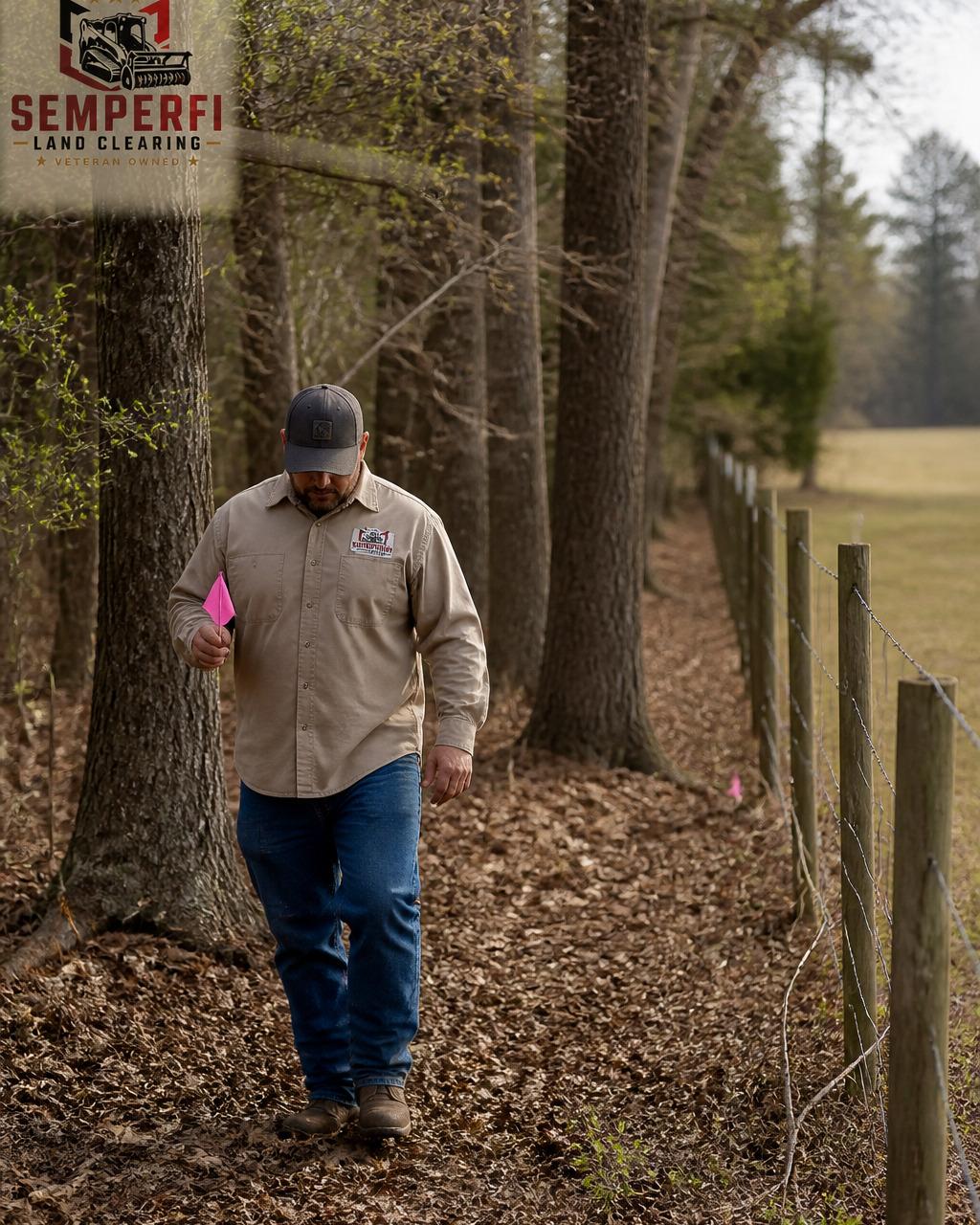
Mark these areas clearly with flags, spray paint, or stakes:
- Property lines so the crew stays within your boundaries
- Fences and gates to keep or remove
- Buried utilities, such as water, gas, and electric lines
- Wells, septic tanks, and drain fields
- Trees and shrubs to save
Call 811 before any digging or heavy work.
How Long Forestry Mulching Projects Take and What Affects Timing
There is no single answer to how long a forestry mulching project takes, because productivity depends on what is being cut and where. For a deeper guide on fence line timing, see how long fence line clearing takes. Light brush and saplings move quickly, while dense mature trees, heavy vines, and rocky ground slow the work considerably.
What drives the schedule
- Vegetation size and density. Small saplings and light brush mulch fast. Hardwoods several inches in diameter, thick understory, and heavy vines take more passes.
- Terrain. Flat, dry ground allows continuous work. Steep slopes, ditches, and uneven ground force slower travel and careful positioning.
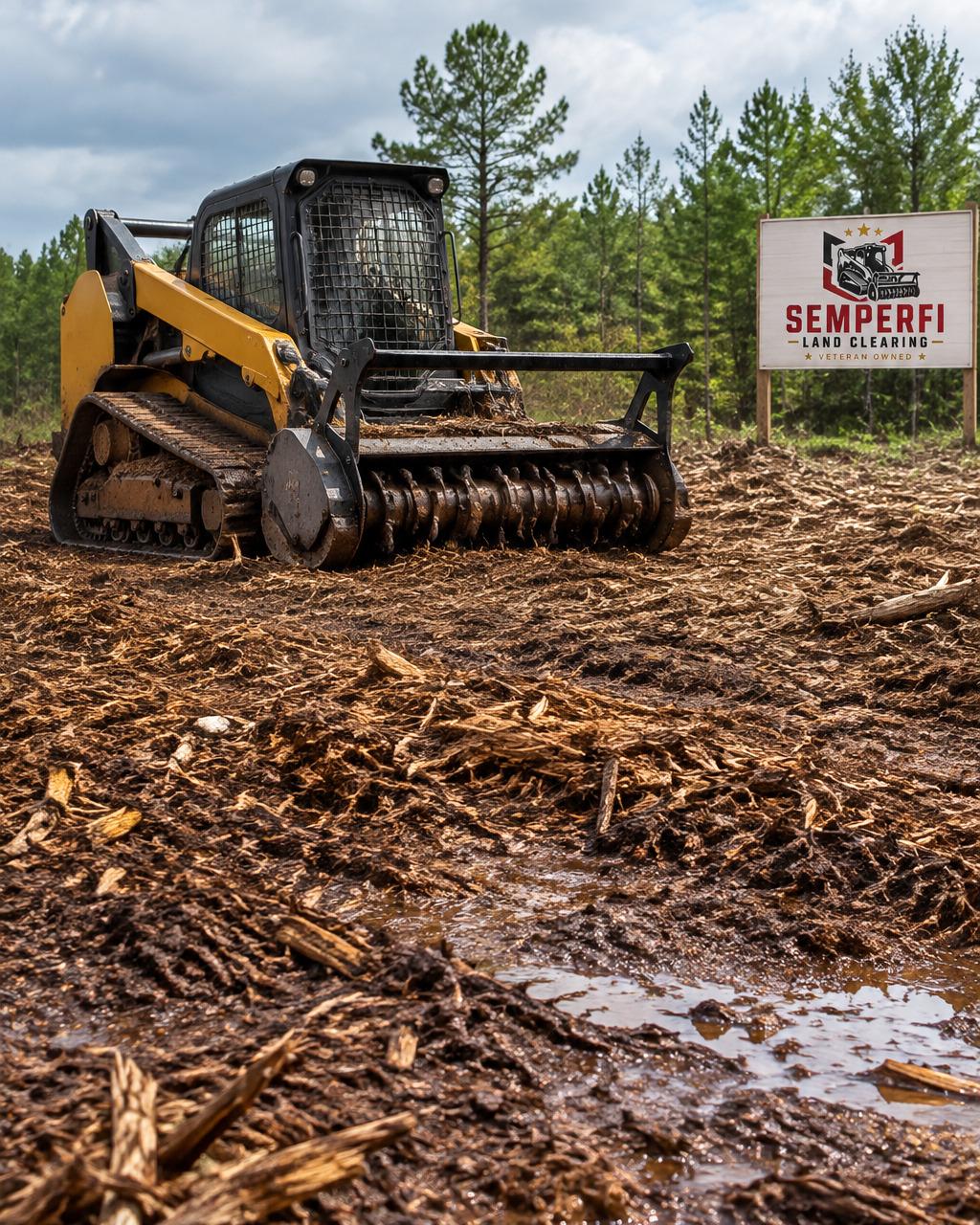
- Soil moisture. Wet ground is the biggest schedule risk; a machine that sinks or spins loses hours, and work may stop until conditions dry out.
- Access. A wide, clear route lets the machine and trailer reach the work area quickly. Narrow gates, low limbs, and soft driveways add setup time and may require a different machine size.
- Scope changes. Adding acreage, changing the end state, or keeping more trees mid-project resets the plan and timeline.
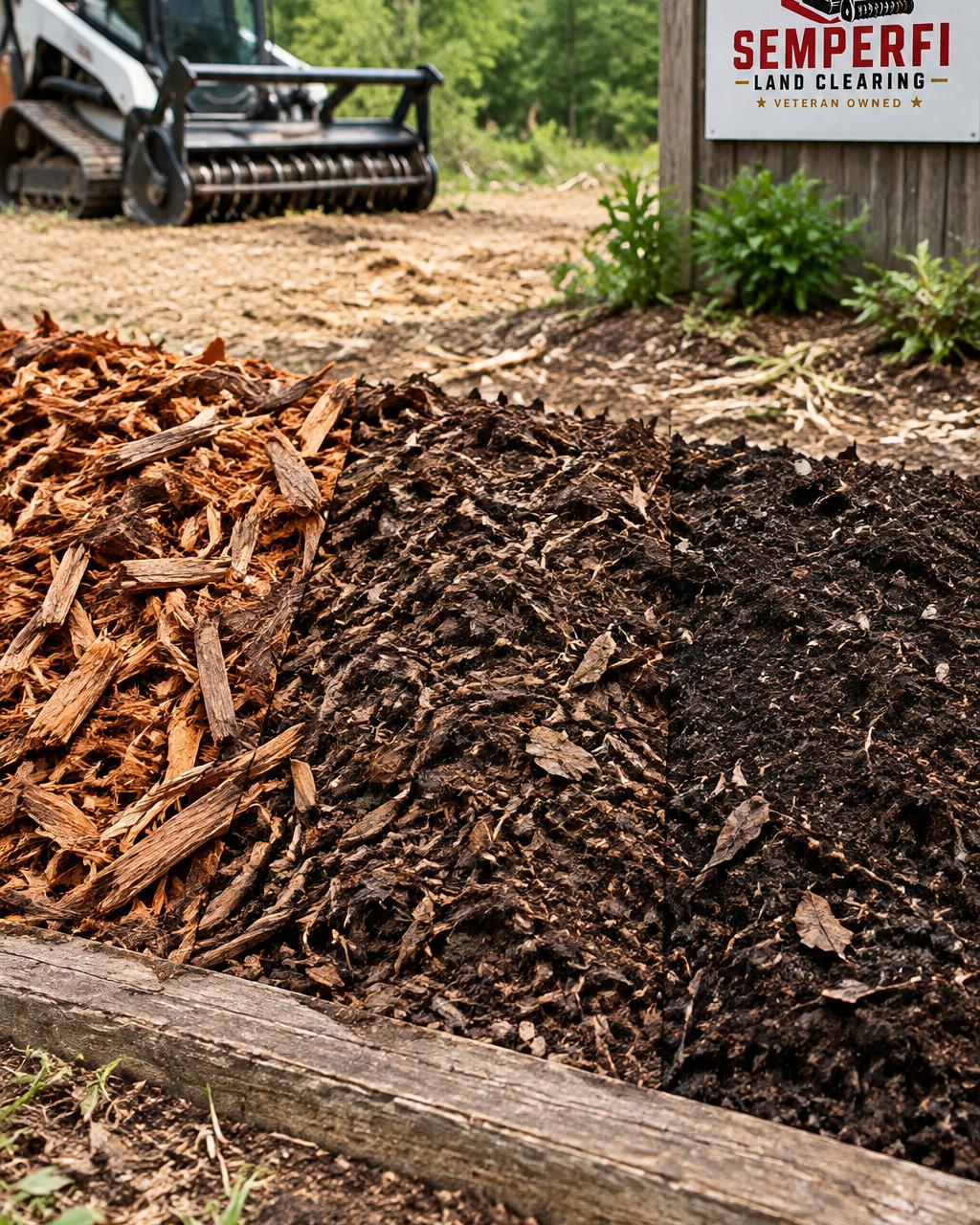
- Cleanup and follow-up. Mulching leaves a layer of chips; spreading them evenly, windrowing, or removing them from certain areas adds time. Learn how the cut at the root collar limits brush regrowth after mulching.
Seasonal considerations
In most of the country, late fall through early spring is the most forgiving window: vegetation is dormant, soils are often firmer, and less leaf cover obscures stumps and rocks. Summer work means harder ground, more dust, and higher fire risk, and some jurisdictions impose burn bans or equipment restrictions during dry periods. Spring work can be limited by saturated soils.
How to think about timing
Ask your contractor for an estimate with a realistic range of days, not a single number. Confirm how weather delays are handled and whether the quote assumes certain ground conditions. A written scope stating acreage, vegetation to be treated, desired end state, and access assumptions is the best protection against schedule surprises.
Watch out: scheduling work during or immediately after heavy rain is the most common cause of missed timelines and extra cost, because a stuck machine can turn a one-day job into a multi-day recovery.
Booking Your Estimate and Preparing for Service Day with SemperFi Land Clearing
Start with a free land assessment from SemperFi Land Clearing LLC. We'll walk the property with you, review the scope, and explain what the work involves. You can also book a forestry mulching service to get started, and our forestry mulching services in Longview and East Texas cover what's included.
On service day, keep access routes open and marked areas visible, and stay clear of the work zone while equipment runs. Once the job is done, you'll get a clear view of your cleared land.
For how project scope affects cost, see our guide to land clearing cost per acre. Pricing depends on acreage, density, and terrain, so get a site-specific quote from SemperFi Land Clearing LLC's website rather than relying on general figures.
Frequently Asked Questions
How do I prepare my property for forestry mulching?
Walk the property before the crew arrives and note the areas you want cleared and the ones you want left alone. Mark property lines, fences, wells, septic components, and any trees or wildlife areas you intend to keep. Confirm where utility lines run, and clear gates or access routes so equipment can reach the work area. Share this information with your contractor during the on-site estimate so they can plan access, equipment, and the scope of work accurately before service day.
What should I remove or mark before forestry mulching?
Remove loose debris, trash, and any items you do not want ground into the soil, such as old tires, metal scrap, or stored equipment. Mark anything that must survive the work, including desirable trees, buried utilities, fence corners, and property boundaries. Forestry mulchers grind brush and small trees, so flag anything that should not be ground. A clear marking plan reduces disputes and keeps the crew from damaging features you want to keep.
How long does forestry mulching take?
Project duration depends on acreage, vegetation density, terrain, and access. Light brush on open ground can move quickly, while dense thickets, steep slopes, or wet soil take longer. Weather and equipment access also affect the schedule. Ask your contractor for a timeline during the estimate, and confirm how weather delays are handled so you know what to expect before the crew mobilizes.