 How-to
Does Mowing Fence Lines Prevent Damage? What Works
Quick Summary
Mowing fence lines helps prevent damage by keeping grass and weeds short enough to see posts and rails, but it cannot reach tight spots or stop trimmer line from striking wood. Pair regular mowing with careful trimming, a clear margin from the fence, and a barrier such as gravel or fabric for the best protection.
- Leave a gap of several inches to a foot so the mower deck and wheels never touch posts or wire.
- Use a thinner trimmer line with the guard on, and keep the line short near the fence.
- Trimmer line between 0.080 and 0.095 inch handles most residential fence-line grass.
- Keep the trimmer head flat or angled away from the fence to avoid striking the bottom boards.
- Top landscape fabric with 2 to 3 inches of gravel or mulch so it lasts instead of fraying.
Table of Contents
- Why Fence Lines Get Damaged During Mowing and Trimming
- How Mowing Fence Lines Helps Prevent Damage and Where It Falls Short
- How to Trim Grass Along a Fence Without Damage
- Best Under Fence Grass Barrier Options
- Setting Up an Under Fence Mow Strip
- How to Keep Grass From Growing on the Fence Line
- Scheduling Your Fence Line Maintenance and Next Steps With SemperFi Land Clearing LLC
- Frequently Asked Questions
Does Mowing Fence Lines Prevent Damage? What Works
Last Updated: November 9, 2026
Why Fence Lines Get Damaged During Mowing and Trimming
Most fence damage doesn't come from storms or age. It comes from the mower deck, the string trimmer, and the post that gets nicked every time someone rushes the edge.
Mowing does prevent some damage, but only with a plan.
The most common causes include:
- String trimmers flinging line into the bottom boards of wood fences
- Riding mowers and zero-turn mowers hitting posts at speed
- Grass and weeds wrapping around posts and holding moisture against the wood
A common mistake is treating the fence line like the rest of the lawn. It needs a different approach, because the fence is the one thing that cannot be replaced cheaply.
How Mowing Fence Lines Helps Prevent Damage and Where It Falls Short
Regular mowing keeps grass and weeds short enough to see the posts and bottom rail, so there are fewer surprises.
Mowing alone has limits. A mower cannot reach the tight spot against a post, and it cannot stop trimmer line from striking wood, the spots where most damage happens.
Mowing works best as one part of a routine:
- Keep the mower at a height that clears the fence base
- Mow regularly so growth never gets tall enough to tangle
- Leave a small gap between the mower and the fence rather than running tight against it
Watch out: running a mower hard against a wire fence can pull posts loose and bend the wire, so keep a clear margin.
How to Trim Grass Along a Fence Without Damage
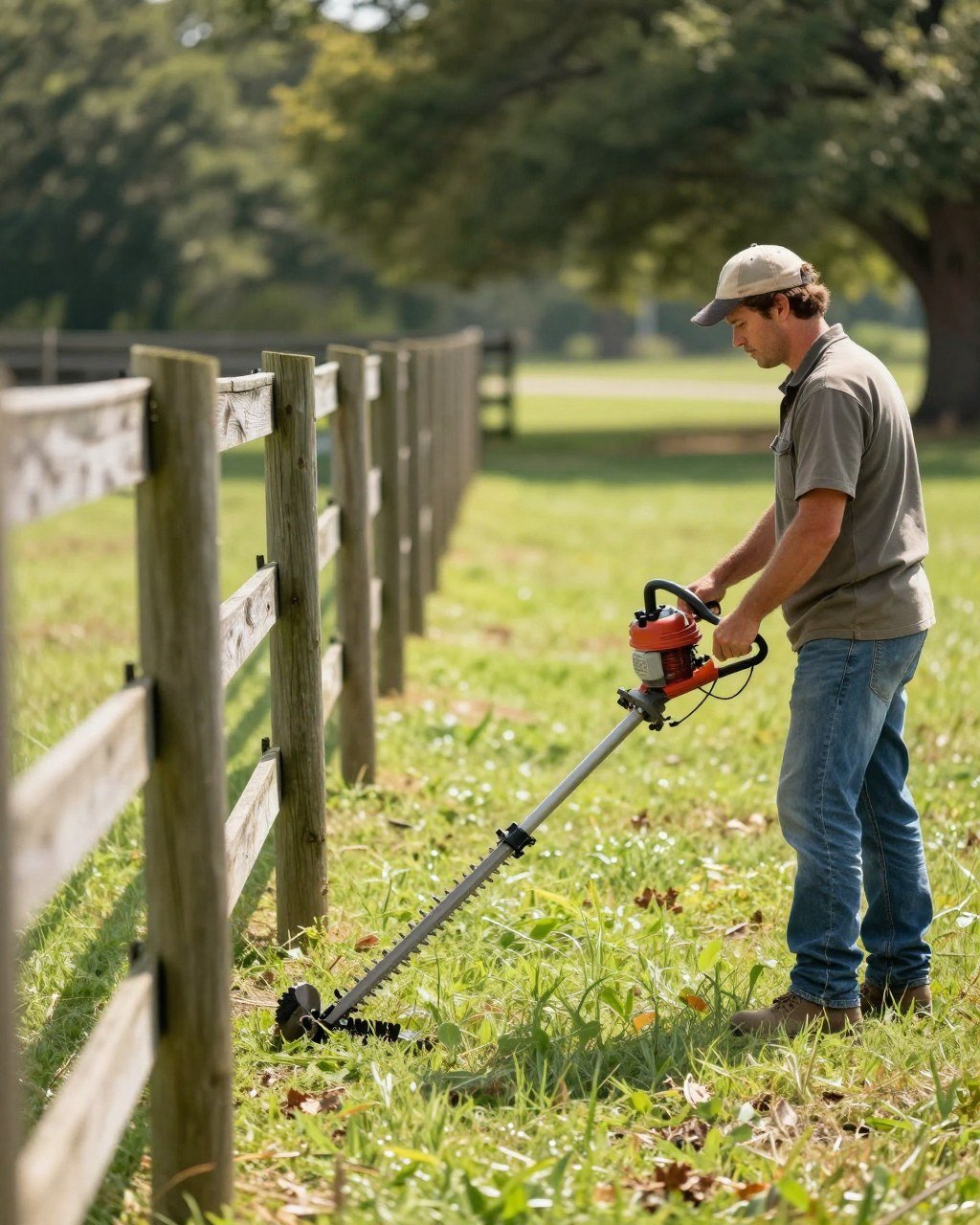
Trimming is where most fence damage happens, so slow down. A step-by-step guide to clearing overgrown fence lines safely covers the tools and methods in more detail. The difference between a clean edge and a scarred bottom rail comes down to line thickness, trimmer head angle, and how close the line gets to the fence.
Match the trimmer line to the fence material
Trimmer line is measured in thousandths of an inch, and the diameter changes how hard the line hits.
- 0.065 to 0.080 inch line is the lightest common size. It cuts grass cleanly but loses energy fast in thick weeds.
- 0.080 to 0.095 inch line is the general-purpose middle ground. It handles most residential fence-line grass without whipping hard enough to bite deep into cedar or pressure-treated pine.
- 0.095 to 0.105 inch line is for heavy weeds and brush. It hits hard and should be kept well away from wood and vinyl. Reserve it for chain link and open ground.
The trade-off is more line breaks and respooling, so keep a spare spool on hand rather than running a worn, uneven line that whips erratically.
Set the trimmer head correctly
Most string trimmers cut best with the head flat and parallel to the ground, line sweeping horizontally. Tilting the head toward the fence turns the line into a vertical cutter that strikes the bottom board and post face directly.
- Keep the head flat or angled slightly away from the fence. Sweep the grass away from the structure rather than into it.
- Run the trimmer at partial throttle near wood and vinyl. Full throttle is for open grass. Lower RPM reduces the energy the line carries into the fence.
- Use the guard. The guard is not optional near fences. It limits how far the line extends and blocks debris from flying back at the operator.
Watch out: bump-feed heads can feed too much line near a fence, and the extra length whips harder and cuts deeper. Switch to a manual-feed head or trim the line to length first.
Work in short, controlled passes
- Walk the fence first. Remove debris, loose wire, rocks, and low branches that could catch the line or fly.
- Trim a few feet at a time. Short passes keep the head steady and let you watch line position.
- Stop and inspect every 50 feet or so. Look for fresh scrapes, loose nails, cracked vinyl, or bent wire.
- Keep the line short. Long line whips harder and cuts deeper into bark and paint.
A simple rule: if the trimmer head is close enough to touch the fence, it is too close. Back off and sweep the grass away instead.
Triage existing damage before it spreads
Most fence lines already have some nicks and gouges. Catching them early keeps a cosmetic scrape from becoming a rot pocket.
- Wood fences: Sand light gouges smooth, then seal the bare wood with an exterior-grade wood preservative or paint. Deep gouges that expose the core of a post should be filled with an exterior wood filler and sealed. Check the base of the post for soft spots, since moisture trapped in a gouge is what starts rot.
- Vinyl fences: Small scuffs often clean up with a mild detergent and a soft brush. Cracks or chips need a vinyl repair kit matched to the fence color. Do not paint over a crack, because trapped moisture can spread the damage.
- Chain link: Bent wire and loose tension bands are the common trimmer casualties. Straighten minor bends with pliers and retighten the bands. A post that has been struck repeatedly may need its concrete footing checked for cracks.
A light touch-up a few times a year beats a full repair. Inspect the fence line after every few mowing cycles and fix small damage before it becomes structural.
Recommended trimmer line diameters by use
Best Under Fence Grass Barrier Options
A barrier can stop growth before it starts, which means less trimming and fewer chances for damage. How well it performs depends on how it is installed.
Landscape fabric: the workhorse option
Woven landscape fabric blocks sunlight and lets water pass through. The key is weight and overlap.
- Choose a woven fabric rated for at least 10 years of UV exposure. Spun-bonded fabric is cheaper but tears easily and breaks down faster in sun.
- Overlap seams by 6 to 12 inches and secure them with landscape staples every few feet. Gaps at the seams are where weeds find their way through.
- Top it with 2 to 3 inches of gravel or mulch. Fabric alone degrades in sunlight and looks unfinished. The topping also holds the fabric down against wind and mower tires.
A common pattern is to skip the topping to save money, then watch the fabric fray within two seasons. The topping is not optional if you want the barrier to last.
Gravel and crushed stone strips
A gravel strip 12 to 18 inches wide on each side of the fence is one of the most durable chemical-free options. Grass struggles to establish in loose stone, and the strip gives the mower a clear edge to run against.
- Use crushed stone, not round river rock. Crushed stone locks together and stays in place better under foot and tire traffic.
- Lay the stone over fabric, not bare soil. Stone alone lets weeds push through from below within a season.
- Keep the strip level. Stone that slopes toward the fence channels water into the post line and speeds rot.
Gravel is heavy and hard to move, so plan the delivery location before the truck arrives. It is also rough on bare feet and mower blades, so keep the mower deck high over the strip.
Mulch beds
Mulch suppresses weeds and looks neat, but it breaks down and needs refreshing. A 3- to 4-inch layer of bark mulch or wood chips works for a few seasons before it thins enough to let light through.
- Keep mulch a few inches away from wood posts. Piled mulch holds moisture against the wood and invites rot and termites.
- Replenish the layer every year or two. As mulch decomposes, it loses its weed-blocking depth.
- Use a fabric underlayer if you want less upkeep. Mulch over fabric lasts longer and blocks more weeds than mulch alone.
Concrete and paver strips
A concrete or paver mow strip is the most permanent option. It costs the most up front but needs almost no upkeep and gives the mower a hard, consistent edge.
- Pavers set on a compacted base are easier to repair than poured concrete if a section cracks or shifts.
- Poured concrete is faster to install but cracks over time and is harder to remove.
- Leave expansion gaps so the strip does not crack against the fence posts.
Chemical-free suppression between barriers
Even a good barrier gets weed seeds blown in from nearby pasture or ditches. A few low-cost habits keep the strip clean without herbicides:
- Pour boiling water on weeds that sprout in gravel or paver joints. It kills the plant without leaving residue.
- Use a flame weeder on gravel strips. A brief pass wilts young weeds before they set seed.
- Spread corn gluten meal in early spring as a pre-emergent in mulch beds. It suppresses seed germination without harming established plants.
A barrier does not replace trimming entirely. Plan on a light touch-up a few times a year, especially where seeds blow in from nearby pasture. The payoff is fewer trimmer passes, less chance of line striking the fence, and a fence line that stays visible and dry.
The article compares the main barrier options, which differ in durability, upkeep and how they are installed. To weigh a faster option against manual work, see forestry mulching vs hand clearing for fence lines.
| Option | Best for | Key difference |
|---|---|---|
| Landscape fabric | Long-lasting weed blocking | Must be topped with gravel or mulch |
| Gravel strip | Durable, chemical-free edge | Heavy; keep it level |
| Mulch bed | Neat look, weed suppression | Needs refreshing every year or two |
| Concrete or paver strip | Permanent, low upkeep | Highest upfront cost |
Setting Up an Under Fence Mow Strip
A mow strip is a narrow band of cleared or treated ground along the fence line, wide enough for the mower to run without hitting the posts. It is a practical middle ground between trimming by hand and building a full barrier.
To set one up:
- Measure a strip about 12 to 18 inches wide on each side of the fence
- Remove existing grass and roots from the strip
- Lay landscape fabric or add a layer of gravel if you want less upkeep
This setup keeps the mower away from the posts and gives you a clear, consistent edge to work from.
How to Keep Grass From Growing on the Fence Line
Keeping grass off the fence line takes steady habits more than one big effort. Start with a clean base, then keep growth down before it spreads.
- Clear the base first. Pull grass and weeds from the post line, including roots where you can reach them.
- Add a barrier. Fabric, gravel, or mulch blocks new growth from taking hold.
- Trim on a schedule. Light trimming every few weeks beats heavy cutting twice a year.
Weed control products can help, but read the label carefully. Some can harm wood and nearby plants, so apply them with care.
Scheduling Your Fence Line Maintenance and Next Steps With SemperFi Land Clearing LLC
If the fence line has already been overrun with thick brush, or you would rather not handle the work yourself, SemperFi Land Clearing LLC offers free land assessments across East Texas. Our East Texas fence line clearing guide covers costs and what to expect from a professional crew. You can also read how to book a forestry mulching service, including timing and what to ask.
Frequently Asked Questions
What trimmer line works best near a fence? Use a thinner line with a guard, and keep it short. Thicker line hits harder and scars wood faster.
Is landscape fabric worth it under a fence? Yes, when you top it with gravel or mulch. Fabric alone tears and lets weeds grow through over time.
Can SemperFi Land Clearing LLC help with heavy overgrowth along a fence? Yes.
Frequently Asked Questions
Does mowing fence lines prevent damage?
Mowing alone does not fully prevent damage, but it reduces the most common problems. Keeping grass and weeds cut low along the fence base limits moisture and pest habitat at the posts and boards, and it keeps vegetation from building up enough to hide hazards. The real damage risk comes from the mower or trimmer striking the fence itself. Mow with the deck turned away from the fence, keep a clear gap of several inches, and inspect the boards and posts after each session for nicks, cracks, or loose hardware. Pair regular mowing with a physical barrier for the best results.
What is the best way to cut grass along a fence line?
Use a string trimmer with a nylon line at a moderate cutting speed, holding the head so the line tips the grass rather than striking the fence. Work in short passes and keep the trimmer about 3 to 4 inches from the posts and rails. Cut the grass to a consistent height over time, following the one-third rule so you never remove more than a third of the blade length at once. Walk the line first to remove debris, rocks, and wire that could be thrown into the fence.
Is a mow strip worth installing along a fence?
A mow strip is usually worth installing if you trim the fence line often and want to cut back on string trimmer use. A strip of gravel, pavers, or landscape fabric with mulch gives you a clear zone where the mower wheels can run without hitting the posts. It also suppresses weeds at the base, which reduces trimming frequency. Costs and materials vary by property size and site conditions, so request a quote from SemperFi Land Clearing LLC for a site-specific estimate.