 How-to
Does Forestry Mulching Reduce Wildfire Risk? What to Know
Last Updated: November 14, 2026
Quick Summary
Yes, forestry mulching reduces wildfire risk by grinding dense brush, small trees, and undergrowth into surface mulch, lowering the fuel load. A mulcher cuts vegetation at the root collar, removing ladder fuels that carry flames from grass into treetops.
- Forestry mulching targets brush, underbrush, dead vegetation, and small trees up to a few inches in diameter.
- Keep mulch pulled back from the foundation and spread thin rather than leaving deep windrows against a structure.
- A thin, spread-out mulch layer dries and burns faster than a deep, compacted pile.
- The mechanical action cuts, chops, and spreads vegetation in one pass, creating a break that can slow fire movement.
- Forestry mulching is fast and low-disturbance, making it best for brush, ladder fuels, and defensible space.
Table of Contents
- How Forestry Mulching Cuts Wildfire Risk
- Forestry Mulching for Wildfire Prevention: What It Actually Removes
- Does Mulch Increase Fire Risk? The Depth and Particle Size Question
- Frequently Asked Questions
How Forestry Mulching Cuts Wildfire Risk
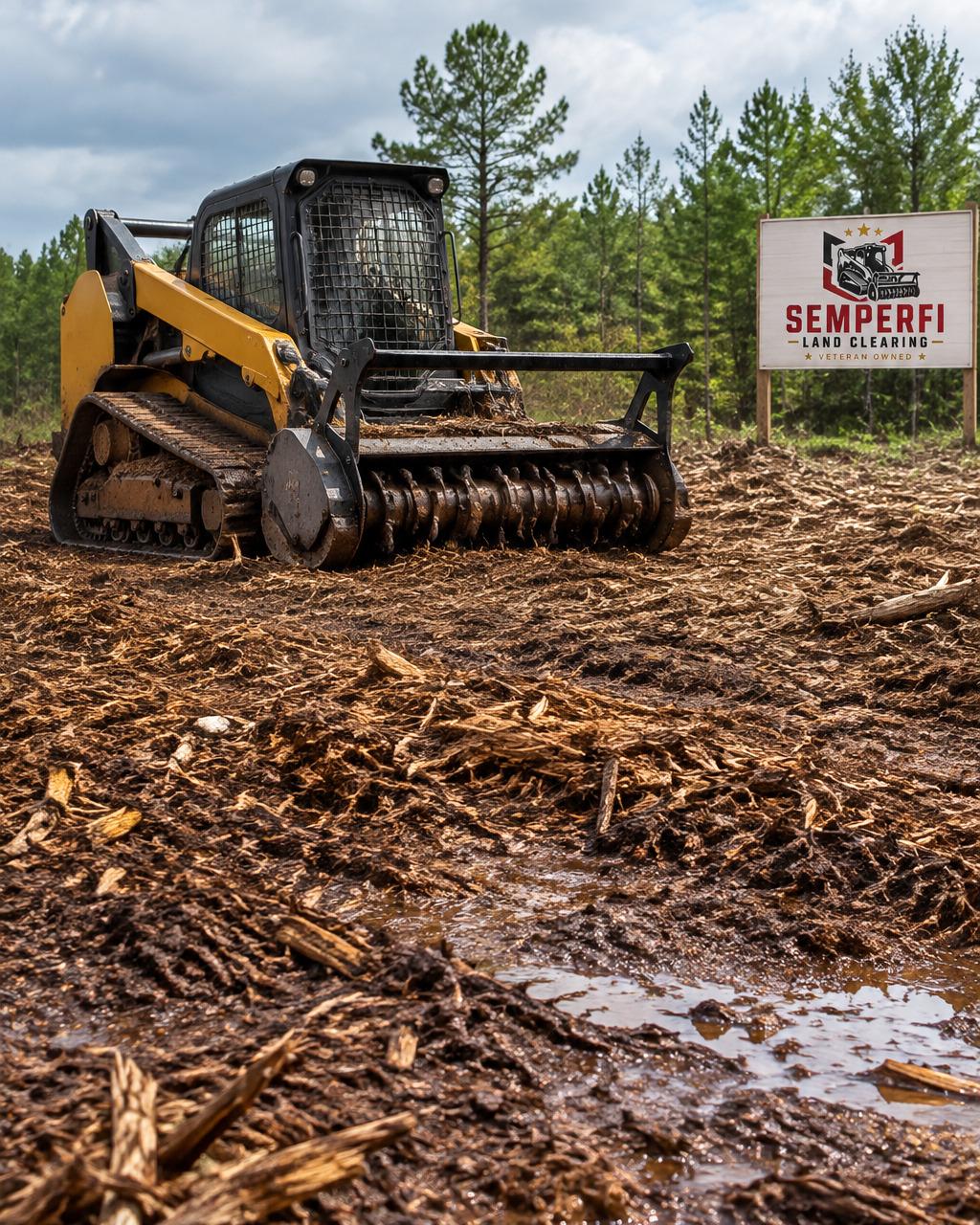
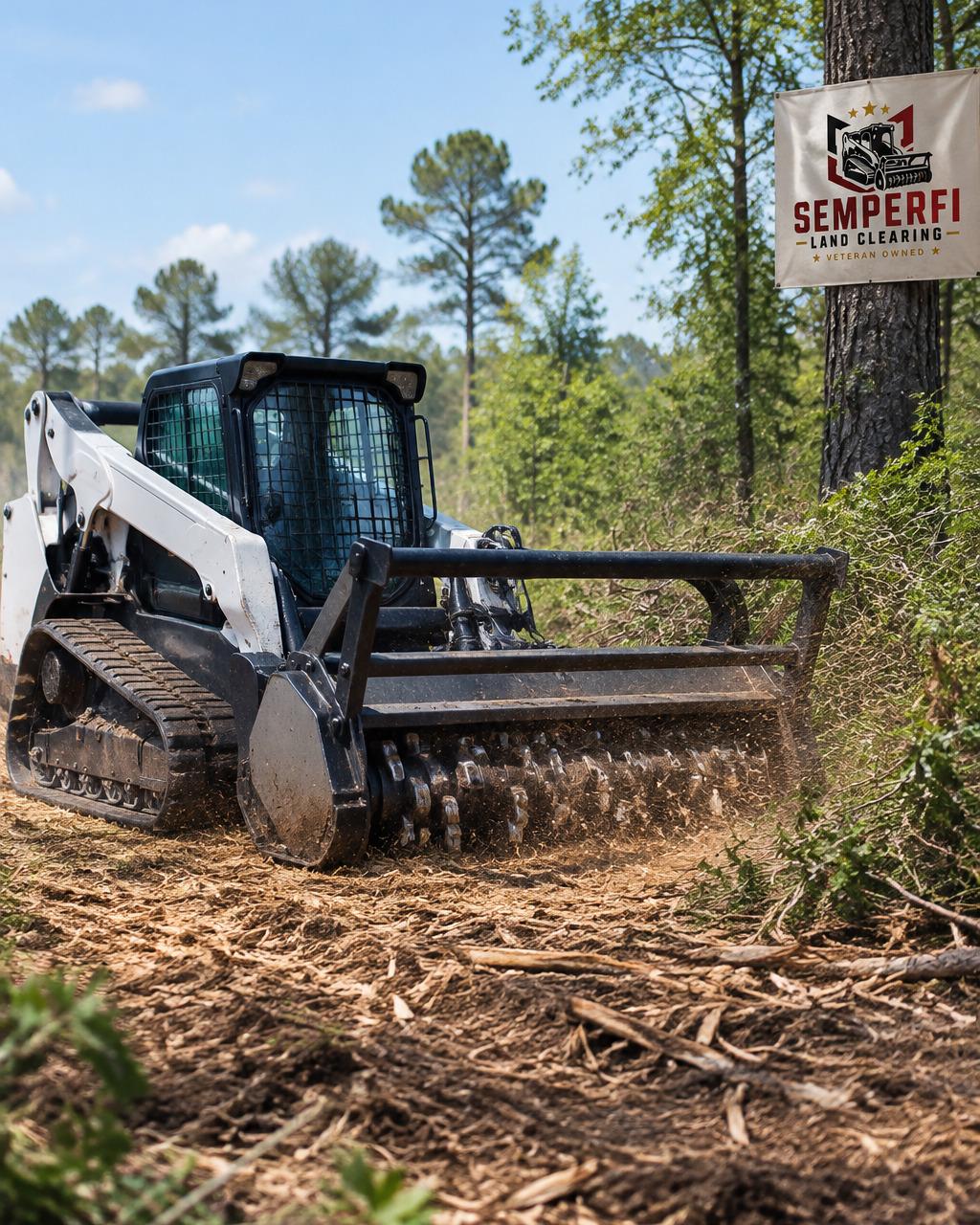
Yes, forestry mulching reduces wildfire risk by grinding dense brush, small trees, and undergrowth into surface mulch, lowering the fuel load. A mulcher cuts vegetation at the root collar, removing ladder fuels that carry flames from grass into treetops.
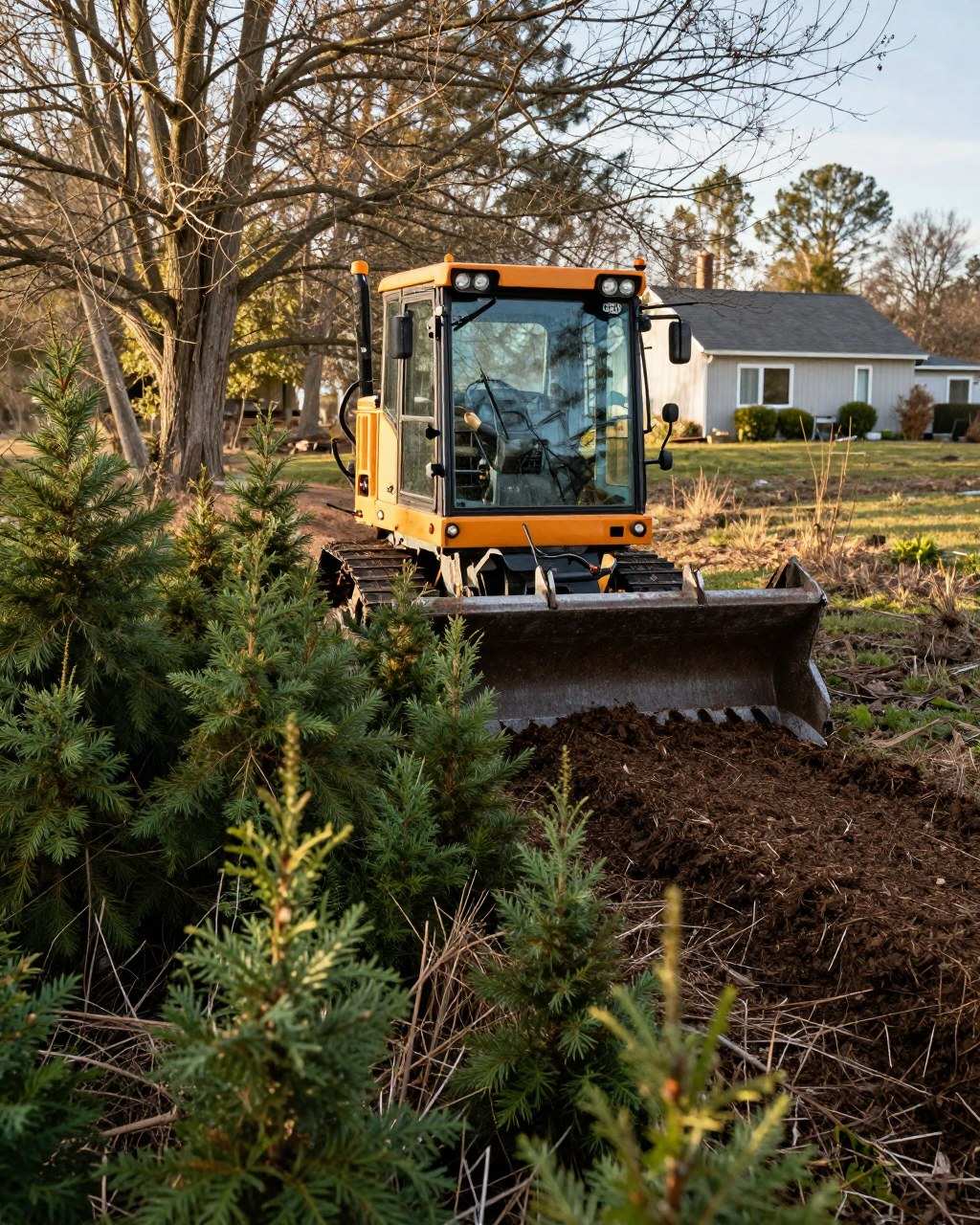
The mechanical action cuts, chops, and spreads vegetation in one pass, creating a break that can slow fire movement toward a structure.
Forestry Mulching for Wildfire Prevention: What It Actually Removes
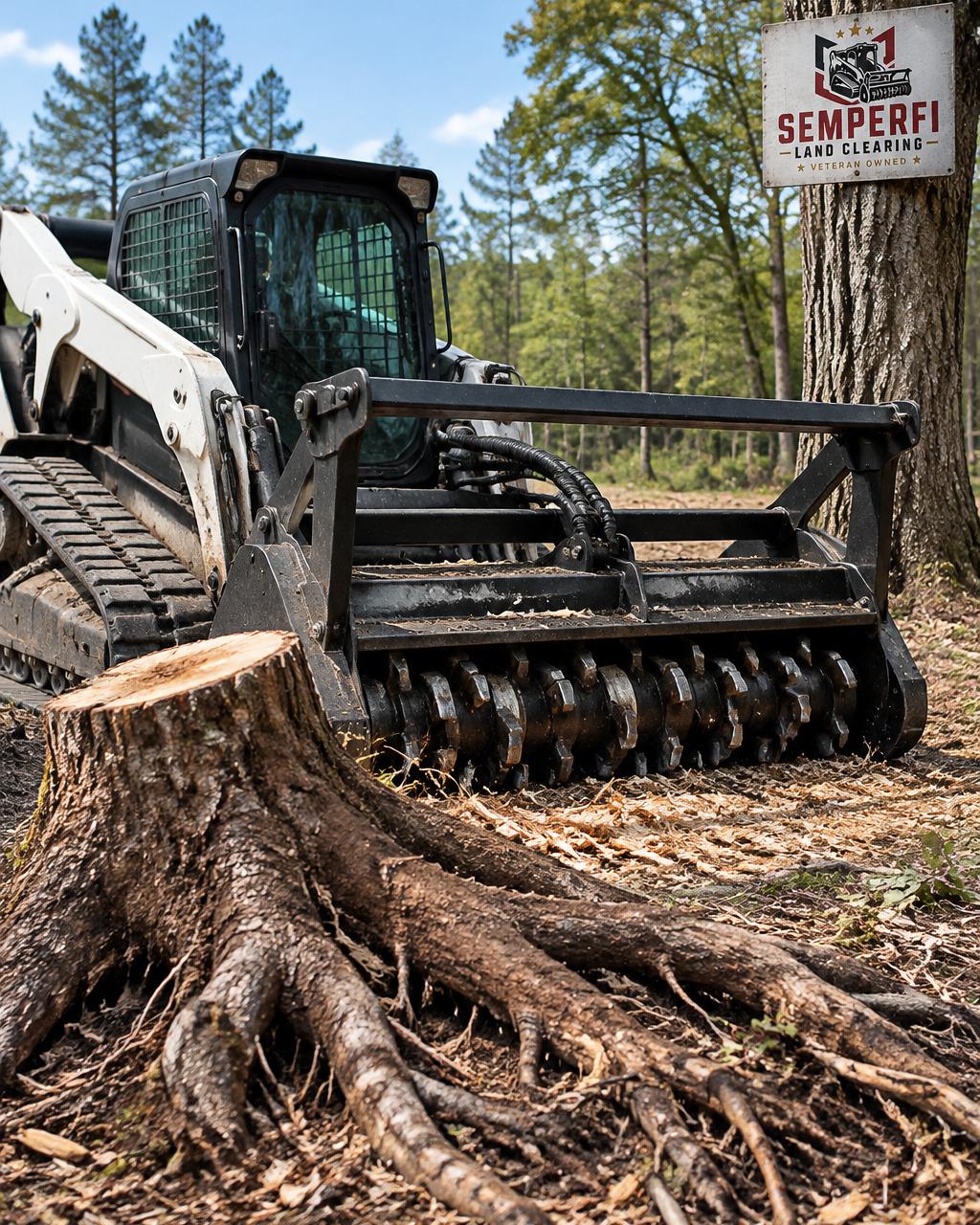
Forestry mulching for wildfire prevention targets dense brush, underbrush, dead vegetation, and small trees up to a few inches in diameter, clearing ladder fuels that let ground fire climb into the canopy. It also removes invasive species and opens the ground for defensible space.
U.S. Forest Service guidance on fuel reduction and defensible space
For a step-by-step plan, see how to clear overgrown brush for fire prevention. To see how our crews work, review our forestry mulching service.
Does Mulch Increase Fire Risk? The Depth and Particle Size Question
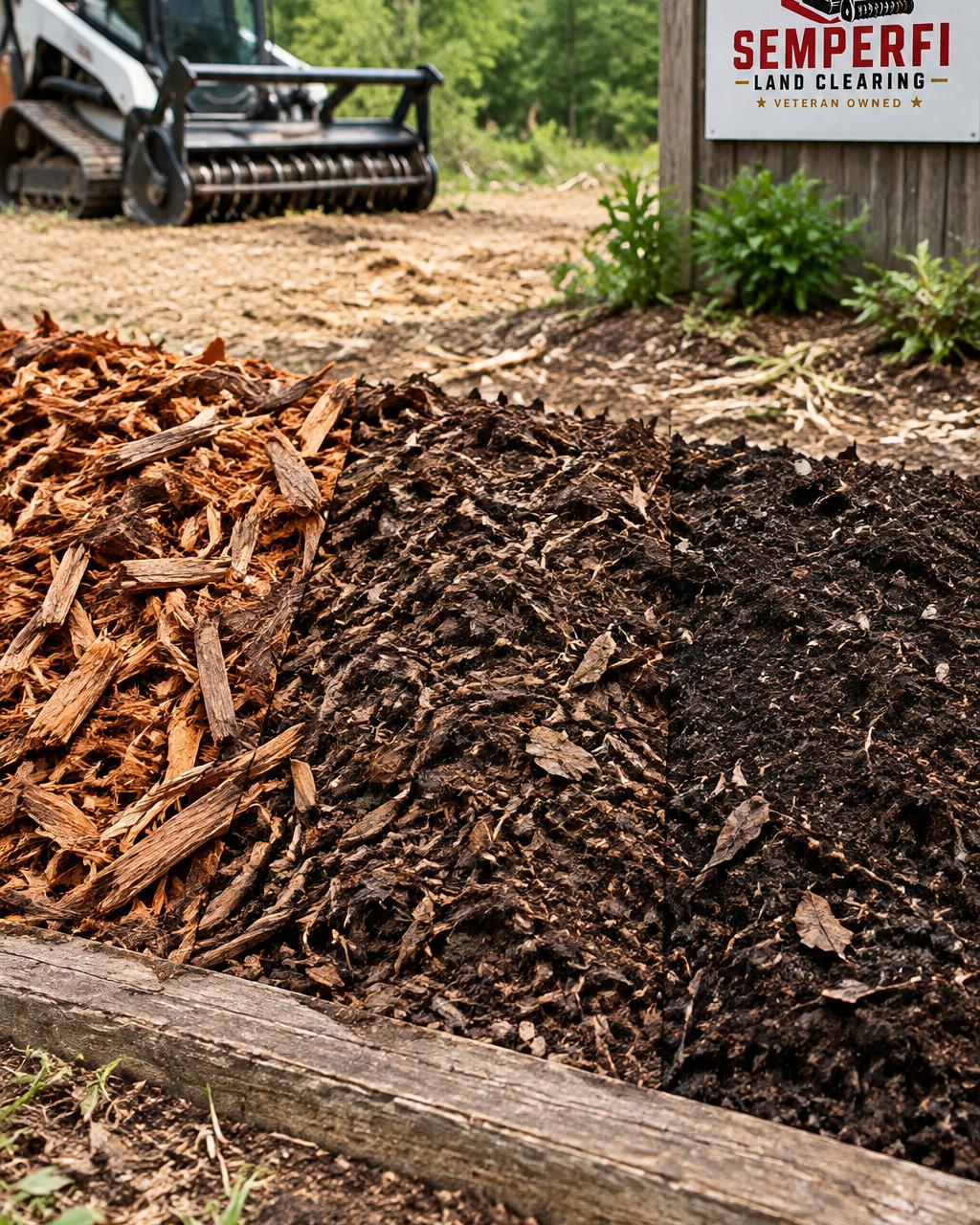
Surface mulch does not automatically increase fire risk, but depth and particle size matter: a thin, spread-out layer dries and burns faster than a deep, compacted pile, and fine, loose mulch catches easily while coarse, scattered mulch left shallow is less of a concern. Keep mulch pulled back from the foundation and spread thin rather than leaving deep windrows against a structure. Learn whether forestry mulching prevents brush regrowth, check per-acre pricing, and read how mulch affects soil health.
| Method | Speed | Soil Disturbance | Best For |
|---|---|---|---|
| Forestry mulching | Fast, one pass | Low | Brush, ladder fuels, defensible space |
| Dozer clearing | Slower | High | Large trees, root removal |
| Hand cutting | Slow | Minimal | Small lots, tight access |
The biggest risk on an overgrown property is waiting until fire season to act. SemperFi Land Clearing LLC is a veteran-owned crew offering free land assessments, expert forestry mulching, and specialized fence line clearing to cut fuel loads before they become a threat. Get started with SemperFi Land Clearing LLC and protect your property with a cleared, defensible landscape.
Frequently Asked Questions
Does forestry mulching make wildfire risk worse?
It can if the mulch is left too deep or piled. A thick layer of surface mulch dries out and can carry fire slowly across the ground, and fine particles ignite faster than coarse ones. Spread at a shallow, even depth and kept away from structures, mulch is a fuel reduction tool rather than a hazard. The risk rises when mulching is treated as a one-time job with no follow-up.
What are the downsides of forestry mulching?
Downsides include regrowth from roots and seeds, a mulch layer that needs monitoring, and limits on slopes or very large trees. Mulching also leaves cut material on site, so fuel is reduced but not removed entirely. It works best as part of a vegetation management plan with follow-up treatments, not as a permanent fix.
How often should a property be cleared for wildfire mitigation?
Most properties need a follow-up pass every one to three years, depending on regrowth speed, rainfall and how dense the original brush was. Inspect the mulch layer and new growth each spring before fire season. Keeping a defensible space zone near the home on a shorter cycle than outlying acreage is a practical way to stay ahead of fuel buildup.