 how-to
Benefits of Restoring Old Fields for Hay Production
Table of Contents
- Why Restoring Old Fields for Hay Production Matters
- Assessing Whether Your Old Hay Field Needs Renovation
- Soil Testing for Hay Fields: The Foundation of Restoration
- Hayfield Renovation: Reseeding and Overseeding Strategies
- Reclaiming Overgrown Fields: Weed Control and Site Preparation
- How Long Does It Take to Restore a Hayfield
- Measuring Success: Yield Improvement and Long-Term Field Longevity
- Frequently Asked Questions
Last Updated: October 20, 2026
Why Restoring Old Fields for Hay Production Matters
An old hay field that's lost its vigor doesn't have to stay that way. The benefits of restoring old fields for hay production include transforming underutilized acreage into a productive asset.
The benefits of restoring old fields for hay production go beyond growing more hay: consistent quality forage, less soil degradation and erosion, reduced weed pressure over time, and a longer productive lifespan for your land.
This guide walks you through the process step by step: assessing your field, testing soil, controlling weeds, reseeding strategically, and measuring success, whether you're working a quarter acre or several hundred.
Assessing Whether Your Old Hay Field Needs Renovation
The first step is honest evaluation. Not every old field needs complete renovation, but most benefit from some intervention.
Look for these warning signs:
- Low plant density. Thin stands with visible bare soil between plants mean the field is losing productivity fast.
- Poor forage quality. Weedy growth, sparse legumes, or grass that's gone to seed signals declining nutritional value.
- Compacted soil. Heavy equipment or repeated grazing can compact soil, reducing water infiltration and root penetration.
- Excessive weed cover. When weeds dominate over desirable grass and legume species, forage quality drops.
- Uneven growth. Patches of dead or weak plants indicate fertility problems or drainage issues.
- Poor regrowth after cutting. If the field takes weeks to recover after mowing, productivity is compromised.
A simple walk tells you a lot: check soil texture, count desirable plants per square foot, and look for compaction or waterlogging. More than 30-40% weed cover or thin, weak stands means renovation makes sense.
The decision depends on your goals. If you're running livestock and need consistent, quality forage, restoration pays off. If the field is purely ornamental or inactive, the investment may not be justified yet.
Soil Testing for Hay Fields: The Foundation of Restoration
You cannot restore a hay field effectively without knowing your soil. Soil testing is the foundation of everything that follows.
A proper soil test tells you:
- pH level and whether you need lime
- Nutrient content (nitrogen, phosphorus, potassium)
- Organic matter and soil structure
- Micronutrient levels
- Texture and drainage characteristics
Contact your local extension office or an independent lab for a sampling kit. Mix samples from at least 10 spots across the field, then submit a composite sample.
Results come back with specific lime, fertilizer, and amendment recommendations tailored to your soil type and hay production goals.
Reading soil pH and liming requirements
Soil pH directly affects nutrient availability. Most hay crops prefer a pH between 6.0 and 7.0; if soil is too acidic, plants can't access nutrients even when present.
The soil test report tells you exactly how much lime to apply. Lime takes 2-3 months to show full effect, so apply it in fall or early spring before the growing season ramps up.
Use agricultural lime (ground limestone) rather than hydrated lime, it's safer to handle and longer-lasting. Spread it evenly and work it into the top few inches if possible.
Nitrogen, phosphorus, and potassium management
These three nutrients drive forage production. Nitrogen supports leaf and stem growth. Phosphorus strengthens root systems. Potassium improves drought tolerance and disease resistance.
Your soil test report recommends specific rates based on current nutrient levels and hay production targets. Don't guess: over-application wastes money and can damage soil structure, while under-application leaves production on the table.
Split nitrogen applications work better than single heavy doses. Apply half in early spring and half after the first cutting to match nutrient availability to plant demand.
Phosphorus and potassium typically need less frequent application. Many fields only need them every 2-3 years once initial restoration is complete.
Hayfield Renovation: Reseeding and Overseeding Strategies
Once soil is amended and pH is corrected, you're ready to improve the plant stand.
Overseeding means adding seed to an existing stand without destroying it. It works when plant density is still decent but you want to fill gaps and introduce better varieties. You can usually keep harvesting through the renovation year, though the first cutting may be lighter.
Reseeding means killing off the old stand and starting fresh. You'll likely lose one to two harvests during establishment and pay for herbicide or mechanical removal, seedbed preparation, and new seed.
A decision framework for hay producers
Use stand density, weed pressure, and soil test results together rather than any single indicator:
- Desirable stand still above roughly 50-60% of a full stand, weeds manageable: overseed with a no-till drill. This is the lowest-risk path and usually preserves the current harvest schedule.
- Desirable stand below roughly 40-50%, but soil fertility and pH are already in range: a full reseed is usually more cost-effective than repeated overseeding into a weak stand.
- Weed pressure above roughly 30-40% cover, or aggressive perennial weeds present: control weeds first, then decide. Seeding into an uncontrolled weed problem wastes seed and money regardless of method.
- Severe compaction or poor drainage: address the physical problem before seeding. No-till overseeding into a hardpan rarely produces a persistent stand.
For overseeding, no-till seeding works best. A no-till drill cuts narrow slots, drops seed into soil contact, and closes the slot, protecting seeds from birds and drying.
For reseeding, kill the old stand first with herbicide or mechanical removal. Wait 7-10 days, then prepare a clean seedbed: work the soil to break up compaction and create a firm, level surface.
Choose seed varieties suited to your region and soil type; consult your extension office. A grass-legume mix typically outperforms monocultures for hay because legumes add nitrogen, improve forage quality, and extend the harvest window.
What this means for hay yield and longevity
Judge the method against hay outcomes, not just stand appearance. Successful overseeding shows higher plant density and better forage quality within one growing season while preserving at least part of your harvest. A successful reseed delivers a cleaner, more uniform stand that reaches full production in year two and persists longer under a hay harvest schedule. If you're overseeding repeatedly without gaining yield, the limiting factor is something other than seed, usually fertility, pH, compaction, or weeds, and a full renovation may be the better investment.
Reclaiming Overgrown Fields: Weed Control and Site Preparation
Overgrown fields require aggressive weed management before seeding.
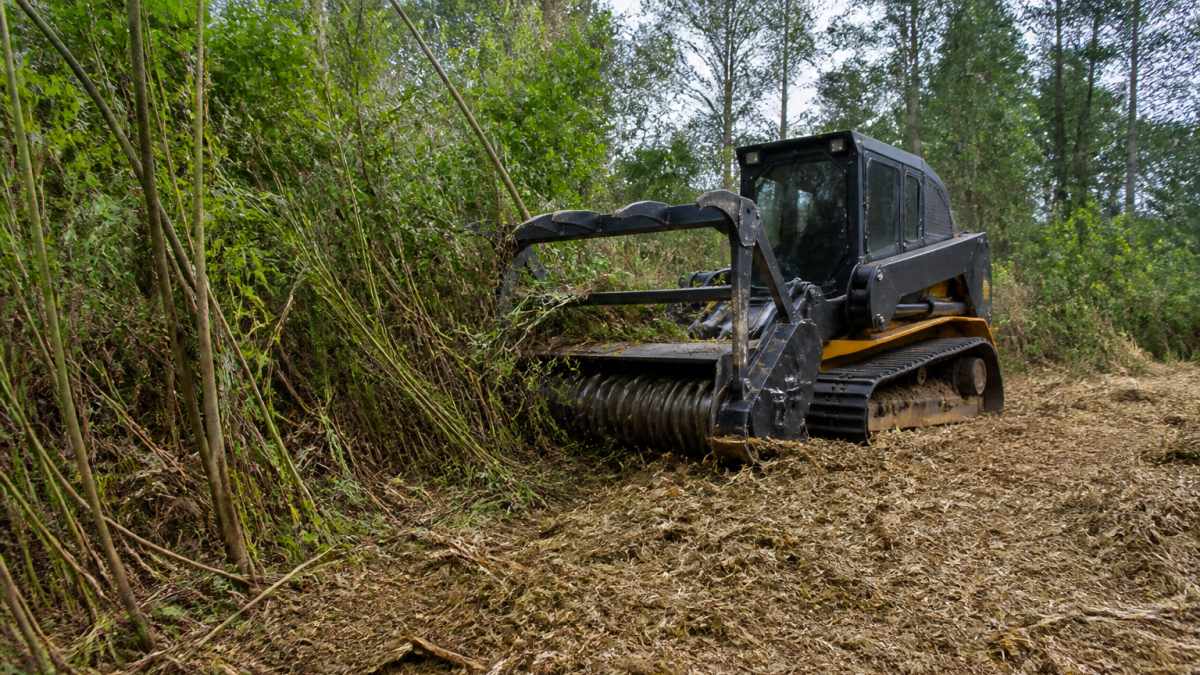
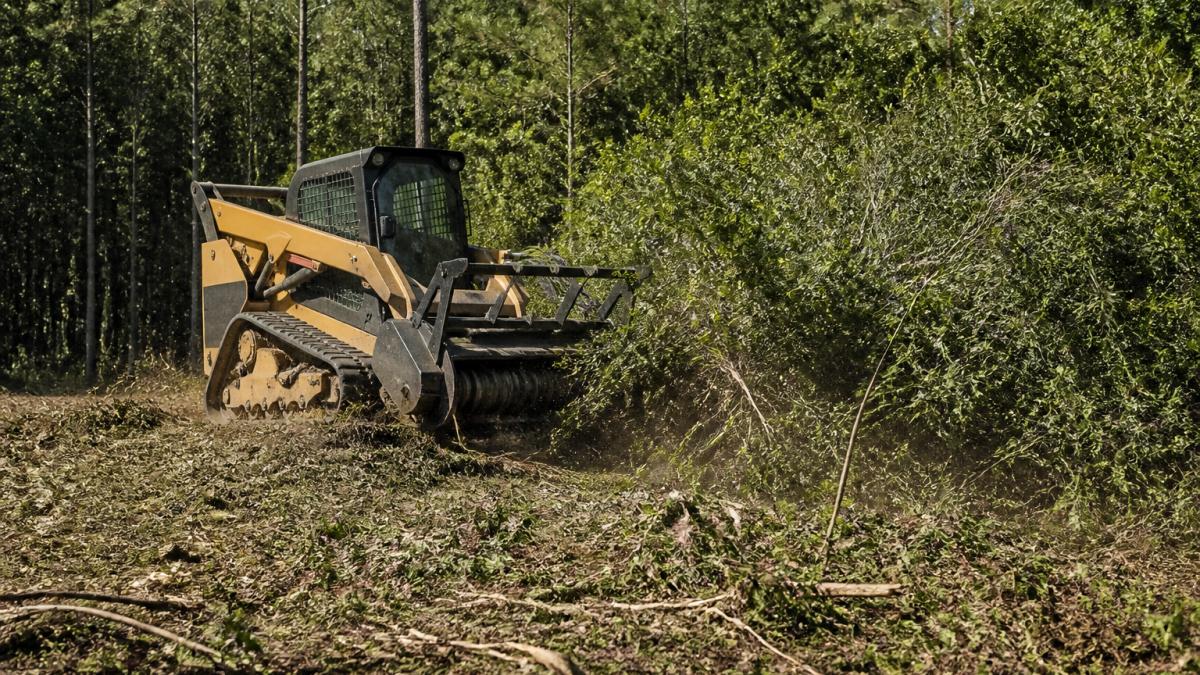
Start with mechanical removal if brush and woody growth dominate, mowing, cutting, or specialized equipment to remove large vegetation.
After mechanical work, herbicide targets remaining weeds. Broad-spectrum herbicides work on many species; apply when weeds are actively growing and rain isn't expected for 24-48 hours.
Some fields benefit from repeated mowing before seeding. Each mowing weakens perennial weeds and prevents seed set; mow every 3-4 weeks for 2-3 months before seeding to set up a cleaner seedbed.
Soil compaction from old equipment or heavy grazing often accompanies overgrown fields.
How Long Does It Take to Restore a Hayfield
Light overseeding on a decent existing stand takes 1-2 months from soil test to seeding. Results show within one growing season.
Moderate renovation with some weed control, soil amendments, and overseeding typically takes 3-4 months. You'll see improved production in year one, with peak results in year two.
Heavy restoration of severely degraded or overgrown fields can take 6-12 months. Initial mechanical work might take weeks. Herbicide applications and mowing cycles take 2-3 months. Soil amendments need time to work. Seeding happens once conditions are right.
The hidden cost: lost harvest and opportunity
The most overlooked cost in hayfield restoration is the harvest you do not take. A full reseed typically means no hay from that field for at least part of the establishment year. If you are relying on that field for winter feed, plan to buy hay or carry extra inventory during renovation.
Labor is the other variable. Mechanical weed control, mowing cycles, and seedbed preparation all require tractor hours and operator time. A field that needs repeated mowing every 3-4 weeks for 2-3 months before seeding is not just a seed cost, it is a scheduling commitment that competes with hay harvest and other work.
A simple way to judge whether restoration paid off
Compare the cost of restoration against the value of the additional hay you expect to harvest. Track hay yield per acre before and after, and note forage quality indicators such as leafiness, legume content, and how early in the season you can cut.
Don't rush the process. Cutting corners on weed control or seedbed preparation leads to poor establishment and wasted seed. A methodical approach costs less in the long run because it avoids repeating the same work. Plan restoration work around your livestock schedule and hay harvest timing. Most restoration happens in fall or early spring when grazing pressure is lower.
Measuring Success: Yield Improvement and Long-Term Field Longevity
Success looks like tangible improvements in forage production and quality.
Start by measuring yield. Weigh hay from a small section of restored field and compare it to pre-restoration yields from the same area.
Monitor plant stand density. Count desirable plants per square foot in several spots.
Observe forage quality. Restored fields should produce leafy, nutritious hay earlier in the season. Livestock should perform better on the improved forage.
Track weed pressure over time. A successful restoration shows declining weed cover year to year as desirable species establish and crowd out competition.
Long-term field longevity depends on ongoing management. Don't treat restoration as a one-time event.
Restoring an old hay field requires planning, but the payoff is substantial. SemperFi Land Clearing LLC helps landowners prepare fields for restoration through professional site assessment and land clearing services.
| Restoration Stage | Timeline | Key Actions |
|---|---|---|
| Assessment | 1-2 weeks | Field evaluation, soil sampling |
| Soil Amendment | 4-8 weeks | Lime application, nutrient correction |
| Weed Control | 4-12 weeks | Mechanical removal, herbicide, mowing cycles |
| Seedbed Prep | 2-4 weeks | Compaction relief, final soil work |
| Seeding | 1-2 weeks | No-till or conventional seeding |
| Establishment | 8-16 weeks | Germination, early growth, weed management |
Frequently Asked Questions
What are the main benefits of restoring old fields for hay production?
Restoring old hay fields increases forage yield, improves stand density and plant growth, enhances soil health through better organic matter and soil structure, and extends field longevity by 10-15 years or more. A renovated field typically produces higher-quality hay with better nutritional value for livestock. Restored fields also reduce weed competition, lower long-term maintenance costs, and improve water infiltration and moisture retention in the soil, making pastures more drought-resistant.
How does soil testing help improve hay production in renovated fields?
Soil testing reveals fertility levels, pH balance, and nutrient deficiencies (nitrogen, phosphorus, potassium) specific to your field. This data guides targeted lime applications to correct soil pH and informs fertilizer decisions that match your forage needs. Testing also identifies soil compaction and drainage issues that affect plant growth and regrowth. By addressing these factors before reseeding, you establish optimal growing conditions, reduce fertilizer waste, and achieve faster stand establishment and higher hay yields.
How long does it take to restore a hayfield and see improved production?
Initial site preparation and weed control typically take 4-8 weeks. Reseeding or overseeding, combined with no-till seeding methods, can be completed in 2-4 weeks during the optimal planting window. Grass and legume establishment takes 6-8 weeks; you may harvest limited forage in year one. Full productive capacity is usually reached in year two, with significant yield improvements visible within the first season if conditions are favorable.
Is it better to renovate an old hayfield or completely reseed it from scratch?
Renovation through overseeding and no-till seeding preserves existing soil structure and organic matter while introducing new, vigorous plant varieties. This approach is faster, less costly, and maintains field longevity. Complete reseeding is justified only if stand density is severely compromised, soil compaction is extreme, or persistent weed pressure makes partial renovation ineffective. For most old hay fields, renovation delivers better ROI and faster forage production than starting over.