 blog
7 Ways to Restore Degraded Pasture Land
Table of Contents
- Assess Your Soil and Vegetation Condition
- Implement a Rotational Grazing Plan to Rest Your Pasture
- Reduce Soil Disturbance and Compaction
- Rebuild Soil Health and Fertility
- Choose the Right Pasture Reseeding Methods
- Restore Soil Moisture and Manage Drought Stress
- Control Erosion and Re-establish Native Grasses
- Monitor Progress and Measure Recovery
- Frequently Asked Questions
Last Updated: October 15, 2026
Assess Your Soil and Vegetation Condition
Start with diagnosis: soil testing and vegetation assessment reveal the root causes of degradation and guide your strategy to restore degraded pasture.
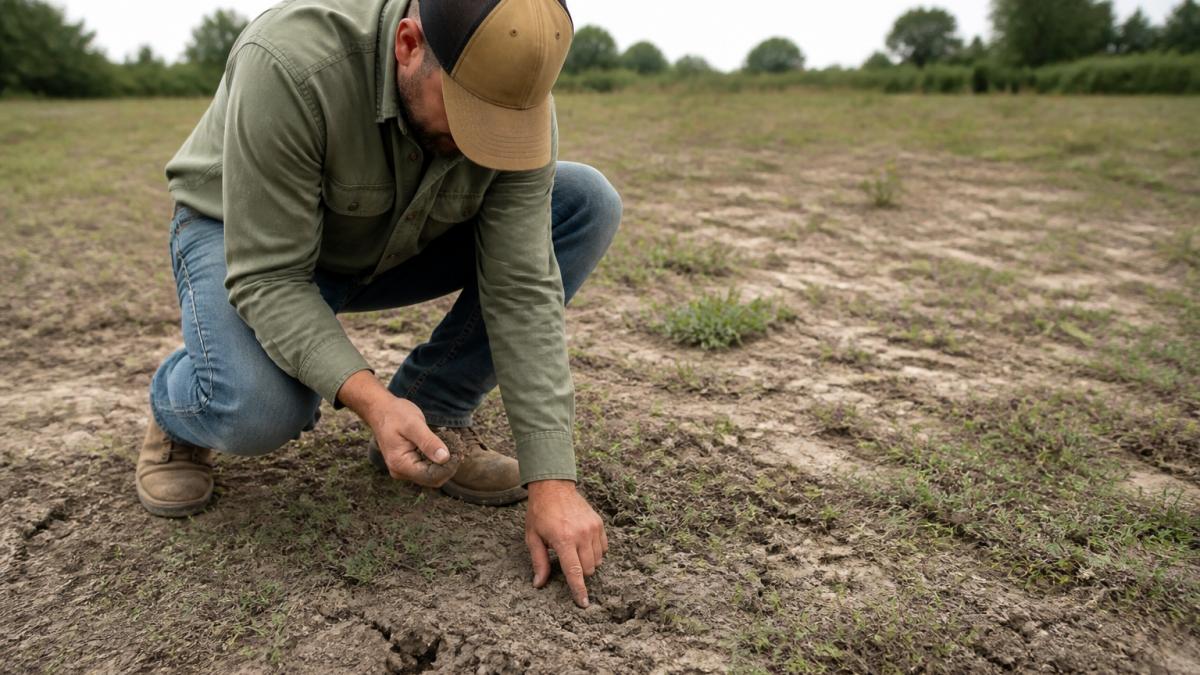
Look for compaction, bare patches, and poor drainage, hard-packed earth, erosion gullies, sparse cover.
Vegetation tells the rest: healthy pastures have diverse native grasses and legumes; degraded ones show weeds, bare ground, and weak forage.
Consider a professional assessment. SemperFi Land Clearing LLC offers free land assessments identifying soil health and vegetation problems specific to your property; this baseline becomes your benchmark for recovery.
Implement a Rotational Grazing Plan to Rest Your Pasture
Overgrazing is the most common cause of pasture degradation and the cheapest to fix, the solution is management, not equipment. Animals eat plants faster than they regrow, depleting root reserves and exposing soil. Rotational grazing breaks that cycle by controlling where animals are, how long they stay, and how long the pasture rests.
The Core Principle: Graze, Then Rest
Divide the pasture into paddocks and move livestock so each paddock fully recovers before it is grazed again. The goal isn't a specific number of paddocks but an outcome: plants grazed hard, then rested long enough to rebuild roots and leaf area.
Even two paddocks beat continuous grazing; four to eight is a common starting point. More paddocks mean more control, if you can move water and animals to them.
Stocking Density and Paddock Size
Two numbers drive the system:
- Stocking rate, how many animals your whole operation can carry over a year. This is set by forage production, not by how many animals you own.
- Stocking density, how many animals are on a single paddock at one time. High density for a short period is what creates even grazing, tramples unpalatable plants, and distributes manure.
Size paddocks so animals graze them down in one to three days, then move on. Long stays cause spot grazing, animals eat palatable plants to the ground and leave the rest, the exact pattern that degrades pasture.
Residual Height: When to Move Animals
Move animals when forage drops to a target residual height. The exact number depends on species, but a widely used rule of thumb is:
- Cool-season grasses: leave 3-4 inches of residual.
- Warm-season grasses: leave 6-8 inches of residual.
- Legumes: leave 3-4 inches.
Grazing below residual height removes the growing point, forces the plant to draw on root reserves, and slows regrowth, repeated, it turns a productive stand weedy.
How Long to Rest Pasture Between Grazing
Rest isn't a fixed calendar number; it's the time required for the plant to fully recover, new leaf area, restored root reserves, and enough vigor to be grazed again.
A practical test: when new growth reaches 6-8 inches and tillers are well developed, the paddock is ready.
Monitor plants, not the calendar. If a paddock looks weak, thin, or weed-dominated, you came back too soon.
Drought Triggers and De-stocking
Drought is when grazing management earns its keep. Have a written trigger plan:
- Early trigger: slow the rotation, extend rest periods, and reduce the number of paddocks in the rotation.
- Mid trigger: reduce stocking rate by selling or moving the least productive animals.
- Late trigger: confine animals to a sacrifice paddock and feed stored forage, letting the rest of the pasture recover untouched.
Grazing through drought without reducing pressure undoes years of progress fastest.
Returning Livestock: Criteria, Not Dates
Before returning animals to a rested paddock, check:
- Residual height has recovered to the target for the species.
- New tillers are visible and the stand looks dense, not patchy.
- Soil surface is covered, bare ground is minimal.
If any fail, extend the rest, waiting a week is cheap; overgrazing a recovering paddock costs seasons.
Infrastructure That Makes It Work
Rotational grazing depends on fencing and water. Permanent perimeter fence with temporary interior polywire is a common low-cost setup, and portable tanks or a piped system with multiple hookups cut labor. NRCS conservation programs often share the cost of fencing and water development for prescribed grazing systems, ask your district conservationist what is ranked in your area.
Reduce Soil Disturbance and Compaction
Heavy equipment and repeated animal traffic compact soil, destroying its structure.
Minimize machinery use in wet conditions, wet soil compacts easily, and work land only when dry.
For existing compaction, use minimal-till or no-till approaches, which leave soil structure intact while controlling weeds and preparing for reseeding.
Natural recovery helps too: when you rest pasture, earthworms return, fungi networks rebuild, and aggregates reform.
Rebuild Soil Health and Fertility
Degraded soils lack organic matter and nutrients. Rebuilding fertility takes time, but several methods speed recovery.
Reduce tillage to preserve soil biology, every turn kills fungi networks and oxidizes organic matter. Minimal disturbance lets beneficial organisms do the work.
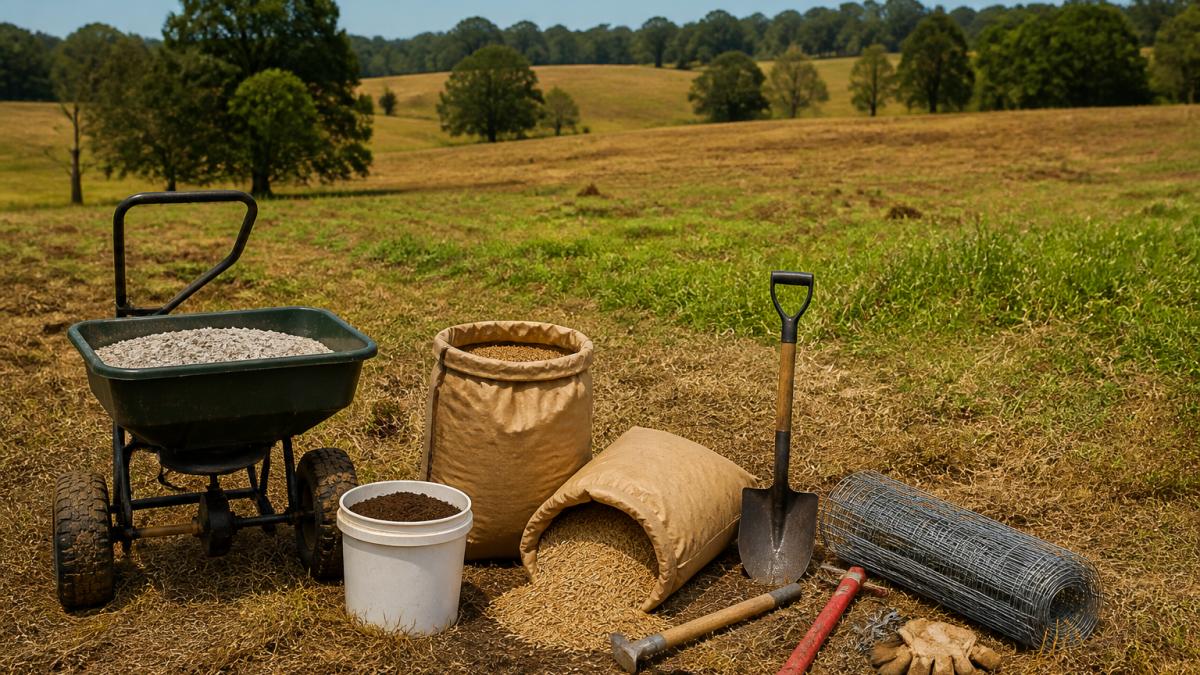
Fertilize based on soil tests: add phosphorus if low, supplement potassium if depleted. Targeted additions beat blanket applications and save money.
Choose the Right Pasture Reseeding Methods
Reseeding is the most expensive single intervention in most restoration projects, so the method should follow from your diagnosis, not habit or equipment. Match the method to the constraint you identified.
Match the Method to the Problem
- Sparse but functioning stand, mostly desirable species present: interseed. You are filling gaps, not starting over.
- Severe compaction with a hardpan: break the pan first (deep ripping or a targeted subsoiler pass when soil is dry), then interseed. Seeding into an unbroken hardpan wastes seed.
- Erosion gullies or bare slopes: stabilize with a nurse crop or erosion blanket before you attempt a perennial mix.
Interseeding: The Default for Partially Degraded Pasture
Interseeding (overseeding or sod-seeding) drills seed into a living stand without killing what's there, preserving soil structure, keeping roots in the ground, and avoiding the erosion risk of bare soil.
Key execution details:
- Timing: late summer to early fall for cool-season species, or late winter to early spring for warm-season species, so seedlings have moisture and a full growing season before heat or frost stress.
- Seed-to-soil contact: a no-till drill is the most reliable tool. Broadcast seed on an undisturbed sod rarely establishes without light disturbance or a follow-up pass.
- Suppression: graze or mow the existing stand short before drilling so seedlings are not shaded out. Do not graze the new seeding until it is well anchored, typically when plants reach 6-8 inches and resist a gentle tug.
Full Renovation: When a Clean Slate Is Worth the Cost
Full renovation means terminating the existing stand, preparing a seedbed, and planting a new mix. It's the most expensive and most disruptive to soil biology, so reserve it for genuinely degraded ground.
Sequence it deliberately:
- Soil test first. Correct pH before you seed, most forage grasses and legumes establish poorly below a pH of about 6.0, and lime takes months to move through the profile.
- Terminate the existing stand. Chemical, mechanical, or a smother crop, pick based on your goals and any organic certification you are working under.
- Prepare a firm, weed-free seedbed. Fallow for one season if perennial weeds are a problem.
- Seed at the right rate and depth. Small-seeded grasses and legumes go shallow (roughly 1/4 to 1/2 inch); larger grass seeds go slightly deeper (Checklist for Spring Forage Seedings). Follow your seed tag or your local extension recommendation rather than guessing.
- Cover and protect. A light mulch, erosion blanket, or nurse crop holds soil and moisture until the perennial stand closes.
Broadcast Seeding: Cheap, But Only Under the Right Conditions
Broadcast seeding is the cheapest and least reliable method. It works when:
- The seedbed has been disturbed or opened up (light disking, harrowing, or animal impact).
- You can follow with a cultipacker or roller to press seed into contact with soil.
- You are seeding a diverse mix where partial establishment is acceptable.
On undisturbed sod, expect poor results, seed-cost savings are usually erased by a failed stand.
Seed Mix Selection
Match species to your rainfall zone, soil texture, and grazing goals:
- Warm-season native grasses, big bluestem, little bluestem, switchgrass, indiangrass, sideoats grama, suit summer growth and deep-rooted erosion control.
- Cool-season grasses, tall fescue, orchardgrass, timothy, and various bromes, extend the grazing season in spring and fall.
- Legumes, clovers, alfalfa, lespedeza, vetch, fix nitrogen and raise forage quality.
A common pattern is a warm-season native base with a cool-season component and one or two legumes. Your local extension office or Natural Resources Conservation Service (NRCS) field office can provide a species list calibrated to your county, soil series, and rainfall.
Cost Drivers to Budget For
Seeding costs vary widely by method, species, and site. The biggest drivers:
- Seed cost, native warm-season mixes are typically the most expensive per acre; common cool-season grasses and clovers are cheaper.
- Site preparation, full renovation with fallow can cost several times more than interseeding.
- Equipment, no-till drills are often available through conservation district rentals, which is usually far cheaper than custom hire.
Get two or three local quotes before committing, and treat the seeding budget as a multi-year investment, not a one-time purchase.
Restore Soil Moisture and Manage Drought Stress
Water is life for pastures. Degraded soils often have poor water-holding capacity; rebuilding it protects against drought stress.
Organic matter is the key, it acts like a sponge, holding water in the soil profile.
Manage surface runoff to keep water in place: contour the land to slow movement and establish vegetation on slopes to break up flow.
Consider supplemental irrigation during establishment. New seedlings need consistent moisture.
Control Erosion and Re-establish Native Grasses
Erosion removes topsoil and nutrients. Once soil is gone, recovery becomes much harder.
Native grasses prevent erosion because their root systems hold soil in place.
For active erosion control, use erosion cloth, silt fences, or vegetation barriers on slopes.
Reduce water velocity on slopes with terracing or contour strips.
Native grasses suited to your region include big bluestem, switchgrass, and indiangrass in most areas.
Monitor Progress and Measure Recovery
Restoration isn't a one-time event but an ongoing process requiring monitoring and adjustment.
Measure soil health annually. Test organic matter, nutrient levels, and microbial activity.
Monitor forage production by weighing hay or estimating standing biomass.
Watch vegetation composition: desirable species should increase and weeds decline.
Document changes with photos. Visual records over months and years show dramatic transformation.
Recovery takes time.
At SemperFi Land Clearing LLC, we understand that land restoration is both science and stewardship. Our free land assessment identifies the specific degradation issues on your property and helps you prioritize restoration efforts. Whether your challenge is compacted soil, invasive vegetation, or erosion, our team can assess your land and recommend the right approach. Get an Estimate today and start your restoration journey with a professional evaluation.
Frequently Asked Questions
How long should a pasture rest between grazing?
Rest periods typically range from 30 to 90 days, depending on climate, forage growth rate, and soil condition. Cool-season grasses need 40-60 days; warm-season grasses may need 60-90 days. Degraded pastures benefit from longer rest to allow root systems to recover and vegetation to regain strength. Your soil testing results and local growing conditions should guide your specific timeline.
What is the fastest way to improve a degraded pasture?
A combination of approaches works fastest: remove livestock immediately to stop disturbance, conduct soil testing to identify deficiencies, apply targeted fertility amendments, and overseed with adapted native grasses. Reducing soil compaction through limited equipment use and improving water infiltration accelerate recovery. Most landowners see visible improvement within one growing season when multiple methods are applied together.
Can rotational grazing help restore pasture on its own?
Rotational grazing is essential but works best alongside other restoration steps. It allows vegetation recovery and reduces soil compaction, but degraded pastures with poor soil fertility, bare patches, or severe erosion also need reseeding, soil amendments, and moisture management. A rotational grazing plan prevents further degradation while other restoration work rebuilds the pasture foundation.
When is the best time to reseed a degraded pasture?
Timing depends on your climate and grass type. Fall (September-November) works well for cool-season grasses in most regions; spring (March-May) suits warm-season species. Reseed after soil testing and amendment, when soil moisture is adequate and competing weeds are controlled. Avoid seeding during drought or extreme heat. Your local extension office can recommend the optimal window for your specific location and forage type.