 blog
5 Best Ways to Make Land Look Bigger for Sale
Table of Contents
- Why Land Staging Matters When Selling
- 1. Clear Overgrowth and Define Boundaries to Make Land Look Bigger
- 2. Create Visual Depth With Sightlines and Focal Points
- 3. Strategic Landscaping: How to Make a Small Yard Look Bigger
- 4. How to Stage Land for Sale: Removing Clutter and Improving Curb Appeal
- 5. How to Show Property Boundaries to Buyers Effectively
- 6. Smart Lawn and Garden Design for Spatial Perception
- What to Avoid When Preparing Land for Sale
- Frequently Asked Questions
Last Updated: October 12, 2026
Why Land Staging Matters When Selling
When you're preparing land for sale, most property owners focus on what's visible from the road. That's a start. But buyers evaluate land differently than houses. They're imagining potential, calculating usable space, and assessing how much work lies ahead. The perception of size and condition determines whether they see opportunity or burden.
Land staging is the process of preparing your property to look its best and appear larger than it actually is. How land looks before a sale directly impacts buyer confidence and offers. A well-staged property feels more spacious, more manageable, and more valuable.
The five strategies below address what buyers actually worry about: hidden acreage, overgrowth, unclear boundaries, and wasted space. Each one is actionable and delivers measurable results in perception and buyer appeal.
1. Clear Overgrowth and Define Boundaries to Make Land Look Bigger
Thick brush, tangled vegetation, and encroaching trees make land feel smaller and harder to envision. Clearing overgrowth is the single most effective way to make land look bigger because it literally opens up space. When sightlines are blocked, buyers can't assess the property's true dimensions or potential.
How Forestry Mulching Improves Perceived Space
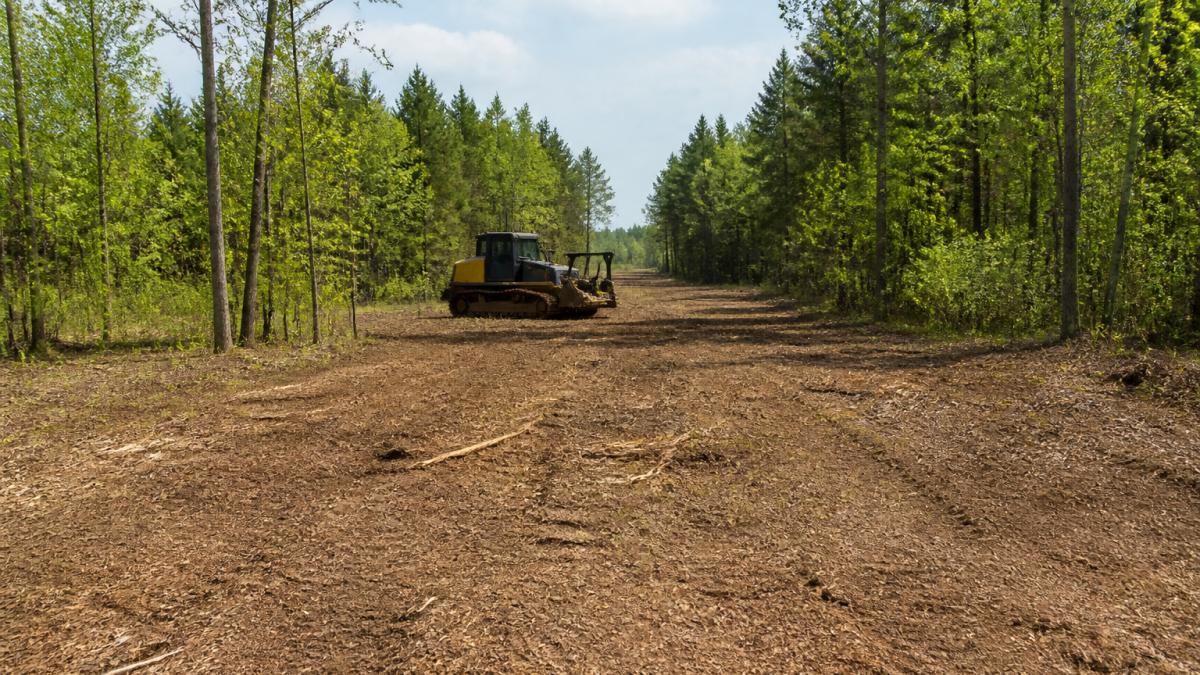
Forestry mulching removes dense vegetation and turns it into nutrient-rich ground cover in one pass.
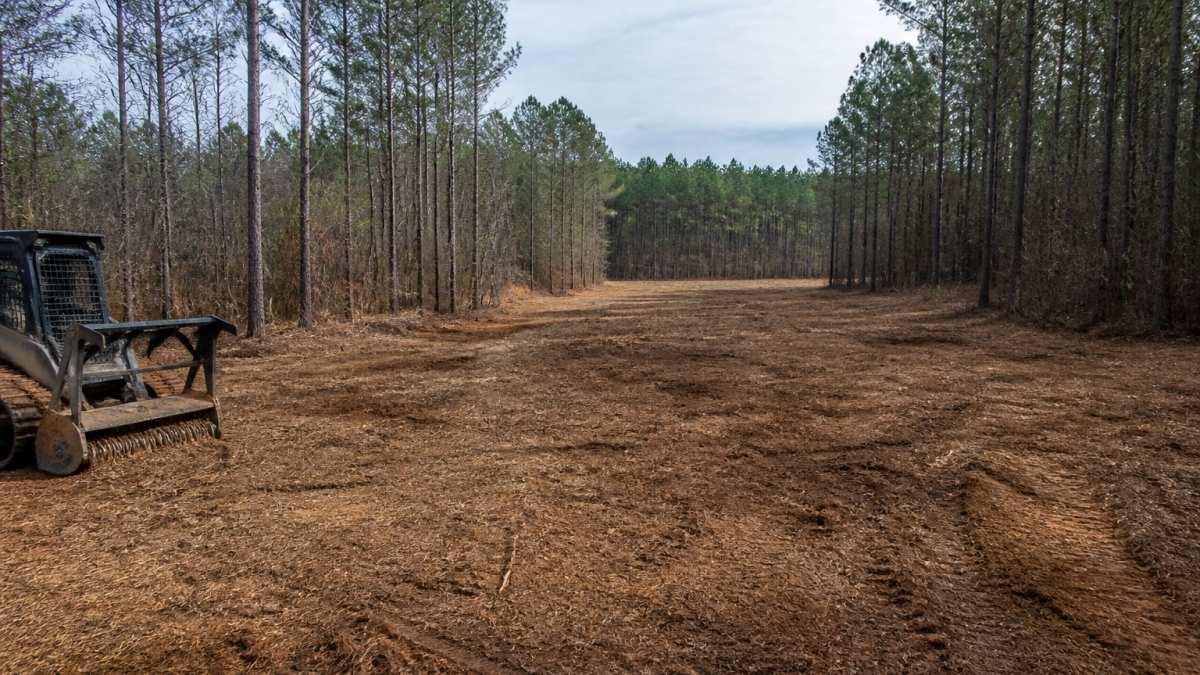
The practical benefit: buyers can walk the property without fighting through brush. They see the actual footprint and can mentally picture fencing, buildings, or garden beds.
The mulch layer suppresses weeds and seedlings, keeping your property presentation clean for weeks after the work is done. This matters because a property that stays cleared longer holds its visual appeal through the entire sales window.
Marking Property Lines Clearly
Undefined boundaries create confusion. Buyers wonder where the property ends and neighboring land begins. This uncertainty makes the land feel smaller because the usable area seems ambiguous.
Marking boundaries with clear fencing, painted posts, or surveyor flags gives buyers confidence in the actual property size. A 10-acre parcel with obvious boundary lines reads as larger and more valuable than 10 acres with unclear edges. The visual definition creates psychological certainty about what's included.
SemperFi Land Clearing LLC specializes in 10-foot fence line clearing, which removes vegetation encroaching on boundaries and makes property lines immediately obvious. When buyers can see where their property starts and ends, they're more comfortable making offers.
2. Create Visual Depth With Sightlines and Focal Points
The human eye perceives distance through layered depth. A property with blocked views feels cramped. A property where you can see across the full acreage feels expansive, even if the actual size is modest.
Opening Sightlines Across Your Property
Sightlines are clear lines of sight across your land. They're created by removing low-hanging branches, cutting back vegetation along pathways, and clearing sight triangles at property corners. When a buyer can look across 5 acres without obstruction, the land feels larger than when trees and brush block the view every 50 feet.
The technique: identify the highest-traffic paths (typically from the road toward the back of the property and along any natural waterways or fencelines). Clear vegetation 8-10 feet on either side of these paths. This creates visual corridors that make the property feel more navigable and spacious.
Practical sightlines also improve safety perception. Buyers worry about hidden hazards, poor access, and unclear terrain. Open sightlines signal that the property is maintained and accessible.
Using Focal Points to Guide the Eye
A focal point is an object or feature that naturally draws the eye. It might be a mature tree, a rock outcropping, a cleared building site, or a distant treeline. Focal points guide the viewer's gaze across the property and create the impression of depth.
When you have focal points spaced across your land, buyers' eyes travel the full distance of the property. This extended visual journey makes the acreage feel larger. Without focal points, the eye stops short, and the property feels smaller.
Create focal points by clearing around notable features (a large oak tree, a small hill, a water feature) or by creating them (a cleared circular area for a future structure, a defined garden bed, a gravel parking spot).
3. Strategic Landscaping: How to Make a Small Yard Look Bigger
Landscaping doesn't mean adding plants. It means using plants strategically to create the illusion of space. The goal is to make your property feel organized, intentional, and larger than its actual dimensions.
Layered Planting and Garden Beds
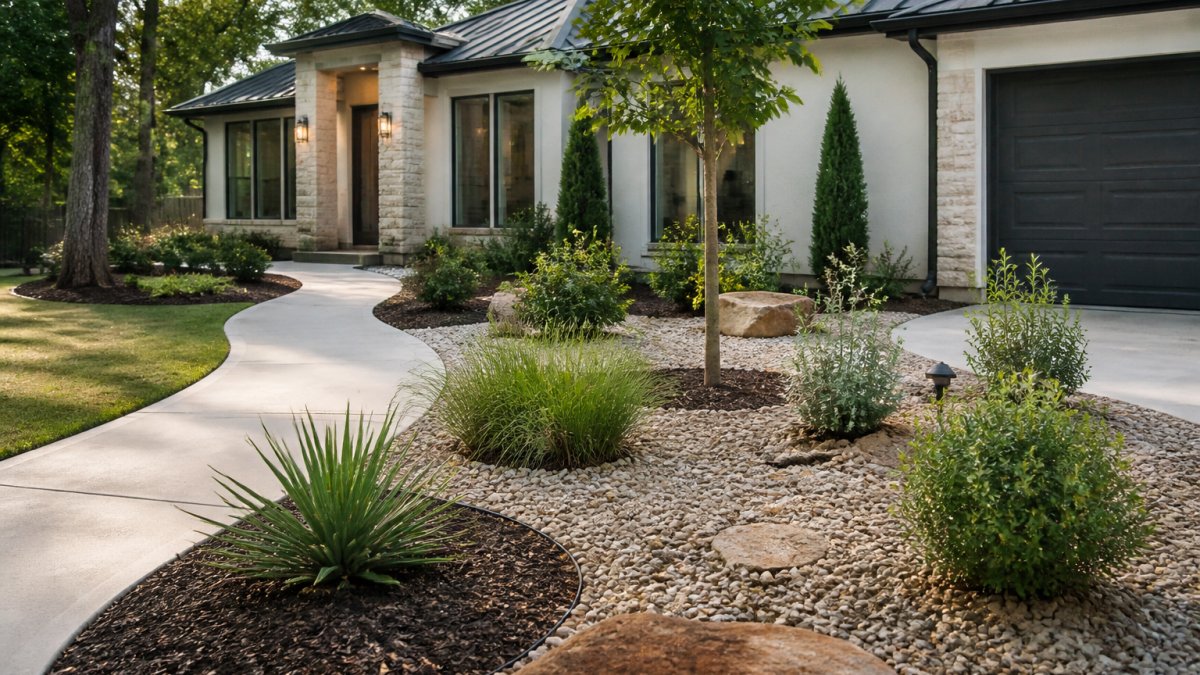
Layered planting uses depth to create visual interest and the impression of more space. Plant taller trees in the background, medium shrubs in the middle, and low ground cover in the foreground. This layered effect draws the eye deeper into the property and makes the acreage feel more expansive.
Defined garden beds also contribute to perceived size. A property with clear, bordered beds looks more intentional and organized than one with scattered vegetation. Organized space reads as larger space because the eye can process it more efficiently.
When staging land for sale, focus on creating 1-3 strategic planting areas rather than scattered plantings throughout. Concentrated landscaping feels more professional and makes the remaining open space feel larger by contrast.
Mulch and Ground Cover for Clean Lines
Mulch serves two purposes in land staging. First, it defines spaces. A mulched bed with clear edges looks intentional and makes the property feel more managed. Second, it eliminates visual clutter. Bare soil, weeds, and scattered debris make land feel messy and smaller. Mulch creates clean lines and a finished appearance.
Ground cover (low-growing plants or mulch) in open areas prevents the "overgrown" appearance that makes land feel neglected. A property with clean ground cover throughout looks more spacious because there's no visual distraction pulling the eye toward problem areas.
4. How to Stage Land for Sale: Removing Clutter and Improving Curb Appeal
Curb appeal for land is different from curb appeal for houses. You're not decorating. You're removing obstacles to the buyer's vision and eliminating signs of neglect.
Clearing Debris and Abandoned Items
Abandoned equipment, old structures, scattered materials, and debris create visual chaos. They make land feel smaller because they fragment the space and signal that the property is poorly maintained. Clearing these items is one of the fastest ways to improve how land looks.
Walk your property with a critical eye. Remove or relocate anything that doesn't belong: old farm equipment, discarded metal, fallen logs, abandoned vehicles, broken fencing, and piles of dirt or gravel. Each item you remove opens up visual space and improves buyer perception.
This step is low-cost and high-impact. You don't need to hire contractors for most items. A weekend of cleanup can dramatically change how the property presents.
Fresh Mowing, Edging, and Maintenance
Mowed grass looks intentional. Overgrown grass looks abandoned. Fresh mowing is one of the cheapest ways to make land look bigger and better maintained.
Edging is equally important. Clean edges along driveways, pathways, and property lines create definition and make the property feel more organized. When edges are sharp and clean, the property reads as larger because the space feels deliberate rather than random.
Maintenance signals that the property is worth investing in. A freshly mowed, well-edged property attracts serious buyers. An overgrown one signals problems and reduces perceived value.
5. How to Show Property Boundaries to Buyers Effectively
Buyers need to understand exactly what they're purchasing. Unclear boundaries create doubt, reduce perceived value, and lower offers. Showing boundaries clearly is essential to land staging.
Accurate Boundary Markers and Maps
Use physical markers to show property lines: painted posts at corners, surveyor flags along edges, or cleared fencelines. These markers should be visible from the road and from within the property. They answer the buyer's immediate question: "Where is the property line?"
Provide a detailed property map showing exact boundaries, acreage, and key features (water sources, road access, utility lines). A buyer who understands the boundaries with certainty is more likely to make an offer.
Accuracy matters. If your boundary markers are approximate or your map is outdated, buyers will question the entire property. Invest in a current survey if there's any doubt about your boundaries.
Making Access Points Obvious
Buyers need to know how to access the property. A clear driveway or entrance signals that the land is usable and accessible. An unclear or overgrown access point suggests the property is hard to reach and maintain.
Clear your main access point thoroughly. Widen the driveway entrance, remove low branches that scrape vehicles, and mark the entry clearly. If you have multiple access points, label them on your property map so buyers understand their options.
Access is part of perceived usability. A property with obvious, clear access feels larger and more manageable than one where access is unclear or difficult.
6. Smart Lawn and Garden Design for Spatial Perception
How you arrange space determines how large it feels. This principle applies to every acre of your property.
Open space feels larger than cluttered space. If you have a large flat area, keep it open rather than filling it with scattered trees or structures. The openness creates the impression of expansiveness.
Curved lines feel more spacious than straight lines. If you have pathways or cleared areas, curve them slightly rather than running them in straight lines. Curves create the illusion of longer distances and more space.
Vertical elements (trees, structures) break up horizontal space and create depth. A property with varied elevation and vertical features feels more interesting and spacious than a flat, open field.
What to Avoid When Preparing Land for Sale
Don't over-landscape. Buyers want to see potential, not a finished garden.
Don't leave debris or abandoned items visible. Every piece of clutter reduces perceived value and makes the property feel smaller.
Don't neglect maintenance. Overgrown grass, tangled brush, and poor edging signal that the property is hard to manage. Buyers will factor maintenance concerns into their offers.
Don't hide boundaries. Unclear property lines create uncertainty and reduce buyer confidence. Buyers prefer properties where they understand exactly what they're purchasing.
Don't block sightlines unnecessarily. While some trees and vegetation add character, blocked views make land feel smaller and less accessible.
Making land look bigger for sale is about removing obstacles to the buyer's vision and creating the perception of space and potential.
If your property has thick brush, tangled fencelines, or unclear boundaries, professional land clearing makes a dramatic difference. Our forestry mulching and fence line clearing services are specifically designed to open up space, improve curb appeal, and help your land show its best potential.
Frequently Asked Questions
Does clearing land actually make it look bigger?
Yes. Removing overgrowth, brush, and clutter immediately increases perceived space. When buyers can see clear sightlines across the property and defined boundaries, the land feels larger and more usable. Forestry mulching removes dense vegetation while preserving soil health, making the parcel appear open and spacious rather than cramped or overgrown.
How can I show buyers the boundaries of my property?
Mark boundaries with clear fencing, flagging tape, or posts along the perimeter. Provide a detailed property map showing acreage and boundary lines. Clear vegetation along fence lines so the boundary is visually obvious. Remove any trees or brush that obscure where your property ends. Making boundaries obvious helps buyers understand what they're purchasing and increases confidence in the property size.
What's the cheapest way to make my land look bigger before listing?
Start with basic maintenance: mow regularly, edge defined areas, remove visible debris, and clear fence lines. These tasks cost minimal effort and money but dramatically improve curb appeal. For heavier overgrowth, professional land clearing through forestry mulching grinds material on-site rather than hauling it away. Contact a professional for a free assessment to understand what your property needs.
How long does it take to see results after land clearing?
Basic cleanup and mowing show immediate results. Professional forestry mulching can be completed in one to a few days depending on acreage and density. Once clearing is done, the transformation is visible right away, though you may want to allow time for fresh landscaping or mulch to settle before listing photos are taken. Maintenance (regular mowing and weeding) helps keep the property looking spacious throughout the selling process.