 how-to
Clearing Brush for Property Visibility: A 2026 Guide
Table of Contents
- Why Clearing Brush for Property Visibility Pays Off
- Start With a Written Clearing Plan and a Walk-Through
- Best Tools for Brush Removal: What to Rent vs. Buy
- Forestry Mulching Benefits for Overgrown Acreage
- Safety Gear and Precautions Before You Cut
- Land Clearing Permit Requirements and Environmental Rules
- The Real Cost to Clear Land per Acre
- Managing Debris, Regrowth, and Erosion After Clearing
- Frequently Asked Questions
Last Updated: September 22, 2026
Why Clearing Brush for Property Visibility Pays Off
Clearing brush for property visibility is the practice of removing dense undergrowth, saplings, and overgrown fence lines so a property can be seen, accessed, and used as intended. For rural landowners, that work delivers three immediate returns: safer sightlines, easier access, and stronger curb appeal.
The gains show up fast:
- Safety. Hidden stumps, holes, and low limbs disappear from the sightline.
- Access. Trucks, trailers, and equipment can reach the back of the lot.
- Value. Buyers and appraisers read a cleared property as maintained land.
Start With a Written Clearing Plan and a Walk-Through
A clearing plan is a simple document that maps what gets cut, what stays, and why. Skip it, and you end up with a half-cleared mess and a frustrated crew.
Your plan should list:
- Goal. Visibility, access, food plots, or site prep.
- Zones. Which acres get cleared, which stay natural.
- Keep list. Mature hardwoods, shade trees, wildlife cover.
- Access route. Where equipment enters and exits.
- Timeline. Season, weather window, and finish date.
Best Tools for Brush Removal: What to Rent vs. Buy
The right tool depends on acreage, brush diameter, and how often you'll do the work. For a one-time cleanup, rent. For yearly maintenance on the same ground, buying starts to make sense.
Hand Tools, String Trimmers, and Chainsaws
Hand tools handle small jobs well. A brush cutter, loppers, and a good string trimmer with a blade attachment clear fence lines and walkways.
Skid Steers, Brush Cutters, and Mulching Heads
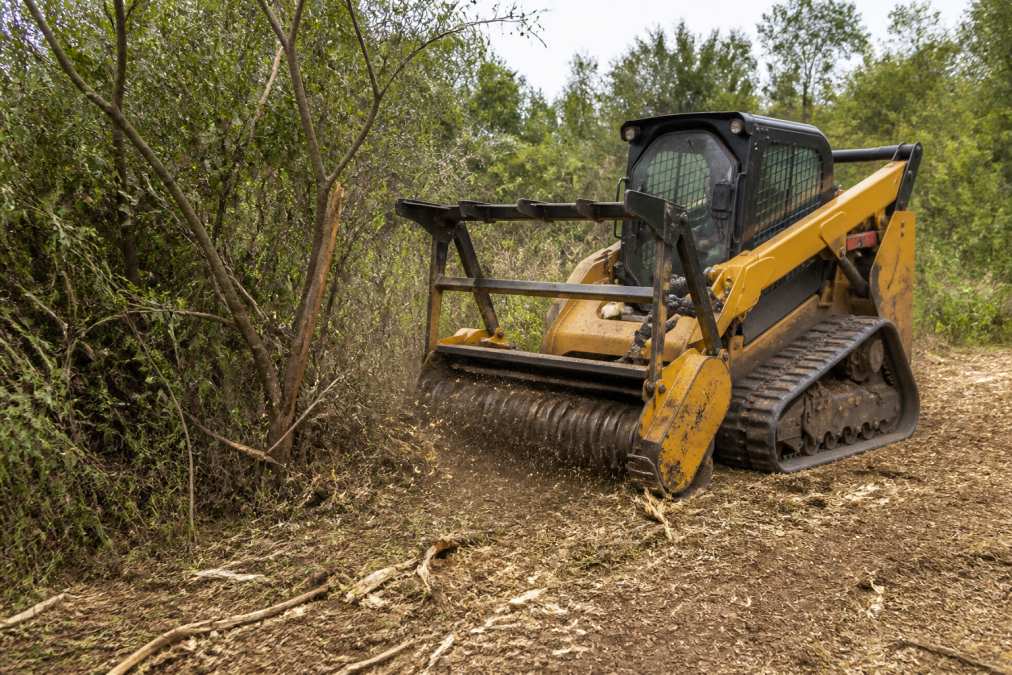
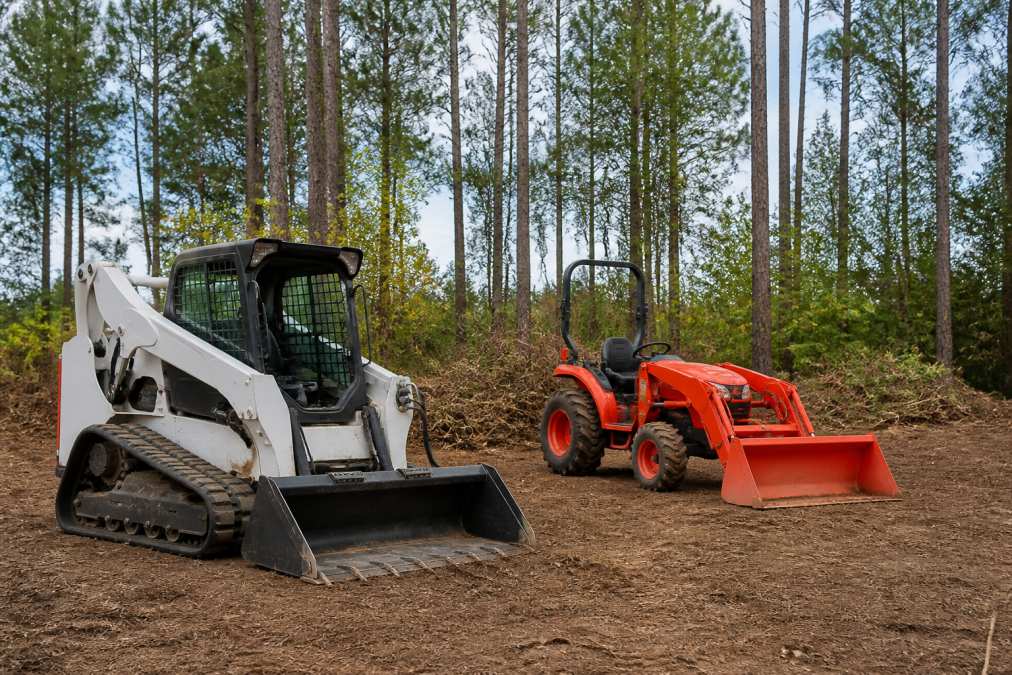
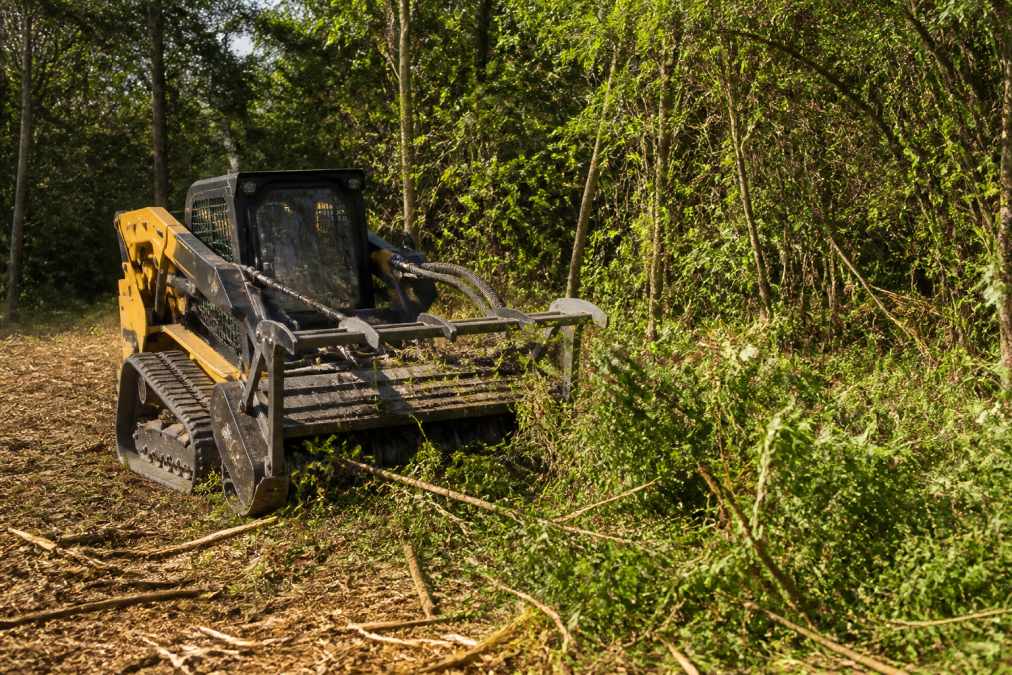
For heavy overgrowth, a skid steer with a brush cutter or mulching head does in hours what hand crews do in weeks. This is the category that separates a hobby cleanup from real land reclamation.
Forestry Mulching Benefits for Overgrown Acreage
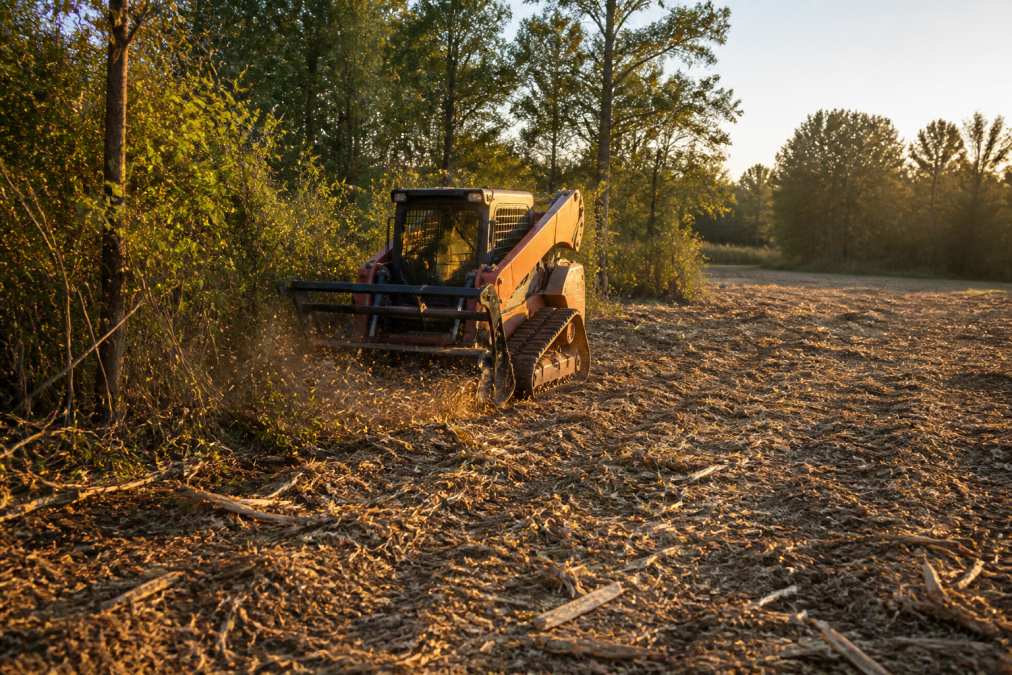
The benefits stack up quickly:
- No burn piles. The mulch stays on site.
- Less soil disturbance. The root mat and topsoil stay in place.
- Faster job. One machine handles cutting and processing.
- Ground cover. The mulch layer slows weeds and holds moisture.
Safety Gear and Precautions Before You Cut
Brush clearing injures people in predictable ways. Most accidents trace back to skipped protective gear or a saw kicked back by a hidden object.
Wear the basics every time:
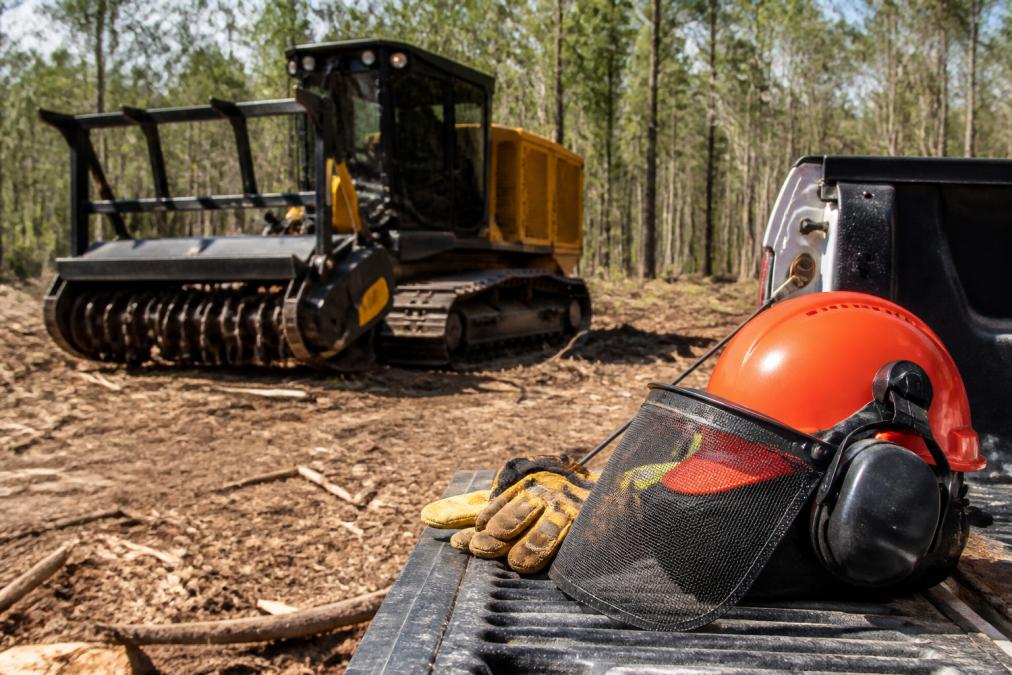
- Head and face. Hard hat with a face shield.
- Eyes and ears. Safety glasses plus hearing protection.
- Legs and feet. Chainsaw chaps and steel-toe boots.
- Hands. Cut-resistant gloves that still let you grip.
Land Clearing Permit Requirements and Environmental Rules
Land clearing permit requirements vary by state, county, and sometimes by watershed. There is no single national rule, so check with your local planning office before any equipment shows up. What follows is the framework most landowners in the U.S. run into, so you know which questions to ask.
Federal Triggers
- Wetlands and waterways. If your brush clearing touches a wetland, stream, or ditch that carries water to a navigable waterway, the U.S. Army Corps of Engineers regulates it under Section 404 of the Clean Water Act. The permit process runs through the Corps' district office. You can read the basics at U.S. Army Corps of Engineers regulatory program.
- Stormwater runoff. Disturbing an acre or more of ground can trigger a Construction General Permit under the EPA's NPDES stormwater program. Most residential brush jobs fall under that threshold, but larger acreage or a site near an impaired water body can pull you in.
- Threatened and endangered species. The U.S. Fish and Wildlife Service administers the Endangered Species Act. If a listed species or its habitat is on your land, clearing can require consultation before work starts.
- Migratory birds. The Migratory Bird Treaty Act protects active nests. Most practitioners schedule clearing outside the spring nesting window to avoid the issue entirely.
State and Local Triggers
- Forestry notification. Many states require a notification or a written forest management plan before you cut above a set acreage or within a buffer of a waterway. The state forestry agency is the office to call.
- Tree ordinances. Some counties and municipalities protect specific species or trees above a certain diameter, even on private land. Removing one without approval can mean a fine and a replanting requirement.
- Burn permits and burn bans. If you plan to burn slash piles instead of mulching, you usually need a permit from your local fire department or state forestry office. During drought, a county-wide burn ban overrides that permit.
- Erosion and sediment control. Grading or clearing that changes drainage often requires a sediment control plan filed with the local soil and water conservation district.
How to Check Before You Cut
- Call your county planning or zoning office and describe the work.
- Call your state forestry agency about notification and buffer rules.
- Check the Corps' district office if any water is on or near the property.
- Ask your county extension office about protected species and local ordinances.
Identifying Invasive Species Before You Cut
Invasive species change how you clear, not just what you clear. Cut some of them at the wrong time and you spread seed across the whole property. Others regrow from root fragments, so mulching alone won't kill them.
- Chinese privet. Fast-spreading, shades out native understory. Cut in late summer before berries set, or the seed bank resets.
- Kudzu. Vines that smother trees and fences. Root crowns must be removed or treated, or it returns within a season.
- Chinese tallow. Grows fast and seeds heavily. Best removed before it flowers.
- Japanese honeysuckle. Chokes young trees and ground cover. Repeated cutting is usually required.
- Tree of heaven. A common invasive that spreads by root suckers; cutting without herbicide treatment often makes it worse.
- Multiflora rose. Thorny thickets that spread by seed and by rooting canes.
The Real Cost to Clear Land per Acre
The cost to clear land per acre depends on brush density, terrain, access, and method. Light brush on flat ground costs far less than heavy timber on a slope.
What moves the number:
- Density. Thick saplings cost more than grass and weeds.
- Topography. Slopes slow every machine.
- Access. Tight gates and soft ground add time.
- Method. Mulching, cut-and-haul, and dozer work price differently.
- Debris. Hauling and chipping add cost that mulching avoids.
| Job Type | Best Method | Debris Handling | Typical Timeline |
|---|---|---|---|
| Fence line clearing | Mulching head | Left in place | 1-2 days |
| Light brush, under 5 acres | Brush cutter | Left in place | 1-3 days |
| Heavy overgrowth, 5+ acres | Forestry mulcher | Left in place | 3-7 days |
| Site prep for a build | Mulch plus haul | Partial haul-off | Varies by plan |
Managing Debris, Regrowth, and Erosion After Clearing
What happens after the machines leave decides whether the work lasts. Mulch, regrowth, and runoff all need a plan. This is the part most clearing articles skip, and it's the part that determines whether you're back to square one in two years.
Debris Options After Clearing
- Leave the mulch in place. Forestry mulching leaves a mat of chips on the ground. It's the cheapest option and it doubles as erosion cover.
- Chip and spread. If you cut with a saw instead of a mulcher, a chipper turns tops and limbs into usable ground cover.
- Burn. Requires a permit in most jurisdictions and a safe burn day. Pile size, distance from structures, and wind matter.
- Haul off. The most expensive option, but sometimes required for site prep or if the debris is diseased or invasive.
Erosion Control: The Step Most Owners Skip
Bare soil on a slope washes away in the first hard rain. Once topsoil is gone, regrowth is slow and expensive to fix. A few practices prevent most of the damage:
- Keep a mulch layer. Aim for a continuous mat over exposed soil, especially on any grade steeper than about 3:1.
- Seed fast. A quick-growing cover crop, annual ryegrass, cereal rye, or a native warm-season mix, holds soil while slower perennials establish. In most climates, seed within days of clearing, not weeks.
- Leave buffer strips. Keep a strip of undisturbed vegetation along drainage paths, ditches, and property lines. Buffers slow runoff and filter sediment before it leaves your land.
- Install silt fence or straw wattles. On steeper ground or near a waterway, these mechanical controls catch sediment that seeding alone won't.
- Avoid bare-soil ruts. Route equipment on the same paths and avoid working saturated ground. Ruts channel water and start gullies.
Regrowth: A Maintenance Schedule That Works
The first season after clearing is the one that decides the outcome. Disturbed soil wakes up the seed bank, and new growth comes fast.
- First 30 days. Walk the cleared ground. Spot-treat new shoots while they're small enough to pull or cut by hand.
- First growing season. Mow or mulch once mid-season to knock back regrowth before it seeds.
- Year one end. Re-seed any bare patches and re-check buffer strips.
- Yearly after that. One pass with a mulching head or brush cutter on the same ground keeps it open. A yearly maintenance pass costs a fraction of a full re-clear.
Replanting for Long-Term Control
Where you want permanent control, plant something that competes. Native warm-season grasses, clover, and low-maintenance shrubs shade out weeds and reduce how often you have to mow. On pasture edges, a managed native grass stand can hold the line for years with minimal input.
Frequently Asked Questions
What is the best way to clear brush on my property?
It depends on density and terrain. Light underbrush along fence lines and driveways comes up fast with a string trimmer and chainsaw. Thick, multi-stemmed growth on acreage is faster with forestry mulching, which grinds brush, saplings, and small trees into mulch in a single pass. Start with a written clearing plan, mark what stays, then match the tool to the job. Heavy overgrowth on slopes or wet ground is usually best left to a professional crew.
Do I need a permit to clear land on my property?
Not always, but land clearing permit requirements vary by county and by what you plan to do. Clearing a few fence lines for visibility often needs no permit, while grubbing stumps, grading, or clearing near waterways can trigger local, state, or federal review. East Texas properties near creeks and wetlands are the ones most likely to need extra paperwork. Call your county office before you cut, and get any approval in writing.
How much does it cost to clear 1 acre of brush?
The cost to clear land per acre depends on brush density, tree size, terrain, access, and how you want the debris handled. Pricing depends on quantity, dates, and delivery. Light saplings and underbrush cost far less per acre than mature timber or stump-heavy ground. Mulching is usually cheaper than cut-and-haul because the material stays on site. Get a written quote after a walk-through rather than trusting a phone estimate, since the actual property changes the number.
Does clearing brush increase property value?
It often does, especially for listings that show poorly because the house is hidden. Opening sightlines, removing fire fuel, and restoring pasture or fence lines all read as maintained land to buyers, and curb appeal is one of the few improvements a seller can make quickly. Clearing also makes the property easier to inspect, survey, and appraise. Pair the work with a regrowth plan so the improvement holds through the selling season.