 How-to
How to Prepare Land for Forestry Mulching in East Texas
Last Updated: October 31, 2026
Quick Summary
Forestry mulching preparation starts with confirming property lines, calling 811 for utility locates, and marking trees and areas to keep. Walk the access route and check soil firmness, since wet ground can stall the machine and cause rutting.
- Confirm property lines with a plat, deed, or survey before the crew arrives.
- Call 811 for free utility locates before any ground is disturbed.
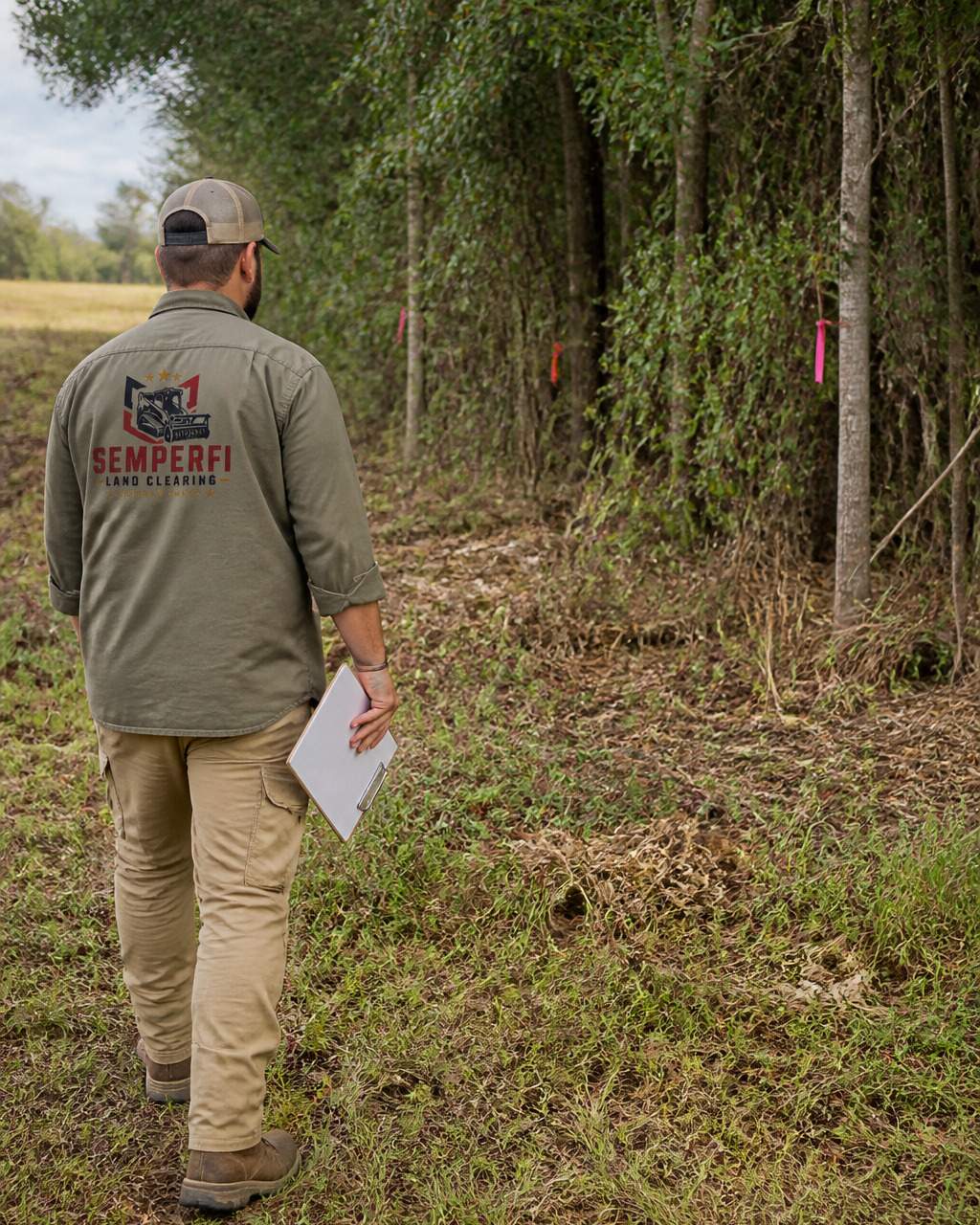
- Mark trees to keep with flagging tape, using different colors for special-care areas.
- Check gate width and overhead clearance against the equipment the crew will bring.
- Walk the access route after a rain to see where the ground stays soft.
Table of Contents
- What Forestry Mulching Needs Before the Machine Arrives
- Forestry Mulching Preparation Checklist for Landowners
- How to Mark Trees for Forestry Mulching
- Forestry Mulching Site Access Requirements and Soil Readiness
- What to Do After Forestry Mulching
- Frequently Asked Questions
What Forestry Mulching Needs Before the Machine Arrives
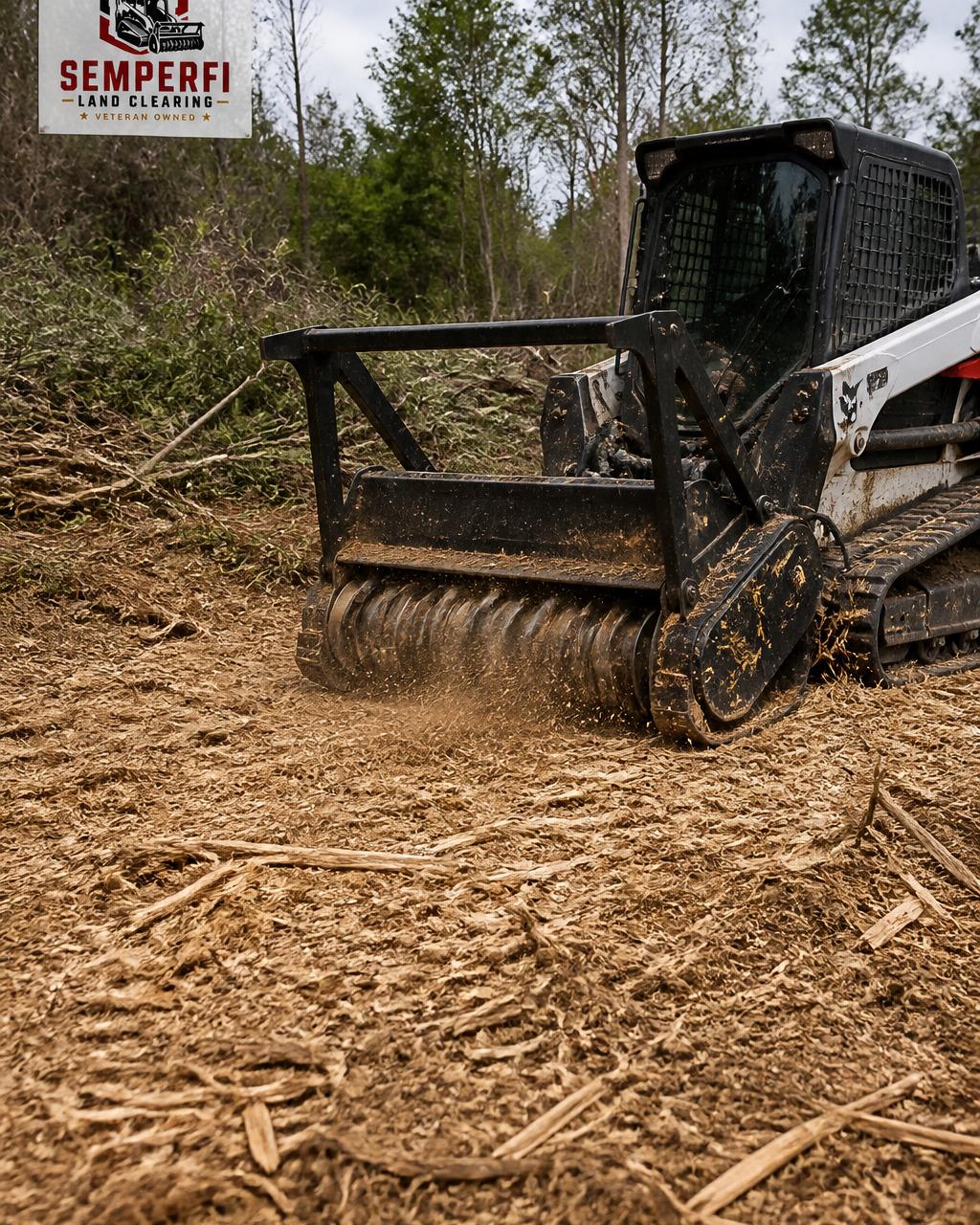
Forestry mulching is a land clearing method that grinds brush, small trees, and vegetation into mulch in one pass. Done right, it leaves the ground ready for grass or planting.
Walking the property before any equipment moves shapes the plan, the price, and the timeline. Preparation is where most projects succeed or fail, so it deserves a careful start.
Start by asking three questions. What do you want the land to look like when the job is done? What is growing there now? And what could get in the way of the machine?
Forestry Mulching Preparation Checklist for Landowners
Use this list to get the property ready before the crew arrives. Work through it a few weeks ahead of the start date, then do a quick re-walk the week of the job to catch anything that changed.
Boundaries, access, and paperwork
-
Confirm property lines with a plat, deed, or survey, flagging a line that is actually the neighbor's is one of the most common and most expensive mistakes
-
Note easements, rights-of-way, and any shared drive the machine must cross
-
Check gate width and overhead clearance against the equipment the crew will bring; a gate narrower than the machine means fence removal or a different entry
-
Get the scope in writing: acreage, stump height, whether cleanup and haul-off are included, and what happens to the mulch
Utilities and hazards
- Call 811 to request utility locates before any ground is disturbed, this is free and required in most states before excavation, and it covers buried electric, gas, water, and communications lines
- Identify overhead power lines, meter pedestals, and any guy wires the machine's boom or cab could contact
- Walk the work zone for hazards the operator cannot see from the cab: old wells, cisterns, septic lids, culvert openings, and hidden fence posts
Vegetation and areas to protect
- Walk the full property and note brush density, tree sizes, and problem areas
- Identify protected trees, wildlife areas, or water features to avoid, and check whether any local tree-protection or wetland rules apply
- Decide what gets cleared and what stays for shade or wildlife cover
People, animals, and equipment
- Move livestock, pets, and vehicles out of the work zone and plan how they will be kept out during the job
- Tell neighbors when the work starts, mulching is loud and throws debris, and a heads-up prevents complaints
- Confirm where the crew will stage equipment and where mulch or debris will be left
How to Mark Trees for Forestry Mulching
Marking tells the operator what to keep. Clear, visible marks prevent costly mistakes, like cutting a shade tree you meant to save.
Use bright flagging tape or spray paint on trunks you want to keep. Use a different color for any area that needs special care, such as a creek bank or a wildlife feeding spot.
Keep marks at eye level and check them after heavy rain, since flagging can blow away or fade.
Forestry Mulching Site Access Requirements and Soil Readiness
The machine needs a path in and a place to turn around.
Access: what the machine actually needs
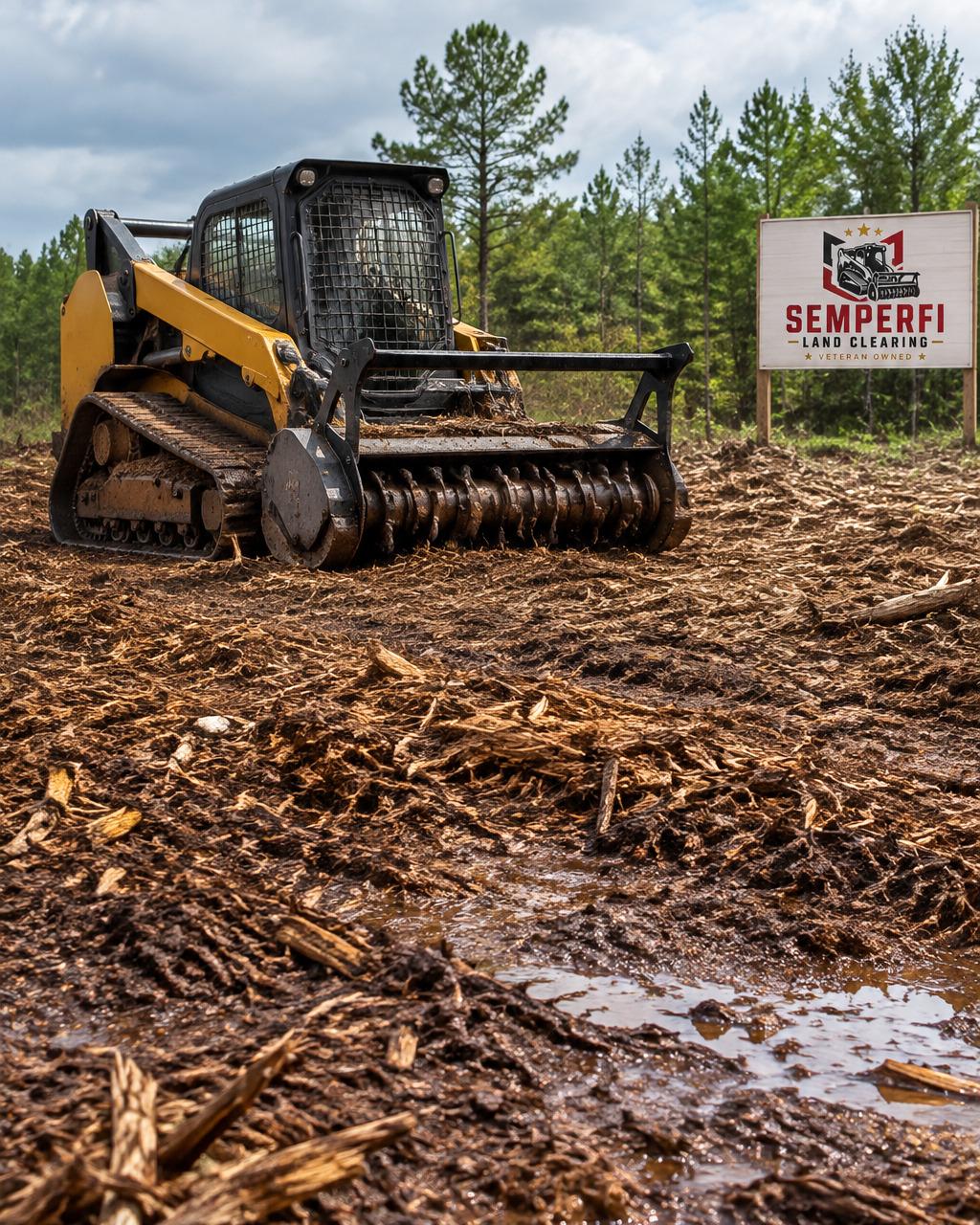
A tracked forestry mulcher is heavy and wide, and it needs a route that supports that weight without tearing up the ground. Before the crew arrives, walk the entry and confirm:
- Gate width and any fence panels that will need to come out
- Overhead clearance for the boom and cab, low limbs, wires, and roof overhangs all count
- A firm, well-drained entry; a soft spot at the gate can turn into a rutted trench in one pass
- A staging area where the machine can turn around and where debris or mulch can sit
If the only access is through a neighbor's property or a shared drive, sort out permission in writing before the start date.
Soil type and what it means for the job
Soil is the variable most landowners underestimate.
- Sandy and loamy soils drain quickly and generally support equipment soon after rain, but they are also the most prone to erosion once the vegetation holding them is gone.
- Clay and silt soils hold water, compact under weight, and can stay too soft for days after a storm. Compaction squeezes the air out of the topsoil and slows regrowth for years.
- Organic and low-lying soils near creeks, ponds, and wetlands are the least stable and the most regulated, check before you plan work there.
A simple field test: push a soil probe or a length of rebar into the ground.
Slope, drainage, and erosion
On slopes, plan the path so the machine works across the grade rather than straight up or down, which reduces the chance of erosion and loss of traction. Watch for:
- Seeps and wet-weather springs that stay soft even in dry spells
- Drainage ways and culverts that concentrate water after storms
- Steep pitches where the machine cannot safely operate and where mulch will wash downhill
Heavy equipment compacts soil, so keep the number of passes to what the job needs.
Wet-weather readiness and timing
Recent rain is the single most common reason a mulching job gets delayed. Use this per-acre cost guide to understand what drives mulching pricing when budgeting the project.
The table below summarises the soil types covered in this section and what each means for the job.
| Soil type | Behaviour | What it means for the job |
|---|---|---|
| Sandy and loamy | Drains quickly, supports equipment soon after rain | Most prone to erosion once vegetation is gone |
| Clay and silt | Holds water, compacts under weight | Can stay too soft for days after a storm |
| Organic and low-lying | Least stable, near creeks and wetlands | Most regulated; check before planning work |
What to Do After Forestry Mulching
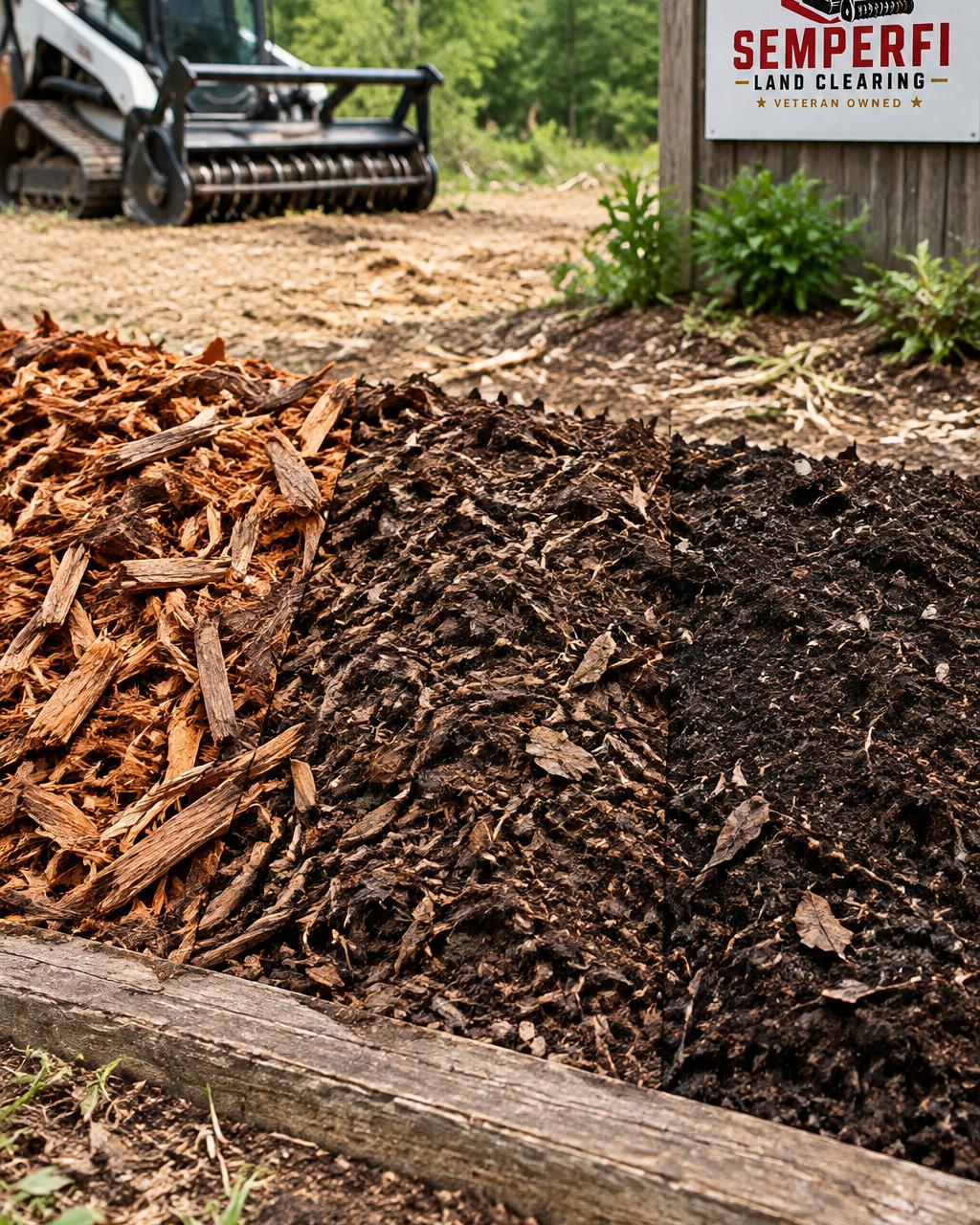
The mulch layer left behind can help soil hold moisture and organic matter, but it needs time to settle. Find out whether grass will grow after forestry mulching, how to prepare the soil, and when to seed.
If you plan to plant grass, test the soil first and seed when the season suits the grass type. Keep the new seed watered until it establishes.
A short maintenance plan can pay off. Check the property after the first heavy rain, look for erosion or bare patches, and address them early.
Ready to start? USDA Natural Resources Conservation Service guidance on soil and erosion control and the Texas A&M AgriLife Extension service are good references for soil and land management questions.
Frequently Asked Questions
How do you prepare land for forestry mulching?
Start by walking the property and noting boundaries, fence lines, low-lying wet areas, rocks, buried utilities and any trees you want to keep. Mark the trees to preserve with flagging or paint, clear gates and access routes of hanging limbs, and confirm where utility lines run before the work starts. Remove loose debris, old fencing wire and garbage that could damage the mulching head. Walking the site with your contractor before the crew arrives lets both of you agree on scope and avoids surprises during the job.
Do I need to mark trees before forestry mulching?
Yes, marking trees is one of the most useful steps a landowner can take. Forestry mulchers grind everything in their path, so any tree you want to keep must be clearly flagged, painted or otherwise identified before the machine enters the area. Use bright flagging tape or spray paint at eye level and on several sides of the trunk. Tell your operator about any protected or sentimental trees, and walk the line together so there is no confusion about what stays standing.
What should I do after forestry mulching?
After the mulcher finishes, inspect the site for ruts, exposed soil and any missed brush or debris. Spread the mulch evenly where it will help hold soil, or remove excess if you plan to seed or build. Consider seeding bare areas with a suitable grass cover to reduce erosion, and monitor regrowth over the following months, since sprouts from stumps and seedlings often appear and can be treated early. Keep access routes clear so future maintenance stays manageable.
Can forestry mulching handle rocks, stumps and large trees?
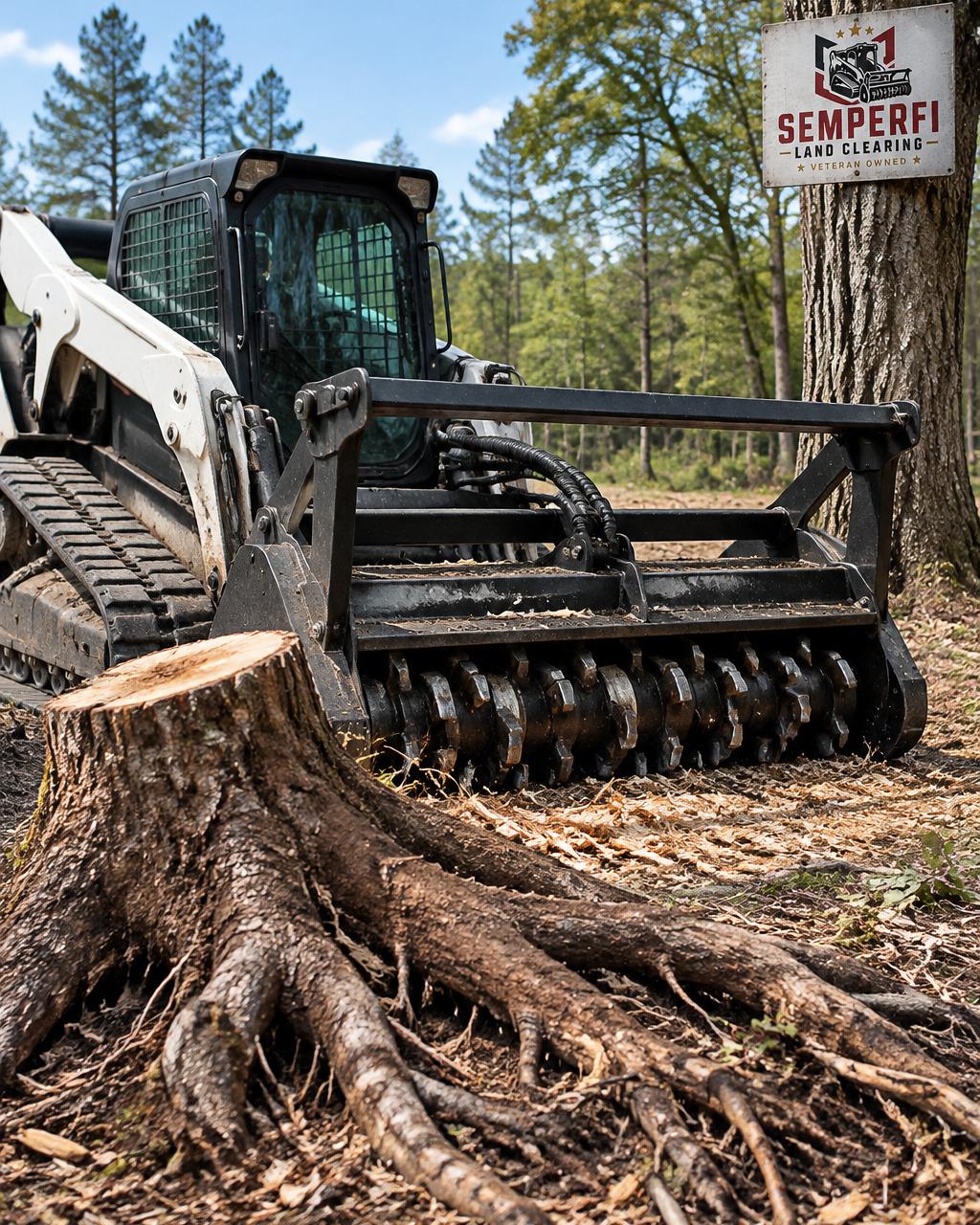
Forestry mulching handles dense brush, small and medium trees and thick overgrowth well, but large rocks, buried debris and very large trunks can damage the mulching head or slow the job. Ask your contractor during the assessment what the machine can safely process on your property. Remove oversized obstacles where practical, and flag any stumps or rock outcrops so the operator can plan around them.