 ultimate-guide
Land Management for Hunting Ranches: 2026 Guide
Table of Contents
- Why Land Management for Hunting Ranches Matters
- The Difference Between Management and Leadership on a Hunting Property
- Forestry Mulching for Hunting Trails
- Food Plot Installation Best Practices
- Brush Management for Deer Hunting
- Legal and Regulatory Compliance for Hunting Ranches
- Financial ROI of Hunting Land Management
- Monitoring, Reporting, and Sustainability
- Frequently Asked Questions
Last Updated: September 19, 2026
Why Land Management for Hunting Ranches Matters
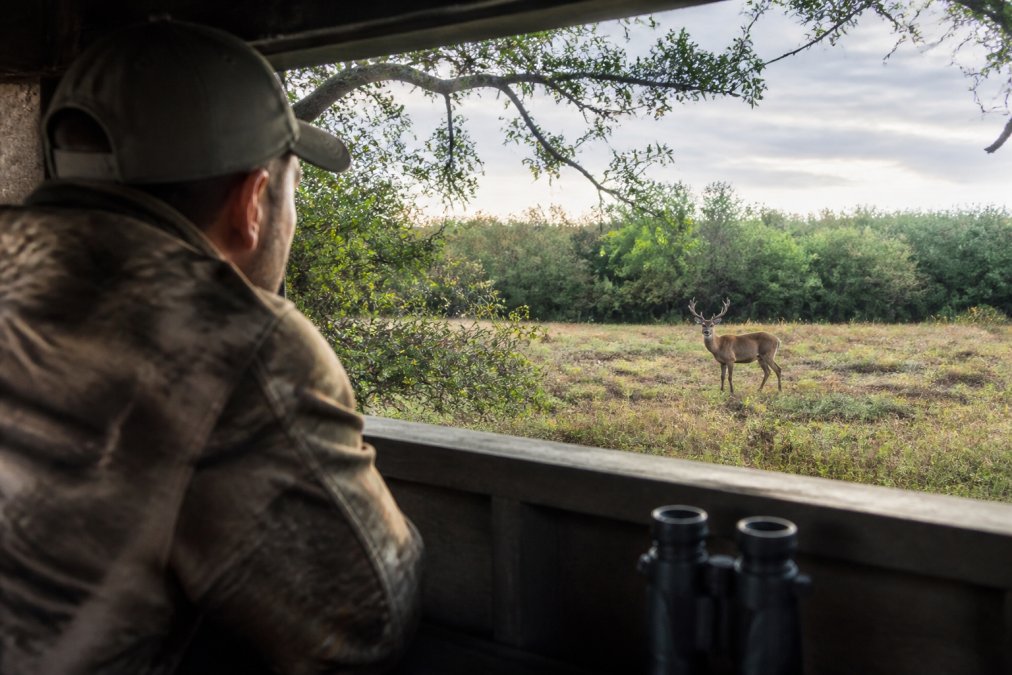
Land management for hunting ranches is the ongoing practice of shaping vegetation, water, access, and wildlife habitat so a property holds and produces game year after year. Without it, most acreage slowly reverts to thick, low-value brush that deer and other wildlife avoid.
The Difference Between Management and Leadership on a Hunting Property
Management is the day-to-day execution: mowing trails, spraying invasives, testing soil, pulling camera cards, keeping records. Leadership is deciding what the property should be in ten years and refusing to chase every new tactic that comes along.
What Leadership Actually Looks Like on Acreage
Leadership on a hunting property shows up as four decisions, made once and revisited annually:
- A carrying capacity target. How many deer can this acreage actually feed through a hard winter without wrecking the browse? A common rule of thumb in whitetail country is roughly one deer per 15 to 30 acres of usable habitat, but the real number depends on your soil, your cover, and your neighbors' pressure. Pick a number, then let harvest data tell you if you were right.
- An age structure goal. Do you want to shoot 3.5-year-old bucks, or hold out for 5.5? That single decision changes everything downstream, how many does you take, how much food you plant, how many stands you hang.
- A habitat mosaic plan. What percentage of the property stays in thick bedding cover, what percentage goes to open feeding, and where the edges between them sit. Draw it on a map, not in your head.
- A resource allocation budget. Time, diesel, seed, lime, and equipment hours are finite. A written budget forces you to choose between, say, another food plot and a new culvert on the access road.
What Management Looks Like Week to Week
- Late winter: cut trails, hinge-cut bedding cover, pull soil samples.
- Early spring: lime and fertilize per the soil test, plant warm-season plots.
- Summer: spray invasives, mow plot edges, run camera surveys.
- Early fall: plant cool-season plots, hang and check stands, verify wind-safe access routes.
- Late fall and winter: hunt, log every harvest, review the year against the plan.
That last item, the review date, is what separates a managed ranch from an overgrown one. Put it on the calendar. If you never sit down to compare what you planned against what actually happened, you are not leading the property. You are just working on it.
Forestry Mulching for Hunting Trails
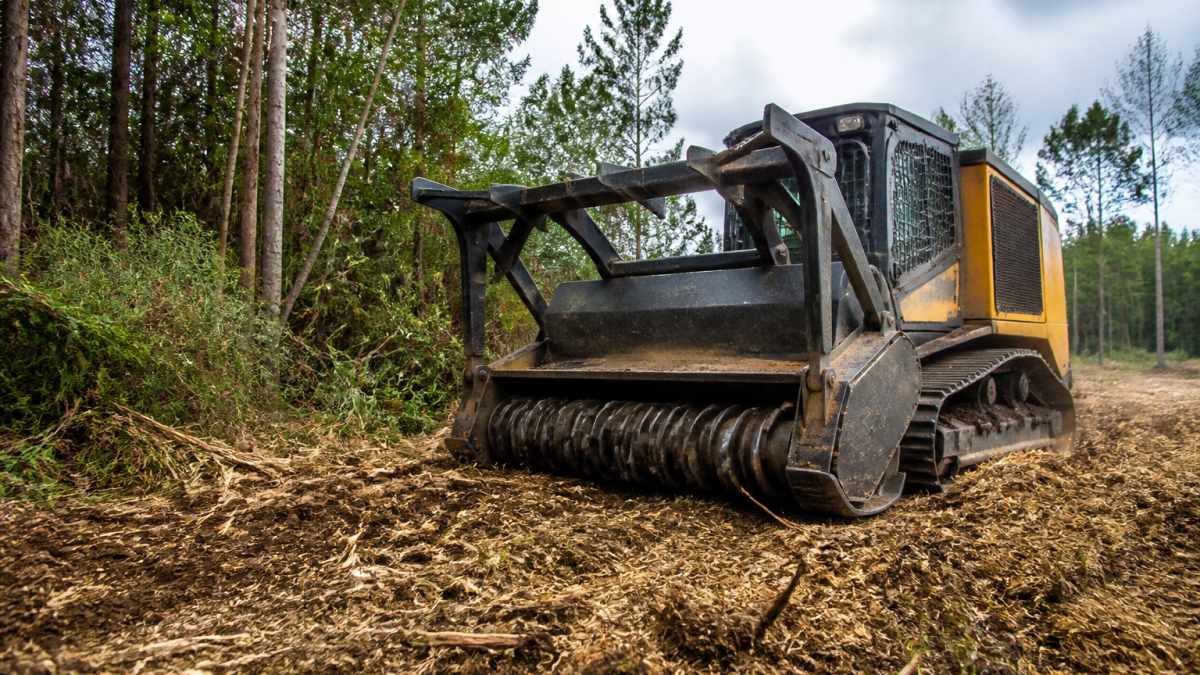
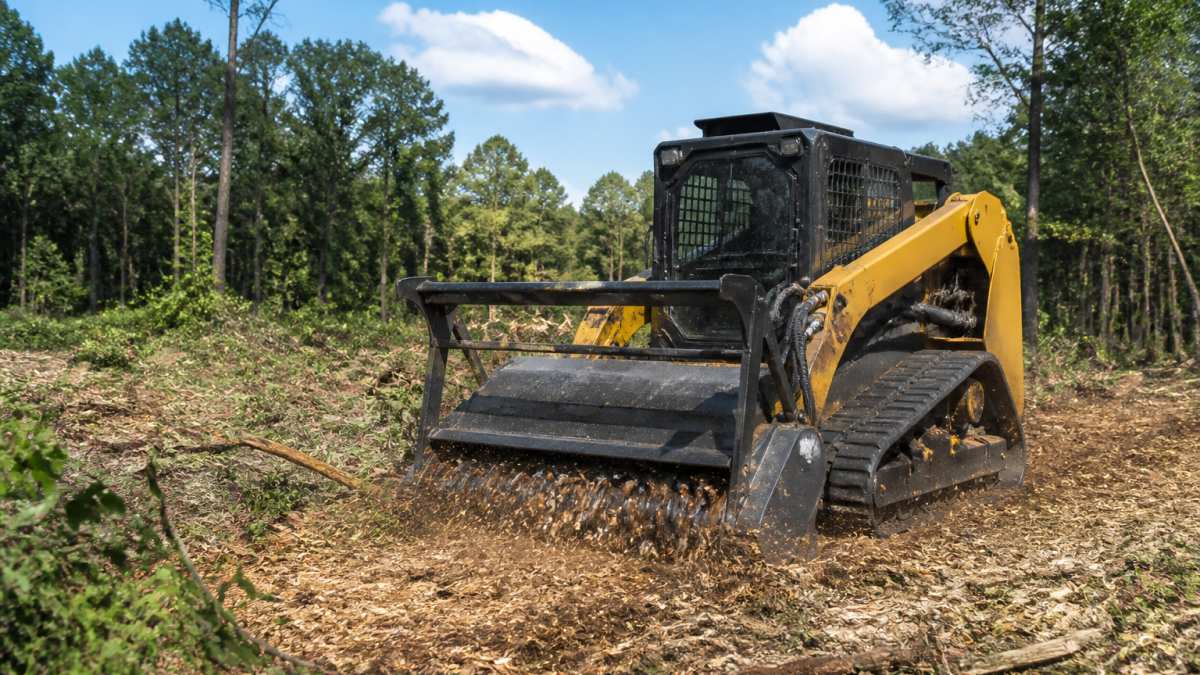
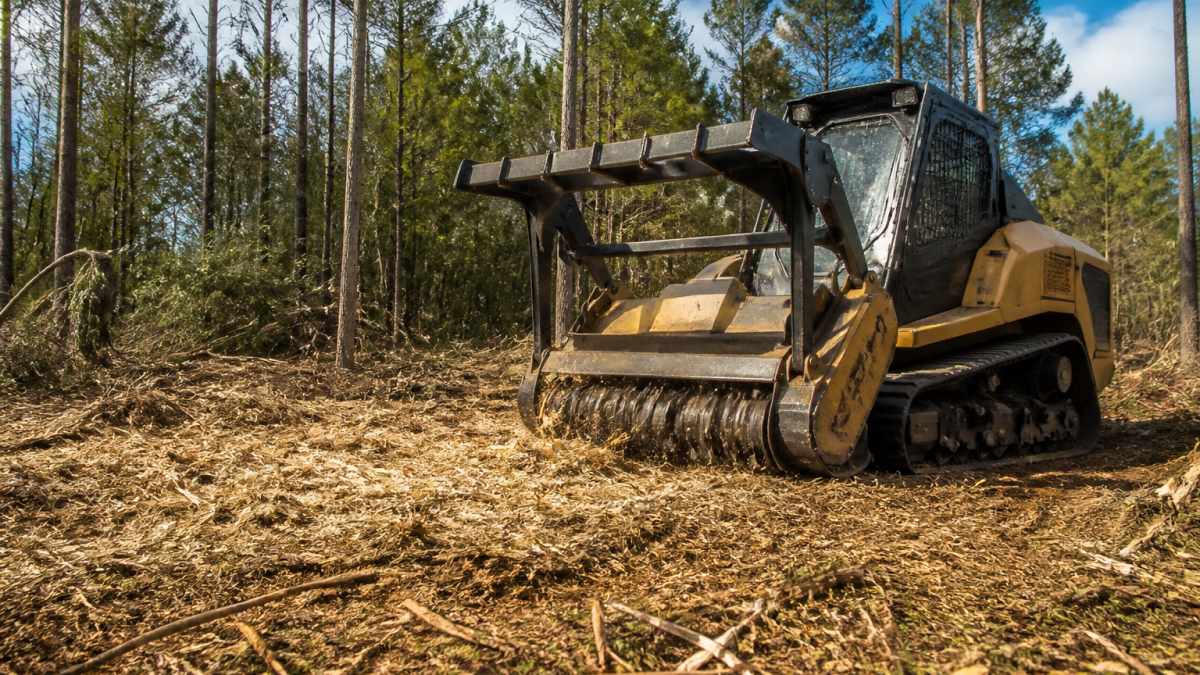
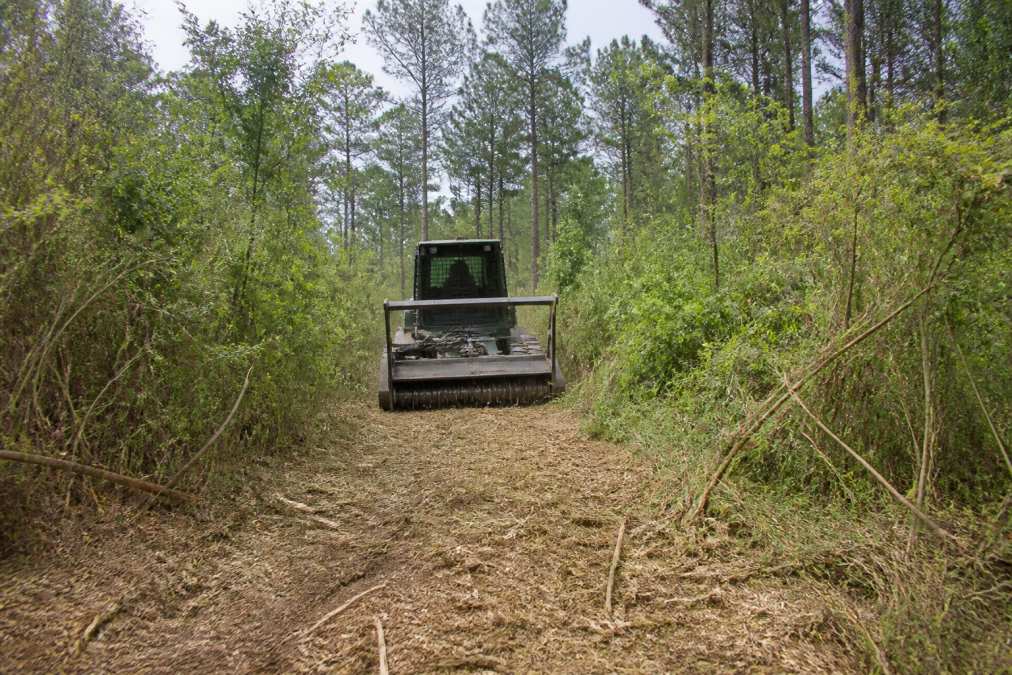
Forestry mulching is the process of grinding standing brush, saplings, and small trees into mulch in a single pass, leaving the root structure and topsoil largely intact. For hunting properties, it is the fastest way to open travel corridors without the bare dirt that bulldozing leaves behind.
Trail Layout and Access Planning
Plan access so you can enter and exit without crossing your best hunting ground. The standard approach is a perimeter loop with short spurs to stands, entered from the downwind side for the prevailing wind on your property.
Food Plot Installation Best Practices
Food plot installation succeeds or fails on soil chemistry, not seed brand. A plot planted into acidic, compacted ground will underperform no matter what you put in it.
Soil Testing and Seed Selection
Take samples from multiple spots across each plot and mix them, since pH can swing widely across a few hundred feet. For shaded timber plots, choose shade-tolerant forages; for open ground, warm-season and cool-season blends keep something green available across more of the year.
Brush Management for Deer Hunting
Brush management is the deliberate thinning of woody cover to create the dense, low structure deer use for bedding and escape. The goal is not a clean property. It is a mosaic: thick blocks, open feeding areas, and soft edges between them.
Legal and Regulatory Compliance for Hunting Ranches
Compliance is where well-intentioned owners get into real trouble. Rules that affect hunting properties come from several directions at once, and they vary by state and by whether you charge for access.
Three areas deserve attention before you clear or plant:
- Wetlands and waterways. Work near streams, ponds, and wet ground can require a permit. Check with the U.S. Army Corps of Engineers before moving dirt in these areas.
- Endangered species. Some clearing windows are restricted to protect nesting or roosting species. Your state wildlife agency publishes the timing.
- Commercial hunting operations. If you sell hunts, you may need state outfitter licensing, liability coverage, and posted-land requirements.
Financial ROI of Hunting Land Management
Hunting land management pays back through three channels: higher lease value, better harvest quality, and long-term land appreciation. Owners who treat habitat work as a cost center usually stop doing it. Owners who treat it as an investment keep going.
Monitoring, Reporting, and Sustainability
Monitoring turns guesswork into decisions. Without it, every habitat change you make is a guess you never get to grade. With it, each season teaches you something you can act on next year.
Camera Surveys: How Many Deer Do You Actually Have?
The standard method is a baited camera survey run in late summer or early fall, before the rut scrambles movement patterns. The mechanics matter:
- One camera per 80 to 100 acres of usable habitat, placed on a food source or bait site.
- Run the survey for 10 to 14 days, then let cameras sit idle for at least a week before moving them.
- Identify individual bucks by antler and body characteristics. Does and fawns are counted but not individually identified.
- Use the number of unique bucks photographed and the recapture rate to estimate the total population.
Harvest Records: The Only Honest Scorecard
A harvest log is not just a list of kills. It is the record that tells you whether your age structure goal is being met. Track, for every deer taken:
- Date, stand location, and wind direction.
- Sex and estimated age (jawbone or tooth wear if you want precision).
- Field-dressed weight, which is the single best proxy for herd health and habitat quality.
- Whether the deer was taken on a food plot, a trail, or natural browse.
Habitat Condition: Reading the Land Itself
Habitat tells you what the herd is doing before the harvest data does. Three quick reads:
- Browse line. A sharp, hedged line at roughly 4 to 5 feet, the height a deer can reach, means too many mouths for the available forage. If you can see under the brush and the tops are untouched, you are under capacity.
- Plot utilization. A food plot that is grazed to bare dirt by mid-season is too small or too few. A plot that goes rank and unused means deer have better options elsewhere, or the plot is in the wrong place.
- Bedding cover quality. Walk into your thickest block. If you can see more than 30 or 40 yards, it is not bedding cover. Mature bucks want horizontal structure at chest height, not open timber.
Reporting: Write It Down or Lose It
A one-page annual report, population estimate, harvest summary, habitat observations, and the changes you plan to make, is the artifact that makes the next year's decisions defensible. It also becomes the document you hand a buyer, a lessee, or a wildlife biologist when you need outside input.
Sustainability: Keep the Land Producing
Sustainability on a hunting property means keeping soil covered, limiting soil disturbance, and never clearing more than the land can regenerate. Practices that protect topsoil and root structure, forestry mulching instead of repeated disking, rotational plot planting instead of continuous tillage, leaving standing dead trees for cavity nesters, keep a property productive instead of burning it out.
| Practice | Frequency | Why It Matters |
|---|---|---|
| Soil test per plot | Every 2-3 years | Prevents wasted seed and fertilizer |
| Trail maintenance | Annually, late winter | Keeps access open and quiet |
| Invasive species walk | Twice per year | Stops brush from reclaiming cleared ground |
| Camera survey | Annually, late summer | Estimates population and buck age structure |
| Harvest log review | Annually, post-season | Tells you if the habitat matches the herd |
| Browse line check | Twice per year | Early warning of overcapacity |
| Compliance check | Before any clearing | Avoids permits, fines, and restoration orders |
Frequently Asked Questions
What are the best land management practices for deer?
Focus on three things: food, cover, and water. Establish food plots with cool-season and warm-season forages, manage brush to create edge habitat, and maintain reliable water sources. Rotate grazing or mowing to keep vegetation young and nutritious. Conduct soil tests before planting and monitor deer activity to adjust your approach. A written wildlife management plan helps you stay consistent year to year.
How do you improve habitat for hunting on private land?
Start with a land assessment to identify what your property lacks. Common improvements include timber stand improvement, native grass restoration, brush management for deer hunting, and creating travel corridors. Remove invasive species and thin overcrowded trees to let sunlight reach the ground. Add food plots and mineral sites. The goal is diversity: different ages of vegetation and different cover types support more wildlife.
What is the role of forestry mulching in wildlife management?
Forestry mulching grinds brush and small trees into mulch that stays on the ground. This clears trails, creates edge habitat, and returns nutrients to the soil without burning or hauling debris. For hunting ranches, it opens access routes and establishes transition zones where deer and other wildlife feed and travel. The mulch layer also slows weed regrowth compared to bare-soil clearing.
How often should you perform controlled burns on hunting land?
Most wildlife managers burn on a 2-4 year rotation, depending on fuel loads and vegetation goals. Some properties split into burn units and burn a different section each year. Always check local burn bans and permit requirements before lighting. Controlled burns reduce fuel, stimulate new growth, and improve forage quality. If burning is not practical, forestry mulching and disking can achieve similar habitat results.
What are the essential components of a wildlife management plan?
A solid plan covers habitat goals, population targets, food plot rotation, brush management schedule, water sources, and monitoring methods. Include a map of your property with stand locations, food plots, and travel corridors. Set measurable objectives like "increase native forb coverage by 20% in two years." Review and update annually based on trail camera data and harvest records. Many states offer technical assistance from wildlife biologists.
How does fence line clearing benefit hunting ranches?
Cleared fence lines improve access for maintenance and create linear edge habitat that deer and small game use as travel routes. Removing overgrowth also reduces hiding cover for predators and makes it easier to inspect and repair fencing. On hunting properties, clean fence lines define property boundaries clearly and support better grazing management if you run livestock alongside wildlife.