 ultimate-guide
7 Benefits of Professional Land Clearing in 2026
Table of Contents
- What Professional Land Clearing Actually Does to a Property
- Benefits of Professional Land Clearing: Property Value and Usable Space
- Safety, Hazard Removal, and Invasive Species Control
- Forestry Mulching Benefits for Soil Health and Regrowth
- Land Clearing Cost Per Acre: What Drives the Number
- Site Preparation for Construction: From Raw Land to Build-Ready
- Permits, Zoning, and Environmental Rules to Check First
- Frequently Asked Questions
Last Updated: September 25, 2026
What Professional Land Clearing Actually Does to a Property
Professional land clearing is the controlled removal of trees, brush, stumps, and undergrowth using specialized equipment and a defined debris plan. At SemperFi Land Clearing LLC, it is the first step in land management, not a one-time demolition job: vegetation removal, stump treatment, and debris disposal.
Mechanized Clearing vs. Hand Cutting
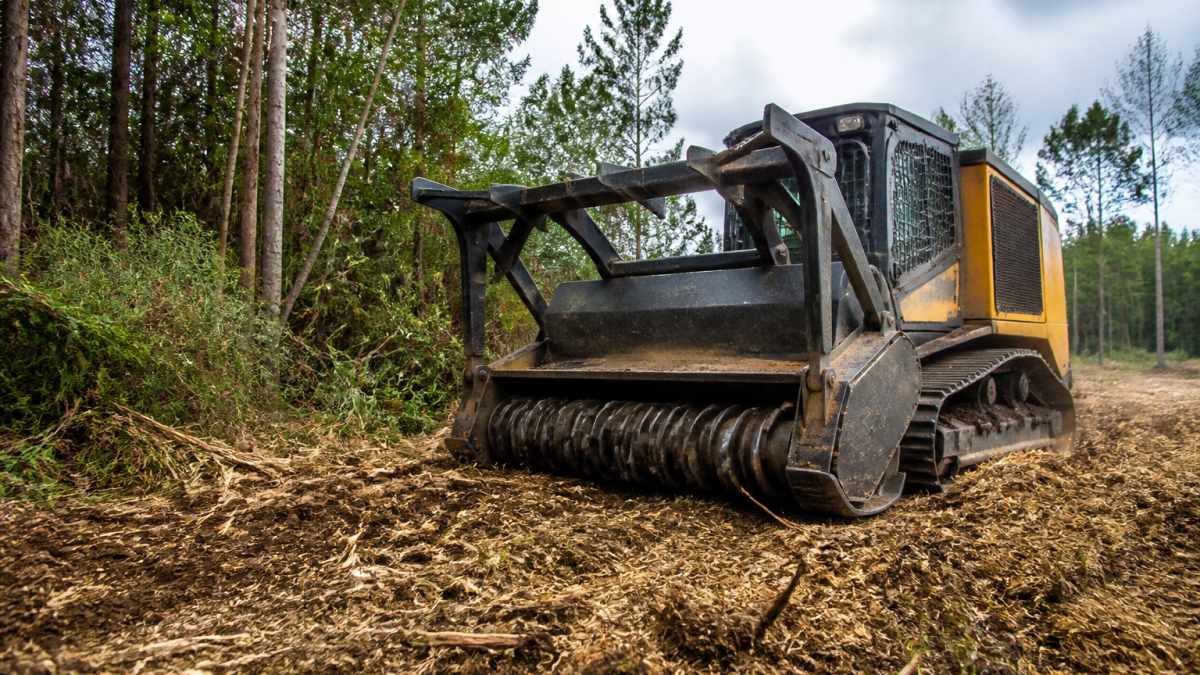
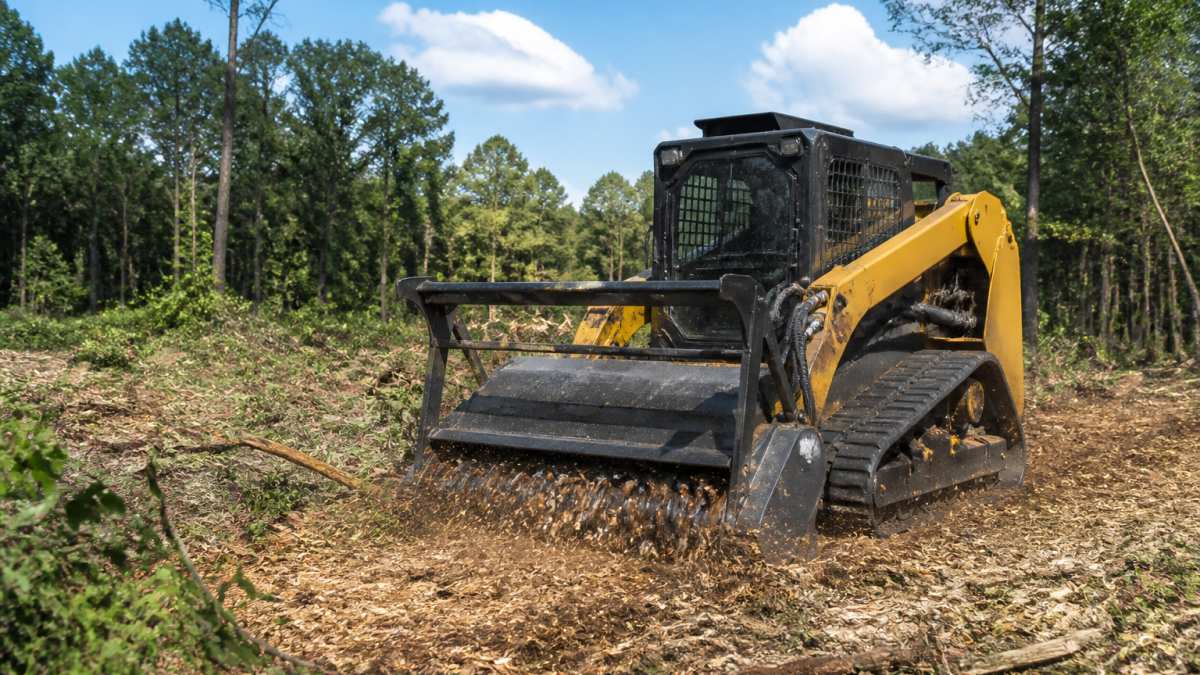
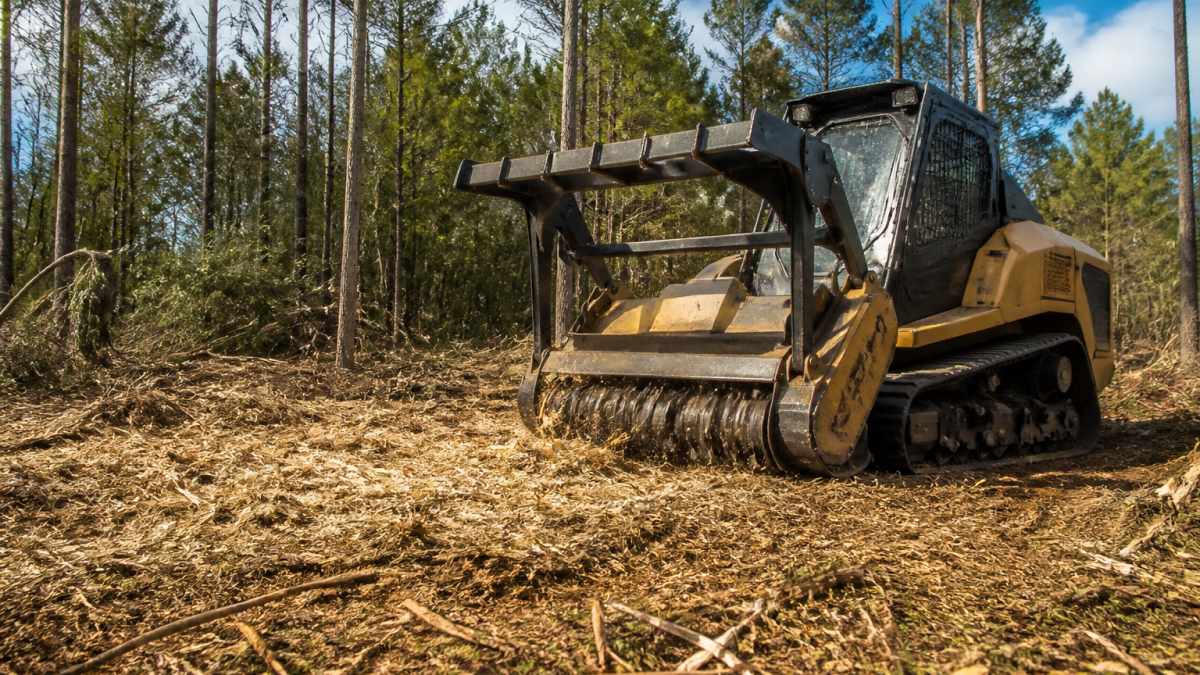
Mechanized clearing uses tracked machines, forestry mulchers, and excavators to remove vegetation at scale. Hand cutting relies on chainsaws and manual labor for small fence lines and tight spaces equipment cannot reach.
Benefits of Professional Land Clearing: Property Value and Usable Space
The clearest benefits of professional land clearing show up in what the land is worth and what you can do with it. Overgrown acreage reads as a liability to buyers and lenders; cleared, graded land reads as an opportunity.
How Clearing Land Increases Property Value
Land that cannot be walked, surveyed, or built on is hard to sell at full value. Buyers discount for uncertainty, and thick brush hides drainage problems, old debris, and boundary issues. Removing that uncertainty is the value.
A few concrete ways the value shows up:
- Usable-acreage math. If 12 of 20 acres are walkable after clearing versus 4 before, the buyer is effectively purchasing three times the functional land.
- Removed uncertainty discounts. Buyers price in the cost of clearing they would have to do themselves, plus a risk premium for what the brush might hide. A cleared tract removes both.
- Financing and appraisal. Lenders prefer land with visible access, defined boundaries, and no obvious hazard. A property that stalls in underwriting costs the seller time and sometimes the deal.
- Highest-and-best-use shift. Raw brushland is often valued as recreational or timberland. Cleared land with a buildable pad, pasture, or homesite potential can be valued against higher comps.
Curb Appeal and Making Overgrown Acreage Marketable
Curb appeal for rural property is about sight lines: a cleared fence line, a mowed pasture edge, and a visible driveway change how a tract photographs and feels to walk.
- Cleared fence lines show where the property actually ends
- Open pasture edges make acreage look larger, not smaller
- Visible access roads signal the land is maintained
- Removed debris eliminates the "abandoned" impression
Creating Usable Space for What Comes Next
Value is only half the story. The other half is what the land can do: clearing converts a tract from something you own into something you can use, and the intended use drives the scope of work.
- Building sites. A homesite needs a cleared envelope, grubbed roots, and a graded pad. Brush in the way is a construction delay.
- Pasture and grazing. Reclaiming overgrown pasture restores forage acreage and lets you rotate livestock again, one of the most common reasons rural landowners call.
- Food plots and wildlife habitat. Hunters clear lanes and plot areas to concentrate game movement. Forestry mulching is often right here because it leaves cover and soil structure intact.
- Access roads and fence lines. A property you cannot drive across is a property you cannot manage. Cleared lanes make fencing, spraying, and timber work possible.
- Agricultural productivity. Removing shade and competition lets sunlight and water reach the ground, the precondition for any crop or hay program.
Safety, Hazard Removal, and Invasive Species Control
Dead trees, leaning limbs, and hidden debris injure landowners every year. Professional clearing removes them with equipment and procedures built for the risk.
Hazard Tree and Debris Removal
The hazards on overgrown land are not always obvious from the road. The most common:
- Dead and dying trees (snags). A standing dead tree can drop a limb or the whole trunk without warning, and its compromised root plate makes it unpredictable to fell by hand.
- Leaning and hung-up trees. A tree caught in a neighbor's canopy is under tension; cutting it wrong releases that tension in a direction nobody wants.
- Hidden debris. Old fence wire, abandoned equipment, and concrete are invisible under brush. Hitting them with a mower or machine is expensive and dangerous.
- Hazard limbs over structures and driveways. A limb dead for years can come down in the first strong wind after a dry spell.
Invasive Species Control
The bigger long-term problem is invasive species. In East Texas, Chinese privet, Japanese honeysuckle, and Chinese tallow spread aggressively and crowd out native grasses and timber. Cutting them at ground level does not kill them; most resprout from the root collar within a season.
A few specifics that matter:
- Chinese privet spreads by seed and root suckers. Cutting it without stump herbicide typically produces multiple stems from the same root system.
- Japanese honeysuckle vines smother understory plants and can girdle small trees, regrowing readily from any root fragments left in the soil.
- Chinese tallow is a prolific seeder and fast grower. Left alone, it converts pasture and prairie into a monoculture within a few years.
Fire Hazard Reduction
Fire mitigation is the other safety benefit. Reduced fuel load near structures lowers wildfire risk: a cleared buffer removes the ladder fuels that carry a ground fire into the canopy. Maintained defensible space around structures, plus cleared access for emergency vehicles, is one of the most effective and least expensive wildfire preparations a rural landowner can make.
Forestry Mulching Benefits for Soil Health and Regrowth
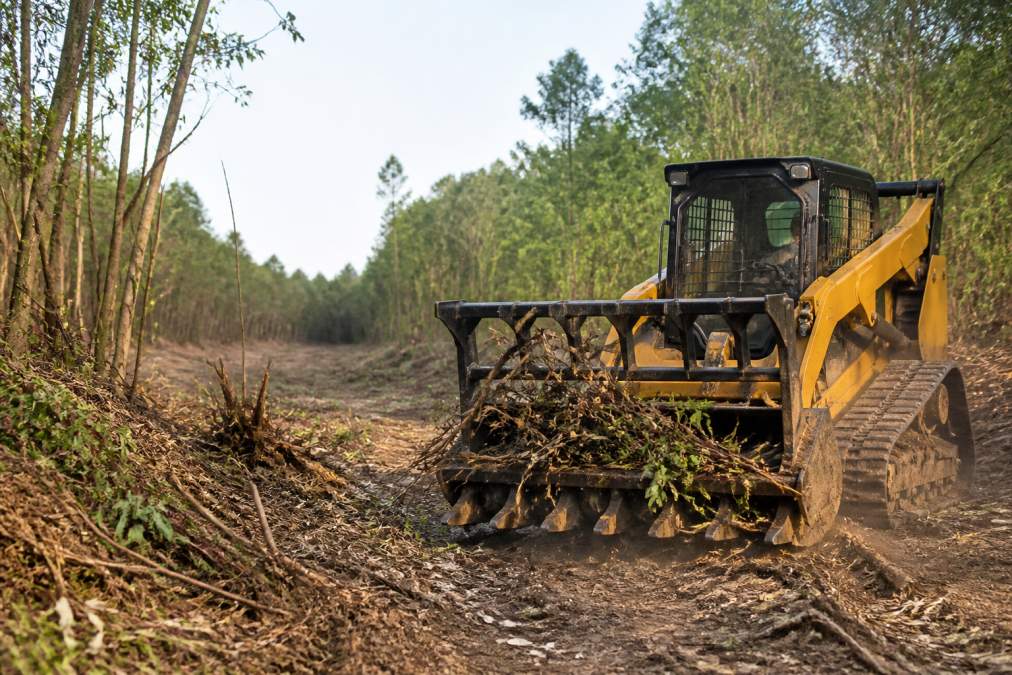
Forestry mulching grinds standing brush, saplings, and small trees into mulch on the spot, eliminating debris hauling. The machine leaves the root structure and topsoil largely intact.
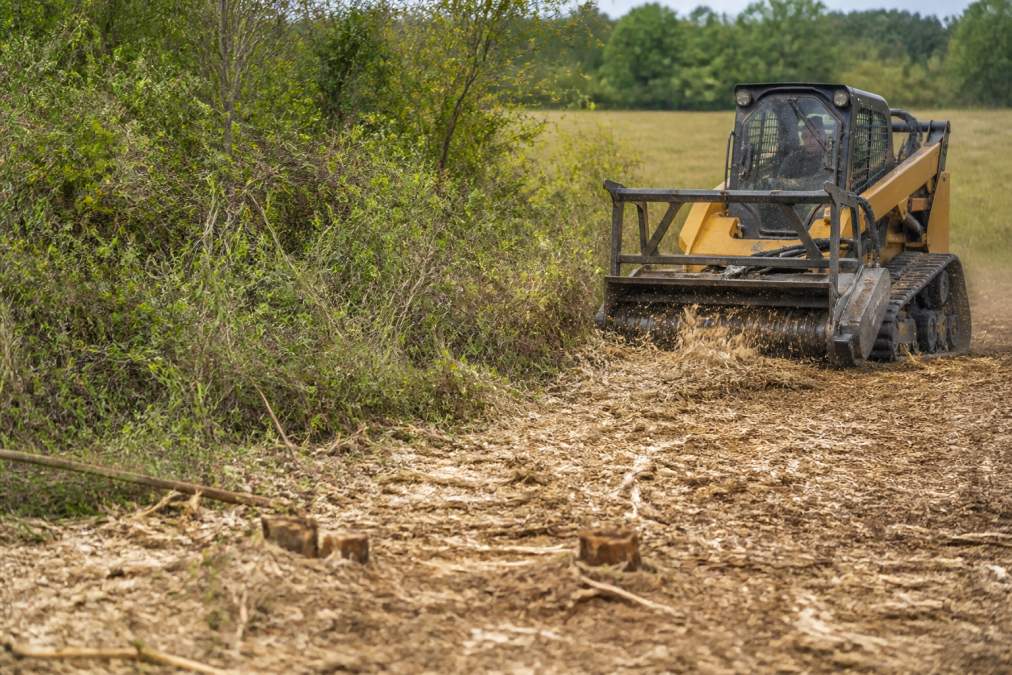
- Covers bare soil, reducing erosion from rain
- Retains moisture and moderates soil temperature
- Breaks down into organic matter over time
- Suppresses some regrowth by shading the seed bank
Land Clearing Cost Per Acre: What Drives the Number
Land clearing cost per acre varies widely because the work varies widely. Two properties of the same size can differ by thousands per acre based on what is growing and where it sits.
The main cost drivers:
| Cost Driver | What Raises the Price | What Lowers It |
|---|---|---|
| Vegetation density | Dense brush, large hardwoods | Light saplings, open grass |
| Terrain | Slopes, wet ground, rock | Flat, dry, accessible ground |
| Access | No road, narrow gates | Wide entry, room to turn |
| Method | Excavation and hauling | Forestry mulching in place |
| Debris handling | Chipping and trucking off site | Mulch left on the ground |
| Stumps | Grinding and removal | Left in place or mulched |
Site Preparation for Construction: From Raw Land to Build-Ready
Site preparation for construction is the step between raw acreage and a buildable pad: clearing, grubbing out roots, rough grading, and establishing drainage before a foundation or driveway goes in.
The sequence matters more than the speed:
- Survey and mark boundaries, easements, and utilities
- Clear vegetation and grub out root systems in the building envelope
- Rough grade to the planned elevations
- Establish drainage away from structures
- Confirm soil conditions before foundation work
Permits, Zoning, and Environmental Rules to Check First
Permits and zoning rules vary by county and intended use, so the first move is a call to your local planning office, not a contractor. Clearing a homesite, converting timberland to pasture, and developing a subdivision can fall under different requirements.
Questions worth asking before any machine arrives:
- Does the county require a clearing or grading permit for this scope?
- Are there setback, buffer, or tree preservation rules?
- Is the property in a floodplain or wetland area with extra restrictions?
- Are there erosion control or stormwater requirements?
- Does agricultural conversion change the property's tax classification?
Frequently Asked Questions
Does clearing land increase property value?
Removing dense brush and hazardous trees makes acreage usable and easier to inspect, appraise, and market. A cleared property shows its true boundaries, fence lines, and building sites, which helps buyers and agents picture what the land can support. The gain depends on your local market and how the cleared space is used, so ask a real estate professional to weigh clearing against your listing goals before you schedule work.
What is the difference between DIY clearing and professional forestry mulching?
Hand cutting with a chainsaw leaves piles of brush and stumps you still have to burn or haul off. Professional forestry mulching grinds standing vegetation and stumps into a mulch layer in one pass, which limits soil disturbance and leaves the ground ready for grass or grading. It also handles thick overgrowth and fence lines far faster than manual labor, reducing the time your land sits unfinished.
How is land clearing cost per acre determined?
Density of vegetation, tree size, terrain slope, access for equipment, and how much debris must be hauled away all change the total. Rocky ground, wet areas, and unforeseen obstacles like buried fence or old foundations add time. Because every property is different, a free on-site assessment is the only way to get an accurate figure. Reach out to SemperFi Land Clearing LLC for a quote based on your acreage.
What are the primary safety benefits of professional land clearing?
Dead trees, leaning limbs, and tangled undergrowth are common on neglected acreage, and they fail without warning. Clearing removes those hazards before they drop on fences, buildings, or people, and it opens sight lines across the property. Crews also work with the heavy machinery and safety procedures that make felling and grinding large trees far less risky than doing it yourself with hand tools.
Overgrown land does not improve with waiting, and the hazards and invasives in it only get more expensive to deal with. SemperFi Land Clearing LLC brings veteran-owned discipline to every job, with free land assessments, specialized 10 ft fence line clearing, and forestry mulching that leaves your soil intact and your property usable. Get an estimate from SemperFi Land Clearing LLC and turn unmanaged acreage into land you can actually use.